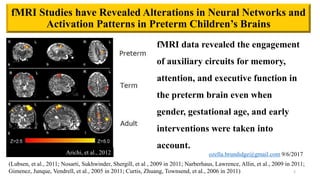
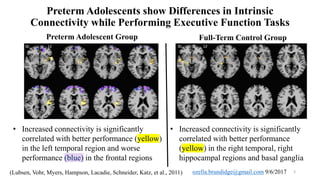
1) Studies have found alterations in neural networks and activation patterns in the brains of preterm children, even when accounting for gender, gestational age, and early interventions. Preterm adolescents also show differences in intrinsic connectivity while performing executive function tasks.
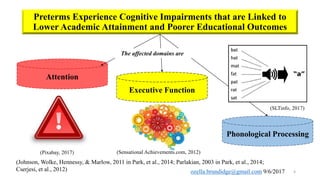
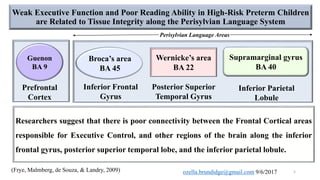
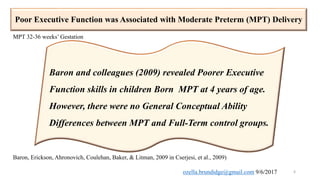
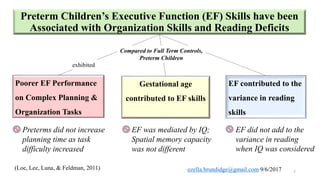
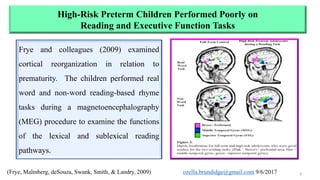
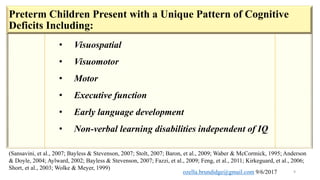
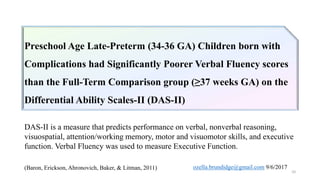
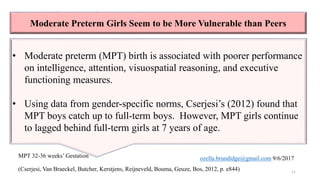
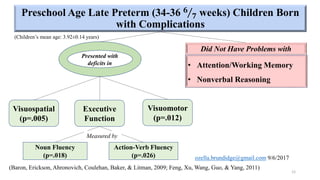
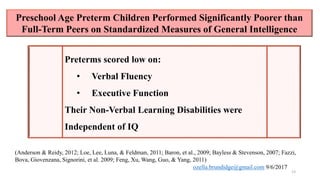
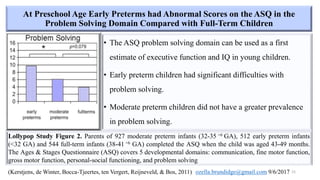
2) Preterms experience cognitive impairments like weaknesses in phonological processing, attention, and executive function that are linked to lower academic attainment and poorer educational outcomes. Weak executive function and poor reading ability in high-risk preterm children have been related to tissue integrity issues along the perisylvian language system.
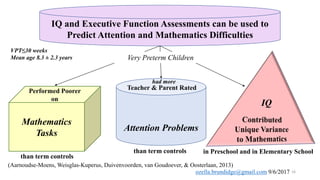
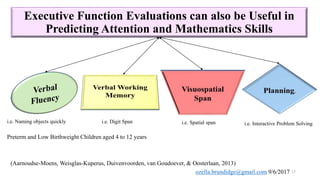
3) Evaluations of IQ and executive function can predict attention and mathematics difficulties in preterm children and are useful in assessing risks for these outcomes.