Regional Approaches & NAPs
B. Phillips
Vanuatu
Why Regional Approach
in the Pacific?
• Limited capacity issues
• Separate coordination of CC &
DRR at the national level
• Many areas of overlap
• Need for countries to be in the
“driving seat” when encaging
with partners
Why Regional Approach
in the Pacific?
• Efficiency, coordination, best
use of resources, and stronger
governance
• Set up of the Council of
Regional Organizations of the
Pacific (CROP) – SPREP, SPC,
FFA, USP
• Merging of institutions to
support Pacific Island
Countries
JNAPs
• Recognition that CC and DRR challenges
cannot
be addressed separately
• Countries have an opportunity to
systematically address their development
and risk management challenges in an
integrated manner within national
development context.
• Such an integrated agenda can be
pursued using normal ODA as well as
increasing financial resources available
under global climate change financing
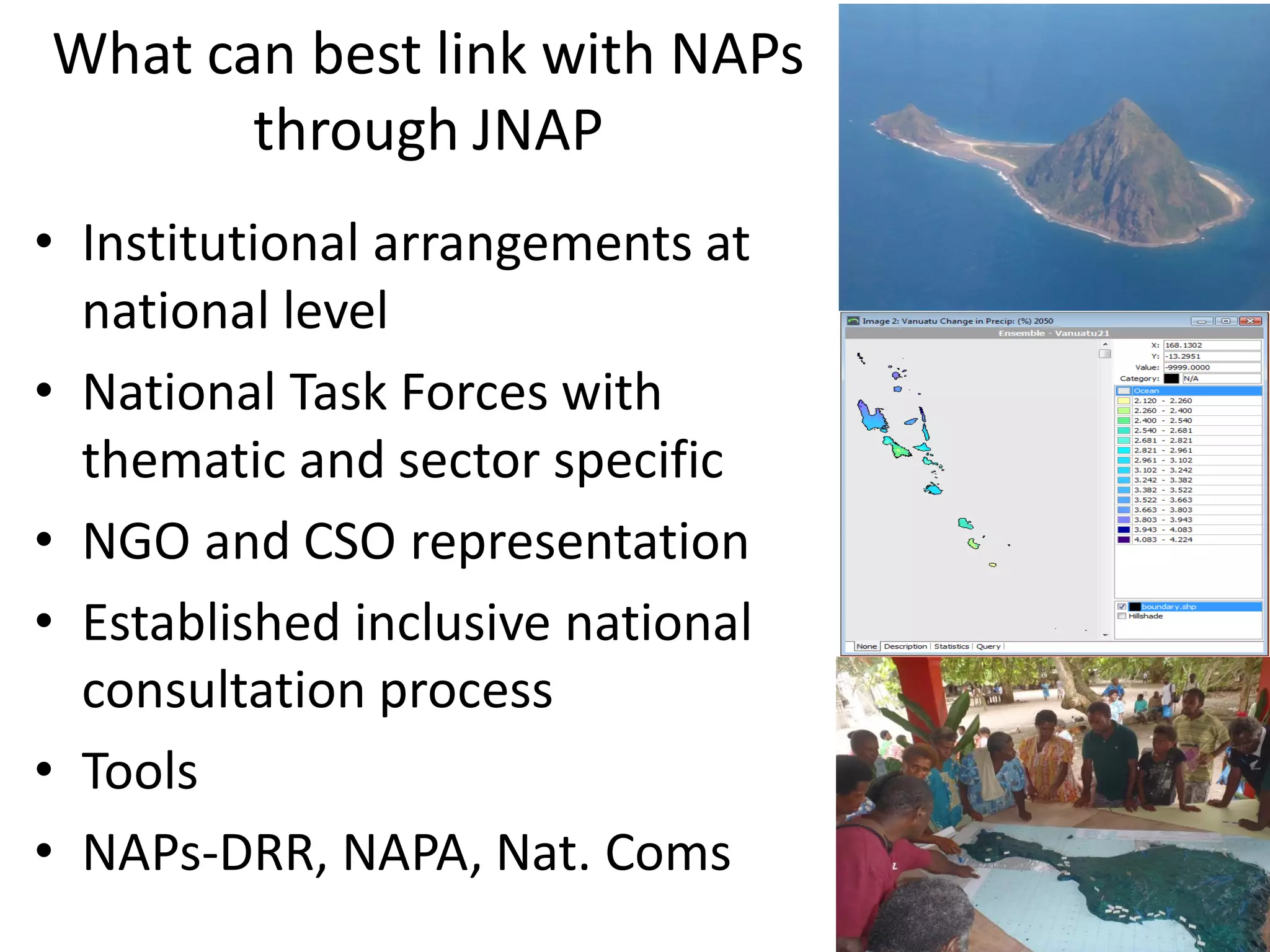
What can best link with NAPs
through JNAP
• Institutional arrangements at
national level
• National Task Forces with
thematic and sector specific
• NGO and CSO representation
• Established inclusive national
consultation process
• Tools
• NAPs-DRR, NAPA, Nat. Coms
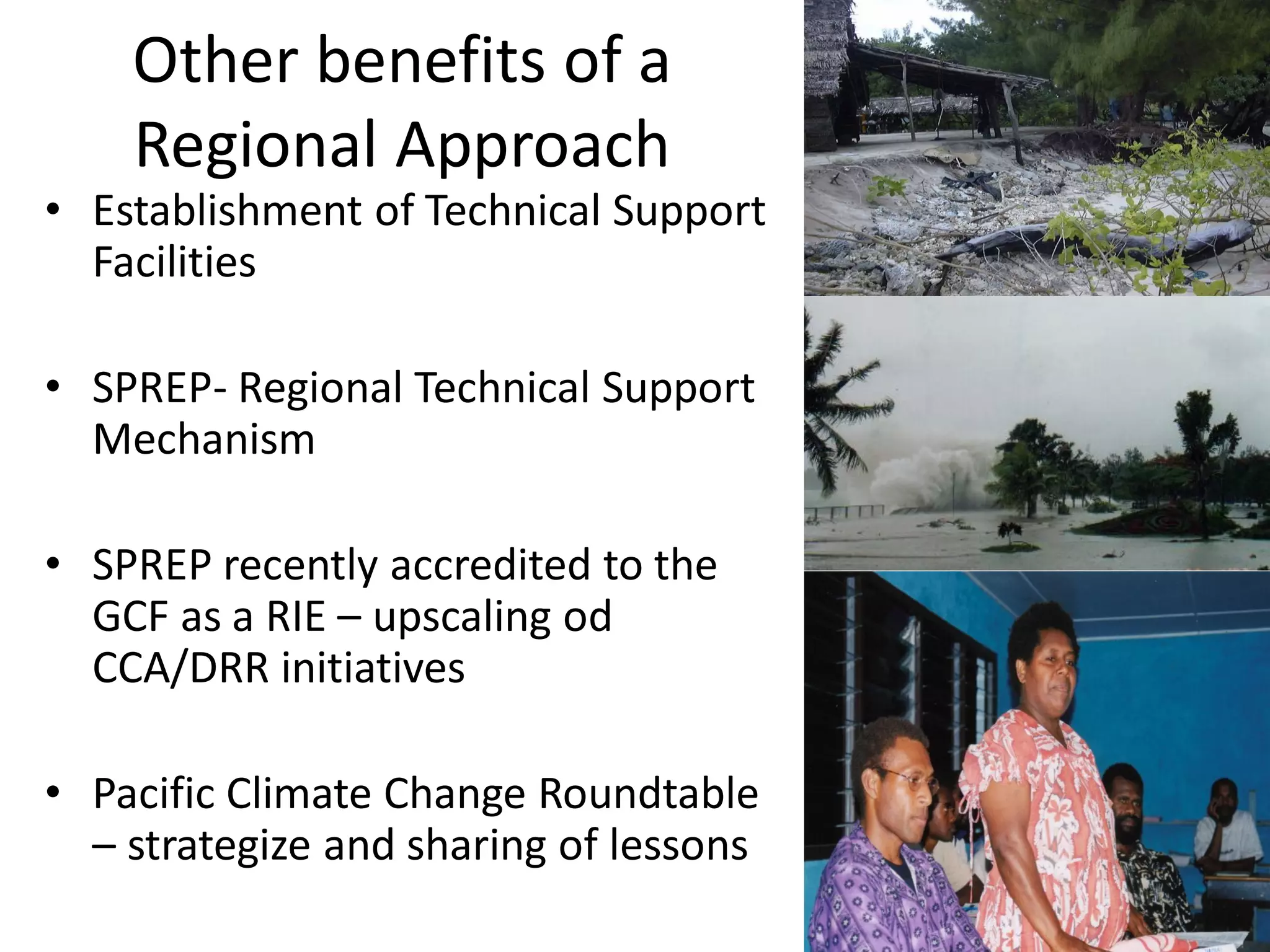
Other benefits of a
Regional Approach
• Establishment of Technical Support
Facilities
• SPREP- Regional Technical Support
Mechanism
• SPREP recently accredited to the
GCF as a RIE – upscaling od
CCA/DRR initiatives
• Pacific Climate Change Roundtable
– strategize and sharing of lessons

NAP Expo 2015 Session VII, IV Regional approaches & NAPs

  • 1.
    Regional Approaches &NAPs B. Phillips Vanuatu
  • 2.
    Why Regional Approach inthe Pacific? • Limited capacity issues • Separate coordination of CC & DRR at the national level • Many areas of overlap • Need for countries to be in the “driving seat” when encaging with partners
  • 3.
    Why Regional Approach inthe Pacific? • Efficiency, coordination, best use of resources, and stronger governance • Set up of the Council of Regional Organizations of the Pacific (CROP) – SPREP, SPC, FFA, USP • Merging of institutions to support Pacific Island Countries
  • 4.
    JNAPs • Recognition thatCC and DRR challenges cannot be addressed separately • Countries have an opportunity to systematically address their development and risk management challenges in an integrated manner within national development context. • Such an integrated agenda can be pursued using normal ODA as well as increasing financial resources available under global climate change financing
  • 5.
    What can bestlink with NAPs through JNAP • Institutional arrangements at national level • National Task Forces with thematic and sector specific • NGO and CSO representation • Established inclusive national consultation process • Tools • NAPs-DRR, NAPA, Nat. Coms
  • 6.
    Other benefits ofa Regional Approach • Establishment of Technical Support Facilities • SPREP- Regional Technical Support Mechanism • SPREP recently accredited to the GCF as a RIE – upscaling od CCA/DRR initiatives • Pacific Climate Change Roundtable – strategize and sharing of lessons