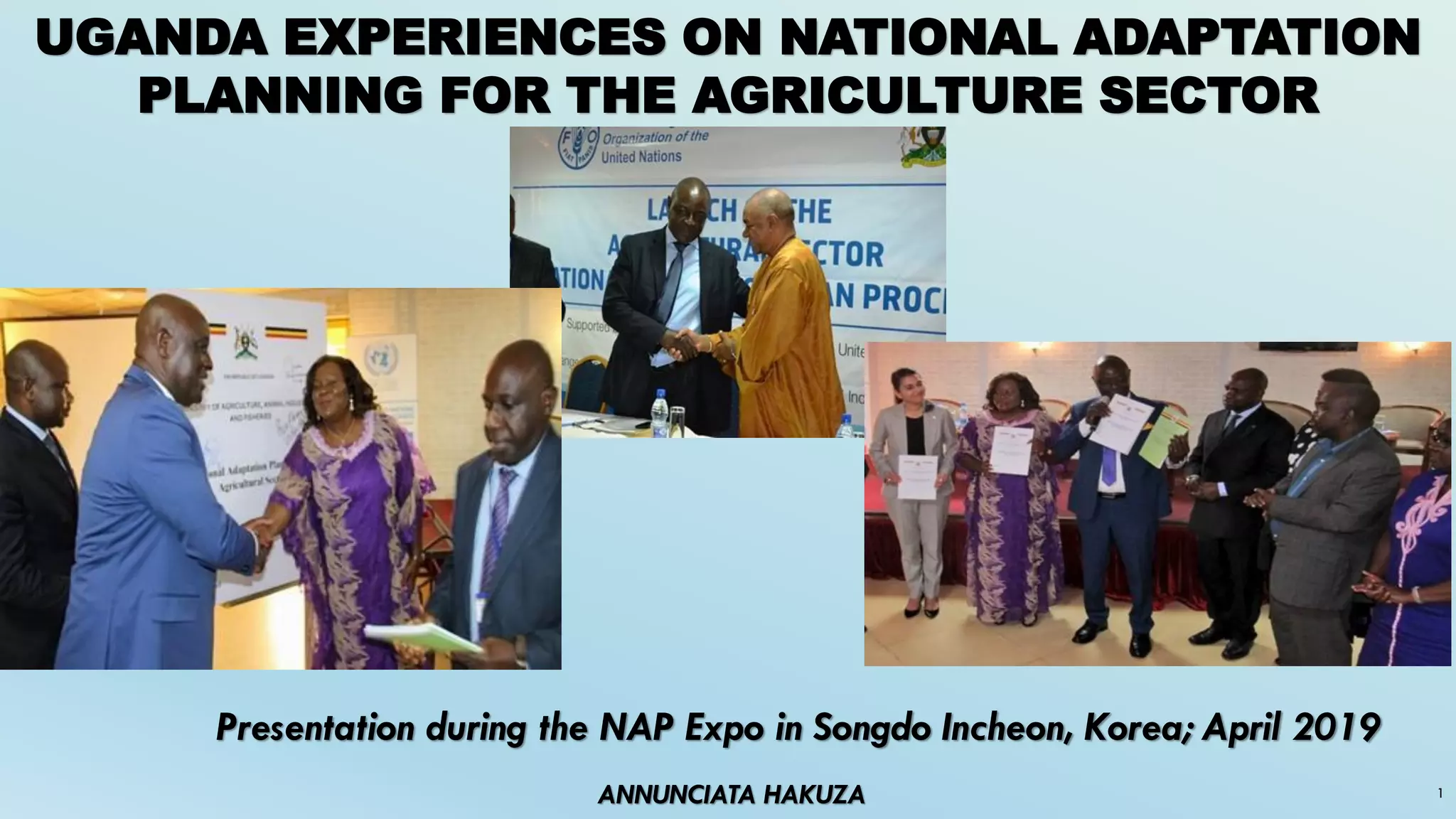
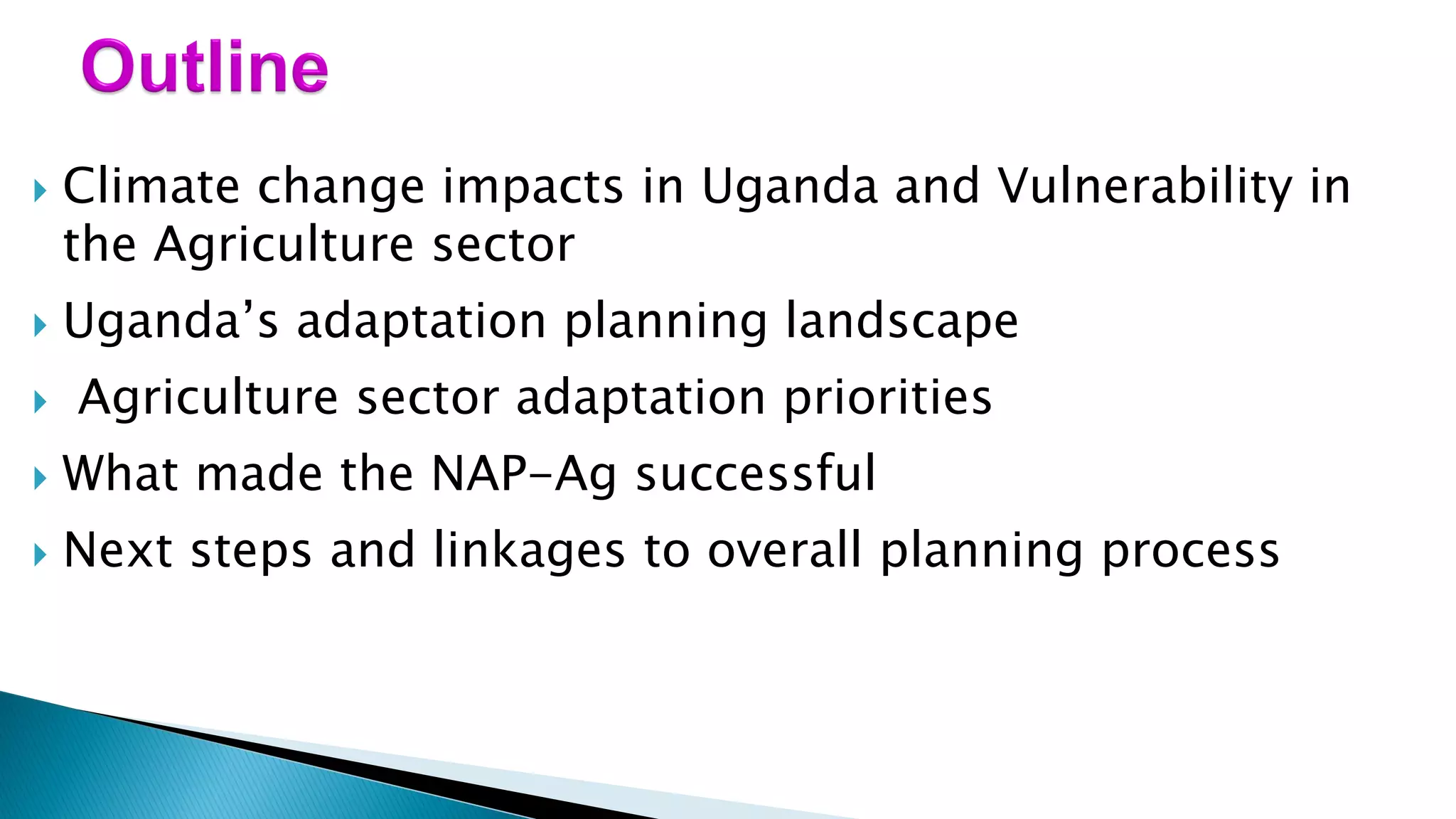
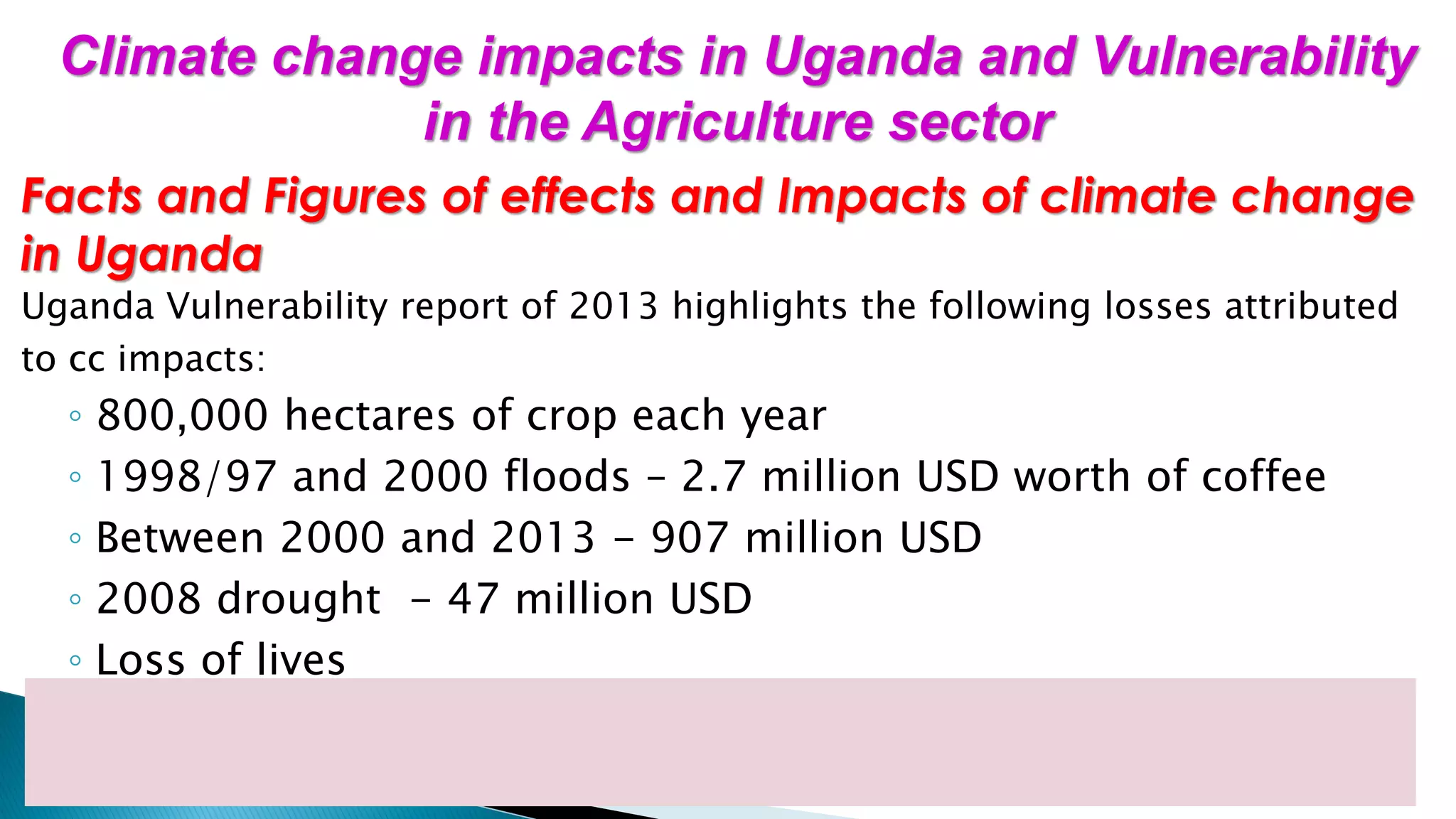
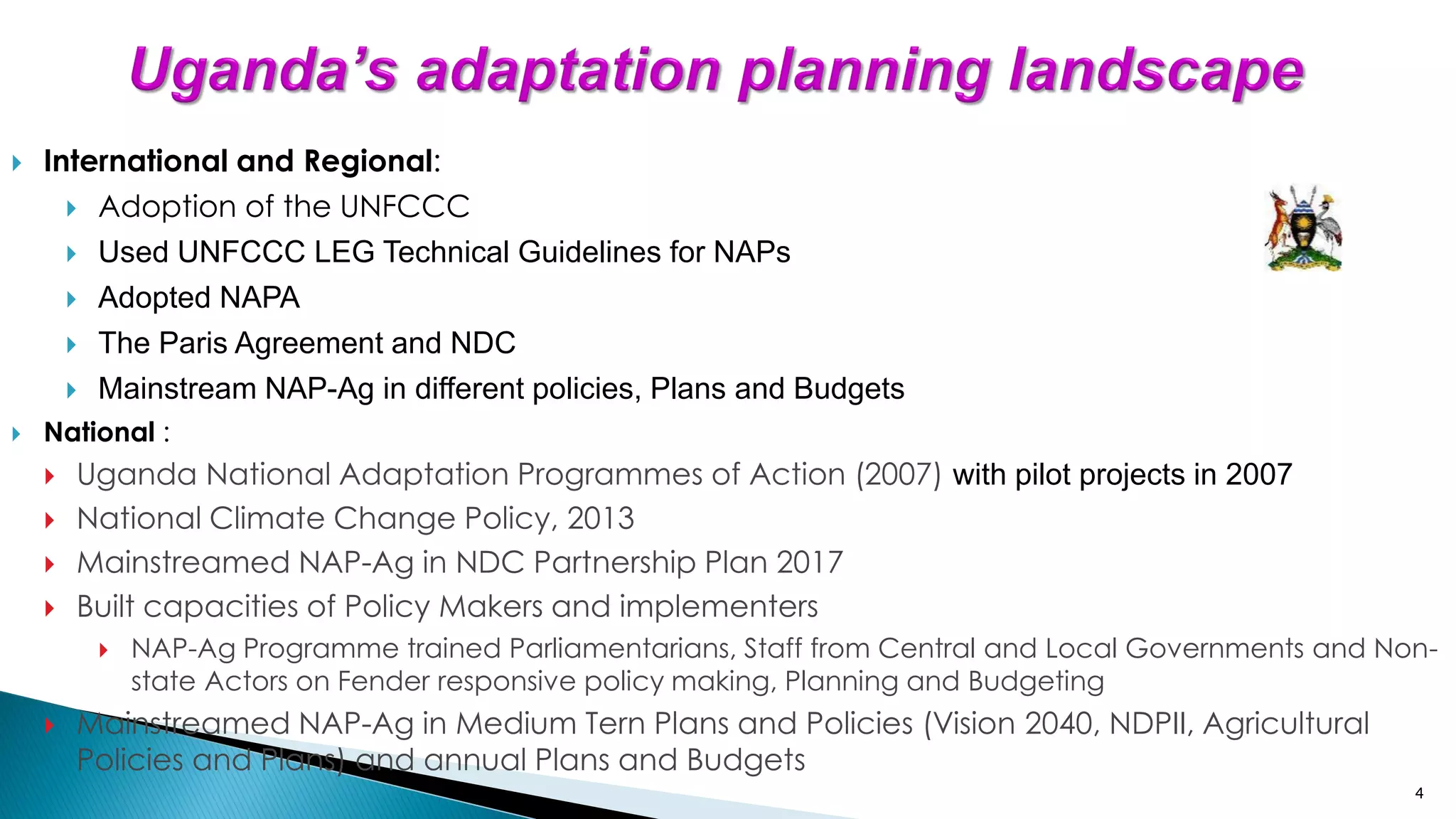
UGANDA EXPERIENCES ON NATIONAL ADAPTATION
PLANNING FOR THE AGRICULTURE SECTOR
1ANNUNCIATA HAKUZA
Presentation during the NAP Expo in Songdo Incheon, Korea; April 2019
 Climate change impacts in Uganda and Vulnerability in
the Agriculture sector
 Uganda’s adaptation planning landscape
 Agriculture sector adaptation priorities
 What made the NAP-Ag successful
 Next steps and linkages to overall planning process
Facts and Figures of effects and Impacts of climate change
in Uganda
Uganda Vulnerability report of 2013 highlights the following losses attributed
to cc impacts:
◦ 800,000 hectares of crop each year
◦ 1998/97 and 2000 floods – 2.7 million USD worth of coffee
◦ Between 2000 and 2013 - 907 million USD
◦ 2008 drought - 47 million USD
◦ Loss of lives
Climate change impacts in Uganda and Vulnerability
in the Agriculture sector
4
 International and Regional:
 Adoption of the UNFCCC
 Used UNFCCC LEG Technical Guidelines for NAPs
 Adopted NAPA
 The Paris Agreement and NDC
 Mainstream NAP-Ag in different policies, Plans and Budgets
 National :
 Uganda National Adaptation Programmes of Action (2007) with pilot projects in 2007
 National Climate Change Policy, 2013
 Mainstreamed NAP-Ag in NDC Partnership Plan 2017
 Built capacities of Policy Makers and implementers
 NAP-Ag Programme trained Parliamentarians, Staff from Central and Local Governments and Non-
state Actors on Fender responsive policy making, Planning and Budgeting
 Mainstreamed NAP-Ag in Medium Tern Plans and Policies (Vision 2040, NDPII, Agricultural
Policies and Plans) and annual Plans and Budgets
NAP for agriculture sector intervention to address CC
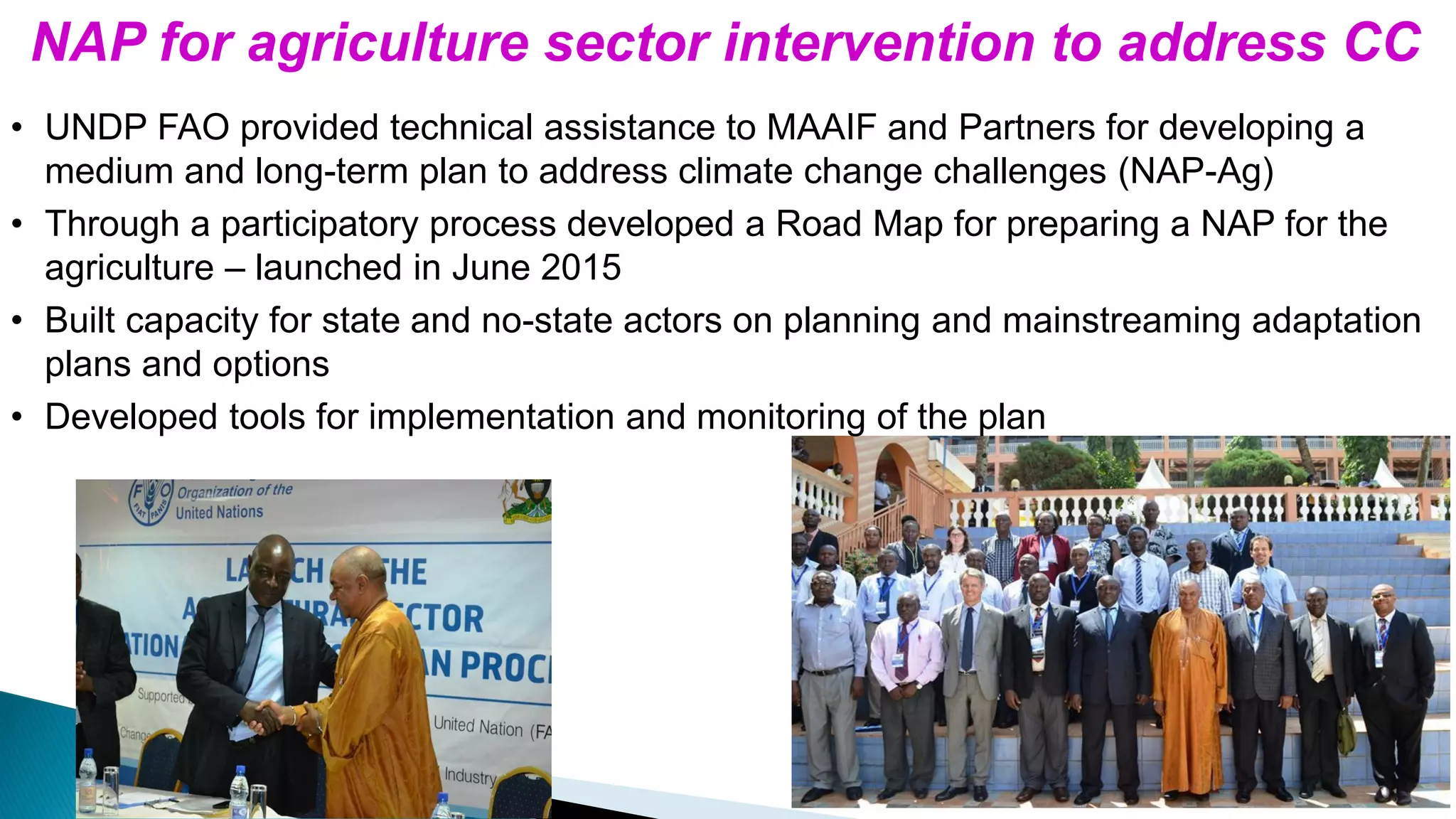
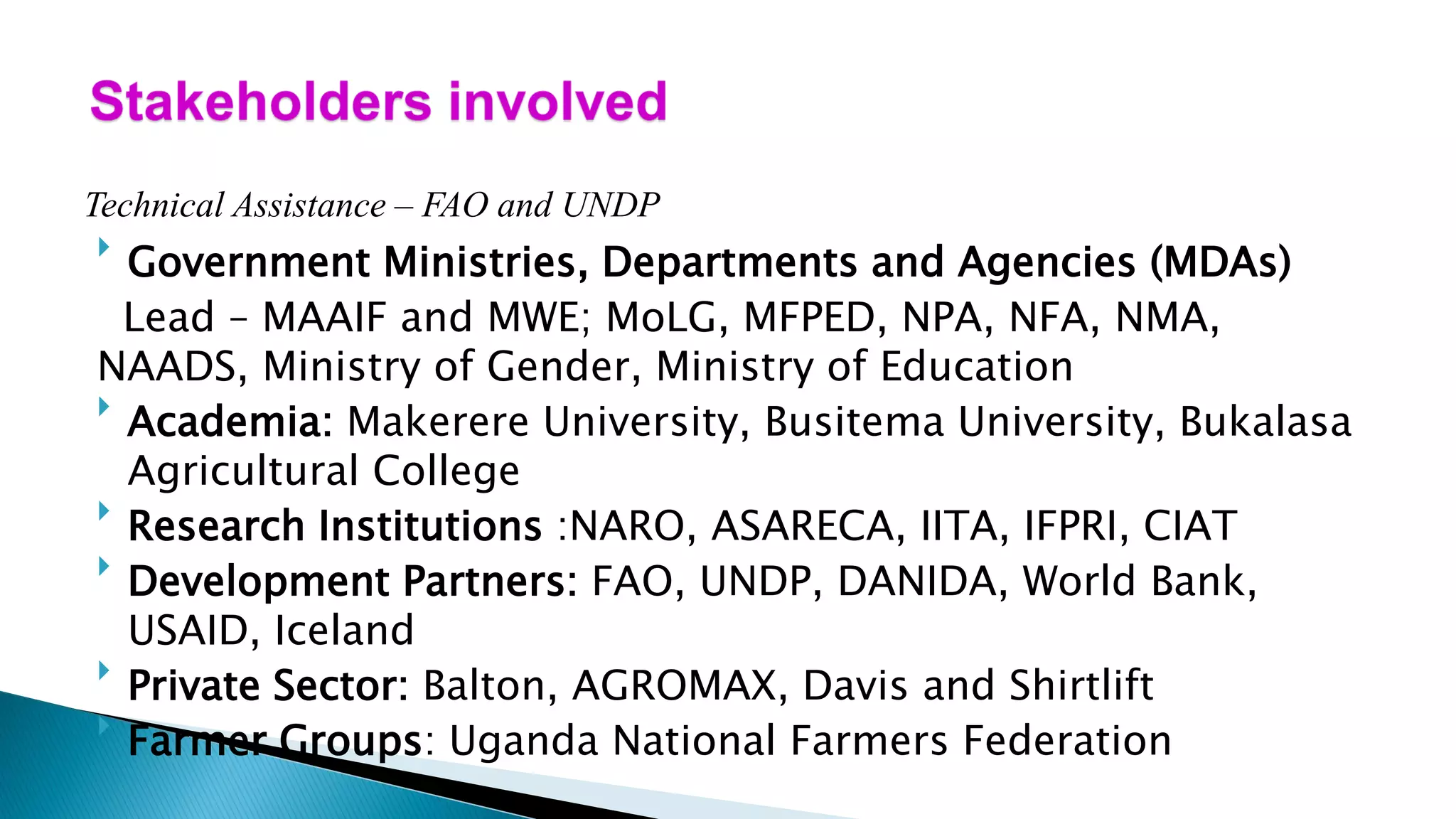
• UNDP FAO provided technical assistance to MAAIF and Partners for developing a
medium and long-term plan to address climate change challenges (NAP-Ag)
• Through a participatory process developed a Road Map for preparing a NAP for the
agriculture – launched in June 2015
• Built capacity for state and no-state actors on planning and mainstreaming adaptation
plans and options
• Developed tools for implementation and monitoring of the plan
Technical Assistance – FAO and UNDP

Government Ministries, Departments and Agencies (MDAs)
Lead – MAAIF and MWE; MoLG, MFPED, NPA, NFA, NMA,
NAADS, Ministry of Gender, Ministry of Education

Academia: Makerere University, Busitema University, Bukalasa
Agricultural College

Research Institutions :NARO, ASARECA, IITA, IFPRI, CIAT

Development Partners: FAO, UNDP, DANIDA, World Bank,
USAID, Iceland

Private Sector: Balton, AGROMAX, Davis and Shirtlift

Farmer Groups: Uganda National Farmers Federation
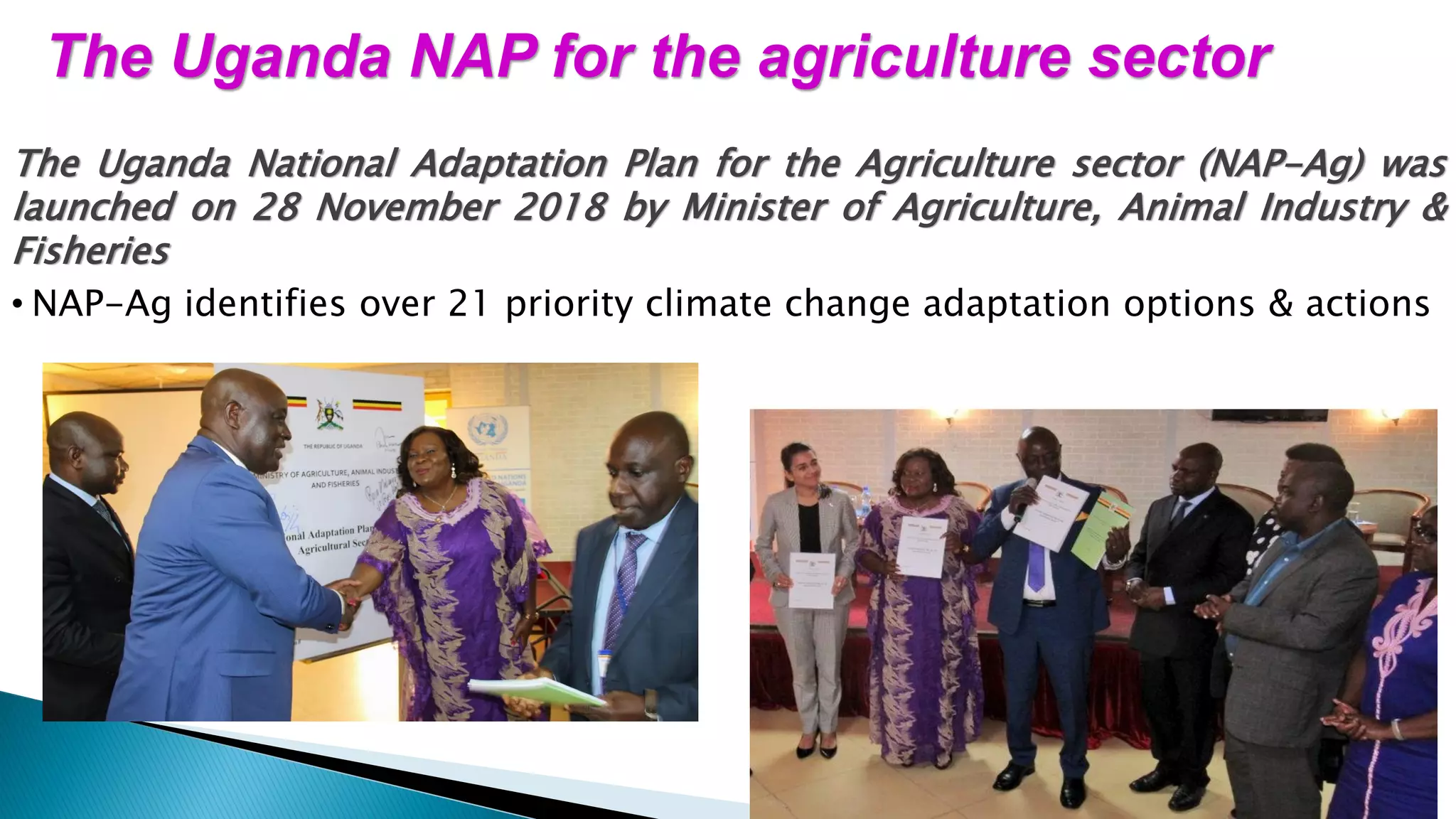
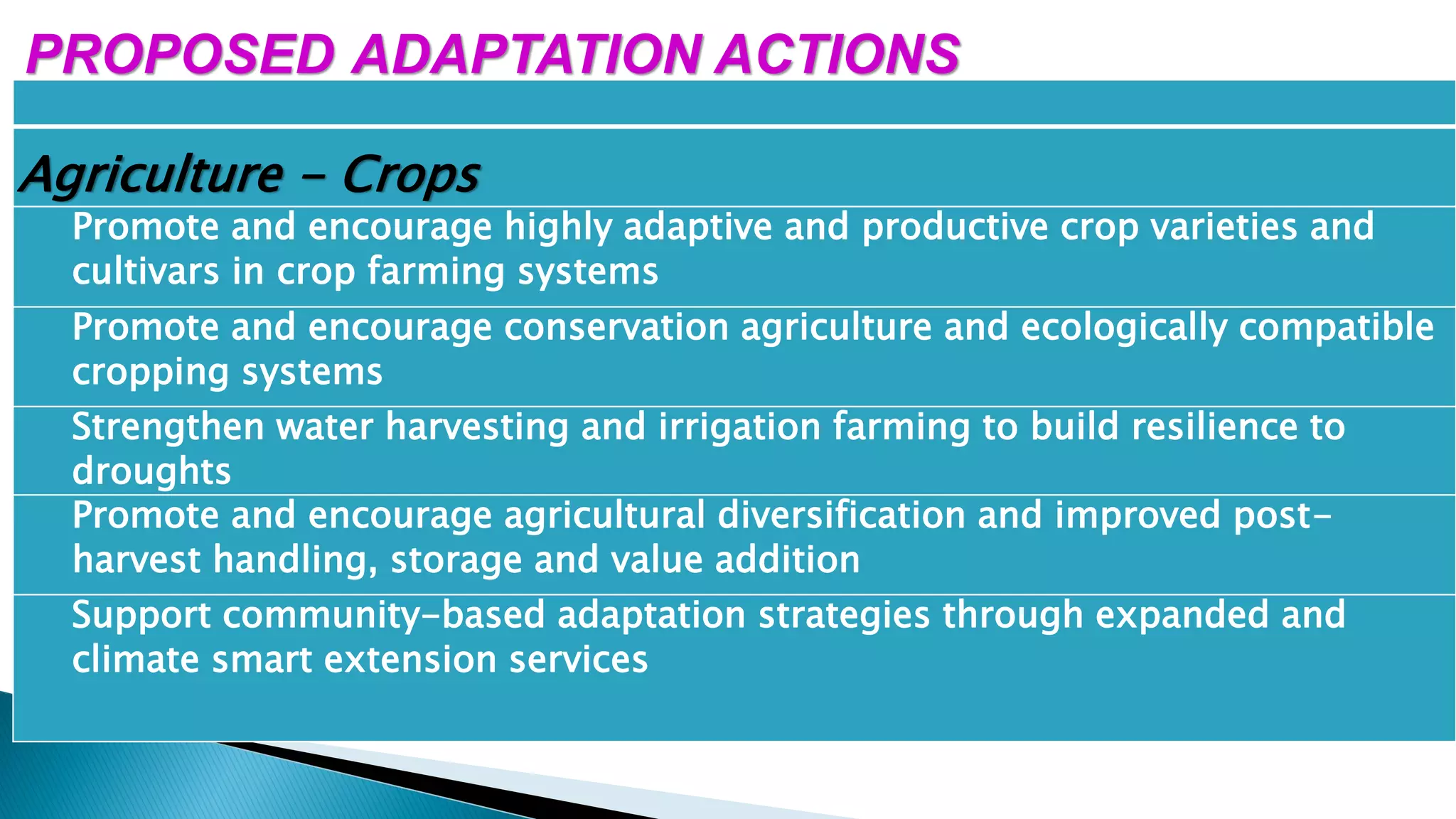
The Uganda National Adaptation Plan for the Agriculture sector (NAP-Ag) was
launched on 28 November 2018 by Minister of Agriculture, Animal Industry &
Fisheries
• NAP-Ag identifies over 21 priority climate change adaptation options & actions
The Uganda NAP for the agriculture sector
Agriculture - Crops
Promote and encourage highly adaptive and productive crop varieties and
cultivars in crop farming systems
Promote and encourage conservation agriculture and ecologically compatible
cropping systems
Strengthen water harvesting and irrigation farming to build resilience to
droughts
Promote and encourage agricultural diversification and improved post-
harvest handling, storage and value addition
Support community-based adaptation strategies through expanded and
climate smart extension services
PROPOSED ADAPTATION ACTIONS
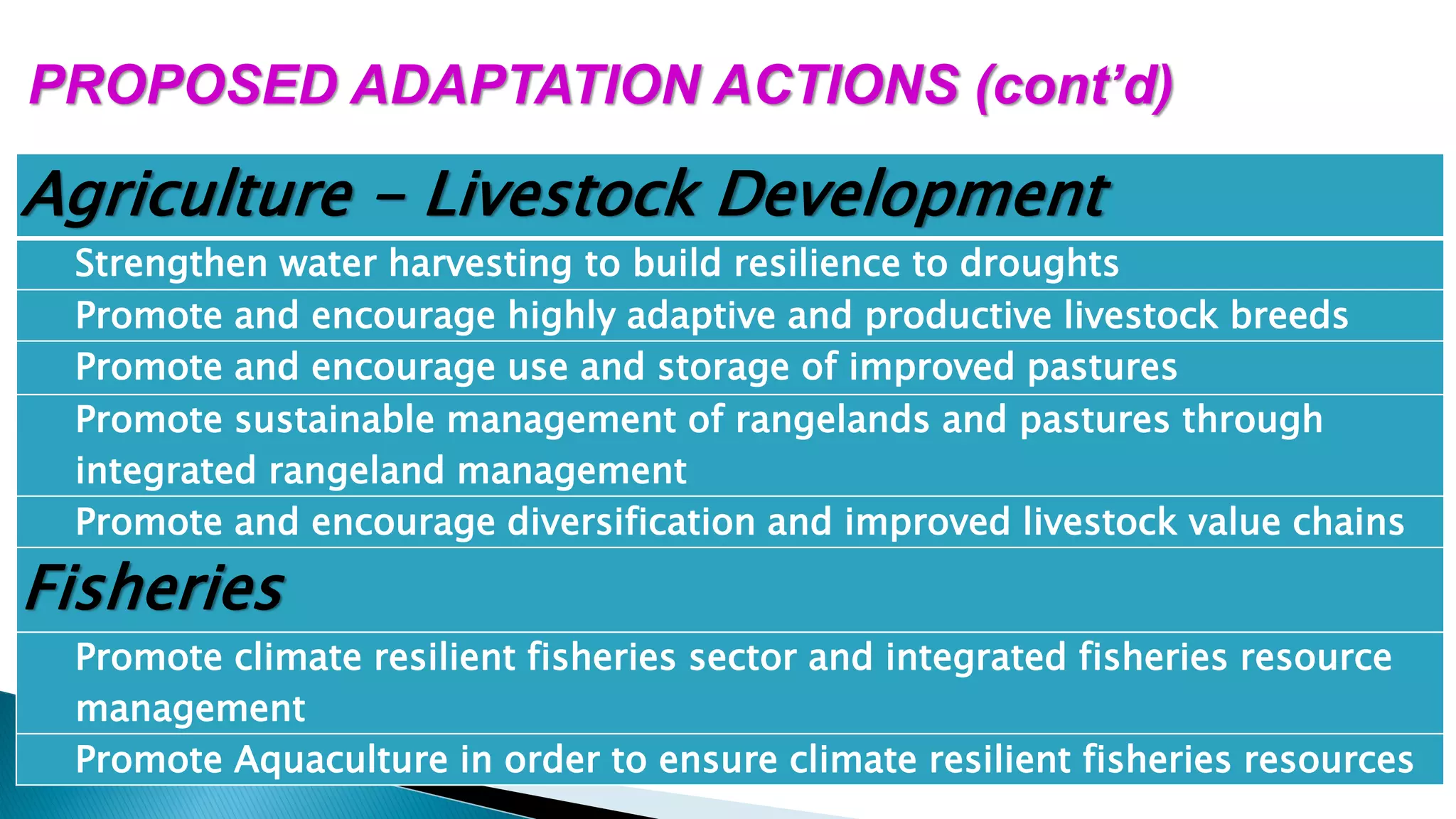
Agriculture - Livestock Development
Strengthen water harvesting to build resilience to droughts
Promote and encourage highly adaptive and productive livestock breeds
Promote and encourage use and storage of improved pastures
Promote sustainable management of rangelands and pastures through
integrated rangeland management
Promote and encourage diversification and improved livestock value chains
Fisheries
Promote climate resilient fisheries sector and integrated fisheries resource
management
Promote Aquaculture in order to ensure climate resilient fisheries resources
PROPOSED ADAPTATION ACTIONS (cont’d)
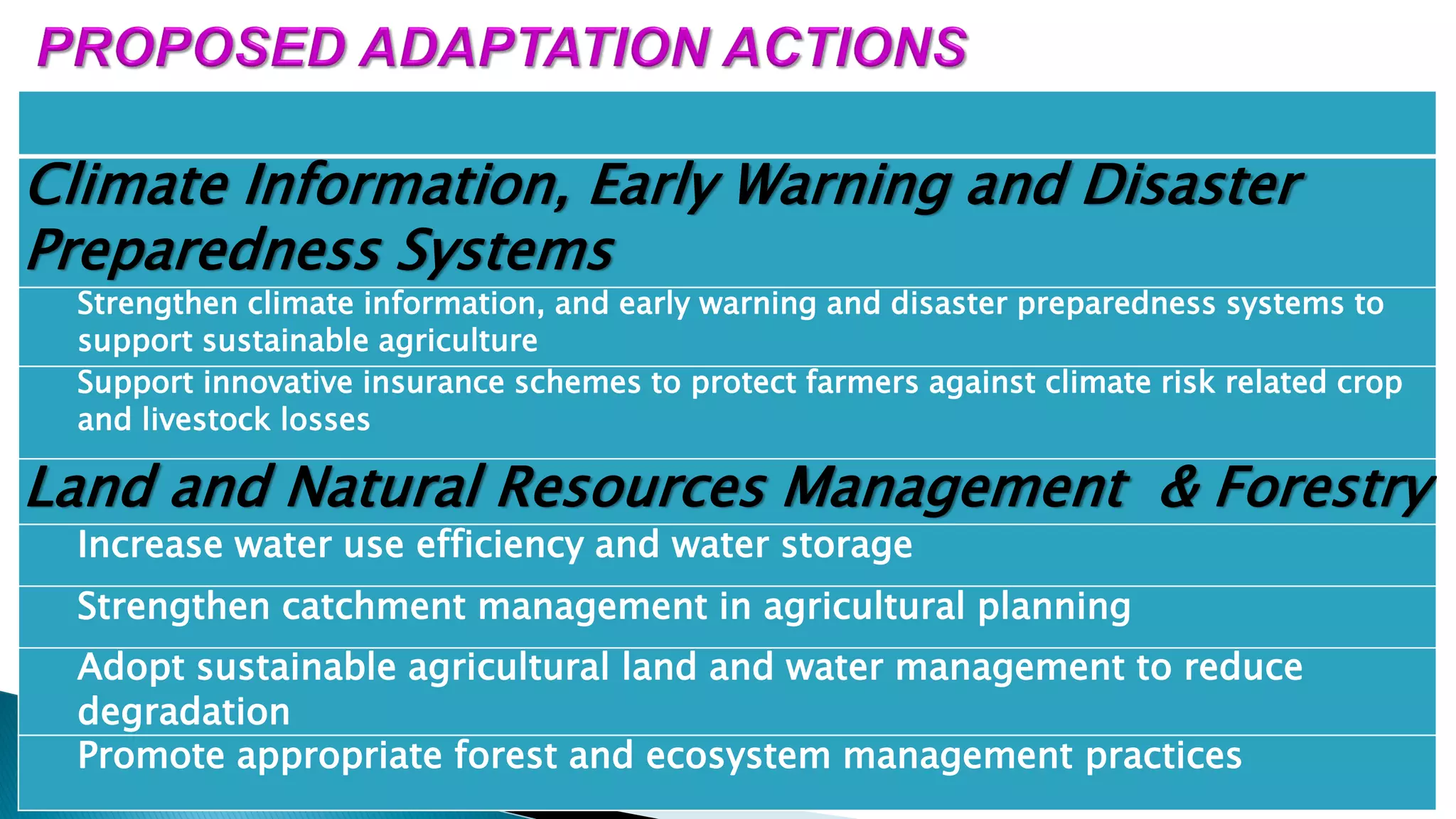
Climate Information, Early Warning and Disaster
Preparedness Systems
Strengthen climate information, and early warning and disaster preparedness systems to
support sustainable agriculture
Support innovative insurance schemes to protect farmers against climate risk related crop
and livestock losses
Land and Natural Resources Management & Forestry
Increase water use efficiency and water storage
Strengthen catchment management in agricultural planning
Adopt sustainable agricultural land and water management to reduce
degradation
Promote appropriate forest and ecosystem management practices
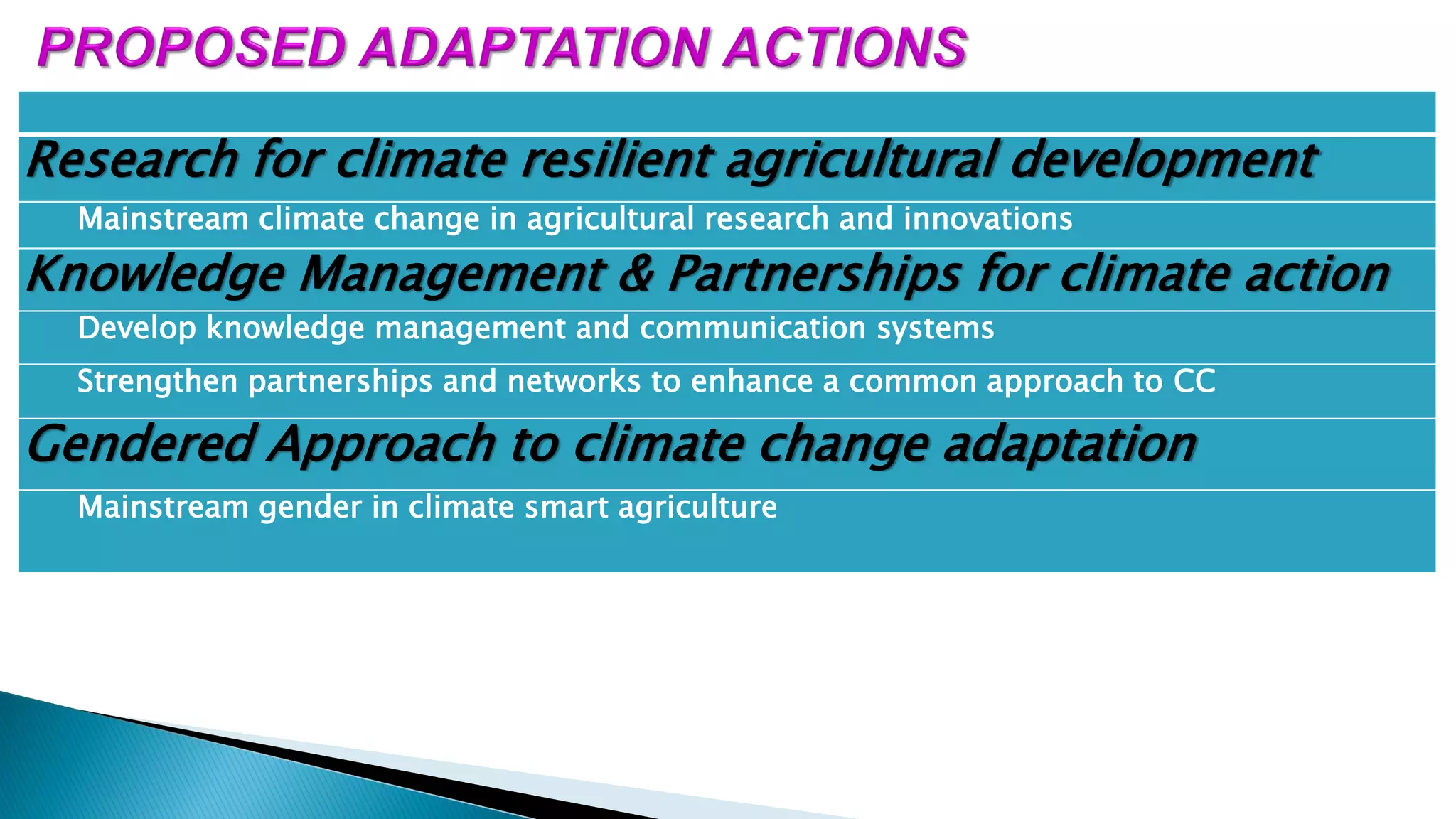
Research for climate resilient agricultural development
Mainstream climate change in agricultural research and innovations
Knowledge Management & Partnerships for climate action
Develop knowledge management and communication systems
Strengthen partnerships and networks to enhance a common approach to CC
Gendered Approach to climate change adaptation
Mainstream gender in climate smart agriculture
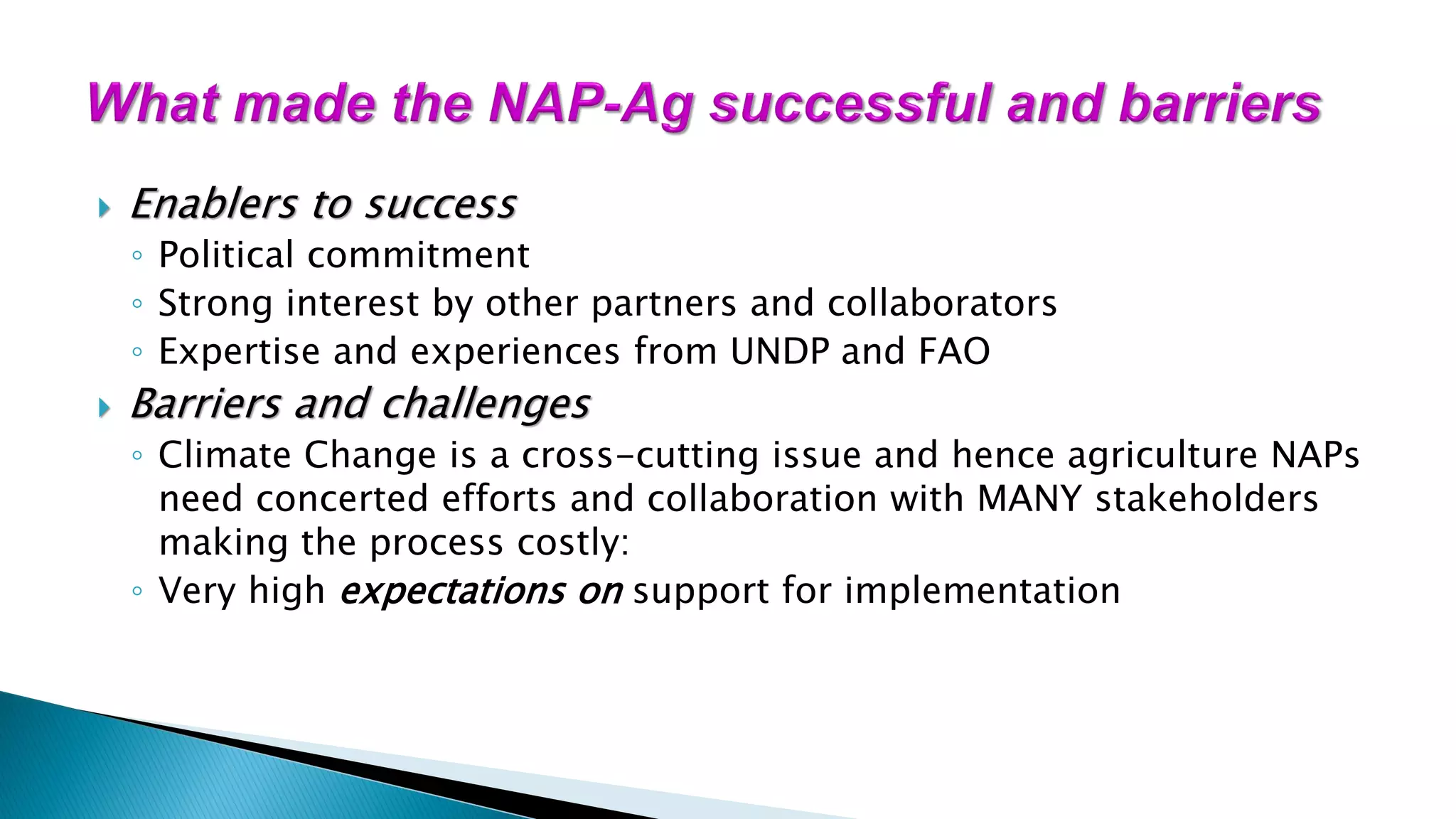
 Enablers to success
◦ Political commitment
◦ Strong interest by other partners and collaborators
◦ Expertise and experiences from UNDP and FAO
 Barriers and challenges
◦ Climate Change is a cross-cutting issue and hence agriculture NAPs
need concerted efforts and collaboration with MANY stakeholders
making the process costly:
◦ Very high expectations on support for implementation
 Disseminate NAP-Ag framework and its tools
◦Develop proposals for mobilising resources
for NAP-Ag implementation
◦Facilitate central and local governments and
non-state actors to mainstream NAP-Ag in
their plans, policies and budgets
◦Implement adaptation options in the NAP-Ag
framework
Thank you for the attention

7.3.3 A system approach to the integration of the agriculture sector in the NAP

  • 1.
    UGANDA EXPERIENCES ONNATIONAL ADAPTATION PLANNING FOR THE AGRICULTURE SECTOR 1ANNUNCIATA HAKUZA Presentation during the NAP Expo in Songdo Incheon, Korea; April 2019
  • 2.
     Climate changeimpacts in Uganda and Vulnerability in the Agriculture sector  Uganda’s adaptation planning landscape  Agriculture sector adaptation priorities  What made the NAP-Ag successful  Next steps and linkages to overall planning process
  • 3.
    Facts and Figuresof effects and Impacts of climate change in Uganda Uganda Vulnerability report of 2013 highlights the following losses attributed to cc impacts: ◦ 800,000 hectares of crop each year ◦ 1998/97 and 2000 floods – 2.7 million USD worth of coffee ◦ Between 2000 and 2013 - 907 million USD ◦ 2008 drought - 47 million USD ◦ Loss of lives Climate change impacts in Uganda and Vulnerability in the Agriculture sector
  • 4.
    4  International andRegional:  Adoption of the UNFCCC  Used UNFCCC LEG Technical Guidelines for NAPs  Adopted NAPA  The Paris Agreement and NDC  Mainstream NAP-Ag in different policies, Plans and Budgets  National :  Uganda National Adaptation Programmes of Action (2007) with pilot projects in 2007  National Climate Change Policy, 2013  Mainstreamed NAP-Ag in NDC Partnership Plan 2017  Built capacities of Policy Makers and implementers  NAP-Ag Programme trained Parliamentarians, Staff from Central and Local Governments and Non- state Actors on Fender responsive policy making, Planning and Budgeting  Mainstreamed NAP-Ag in Medium Tern Plans and Policies (Vision 2040, NDPII, Agricultural Policies and Plans) and annual Plans and Budgets
  • 5.
    NAP for agriculturesector intervention to address CC • UNDP FAO provided technical assistance to MAAIF and Partners for developing a medium and long-term plan to address climate change challenges (NAP-Ag) • Through a participatory process developed a Road Map for preparing a NAP for the agriculture – launched in June 2015 • Built capacity for state and no-state actors on planning and mainstreaming adaptation plans and options • Developed tools for implementation and monitoring of the plan
  • 6.
    Technical Assistance –FAO and UNDP  Government Ministries, Departments and Agencies (MDAs) Lead – MAAIF and MWE; MoLG, MFPED, NPA, NFA, NMA, NAADS, Ministry of Gender, Ministry of Education  Academia: Makerere University, Busitema University, Bukalasa Agricultural College  Research Institutions :NARO, ASARECA, IITA, IFPRI, CIAT  Development Partners: FAO, UNDP, DANIDA, World Bank, USAID, Iceland  Private Sector: Balton, AGROMAX, Davis and Shirtlift  Farmer Groups: Uganda National Farmers Federation
  • 7.
    The Uganda NationalAdaptation Plan for the Agriculture sector (NAP-Ag) was launched on 28 November 2018 by Minister of Agriculture, Animal Industry & Fisheries • NAP-Ag identifies over 21 priority climate change adaptation options & actions The Uganda NAP for the agriculture sector
  • 8.
    Agriculture - Crops Promoteand encourage highly adaptive and productive crop varieties and cultivars in crop farming systems Promote and encourage conservation agriculture and ecologically compatible cropping systems Strengthen water harvesting and irrigation farming to build resilience to droughts Promote and encourage agricultural diversification and improved post- harvest handling, storage and value addition Support community-based adaptation strategies through expanded and climate smart extension services PROPOSED ADAPTATION ACTIONS
  • 9.
    Agriculture - LivestockDevelopment Strengthen water harvesting to build resilience to droughts Promote and encourage highly adaptive and productive livestock breeds Promote and encourage use and storage of improved pastures Promote sustainable management of rangelands and pastures through integrated rangeland management Promote and encourage diversification and improved livestock value chains Fisheries Promote climate resilient fisheries sector and integrated fisheries resource management Promote Aquaculture in order to ensure climate resilient fisheries resources PROPOSED ADAPTATION ACTIONS (cont’d)
  • 10.
    Climate Information, EarlyWarning and Disaster Preparedness Systems Strengthen climate information, and early warning and disaster preparedness systems to support sustainable agriculture Support innovative insurance schemes to protect farmers against climate risk related crop and livestock losses Land and Natural Resources Management & Forestry Increase water use efficiency and water storage Strengthen catchment management in agricultural planning Adopt sustainable agricultural land and water management to reduce degradation Promote appropriate forest and ecosystem management practices
  • 11.
    Research for climateresilient agricultural development Mainstream climate change in agricultural research and innovations Knowledge Management & Partnerships for climate action Develop knowledge management and communication systems Strengthen partnerships and networks to enhance a common approach to CC Gendered Approach to climate change adaptation Mainstream gender in climate smart agriculture
  • 12.
     Enablers tosuccess ◦ Political commitment ◦ Strong interest by other partners and collaborators ◦ Expertise and experiences from UNDP and FAO  Barriers and challenges ◦ Climate Change is a cross-cutting issue and hence agriculture NAPs need concerted efforts and collaboration with MANY stakeholders making the process costly: ◦ Very high expectations on support for implementation
  • 13.
     Disseminate NAP-Agframework and its tools ◦Develop proposals for mobilising resources for NAP-Ag implementation ◦Facilitate central and local governments and non-state actors to mainstream NAP-Ag in their plans, policies and budgets ◦Implement adaptation options in the NAP-Ag framework
  • 14.
    Thank you forthe attention