Reflexive Verbs & Pronouns Discussing daily routines
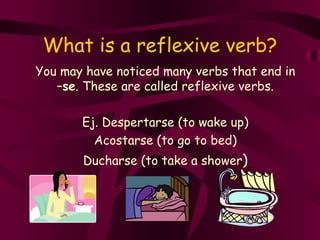
What is a reflexive verb? You may have noticed many verbs that end in – se . These are called reflexive verbs. Ej. Despertarse (to wake up) Acostarse (to go to bed) Ducharse (to take a shower )
Why are they called “reflexive”? Reflexive verbs indicate that the subject is doing the action to himself! Think of your reflection: What do you see? For example: I take a shower or I shower myself. I am doing the action to myself.
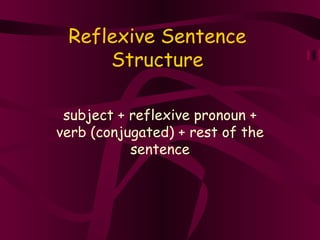
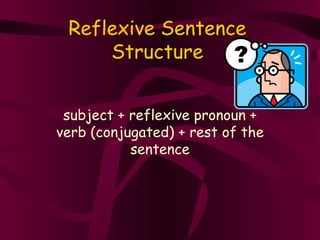
Reflexive Sentence Structure subject + reflexive pronoun + verb (conjugated) + rest of the sentence
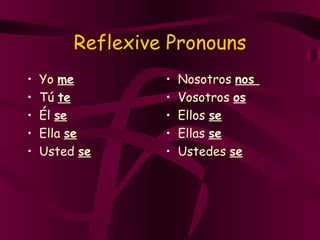
Reflexive Pronouns Yo  me Tú  te Él  se Ella  se Usted  se Nosotros  nos  Vosotros  os Ellos  se Ellas  se Ustedes  se
The Verb The verb is conjugated as it normally would be it present tense. Just drop the – se  and you will be left with the infinitive. When the verb should not be conjugated (after “de” or next to another conjugated verb), attach the –se to the infinitive.
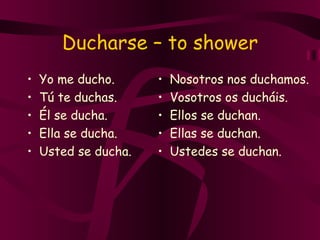
Ducharse – to shower Yo me ducho. Tú te duchas. Él se ducha. Ella se ducha. Usted se ducha. Nosotros nos duchamos. Vosotros os ducháis. Ellos se duchan. Ellas se duchan. Ustedes se duchan.
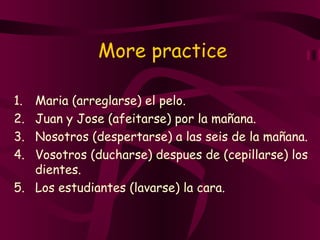
More practice Maria (arreglarse) el pelo. Juan y Jose (afeitarse) por la mañana. Nosotros (despertarse) a las seis de la mañana. Vosotros (ducharse) despues de (cepillarse) los dientes. Los estudiantes (lavarse) la cara.
Las Repuestas Maria  se arregla  el pelo. Juan y Jose  se afeitan  por la mañana. Nosotros  nos depertamos  a las seis de la mañana. Vosotros  os ducháis  despues de  cepillaros  los dientes. Los estudiantes  se lavan  la cara.
Don‘t Forget Remove the –se before conjugating. Conjugate the verb as you would conjugate any present tense verb. The reflexive pronoun goes BEFORE the conjugated verb. Don’t get tripped up by those stem-changing verbs…they still change!

Reflexive Verbs & Pronouns

  • 1.
    Reflexive Verbs &Pronouns Discussing daily routines
  • 2.
    What is areflexive verb? You may have noticed many verbs that end in – se . These are called reflexive verbs. Ej. Despertarse (to wake up) Acostarse (to go to bed) Ducharse (to take a shower )
  • 3.
    Why are theycalled “reflexive”? Reflexive verbs indicate that the subject is doing the action to himself! Think of your reflection: What do you see? For example: I take a shower or I shower myself. I am doing the action to myself.
  • 4.
    Reflexive Sentence Structuresubject + reflexive pronoun + verb (conjugated) + rest of the sentence
  • 5.
    Reflexive Sentence Structuresubject + reflexive pronoun + verb (conjugated) + rest of the sentence
  • 6.
    Reflexive Pronouns Yo me Tú te Él se Ella se Usted se Nosotros nos Vosotros os Ellos se Ellas se Ustedes se
  • 7.
    The Verb Theverb is conjugated as it normally would be it present tense. Just drop the – se and you will be left with the infinitive. When the verb should not be conjugated (after “de” or next to another conjugated verb), attach the –se to the infinitive.
  • 8.
    Ducharse – toshower Yo me ducho. Tú te duchas. Él se ducha. Ella se ducha. Usted se ducha. Nosotros nos duchamos. Vosotros os ducháis. Ellos se duchan. Ellas se duchan. Ustedes se duchan.
  • 9.
    More practice Maria(arreglarse) el pelo. Juan y Jose (afeitarse) por la mañana. Nosotros (despertarse) a las seis de la mañana. Vosotros (ducharse) despues de (cepillarse) los dientes. Los estudiantes (lavarse) la cara.
  • 10.
    Las Repuestas Maria se arregla el pelo. Juan y Jose se afeitan por la mañana. Nosotros nos depertamos a las seis de la mañana. Vosotros os ducháis despues de cepillaros los dientes. Los estudiantes se lavan la cara.
  • 11.
    Don‘t Forget Removethe –se before conjugating. Conjugate the verb as you would conjugate any present tense verb. The reflexive pronoun goes BEFORE the conjugated verb. Don’t get tripped up by those stem-changing verbs…they still change!