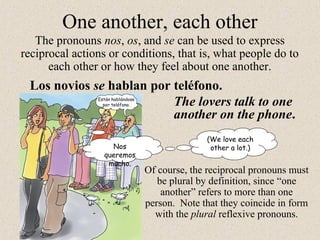
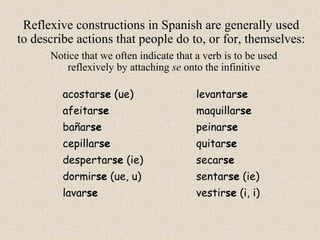
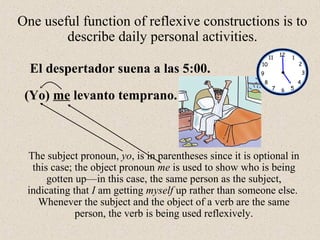
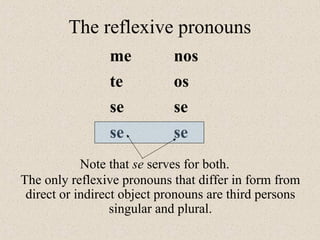
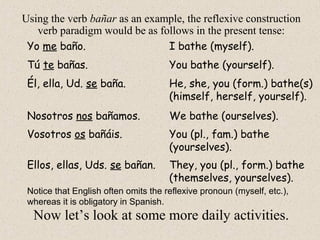
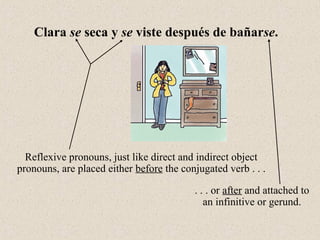
Reflexive constructions in Spanish are used to describe actions done to oneself, such as daily activities like bathing, getting dressed, and feeling emotions. The reflexive pronouns are attached to infinitives or conjugated verbs. For example, "Clara se seca y se viste después de bañarse" means "Clara dries herself off and gets dressed after bathing herself." Reflexive pronouns can also express reciprocal actions between people, like in "Los novios se hablan por teléfono" which means "The lovers talk to each other on the phone."

![(Now, how do we feel?)
Reflexive constructions are often used to describe
feelings, moods, and conditions:
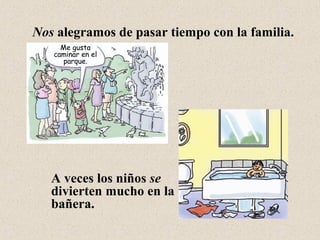
alegrarse (de)
Some examples are listed below
divertirse [ie, i] (con)
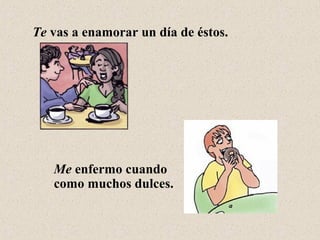
enamorarse (de)
enfermarse (de, con)
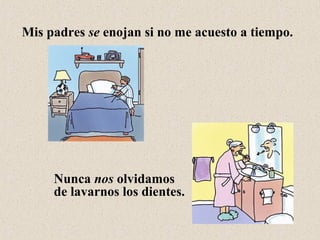
enojarse (de, con)
olvidarse (de)
to become happy (about)
to have fun (with)
to fall in love (with)
to become sick (from, with)
to get angry (about, at)
to forget (to or about)
Y ahora, ¿cómo nos sentimos?](https://image.slidesharecdn.com/reflexiveconstructionspronounsandverbs-130731195047-phpapp02/85/Reflexive-constructions-pronouns-and-verbs-10-320.jpg)