Reflective Writing
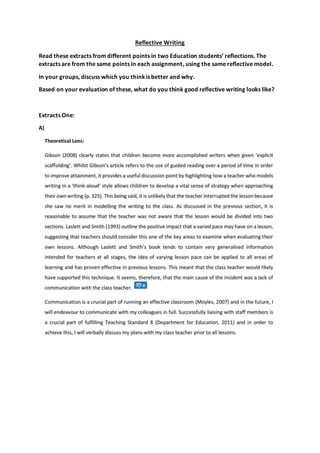
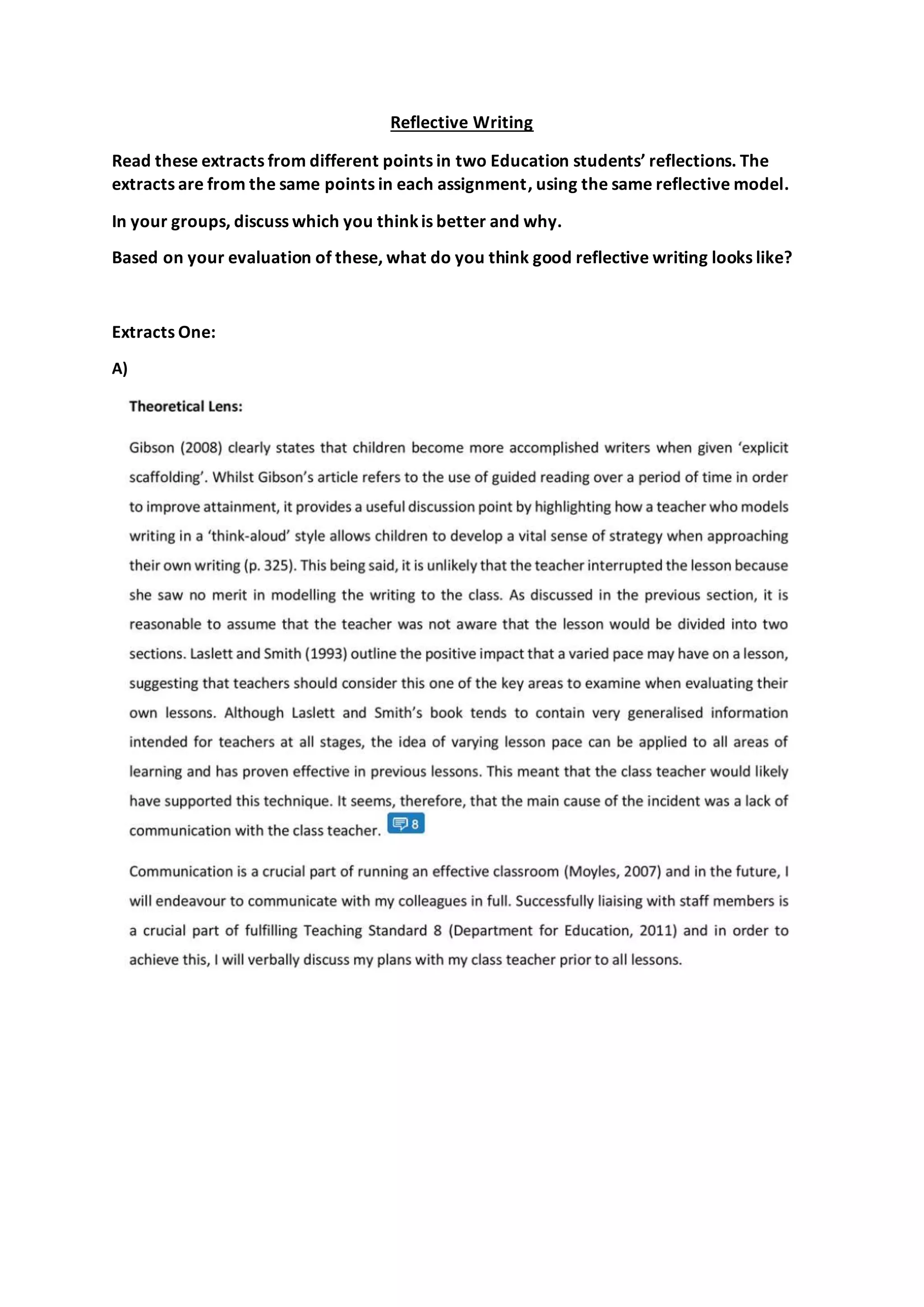
Read these extracts from different points in two Education students’ reflections. The
extracts are from the same points in each assignment, using the same reflective model.
In your groups, discuss which you thinkis better and why.
Based on your evaluation of these, what do you think good reflective writing looks like?
Extracts One:
A)
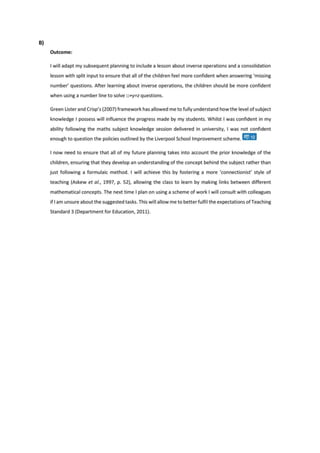
B)
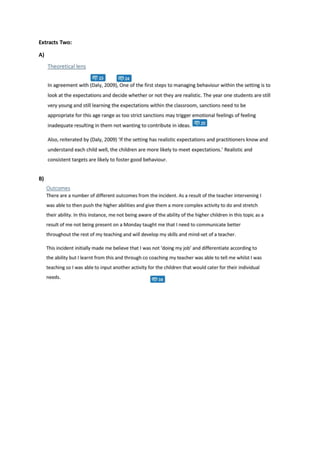
Extracts Two:
A)
B)
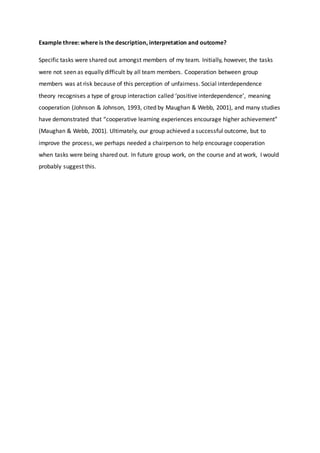
Example three: where is the description, interpretation and outcome?
Specific tasks were shared out amongst members of my team. Initially, however, the tasks
were not seen as equally difficult by all team members. Cooperation between group
members was at risk because of this perception of unfairness. Social interdependence
theory recognises a type of group interaction called ‘positive interdependence’, meaning
cooperation (Johnson & Johnson, 1993, cited by Maughan & Webb, 2001), and many studies
have demonstrated that “cooperative learning experiences encourage higher achievement”
(Maughan & Webb, 2001). Ultimately, our group achieved a successful outcome, but to
improve the process, we perhaps needed a chairperson to help encourage cooperation
when tasks were being shared out. In future group work, on the course and at work, I would
probably suggest this.

Reflective writing worksheet

  • 1.
    Reflective Writing Read theseextracts from different points in two Education students’ reflections. The extracts are from the same points in each assignment, using the same reflective model. In your groups, discuss which you thinkis better and why. Based on your evaluation of these, what do you think good reflective writing looks like? Extracts One: A)
  • 2.
  • 3.
  • 4.
    Example three: whereis the description, interpretation and outcome? Specific tasks were shared out amongst members of my team. Initially, however, the tasks were not seen as equally difficult by all team members. Cooperation between group members was at risk because of this perception of unfairness. Social interdependence theory recognises a type of group interaction called ‘positive interdependence’, meaning cooperation (Johnson & Johnson, 1993, cited by Maughan & Webb, 2001), and many studies have demonstrated that “cooperative learning experiences encourage higher achievement” (Maughan & Webb, 2001). Ultimately, our group achieved a successful outcome, but to improve the process, we perhaps needed a chairperson to help encourage cooperation when tasks were being shared out. In future group work, on the course and at work, I would probably suggest this.