Advisory Panel on Clinical
Trials Spring 2014 Meeting
Alexandria, VA
May 1, 2014 – 8:30 a.m. to 5:30 p.m. EST
1
Welcome and Plans for the
Day
Joe V. Selby, MD, MPH
Executive Director, PCORI
2
Housekeeping
Today’s webinar is open to the public and is
being recorded.
Members of the public are invited to listen to
this teleconference and view the webinar.
Anyone may submit a comment through the
webinar chat function or by emailing
advisorypanels@pcori.org.
Visit www.pcori.org/events for more
information.
3
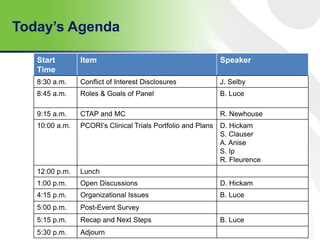
Today’s Agenda
4
Start
Time
Item Speaker
8:30 a.m. Conflict of Interest Disclosures J. Selby
8:45 a.m. Roles & Goals of Panel B. Luce
9:15 a.m. CTAP and MC R. Newhouse
10:00 a.m. PCORI’s Clinical Trials Portfolio and Plans D. Hickam
S. Clauser
A. Anise
S. Ip
R. Fleurence
12:00 p.m. Lunch
1:00 p.m. Open Discussions D. Hickam
4:15 p.m. Organizational Issues B. Luce
5:00 p.m. Post-Event Survey
5:15 p.m. Recap and Next Steps B. Luce
5:30 p.m. Adjourn
Meeting Objectives
Introduce PCORI staff & CTAP panelists
Clarify panel roles & objectives
Introduce PCORI’s clinical trials research portfolio
Agree on panel’s scope of work
Discuss organization issues, including leadership
5
Conflicts of Interest
6
Joe V. Selby, MD, MPH
Executive Director, PCORI
Why is COI Important?
7
PCORI has a legal obligation to publicly disclose conflict of
interest statements for members of the Board, Methodology
Committee, Advisory Panels and executive staff as well as
in an annual report to Congress and the President.
Transparency is important because it gives the public
information about backgrounds and relationships that may
inform actions.
What should you disclose?
8
If you have financial or personal relationships that may
have the potential to bias or have the appearance of
biasing your decisions, you should disclose them.
Disclose, for example:
Employment
Financial income, such as stock, honoraria,
consulting fees, etc.
Memberships/Leadership positions in other health
care organizations
Disclose as it relates to yourself, your spouse, domestic
partner, children, parents, and others indicated.
Conflict of Interest Session
9
Next Steps
Each panel has a few minutes on their agenda for each
panelist to fill out a COI disclosure form.
We will provide you with guidelines and formatting, and
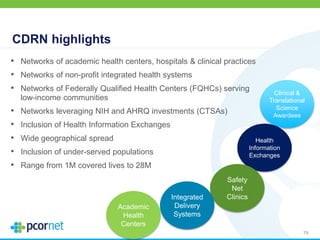
Staff will be available to answer any questions you may
have about filling out the COI disclosure form.
Questions?
10
Roles and Goals of the Advisory
Panel on Clinical Trials
Bryan Luce, PhD, MBA
Chief Science Officer, PCORI
11
Charter – Purpose
12
The CT panel will provide recommendations to:
PCORI
Agencies, instrumentalities, or other entities conducting
research through the PCORI Methodology Committee
This advice will pertain to clinical trials for PCOR,
including their:
Selection
Research design
Implementation
Technical issues
Note: The CT Panel will not serve in an official decision-
making capacity.
Charter of the Advisory Panel on Clinical Trials – Approved
by PCORI Board of Governors – November 18, 2013
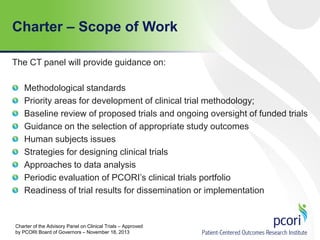
Charter – Scope of Work
The CT panel will provide guidance on:
Methodological standards
Priority areas for development of clinical trial methodology;
Baseline review of proposed trials and ongoing oversight of funded trials
Guidance on the selection of appropriate study outcomes
Human subjects issues
Strategies for designing clinical trials
Approaches to data analysis
Periodic evaluation of PCORI’s clinical trials portfolio
Readiness of trial results for dissemination or implementation
Charter of the Advisory Panel on Clinical Trials – Approved
by PCORI Board of Governors – November 18, 2013
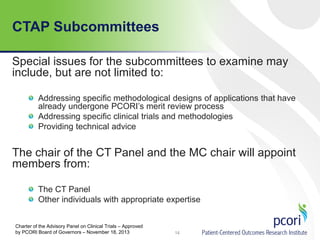
CTAP Subcommittees
Special issues for the subcommittees to examine may
include, but are not limited to:
Addressing specific methodological designs of applications that have
already undergone PCORI’s merit review process
Addressing specific clinical trials and methodologies
Providing technical advice
The chair of the CT Panel and the MC chair will appoint
members from:
The CT Panel
Other individuals with appropriate expertise
14
Charter of the Advisory Panel on Clinical Trials – Approved
by PCORI Board of Governors – November 18, 2013
Advisory Panel on Clinical Trials
and PCORI’s Methodology
Committee
Robin Newhouse, PhD, RD
Methodology Committee (Chair), PCORI
Steve Goodman, MD, MHS, PhD
Methodology Committee (Vice Chair), PCORI
15
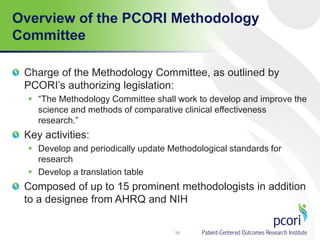
Overview of the PCORI Methodology
Committee
Charge of the Methodology Committee, as outlined by
PCORI’s authorizing legislation:
 “The Methodology Committee shall work to develop and improve the
science and methods of comparative clinical effectiveness
research.”
Key activities:
 Develop and periodically update Methodological standards for
research
 Develop a translation table
Composed of up to 15 prominent methodologists in addition
to a designee from AHRQ and NIH
16
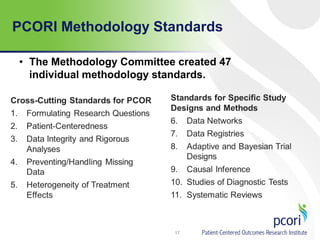
PCORI Methodology Standards
17
• The Methodology Committee created 47
individual methodology standards.
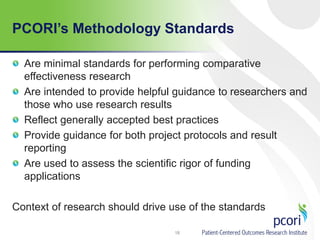
Are minimal standards for performing comparative
effectiveness research
Are intended to provide helpful guidance to researchers and
those who use research results
Reflect generally accepted best practices
Provide guidance for both project protocols and result
reporting
Are used to assess the scientific rigor of funding
applications
Context of research should drive use of the standards
18
PCORI’s Methodology Standards
Other Initiatives
General oversight of PCORI portfolio
Dissemination and implementation of the
methodology standards
Development of new methodology standards
Workshops
19
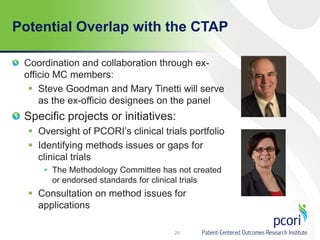
Potential Overlap with the CTAP
Coordination and collaboration through ex-
officio MC members:
 Steve Goodman and Mary Tinetti will serve
as the ex-officio designees on the panel
Specific projects or initiatives:
 Oversight of PCORI’s clinical trials portfolio
 Identifying methods issues or gaps for
clinical trials
• The Methodology Committee has not created
or endorsed standards for clinical trials
 Consultation on method issues for
applications
20
Break
9:45 – 10:00 a.m. EST
21
PCORI’s Clinical Trials Portfolio
and Plans
22
Presentation Outline
Clinical Trials in PCORI’s Portfolio
David Hickam, MD, Program Director, CER, PCORI
Steve Clauser, PhD, MPA, Program Director, Improving Healthcare
Systems, PCORI
Ayodola Anise, Program Officer, Addressing Disparities, PCORI
Pragmatic Clinical Studies and Large Simple Trials Initiative
Stanley Ip, MD, Senior Program Officer, CER, PCORI
PCORnet and the Role of RCTs/PCTs
Rachael Fleurence, Program Director, CER Methods and
Infrastructure, PCORI
23
Clinical Effectiveness Research
Clinical Trials Portfolio
David Hickam, MD, MPH
Program Director, Clinical Effectiveness Research, PCORI
24
Characteristics of the Trials
36 projects as of April 2014
Small to moderate size
Usually single center trials
Usually less than 200 participants per arm
More participants when cluster designs are used
Diverse interventions
Medications
Surgical interventions
Decision aids
Self-care tools
One study will use adaptive randomization.
25
Trials Comparing Clinical Therapies
Drugs for childhood epilepsy
Drugs for neuropathic pain
Surgical techniques for cervical disk disorders
Manipulative and non-manipulative treatment for back
pain
Physical therapy regimens for knee arthritis
Nicotine replacement regimens
Weight-loss programs
Treatments to prevent dementia
Counseling interventions in mental health (3 trials)
26
Trials of Interventions to Promote Self-Care
Management of symptoms in cancer patients
Pain management
Exercise in older adults
Mobilization after back surgery
Cardiovascular risk reduction
Medication adherence
Home oxygen adherence
Home glucose monitoring
27
Trials of Interventions for Caregivers
Caregivers of patients receiving allogeneic stem
cell transplants
Caregivers of elderly patients with dementia
Parents of children with severe injuries or critical
illness (3 trials)
28
Trials to Assess the Impact of Decision
Aids
Decision to obtain screening for lung cancer
Treatment options for appendicitis
Choosing methods for contraception
Choosing treatments for back pain
Treatment options for lupus
Cancer treatment choices (4 trials)
Guidance for use of diagnostic tests (3 trials)
29
Conclusions about the Direction of the
Portfolio of Clinical CER at PCORI
PCORI has developed a portfolio of head-to-head
trials of treatment options.
The portfolio of trials of decision aids will help to
identify best practices for such tools.
PCORI has a unique focus on patient-centered
practices.
Interventions to promote self-care
Interventions to reduce caregiver stress
30
Improving Healthcare Systems
Clinical Trials Portfolio
Steve Clauser, PhD, MPA
Program Director, Improving Healthcare Systems,
PCORI
31
IHS Goal Statement
To support studies of the comparative effectiveness
of alternate features of healthcare systems
designed to optimize the quality, access, outcomes,
and/or efficiency of care for the patients they serve.
To support studies that will provide information of
value to patients, their caregivers and clinicians, as
well as to healthcare leaders, regarding which
features of systems lead to better patient-centered
outcomes.
32
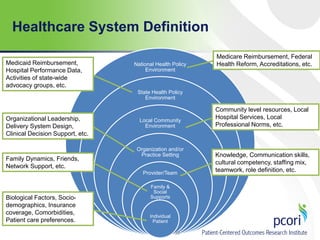
Healthcare System Definition
National Health Policy
Environment
State Health Policy
Environment
Local Community
Environment
Organization and/or
Practice Setting
Provider/Team
Family &
Social
Supports
Individual
Patient
33
Medicare Reimbursement, Federal
Health Reform, Accreditations, etc.Medicaid Reimbursement,
Hospital Performance Data,
Activities of state-wide
advocacy groups, etc.
Community level resources, Local
Hospital Services, Local
Professional Norms, etc.
Organizational Leadership,
Delivery System Design,
Clinical Decision Support, etc.
Knowledge, Communication skills,
cultural competency, staffing mix,
teamwork, role definition, etc.
Family Dynamics, Friends,
Network Support, etc.
Biological Factors, Socio-
demographics, Insurance
coverage, Comorbidities,
Patient care preferences.
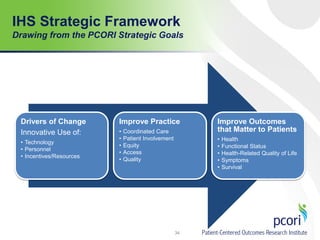
IHS Strategic Framework
Drawing from the PCORI Strategic Goals
Drivers of Change
Innovative Use of:
• Technology
• Personnel
• Incentives/Resources
Improve Practice
• Coordinated Care
• Patient Involvement
• Equity
• Access
• Quality
Improve Outcomes
that Matter to Patients
• Health
• Functional Status
• Health-Related Quality of Life
• Symptoms
• Survival
34
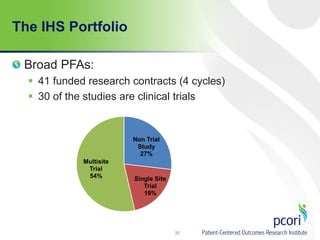
The IHS Portfolio
Broad PFAs:
 41 funded research contracts (4 cycles)
 30 of the studies are clinical trials
35
Non Trial
Study
27%
Single Site
Trial
19%
Multisite
Trial
54%
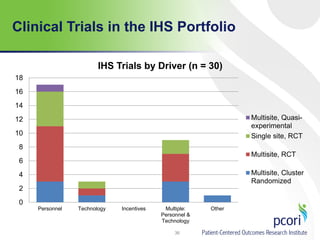
Clinical Trials in the IHS Portfolio
36
0
2
4
6
8
10
12
14
16
18
Personnel Technology Incentives Multiple:
Personnel &
Technology
Other
IHS Trials by Driver (n = 30)
Multisite, Quasi-
experimental
Single site, RCT
Multisite, RCT
Multisite, Cluster
Randomized
Example of Multi-level, Multi-site IHS Trial
37
Title: Improving Palliative and End-of-Life Care in Nursing Homes
PI: Helena Temkin-Greener, PhD; University of Rochester
 Cluster RCT of 30 Nursing Homes (~1,200 residents)
 Clustering residents within nursing homes. Half of the nursing
homes are controls.
 Training nursing home staff to provide palliative care to actively
dying residents with an adapted National Quality Forum
protocol.
 Assessing the effectiveness of intervention on resident end of
life outcomes and staff competencies and satisfaction.
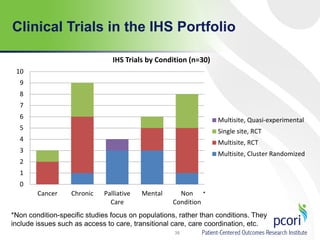
Clinical Trials in the IHS Portfolio
38
*
*Non condition-specific studies focus on populations, rather than conditions. They
include issues such as access to care, transitional care, care coordination, etc.
0
1
2
3
4
5
6
7
8
9
10
Cancer Chronic Palliative
Care
Mental Non
Condition
IHS Trials by Condition (n=30)
Multisite, Quasi-experimental
Single site, RCT
Multisite, RCT
Multisite, Cluster Randomized
Example of Population-based IHS Trial
39
Title: “PATient Navigator to rEduce Readmissions (PArTNER)”
PI: Jerry A. Krishnan, MD, PhD; University of Illinois at Chicago
 RCT (~1,100 patients / 2 arms / single site)
 Focus on patients discharged from hospital within first 30 days
 Community Health Worker-based Navigator program tailored to
the needs of patients at a minority-serving institution.
 Studying the effects of the CHW-Navigator program on patients’
experience, self-management, and functional status – and on
hospital readmission rates.
Cluster-Randomized Trial of a Multifactorial
Fall Injury Prevention Program
Partnership with the National Institute on Aging
PCORI committed up to $30 million to fund a clinical
trial of a multifactorial fall injury prevention strategy in
older persons
National cluster-randomized study will include a
diverse network of practice sites to reflect the diversity
of the elderly at risk of serious falls, insurance
coverage, and delivery systems across the U.S.
40
IHS Topics in the First “Pragmatic Clinical
Studies” Funding Announcement
Topics identified by PCORI’s multi-stakeholder IHS advisory panel
include:
Comparing the effectiveness of innovative strategies for enhancing
patients’ adherence to medication regimens
Comparing the effects of specific features of health insurance on
access to care, use of care, and other outcomes that are especially
important to patients.
Measuring the effectiveness of integrating mental and behavioral
health services with primary care in the general population.
The Institute of Medicine (IOM) Priorities for CER, the Agency for Health
Care Research and Quality (AHRQ) Future Research Needs Projects
also contain health systems relevant topics
41
Strengths and Challenges of Clinical Trials
Funded under the IHS Portfolio
Strengths:
 Engagement of patients, clinicians and organizational leadership
 Multi-level assessment of patients, clinicians and organizational
influences on patient centered outcomes
 Ability to assess scalability at organizational level
Challenges:
 Small in scope and sample size due to budget limitations
 Future studies likely to involve larger, more complex trials
• Many may involve multi-level and multi-component interventions
 Attribution of health system changes to patient
outcomes
42
Addressing Disparities Program
Clinical Trials Portfolio
43
Ayodola Anise, MHS
Program Officer, Addressing Disparities, PCORI
44
Addressing Disparities Program Background
 Program Mission and Goals
 Program Progress to Date
Addressing Disparities Program Clinical Trials
Portfolio
Methodological Challenges and Solutions
Next Steps for Addressing Disparities Program
Agenda
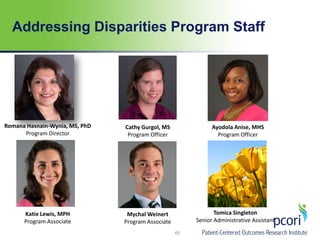
Addressing Disparities Program Staff
45
Cathy Gurgol, MS
Program Officer
Romana Hasnain-Wynia, MS, PhD
Program Director
Katie Lewis, MPH
Program Associate
Ayodola Anise, MHS
Program Officer
Mychal Weinert
Program Associate
Tomica Singleton
Senior Administrative Assistant
Addressing Disparities Mission Statement
46
Program’s Mission Statement
To reduce disparities in healthcare outcomes and advance
equity in health and healthcare
Program’s Guiding Principle
To support comparative effectiveness research that will identify
best options for eliminating disparities.
PCORI’s
Vision, Mission, Strategic Plan
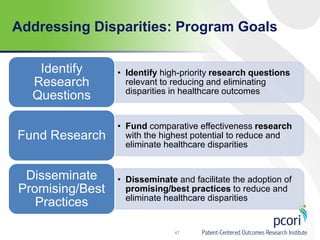
• Identify high-priority research questions
relevant to reducing and eliminating
disparities in healthcare outcomes
Identify
Research
Questions
• Fund comparative effectiveness research
with the highest potential to reduce and
eliminate healthcare disparities
Fund Research
• Disseminate and facilitate the adoption of
promising/best practices to reduce and
eliminate healthcare disparities
Disseminate
Promising/Best
Practices
Addressing Disparities: Program Goals
47
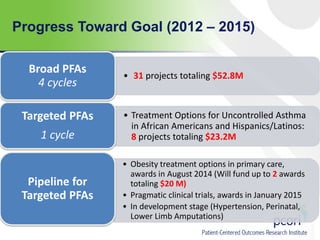
Progress Toward Goal (2012 – 2015)
• 31 projects totaling $52.8M
Broad PFAs
4 cycles
• Treatment Options for Uncontrolled Asthma
in African Americans and Hispanics/Latinos:
8 projects totaling $23.2M
Targeted PFAs
1 cycle
• Obesity treatment options in primary care,
awards in August 2014 (Will fund up to 2 awards
totaling $20 M)
• Pragmatic clinical trials, awards in January 2015
• In development stage (Hypertension, Perinatal,
Lower Limb Amputations)
Pipeline for
Targeted PFAs
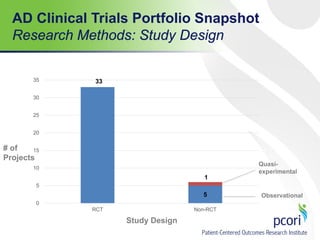
AD Clinical Trials Portfolio Snapshot
Research Methods: Study Design
33
5
1
0
5
10
15
20
25
30
35
RCT Non-RCT
Study Design
# of
Projects
Quasi-
experimental
Observational
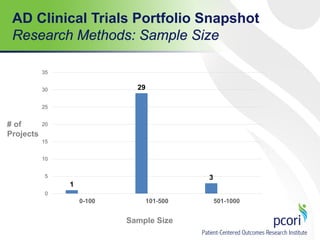
1
29
3
0
5
10
15
20
25
30
35
0-100 101-500 501-1000
AD Clinical Trials Portfolio Snapshot
Research Methods: Sample Size
Sample Size
# of
Projects
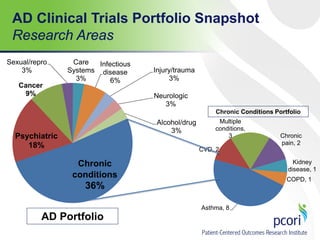
AD Clinical Trials Portfolio Snapshot
Research Areas
Chronic
conditions
36%
Psychiatric
18%
Cancer
9%
Sexual/repro
3%
Care
Systems
3%
Infectious
disease
6%
Injury/trauma
3%
Neurologic
3%
Alcohol/drug
3%
Asthma, 8
CVD, 2
Multiple
conditions,
3 Chronic
pain, 2
Kidney
disease, 1
COPD, 1
AD Portfolio
Chronic Conditions Portfolio
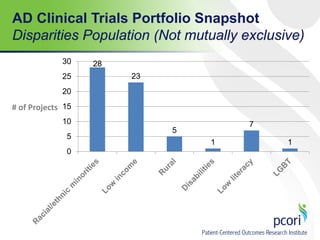
AD Clinical Trials Portfolio Snapshot
Disparities Population (Not mutually exclusive)
28
23
5
1
7
1
0
5
10
15
20
25
30
# of Projects
Methodological Challenges and Solutions
Data and safety monitoring plans (DSMPs) and
data and safety and monitoring boards
(DSMBs)
Efficacy versus effectiveness studies
Intersection of community health and
health/clinical care
Identifying comparators
Monitoring protocol changes
Recruitment
Small sample sizes
53
Methodological Challenges and Solutions:
DSMPs and DSMBs
54
Challenge
 Program staff wanted to provide DSMP and DSMB guidance
to awardees funded through Asthma PFA
 Experts suggested that minimal and high risk projects require
monitoring
Solution
 All awardees funded through the Asthma PFA are required to
develop DSMPs and convene DSMBs regardless of risk
assessment
 Awardees will be required to follow the NHLBI Policy for Data
and Safety Monitoring of Extramural Clinical Studies with
some differences (e.g., DSMBs will be convened by awardee;
where possible, a trained patient or stakeholder should be on
the DSMB)
Methodological Challenges and Solutions:
Efficacy versus Effectiveness Studies
Challenge:
 In order to conduct effectiveness studies, there needs to be
enough evidence supporting the efficacy of an intervention or
treatment
 To conduct pragmatic trials, there needs to be a certain
amount of evidence showing the effectiveness of an
intervention or treatment
 In the disparities field, there is not much research available on
the efficacy and effectiveness of interventions or treatments
Solution:
 Identify key research topics where we can connect some level
of evidence of efficacy and effectiveness (e.g., Obesity PFA)
55
Methodological Challenges and Solutions:
Intersection of Community Health with
Health/Clinical Care
Challenge:
 Within disparities research, the most successful
interventions integrate health/clinical care with factors
that lie outside of health care systems but that have a
direct effect on health outcomes
 Lack of understanding of what community health factors
most influence health/clinical care within CER
Solution:
 Through portfolio, identify projects at this intersection
and delineate the community health factors that influence
health/clinical care as it relates to CER
56
Next Steps
Continue funding high priority research topics that
can reduce/eliminate disparities in healthcare
outcomes
Inform PCORI’s DSMP and DSMB policy
Identify promising practices from projects that
successfully link community health and
health/clinical care interventions to share with
awardees, researchers, and end users (e.g.,
payers, purchasers, professional societies)
57
Pragmatic Clinical Studies
and Large Simple Trials
Initiative
Stanley Ip, MD
Senior Program Officer, CER, PCORI
Objective
Address critical clinical and health-related
comparative effectiveness questions faced by
patients and other decision makers
 Compare interventions and outcomes that matter to
patients
 Sample size is sufficiently large to allow precise
estimates of differences in treatment effects and permit
valid and rigorous analysis of heterogeneity of
treatment effects
Available Funds
Up to $90M per announcement
Two announcements/year
Direct costs of up to $10M per project
Essential Characteristics of Funded
Head-to-Head Studies
Broadly representative patient populations
Strong endorsement and participation by relevant patient, professional,
and/or payer or purchaser organizations
Address:
 Prevention, diagnosis, treatment, management of disease or symptom
 Improve performance of HC systems
 Eliminate health-related disparities
Take place within typical clinical care or community settings
Outcomes meaningful to patients
Sufficient size to evaluate effectiveness in subgroups
Comparators of Interest
Specific drugs, devices, and procedures
Medical and assistive devices and technologies
Techniques for behavioral modification
Complementary and alternative medicine
Delivery-system interventions
Usual care or no specific intervention, if these are
realistic choices for patients (e.g., choosing not to
have a procedure for cancer screening)
Sources for Topics of Interest
IOM 100 priority topics for CER
AHRQ Future Research Needs Projects
Investigator-initiated topics
PCORI priority topics (updated1/2014)
Note: Requirement to follow PCORI methodology standards including
RQ1 (gap analysis and systematic reviews to support application)
PCORI Priority Topics Announced in
December 2013
Bipolar disorder
Ductal carcinoma in situ (DCIS)
Cardiovascular disease (CVD)
Back pain
Integration of mental and behavioral health
services
Adherence to medication regimens
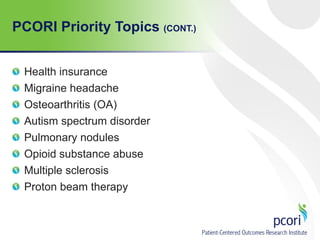
PCORI Priority Topics (CONT.)
Health insurance
Migraine headache
Osteoarthritis (OA)
Autism spectrum disorder
Pulmonary nodules
Opioid substance abuse
Multiple sclerosis
Proton beam therapy
Introducing PCORnet:
The National Patient-Centered
Clinical Research Network
Rachael Fleurence, PhD
Program Director, CER Methods and Infrastructure, PCORI
This slide presentation explains:
Why PCORnet was created
What PCORnet will do for research
How it works
Who is involved
67
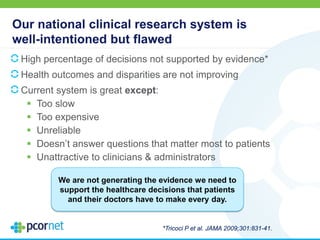
Our national clinical research system is
well-intentioned but flawed
High percentage of decisions not supported by evidence*
Health outcomes and disparities are not improving
Current system is great except:
 Too slow
 Too expensive
 Unreliable
 Doesn’t answer questions that matter most to patients
 Unattractive to clinicians & administrators
We are not generating the evidence we need to
support the healthcare decisions that patients
and their doctors have to make every day.
*Tricoci P et al. JAMA 2009;301:831-41.
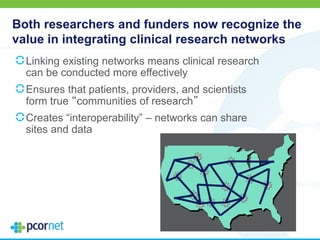
Both researchers and funders now recognize the
value in integrating clinical research networks
Linking existing networks means clinical research
can be conducted more effectively
Ensures that patients, providers, and scientists
form true “communities of research”
Creates “interoperability” – networks can share
sites and data
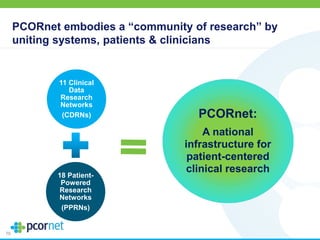
PCORnet embodies a “community of research” by
uniting systems, patients & clinicians
70
11 Clinical
Data
Research
Networks
(CDRNs)
18 Patient-
Powered
Research
Networks
(PPRNs)
PCORnet:
A national
infrastructure for
patient-centered
clinical research
What will PCORnet do for
research?
71
PCORnet’s goal
72
PCORnet seeks to improve the nation’s
capacity to conduct clinical research by
creating a large, highly representative,
national patient-centered network that
supports more efficient clinical trials
and observational studies.
PCORnet’s vision
73
PCORnet will support widespread
capability for the US healthcare
system to learn from research,
meaning that large-scale research
can be conducted with greater speed
and accuracy within real-world care
delivery systems.
Overall objectives of PCORnet: achieving a
single functional research network
Create a secure national research resource that will enable teams of
health researchers, patients, and their partners to work together on
researching questions of shared interest.
Utilize multiple rich data sources to support research, such as electronic
health records, insurance claims data, and data reported directly by
patients
Engage patients, clinicians & health system leaders throughout the
research cycle from idea generation to implementation
Support observational and interventional research studies that compare
how well different treatment options work for different people
Enable external partners to collaborate with PCORI-funded networks
Sustain PCORnet resources for a range of research activities supported
by PCORI and other sponsors
74
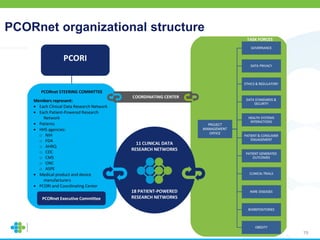
PCORnet organizational structure
75
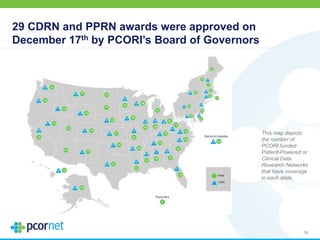
29 CDRN and PPRN awards were approved on
December 17th by PCORI’s Board of Governors
76
This map depicts
the number of
PCORI funded
Patient-Powered or
Clinical Data
Research Networks
that have coverage
in each state.
CDRN Partners
77
Goals for Each Clinical Data Research
Network (CDRN)
Create a research-ready dataset of at least 1 million patients that is:
 Secure and does not identify individual patients
 Comprehensive, using data from EHRs to describe patients’ care
experience over time and in different care settings
Involve patients, clinicians, and health system leaders in all aspects
of creating and running the network
Develop the ability to run a clinical trial in the participating systems
that fits seamlessly into healthcare operations
Identify at least 3 cohorts of patients who have a condition in
common, and who can be characterized and surveyed
78
CDRN highlights
• Networks of academic health centers, hospitals & clinical practices
• Networks of non-profit integrated health systems
• Networks of Federally Qualified Health Centers (FQHCs) serving
low-income communities
• Networks leveraging NIH and AHRQ investments (CTSAs)
• Inclusion of Health Information Exchanges
• Wide geographical spread
• Inclusion of under-served populations
• Range from 1M covered lives to 28M
79
Clinical &
Translational
Science
Awardees
Health
Information
Exchanges
Safety
Net
ClinicsIntegrated
Delivery
Systems
Academic
Health
Centers
PPRN Partners
80
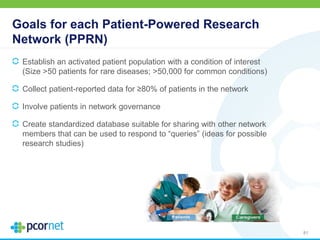
Goals for each Patient-Powered Research
Network (PPRN)
Establish an activated patient population with a condition of interest
(Size >50 patients for rare diseases; >50,000 for common conditions)
Collect patient-reported data for ≥80% of patients in the network
Involve patients in network governance
Create standardized database suitable for sharing with other network
members that can be used to respond to “queries” (ideas for possible
research studies)
81
PPRN highlights
Participating organizations and leadership teams include patients, advocacy
groups, clinicians, academic centers, practice-based research networks
Strong understanding of patient engagement
Significant range of conditions and diseases
Variety in populations represented (including pediatrics, under-served
populations)
50% are focused on rare diseases
Varying capabilities with respect to developing research data
Several PPRNs have capacity to work with biospecimens
82
The PCORnet opportunity: making a real
difference for patients and their families
Until now, we have been unable to answer many of the
most important questions affecting health and healthcare
83
By combining the knowledge and insights of patients, caregivers,
and researchers in a revolutionary network with carefully
controlled access to rich sources of health data, we will be able to
respond to patients’ priorities and speed the creation of new
knowledge to guide treatment on a national scale.
Early Opportunity to conduct a clinical trial
within PCORNet
Large, highly representative electronic data
infrastructure to facilitate efficient research
 Observational
 Pragmatic randomized trials
Officially launched Jan 2014 – early phase
PCORI has identified a unique early opportunity
to support an interventional individual-level
randomized clinical trial that will inform future
research studies in PCORnet
84
Process
85
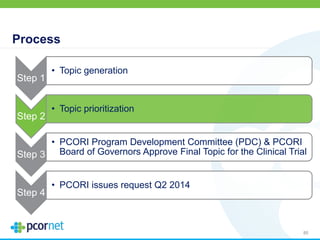
Step 1
• Topic generation
Step 2
• Topic prioritization
Step 3
• PCORI Program Development Committee (PDC) & PCORI
Board of Governors Approve Final Topic for the Clinical Trial
Step 4
• PCORI issues request Q2 2014
About the trial
The trial should be characterized by operational
simplicity and clinical relevance
The trial will make extensive use of EHR to identify
patients and report outcomes
The study will complete in no more than 18 months
with a total cost of $10 million
PCORI has received 6 viable topics from the
network for prioritization
86
The Topics
What is the optimal second line treatment for glycemic control in
type 2 diabetes?
What is the role of spacers for treatment of Asthma?
Comparative effectiveness of anticoagulants for atrial fibrillation
Randomized clinical trial to determine optimal maintenance
aspirin dose for patients with coronary artery disease
Comparative effectiveness of interventions to maximize and
maintain weight loss after bariatric surgery
Mindfulness-based weight reduction using a simple web-based
training
87
Lunch
12:00 – 1:00 p.m. EST
88
Methodological and Policy
Issues for Clinical Trials in CER
Moderated by
David Hickam, MD, Program Director, CER, PCORI
89
Break
3:00 – 3:15 p.m. EST
90
Advisory Panel Scope Issues:
Methodological Consultation
on Individual Studies vs General
Advice/Consultation
Moderated by
David Hickam, MD, Program Director, CER, PCORI
91
Organizational Issues: Meeting
Frequency, Scheduling,
Leadership, and Staff Support
Bryan Luce, PhD, MBA
Chief Science Officer, PCORI
92
Topics
Meeting frequency
Scheduling: Next two face-to-face meetings
HOLD: September 29 – October 2, 2014 (Fall 2014 meeting)
HOLD: January 12 – 15, 2015 (Winter 2015 meeting)
Leadership: Please submit nomination (including self-
nominations) to CTAP@pcori.org. PCORI staff will then
select a chair and co-chair and will announce the new
leadership to all panel members.
Staff support
93
Recap and Next Steps
Bryan Luce, PhD, MBA
Chief Science Officer, PCORI
94
95
Adjourn
Thank you for your participation!

Advisory Panel on Clinical Trials Spring 2014 Meeting

  • 1.
    Advisory Panel onClinical Trials Spring 2014 Meeting Alexandria, VA May 1, 2014 – 8:30 a.m. to 5:30 p.m. EST 1
  • 2.
    Welcome and Plansfor the Day Joe V. Selby, MD, MPH Executive Director, PCORI 2
  • 3.
    Housekeeping Today’s webinar isopen to the public and is being recorded. Members of the public are invited to listen to this teleconference and view the webinar. Anyone may submit a comment through the webinar chat function or by emailing advisorypanels@pcori.org. Visit www.pcori.org/events for more information. 3
  • 4.
    Today’s Agenda 4 Start Time Item Speaker 8:30a.m. Conflict of Interest Disclosures J. Selby 8:45 a.m. Roles & Goals of Panel B. Luce 9:15 a.m. CTAP and MC R. Newhouse 10:00 a.m. PCORI’s Clinical Trials Portfolio and Plans D. Hickam S. Clauser A. Anise S. Ip R. Fleurence 12:00 p.m. Lunch 1:00 p.m. Open Discussions D. Hickam 4:15 p.m. Organizational Issues B. Luce 5:00 p.m. Post-Event Survey 5:15 p.m. Recap and Next Steps B. Luce 5:30 p.m. Adjourn
  • 5.
    Meeting Objectives Introduce PCORIstaff & CTAP panelists Clarify panel roles & objectives Introduce PCORI’s clinical trials research portfolio Agree on panel’s scope of work Discuss organization issues, including leadership 5
  • 6.
    Conflicts of Interest 6 JoeV. Selby, MD, MPH Executive Director, PCORI
  • 7.
    Why is COIImportant? 7 PCORI has a legal obligation to publicly disclose conflict of interest statements for members of the Board, Methodology Committee, Advisory Panels and executive staff as well as in an annual report to Congress and the President. Transparency is important because it gives the public information about backgrounds and relationships that may inform actions.
  • 8.
    What should youdisclose? 8 If you have financial or personal relationships that may have the potential to bias or have the appearance of biasing your decisions, you should disclose them. Disclose, for example: Employment Financial income, such as stock, honoraria, consulting fees, etc. Memberships/Leadership positions in other health care organizations Disclose as it relates to yourself, your spouse, domestic partner, children, parents, and others indicated.
  • 9.
    Conflict of InterestSession 9 Next Steps Each panel has a few minutes on their agenda for each panelist to fill out a COI disclosure form. We will provide you with guidelines and formatting, and Staff will be available to answer any questions you may have about filling out the COI disclosure form.
  • 10.
  • 11.
    Roles and Goalsof the Advisory Panel on Clinical Trials Bryan Luce, PhD, MBA Chief Science Officer, PCORI 11
  • 12.
    Charter – Purpose 12 TheCT panel will provide recommendations to: PCORI Agencies, instrumentalities, or other entities conducting research through the PCORI Methodology Committee This advice will pertain to clinical trials for PCOR, including their: Selection Research design Implementation Technical issues Note: The CT Panel will not serve in an official decision- making capacity. Charter of the Advisory Panel on Clinical Trials – Approved by PCORI Board of Governors – November 18, 2013
  • 13.
    Charter – Scopeof Work The CT panel will provide guidance on: Methodological standards Priority areas for development of clinical trial methodology; Baseline review of proposed trials and ongoing oversight of funded trials Guidance on the selection of appropriate study outcomes Human subjects issues Strategies for designing clinical trials Approaches to data analysis Periodic evaluation of PCORI’s clinical trials portfolio Readiness of trial results for dissemination or implementation Charter of the Advisory Panel on Clinical Trials – Approved by PCORI Board of Governors – November 18, 2013
  • 14.
    CTAP Subcommittees Special issuesfor the subcommittees to examine may include, but are not limited to: Addressing specific methodological designs of applications that have already undergone PCORI’s merit review process Addressing specific clinical trials and methodologies Providing technical advice The chair of the CT Panel and the MC chair will appoint members from: The CT Panel Other individuals with appropriate expertise 14 Charter of the Advisory Panel on Clinical Trials – Approved by PCORI Board of Governors – November 18, 2013
  • 15.
    Advisory Panel onClinical Trials and PCORI’s Methodology Committee Robin Newhouse, PhD, RD Methodology Committee (Chair), PCORI Steve Goodman, MD, MHS, PhD Methodology Committee (Vice Chair), PCORI 15
  • 16.
    Overview of thePCORI Methodology Committee Charge of the Methodology Committee, as outlined by PCORI’s authorizing legislation:  “The Methodology Committee shall work to develop and improve the science and methods of comparative clinical effectiveness research.” Key activities:  Develop and periodically update Methodological standards for research  Develop a translation table Composed of up to 15 prominent methodologists in addition to a designee from AHRQ and NIH 16
  • 17.
    PCORI Methodology Standards 17 •The Methodology Committee created 47 individual methodology standards.
  • 18.
    Are minimal standardsfor performing comparative effectiveness research Are intended to provide helpful guidance to researchers and those who use research results Reflect generally accepted best practices Provide guidance for both project protocols and result reporting Are used to assess the scientific rigor of funding applications Context of research should drive use of the standards 18 PCORI’s Methodology Standards
  • 19.
    Other Initiatives General oversightof PCORI portfolio Dissemination and implementation of the methodology standards Development of new methodology standards Workshops 19
  • 20.
    Potential Overlap withthe CTAP Coordination and collaboration through ex- officio MC members:  Steve Goodman and Mary Tinetti will serve as the ex-officio designees on the panel Specific projects or initiatives:  Oversight of PCORI’s clinical trials portfolio  Identifying methods issues or gaps for clinical trials • The Methodology Committee has not created or endorsed standards for clinical trials  Consultation on method issues for applications 20
  • 21.
  • 22.
    PCORI’s Clinical TrialsPortfolio and Plans 22
  • 23.
    Presentation Outline Clinical Trialsin PCORI’s Portfolio David Hickam, MD, Program Director, CER, PCORI Steve Clauser, PhD, MPA, Program Director, Improving Healthcare Systems, PCORI Ayodola Anise, Program Officer, Addressing Disparities, PCORI Pragmatic Clinical Studies and Large Simple Trials Initiative Stanley Ip, MD, Senior Program Officer, CER, PCORI PCORnet and the Role of RCTs/PCTs Rachael Fleurence, Program Director, CER Methods and Infrastructure, PCORI 23
  • 24.
    Clinical Effectiveness Research ClinicalTrials Portfolio David Hickam, MD, MPH Program Director, Clinical Effectiveness Research, PCORI 24
  • 25.
    Characteristics of theTrials 36 projects as of April 2014 Small to moderate size Usually single center trials Usually less than 200 participants per arm More participants when cluster designs are used Diverse interventions Medications Surgical interventions Decision aids Self-care tools One study will use adaptive randomization. 25
  • 26.
    Trials Comparing ClinicalTherapies Drugs for childhood epilepsy Drugs for neuropathic pain Surgical techniques for cervical disk disorders Manipulative and non-manipulative treatment for back pain Physical therapy regimens for knee arthritis Nicotine replacement regimens Weight-loss programs Treatments to prevent dementia Counseling interventions in mental health (3 trials) 26
  • 27.
    Trials of Interventionsto Promote Self-Care Management of symptoms in cancer patients Pain management Exercise in older adults Mobilization after back surgery Cardiovascular risk reduction Medication adherence Home oxygen adherence Home glucose monitoring 27
  • 28.
    Trials of Interventionsfor Caregivers Caregivers of patients receiving allogeneic stem cell transplants Caregivers of elderly patients with dementia Parents of children with severe injuries or critical illness (3 trials) 28
  • 29.
    Trials to Assessthe Impact of Decision Aids Decision to obtain screening for lung cancer Treatment options for appendicitis Choosing methods for contraception Choosing treatments for back pain Treatment options for lupus Cancer treatment choices (4 trials) Guidance for use of diagnostic tests (3 trials) 29
  • 30.
    Conclusions about theDirection of the Portfolio of Clinical CER at PCORI PCORI has developed a portfolio of head-to-head trials of treatment options. The portfolio of trials of decision aids will help to identify best practices for such tools. PCORI has a unique focus on patient-centered practices. Interventions to promote self-care Interventions to reduce caregiver stress 30
  • 31.
    Improving Healthcare Systems ClinicalTrials Portfolio Steve Clauser, PhD, MPA Program Director, Improving Healthcare Systems, PCORI 31
  • 32.
    IHS Goal Statement Tosupport studies of the comparative effectiveness of alternate features of healthcare systems designed to optimize the quality, access, outcomes, and/or efficiency of care for the patients they serve. To support studies that will provide information of value to patients, their caregivers and clinicians, as well as to healthcare leaders, regarding which features of systems lead to better patient-centered outcomes. 32
  • 33.
    Healthcare System Definition NationalHealth Policy Environment State Health Policy Environment Local Community Environment Organization and/or Practice Setting Provider/Team Family & Social Supports Individual Patient 33 Medicare Reimbursement, Federal Health Reform, Accreditations, etc.Medicaid Reimbursement, Hospital Performance Data, Activities of state-wide advocacy groups, etc. Community level resources, Local Hospital Services, Local Professional Norms, etc. Organizational Leadership, Delivery System Design, Clinical Decision Support, etc. Knowledge, Communication skills, cultural competency, staffing mix, teamwork, role definition, etc. Family Dynamics, Friends, Network Support, etc. Biological Factors, Socio- demographics, Insurance coverage, Comorbidities, Patient care preferences.
  • 34.
    IHS Strategic Framework Drawingfrom the PCORI Strategic Goals Drivers of Change Innovative Use of: • Technology • Personnel • Incentives/Resources Improve Practice • Coordinated Care • Patient Involvement • Equity • Access • Quality Improve Outcomes that Matter to Patients • Health • Functional Status • Health-Related Quality of Life • Symptoms • Survival 34
  • 35.
    The IHS Portfolio BroadPFAs:  41 funded research contracts (4 cycles)  30 of the studies are clinical trials 35 Non Trial Study 27% Single Site Trial 19% Multisite Trial 54%
  • 36.
    Clinical Trials inthe IHS Portfolio 36 0 2 4 6 8 10 12 14 16 18 Personnel Technology Incentives Multiple: Personnel & Technology Other IHS Trials by Driver (n = 30) Multisite, Quasi- experimental Single site, RCT Multisite, RCT Multisite, Cluster Randomized
  • 37.
    Example of Multi-level,Multi-site IHS Trial 37 Title: Improving Palliative and End-of-Life Care in Nursing Homes PI: Helena Temkin-Greener, PhD; University of Rochester  Cluster RCT of 30 Nursing Homes (~1,200 residents)  Clustering residents within nursing homes. Half of the nursing homes are controls.  Training nursing home staff to provide palliative care to actively dying residents with an adapted National Quality Forum protocol.  Assessing the effectiveness of intervention on resident end of life outcomes and staff competencies and satisfaction.
  • 38.
    Clinical Trials inthe IHS Portfolio 38 * *Non condition-specific studies focus on populations, rather than conditions. They include issues such as access to care, transitional care, care coordination, etc. 0 1 2 3 4 5 6 7 8 9 10 Cancer Chronic Palliative Care Mental Non Condition IHS Trials by Condition (n=30) Multisite, Quasi-experimental Single site, RCT Multisite, RCT Multisite, Cluster Randomized
  • 39.
    Example of Population-basedIHS Trial 39 Title: “PATient Navigator to rEduce Readmissions (PArTNER)” PI: Jerry A. Krishnan, MD, PhD; University of Illinois at Chicago  RCT (~1,100 patients / 2 arms / single site)  Focus on patients discharged from hospital within first 30 days  Community Health Worker-based Navigator program tailored to the needs of patients at a minority-serving institution.  Studying the effects of the CHW-Navigator program on patients’ experience, self-management, and functional status – and on hospital readmission rates.
  • 40.
    Cluster-Randomized Trial ofa Multifactorial Fall Injury Prevention Program Partnership with the National Institute on Aging PCORI committed up to $30 million to fund a clinical trial of a multifactorial fall injury prevention strategy in older persons National cluster-randomized study will include a diverse network of practice sites to reflect the diversity of the elderly at risk of serious falls, insurance coverage, and delivery systems across the U.S. 40
  • 41.
    IHS Topics inthe First “Pragmatic Clinical Studies” Funding Announcement Topics identified by PCORI’s multi-stakeholder IHS advisory panel include: Comparing the effectiveness of innovative strategies for enhancing patients’ adherence to medication regimens Comparing the effects of specific features of health insurance on access to care, use of care, and other outcomes that are especially important to patients. Measuring the effectiveness of integrating mental and behavioral health services with primary care in the general population. The Institute of Medicine (IOM) Priorities for CER, the Agency for Health Care Research and Quality (AHRQ) Future Research Needs Projects also contain health systems relevant topics 41
  • 42.
    Strengths and Challengesof Clinical Trials Funded under the IHS Portfolio Strengths:  Engagement of patients, clinicians and organizational leadership  Multi-level assessment of patients, clinicians and organizational influences on patient centered outcomes  Ability to assess scalability at organizational level Challenges:  Small in scope and sample size due to budget limitations  Future studies likely to involve larger, more complex trials • Many may involve multi-level and multi-component interventions  Attribution of health system changes to patient outcomes 42
  • 43.
    Addressing Disparities Program ClinicalTrials Portfolio 43 Ayodola Anise, MHS Program Officer, Addressing Disparities, PCORI
  • 44.
    44 Addressing Disparities ProgramBackground  Program Mission and Goals  Program Progress to Date Addressing Disparities Program Clinical Trials Portfolio Methodological Challenges and Solutions Next Steps for Addressing Disparities Program Agenda
  • 45.
    Addressing Disparities ProgramStaff 45 Cathy Gurgol, MS Program Officer Romana Hasnain-Wynia, MS, PhD Program Director Katie Lewis, MPH Program Associate Ayodola Anise, MHS Program Officer Mychal Weinert Program Associate Tomica Singleton Senior Administrative Assistant
  • 46.
    Addressing Disparities MissionStatement 46 Program’s Mission Statement To reduce disparities in healthcare outcomes and advance equity in health and healthcare Program’s Guiding Principle To support comparative effectiveness research that will identify best options for eliminating disparities. PCORI’s Vision, Mission, Strategic Plan
  • 47.
    • Identify high-priorityresearch questions relevant to reducing and eliminating disparities in healthcare outcomes Identify Research Questions • Fund comparative effectiveness research with the highest potential to reduce and eliminate healthcare disparities Fund Research • Disseminate and facilitate the adoption of promising/best practices to reduce and eliminate healthcare disparities Disseminate Promising/Best Practices Addressing Disparities: Program Goals 47
  • 48.
    Progress Toward Goal(2012 – 2015) • 31 projects totaling $52.8M Broad PFAs 4 cycles • Treatment Options for Uncontrolled Asthma in African Americans and Hispanics/Latinos: 8 projects totaling $23.2M Targeted PFAs 1 cycle • Obesity treatment options in primary care, awards in August 2014 (Will fund up to 2 awards totaling $20 M) • Pragmatic clinical trials, awards in January 2015 • In development stage (Hypertension, Perinatal, Lower Limb Amputations) Pipeline for Targeted PFAs
  • 49.
    AD Clinical TrialsPortfolio Snapshot Research Methods: Study Design 33 5 1 0 5 10 15 20 25 30 35 RCT Non-RCT Study Design # of Projects Quasi- experimental Observational
  • 50.
    1 29 3 0 5 10 15 20 25 30 35 0-100 101-500 501-1000 ADClinical Trials Portfolio Snapshot Research Methods: Sample Size Sample Size # of Projects
  • 51.
    AD Clinical TrialsPortfolio Snapshot Research Areas Chronic conditions 36% Psychiatric 18% Cancer 9% Sexual/repro 3% Care Systems 3% Infectious disease 6% Injury/trauma 3% Neurologic 3% Alcohol/drug 3% Asthma, 8 CVD, 2 Multiple conditions, 3 Chronic pain, 2 Kidney disease, 1 COPD, 1 AD Portfolio Chronic Conditions Portfolio
  • 52.
    AD Clinical TrialsPortfolio Snapshot Disparities Population (Not mutually exclusive) 28 23 5 1 7 1 0 5 10 15 20 25 30 # of Projects
  • 53.
    Methodological Challenges andSolutions Data and safety monitoring plans (DSMPs) and data and safety and monitoring boards (DSMBs) Efficacy versus effectiveness studies Intersection of community health and health/clinical care Identifying comparators Monitoring protocol changes Recruitment Small sample sizes 53
  • 54.
    Methodological Challenges andSolutions: DSMPs and DSMBs 54 Challenge  Program staff wanted to provide DSMP and DSMB guidance to awardees funded through Asthma PFA  Experts suggested that minimal and high risk projects require monitoring Solution  All awardees funded through the Asthma PFA are required to develop DSMPs and convene DSMBs regardless of risk assessment  Awardees will be required to follow the NHLBI Policy for Data and Safety Monitoring of Extramural Clinical Studies with some differences (e.g., DSMBs will be convened by awardee; where possible, a trained patient or stakeholder should be on the DSMB)
  • 55.
    Methodological Challenges andSolutions: Efficacy versus Effectiveness Studies Challenge:  In order to conduct effectiveness studies, there needs to be enough evidence supporting the efficacy of an intervention or treatment  To conduct pragmatic trials, there needs to be a certain amount of evidence showing the effectiveness of an intervention or treatment  In the disparities field, there is not much research available on the efficacy and effectiveness of interventions or treatments Solution:  Identify key research topics where we can connect some level of evidence of efficacy and effectiveness (e.g., Obesity PFA) 55
  • 56.
    Methodological Challenges andSolutions: Intersection of Community Health with Health/Clinical Care Challenge:  Within disparities research, the most successful interventions integrate health/clinical care with factors that lie outside of health care systems but that have a direct effect on health outcomes  Lack of understanding of what community health factors most influence health/clinical care within CER Solution:  Through portfolio, identify projects at this intersection and delineate the community health factors that influence health/clinical care as it relates to CER 56
  • 57.
    Next Steps Continue fundinghigh priority research topics that can reduce/eliminate disparities in healthcare outcomes Inform PCORI’s DSMP and DSMB policy Identify promising practices from projects that successfully link community health and health/clinical care interventions to share with awardees, researchers, and end users (e.g., payers, purchasers, professional societies) 57
  • 58.
    Pragmatic Clinical Studies andLarge Simple Trials Initiative Stanley Ip, MD Senior Program Officer, CER, PCORI
  • 59.
    Objective Address critical clinicaland health-related comparative effectiveness questions faced by patients and other decision makers  Compare interventions and outcomes that matter to patients  Sample size is sufficiently large to allow precise estimates of differences in treatment effects and permit valid and rigorous analysis of heterogeneity of treatment effects
  • 60.
    Available Funds Up to$90M per announcement Two announcements/year Direct costs of up to $10M per project
  • 61.
    Essential Characteristics ofFunded Head-to-Head Studies Broadly representative patient populations Strong endorsement and participation by relevant patient, professional, and/or payer or purchaser organizations Address:  Prevention, diagnosis, treatment, management of disease or symptom  Improve performance of HC systems  Eliminate health-related disparities Take place within typical clinical care or community settings Outcomes meaningful to patients Sufficient size to evaluate effectiveness in subgroups
  • 62.
    Comparators of Interest Specificdrugs, devices, and procedures Medical and assistive devices and technologies Techniques for behavioral modification Complementary and alternative medicine Delivery-system interventions Usual care or no specific intervention, if these are realistic choices for patients (e.g., choosing not to have a procedure for cancer screening)
  • 63.
    Sources for Topicsof Interest IOM 100 priority topics for CER AHRQ Future Research Needs Projects Investigator-initiated topics PCORI priority topics (updated1/2014) Note: Requirement to follow PCORI methodology standards including RQ1 (gap analysis and systematic reviews to support application)
  • 64.
    PCORI Priority TopicsAnnounced in December 2013 Bipolar disorder Ductal carcinoma in situ (DCIS) Cardiovascular disease (CVD) Back pain Integration of mental and behavioral health services Adherence to medication regimens
  • 65.
    PCORI Priority Topics(CONT.) Health insurance Migraine headache Osteoarthritis (OA) Autism spectrum disorder Pulmonary nodules Opioid substance abuse Multiple sclerosis Proton beam therapy
  • 66.
    Introducing PCORnet: The NationalPatient-Centered Clinical Research Network Rachael Fleurence, PhD Program Director, CER Methods and Infrastructure, PCORI
  • 67.
    This slide presentationexplains: Why PCORnet was created What PCORnet will do for research How it works Who is involved 67
  • 68.
    Our national clinicalresearch system is well-intentioned but flawed High percentage of decisions not supported by evidence* Health outcomes and disparities are not improving Current system is great except:  Too slow  Too expensive  Unreliable  Doesn’t answer questions that matter most to patients  Unattractive to clinicians & administrators We are not generating the evidence we need to support the healthcare decisions that patients and their doctors have to make every day. *Tricoci P et al. JAMA 2009;301:831-41.
  • 69.
    Both researchers andfunders now recognize the value in integrating clinical research networks Linking existing networks means clinical research can be conducted more effectively Ensures that patients, providers, and scientists form true “communities of research” Creates “interoperability” – networks can share sites and data
  • 70.
    PCORnet embodies a“community of research” by uniting systems, patients & clinicians 70 11 Clinical Data Research Networks (CDRNs) 18 Patient- Powered Research Networks (PPRNs) PCORnet: A national infrastructure for patient-centered clinical research
  • 71.
    What will PCORnetdo for research? 71
  • 72.
    PCORnet’s goal 72 PCORnet seeksto improve the nation’s capacity to conduct clinical research by creating a large, highly representative, national patient-centered network that supports more efficient clinical trials and observational studies.
  • 73.
    PCORnet’s vision 73 PCORnet willsupport widespread capability for the US healthcare system to learn from research, meaning that large-scale research can be conducted with greater speed and accuracy within real-world care delivery systems.
  • 74.
    Overall objectives ofPCORnet: achieving a single functional research network Create a secure national research resource that will enable teams of health researchers, patients, and their partners to work together on researching questions of shared interest. Utilize multiple rich data sources to support research, such as electronic health records, insurance claims data, and data reported directly by patients Engage patients, clinicians & health system leaders throughout the research cycle from idea generation to implementation Support observational and interventional research studies that compare how well different treatment options work for different people Enable external partners to collaborate with PCORI-funded networks Sustain PCORnet resources for a range of research activities supported by PCORI and other sponsors 74
  • 75.
  • 76.
    29 CDRN andPPRN awards were approved on December 17th by PCORI’s Board of Governors 76 This map depicts the number of PCORI funded Patient-Powered or Clinical Data Research Networks that have coverage in each state.
  • 77.
  • 78.
    Goals for EachClinical Data Research Network (CDRN) Create a research-ready dataset of at least 1 million patients that is:  Secure and does not identify individual patients  Comprehensive, using data from EHRs to describe patients’ care experience over time and in different care settings Involve patients, clinicians, and health system leaders in all aspects of creating and running the network Develop the ability to run a clinical trial in the participating systems that fits seamlessly into healthcare operations Identify at least 3 cohorts of patients who have a condition in common, and who can be characterized and surveyed 78
  • 79.
    CDRN highlights • Networksof academic health centers, hospitals & clinical practices • Networks of non-profit integrated health systems • Networks of Federally Qualified Health Centers (FQHCs) serving low-income communities • Networks leveraging NIH and AHRQ investments (CTSAs) • Inclusion of Health Information Exchanges • Wide geographical spread • Inclusion of under-served populations • Range from 1M covered lives to 28M 79 Clinical & Translational Science Awardees Health Information Exchanges Safety Net ClinicsIntegrated Delivery Systems Academic Health Centers
  • 80.
  • 81.
    Goals for eachPatient-Powered Research Network (PPRN) Establish an activated patient population with a condition of interest (Size >50 patients for rare diseases; >50,000 for common conditions) Collect patient-reported data for ≥80% of patients in the network Involve patients in network governance Create standardized database suitable for sharing with other network members that can be used to respond to “queries” (ideas for possible research studies) 81
  • 82.
    PPRN highlights Participating organizationsand leadership teams include patients, advocacy groups, clinicians, academic centers, practice-based research networks Strong understanding of patient engagement Significant range of conditions and diseases Variety in populations represented (including pediatrics, under-served populations) 50% are focused on rare diseases Varying capabilities with respect to developing research data Several PPRNs have capacity to work with biospecimens 82
  • 83.
    The PCORnet opportunity:making a real difference for patients and their families Until now, we have been unable to answer many of the most important questions affecting health and healthcare 83 By combining the knowledge and insights of patients, caregivers, and researchers in a revolutionary network with carefully controlled access to rich sources of health data, we will be able to respond to patients’ priorities and speed the creation of new knowledge to guide treatment on a national scale.
  • 84.
    Early Opportunity toconduct a clinical trial within PCORNet Large, highly representative electronic data infrastructure to facilitate efficient research  Observational  Pragmatic randomized trials Officially launched Jan 2014 – early phase PCORI has identified a unique early opportunity to support an interventional individual-level randomized clinical trial that will inform future research studies in PCORnet 84
  • 85.
    Process 85 Step 1 • Topicgeneration Step 2 • Topic prioritization Step 3 • PCORI Program Development Committee (PDC) & PCORI Board of Governors Approve Final Topic for the Clinical Trial Step 4 • PCORI issues request Q2 2014
  • 86.
    About the trial Thetrial should be characterized by operational simplicity and clinical relevance The trial will make extensive use of EHR to identify patients and report outcomes The study will complete in no more than 18 months with a total cost of $10 million PCORI has received 6 viable topics from the network for prioritization 86
  • 87.
    The Topics What isthe optimal second line treatment for glycemic control in type 2 diabetes? What is the role of spacers for treatment of Asthma? Comparative effectiveness of anticoagulants for atrial fibrillation Randomized clinical trial to determine optimal maintenance aspirin dose for patients with coronary artery disease Comparative effectiveness of interventions to maximize and maintain weight loss after bariatric surgery Mindfulness-based weight reduction using a simple web-based training 87
  • 88.
  • 89.
    Methodological and Policy Issuesfor Clinical Trials in CER Moderated by David Hickam, MD, Program Director, CER, PCORI 89
  • 90.
  • 91.
    Advisory Panel ScopeIssues: Methodological Consultation on Individual Studies vs General Advice/Consultation Moderated by David Hickam, MD, Program Director, CER, PCORI 91
  • 92.
    Organizational Issues: Meeting Frequency,Scheduling, Leadership, and Staff Support Bryan Luce, PhD, MBA Chief Science Officer, PCORI 92
  • 93.
    Topics Meeting frequency Scheduling: Nexttwo face-to-face meetings HOLD: September 29 – October 2, 2014 (Fall 2014 meeting) HOLD: January 12 – 15, 2015 (Winter 2015 meeting) Leadership: Please submit nomination (including self- nominations) to CTAP@pcori.org. PCORI staff will then select a chair and co-chair and will announce the new leadership to all panel members. Staff support 93
  • 94.
    Recap and NextSteps Bryan Luce, PhD, MBA Chief Science Officer, PCORI 94
  • 95.
    95 Adjourn Thank you foryour participation!