Greta Ūzaitė
Justė Vaišnoraitė
Vytautas Sriubas
Edvinas Vyšniauskas
Aleksandras Čičasovas
About Company
• In 1982, Dietrich Mateschitz became aware of products called "tonic
drinks", which enjoyed widespread popularity throughout the Far East.
• In 1984, Mateschitz founded Red Bull. He fine-tuned the product,
developed a unique marketing concept and started selling Red Bull Energy
Drink on the Austrian market in 1987.
• However , such energy drinks was first-time invented in Thailand.
• Today Red Bull has become the worlds leading energy drink, selling more
than 4.6 billion cans in 2011.
Marketing Mix: Product
• Red Bull is a sweet,
caffeinated drink aimed
to give consumers the
high energy kick.
Available only in rather
expensive 250ml cans,
350ml bottles, with 4
packs and only two
flavours (original or
sugar-free). It contains
caffeine, taurine, and B
vitamins.
Marketing Mix: Promotion
• Strategy called word-of-mouth or “BuzzMarketing”
• “We do not take product to customer. We take
customer to the product” Mr. Dietrich
Mateschitz
• Promotion job for youth
• Promotion through lifestyle
Marketing Mix: Price
• Price of RedBull is premium price all over the
world.
• Highest in the market.
• Varies from 2 to 4 dollars per can.
Marketing Mix: Place
• RedBull are using tactic not to have official
shops of their production. Instead of that,
company are cooperating with local markets
and exporting production by minimalizing
sales cost to a minimum.
Product Categorization
Soft drinks

Hot

Cold

Non-alcoholic

Alcoholic
Juice

Red bull

Milk

Monster

Energy

Water

Etc.

Burn

Battery

Etc.
Segmentation / Target Market
• Age criteria:
14-16
The Student
16-25
The Fan of Extreme sports

Redbull
users
25-39

The Clubber

39-55

The Careerist
Target Market: 16-25
Type

Description

The Student

This group includes all the current students, especially during the
examination time, who are staying late to study and need additional energy
to finish their tasks.

The Fan of Extreme
sport

This group consist not of actual athletes, but of those, who are extremely
into this kind of sport, including motorsport, skiing, windsurfing and all other
areas, which are promoted by “Redbull“ brand. They do not miss any
competition and for them drinking energy drink is like alternative of being in
the real action.

The Clubber

This group includes young and active urban youth, who spend most of their
leisure in variety of clubs, therefore they need plenty of energy to party all
night long. What is more, there was discovered, that “Redbull“ goes
perfectly with alcohol in a lot of cocktails.

The Careerist

This group includes all the new entrants in the business who have a lot of
potential as well as are hardworking persons, and need some additional
energy while staying late after working hours
Market Share / Competitors
in Lithuania
Other
7%
Battery
14%

Redbull
37%

Burn
15%

Monster
27%
Direct and indirect competitors
Direct
Battery
Burn
Monster
Other energy
drinks

Direct

Indirect

Energetic gum
“Blitz”, “Gerimax”
Energy ice-cream
“ENERGY DRIVE”

Coca-cola
Pepsi Cola
Sprite
Fanta

Coffee “Jacobs”
Chocolate “Karūna”

Indirect
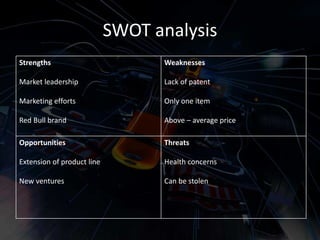
SWOT analysis
Strengths

Weaknesses

Market leadership

Lack of patent

Marketing efforts

Only one item

Red Bull brand

Above – average price

Opportunities

Threats

Extension of product line

Health concerns

New ventures

Can be stolen
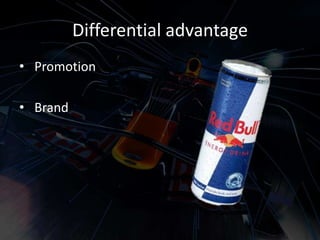
Differential advantage
• Promotion
• Brand
Summary
• “Red Bull” - well-developed company,
undisputed leader in the market of energy
drinks.

Recommendation
• To expand taste assortment of drinks.
Red bull final

Red bull final

  • 1.
    Greta Ūzaitė Justė Vaišnoraitė VytautasSriubas Edvinas Vyšniauskas Aleksandras Čičasovas
  • 2.
    About Company • In1982, Dietrich Mateschitz became aware of products called "tonic drinks", which enjoyed widespread popularity throughout the Far East. • In 1984, Mateschitz founded Red Bull. He fine-tuned the product, developed a unique marketing concept and started selling Red Bull Energy Drink on the Austrian market in 1987. • However , such energy drinks was first-time invented in Thailand. • Today Red Bull has become the worlds leading energy drink, selling more than 4.6 billion cans in 2011.
  • 3.
    Marketing Mix: Product •Red Bull is a sweet, caffeinated drink aimed to give consumers the high energy kick. Available only in rather expensive 250ml cans, 350ml bottles, with 4 packs and only two flavours (original or sugar-free). It contains caffeine, taurine, and B vitamins.
  • 4.
    Marketing Mix: Promotion •Strategy called word-of-mouth or “BuzzMarketing” • “We do not take product to customer. We take customer to the product” Mr. Dietrich Mateschitz • Promotion job for youth • Promotion through lifestyle
  • 5.
    Marketing Mix: Price •Price of RedBull is premium price all over the world. • Highest in the market. • Varies from 2 to 4 dollars per can.
  • 6.
    Marketing Mix: Place •RedBull are using tactic not to have official shops of their production. Instead of that, company are cooperating with local markets and exporting production by minimalizing sales cost to a minimum.
  • 7.
    Product Categorization Soft drinks Hot Cold Non-alcoholic Alcoholic Juice Redbull Milk Monster Energy Water Etc. Burn Battery Etc.
  • 8.
    Segmentation / TargetMarket • Age criteria: 14-16 The Student 16-25 The Fan of Extreme sports Redbull users 25-39 The Clubber 39-55 The Careerist
  • 9.
    Target Market: 16-25 Type Description TheStudent This group includes all the current students, especially during the examination time, who are staying late to study and need additional energy to finish their tasks. The Fan of Extreme sport This group consist not of actual athletes, but of those, who are extremely into this kind of sport, including motorsport, skiing, windsurfing and all other areas, which are promoted by “Redbull“ brand. They do not miss any competition and for them drinking energy drink is like alternative of being in the real action. The Clubber This group includes young and active urban youth, who spend most of their leisure in variety of clubs, therefore they need plenty of energy to party all night long. What is more, there was discovered, that “Redbull“ goes perfectly with alcohol in a lot of cocktails. The Careerist This group includes all the new entrants in the business who have a lot of potential as well as are hardworking persons, and need some additional energy while staying late after working hours
  • 10.
    Market Share /Competitors in Lithuania Other 7% Battery 14% Redbull 37% Burn 15% Monster 27%
  • 11.
    Direct and indirectcompetitors Direct Battery Burn Monster Other energy drinks Direct Indirect Energetic gum “Blitz”, “Gerimax” Energy ice-cream “ENERGY DRIVE” Coca-cola Pepsi Cola Sprite Fanta Coffee “Jacobs” Chocolate “Karūna” Indirect
  • 12.
    SWOT analysis Strengths Weaknesses Market leadership Lackof patent Marketing efforts Only one item Red Bull brand Above – average price Opportunities Threats Extension of product line Health concerns New ventures Can be stolen
  • 13.
  • 14.
    Summary • “Red Bull”- well-developed company, undisputed leader in the market of energy drinks. Recommendation • To expand taste assortment of drinks.