RECYCLED AGGREGATES
VINUSHA THAKKELAPATI
CIVIL ENGINEERING
CONTENTS:
 Introduction
 What is RAC all about?
 Why RAC?
 Sources of RAC
 Characteristics
 Classification
 Process
 Application
 Merits
 Demerits
 Conclusion
INTRODUCTION
 To achieve sustainability in the area of construction,
researches and companies focus on using waste concrete as
a new construction material. It is called recycled aggregate
which can be produced by concrete crusher.
WHAT IS RAC ABOUT?
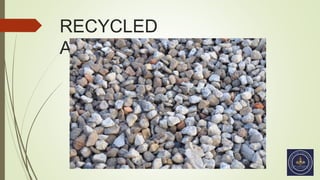
 The aggregates that are derived from processing the
materials previously used in a construction are called
Recycled Aggregate Concrete (RAC).
RECYCLED
AGGREGATES
Why RAC?
 Due to rapid urbanization and growth in population, the
natural resources are depleting.
 The construction industry is facing issues due to the non-
availability of good quality aggregates within reasonable
distances.
 Good quality crushed aggregates cost more when compared
to recycled aggregates.
Why RAC?
 An enormous increase in the quantity of waste materials and
shortage of dumping sites.
 Shortage of dumping sites has resulted in sharp increase in
transport and disposal costs.
 High dumping cost for demolished waste, because it has to
be dumped away as far as possible from construction site.
Sources of RAC
 Construction and demolished waste generated due to natural
disasters for future development. The old buildings are
replaced with the new ones and war inflicted damages.
 Crushing of Portland concrete pavement.
 Tested specimens from laboratory.
 Concrete from ready mix concrete plants and pre casting
units.
 Worn out rail ballast.
Characteristics
 It has low density, elastic modulus, strength and higher water
absorption capacity.
 Recycled aggregates have a proportional motor, which is
attached to the aggregate. It gives a higher porosity and a
lower strength to recycled aggregate concrete than the
normal concrete.
Classification
 Based on material composition RAC is divided into two main
types,
 Mixed concrete
 crushed concrete
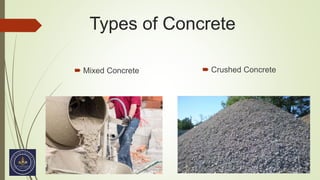
Types of Concrete
 Mixed Concrete  Crushed Concrete
Process
 Crushing
 Pre sizing
 Sorting
 Screening
 Contaminant Elimination
Applications
 Concrete sub Structures
 Roads
 Ground Improvement
 Earth work Embankment
 Earth work Cutting
Applications
 Shallow Foundation
 Deep Foundation
 Utilities
 Concrete Structures
 Building (Residential and industrial)
Merits
 Reduces the need for virgin aggregates.
 Specification Sized Recycled aggregates.
 Avoid haul off costs and land fill disposal fees.
 Minimal impact on community infra structure by reducing
import and export trucking.
 Creates more employment opportunities
Demerits
 Downgrades the quality of concrete.
 Increase in water absorption capacity.
 Decrease in compressive strength.
 Reduces work ability of concrete.
 Lack of specifications and guidelines.
Less durability of RAC.
Conclusion
 Recycling and reusing the building wastes doesn’t merely just
solve the problem of construction debris; but also the issue of
shortage of natural aggregates can be addressed.
Recycled aggregates
Recycled aggregates

Recycled aggregates

  • 1.
  • 2.
    CONTENTS:  Introduction  Whatis RAC all about?  Why RAC?  Sources of RAC  Characteristics  Classification  Process  Application  Merits  Demerits  Conclusion
  • 3.
    INTRODUCTION  To achievesustainability in the area of construction, researches and companies focus on using waste concrete as a new construction material. It is called recycled aggregate which can be produced by concrete crusher.
  • 4.
    WHAT IS RACABOUT?  The aggregates that are derived from processing the materials previously used in a construction are called Recycled Aggregate Concrete (RAC).
  • 5.
  • 6.
    Why RAC?  Dueto rapid urbanization and growth in population, the natural resources are depleting.  The construction industry is facing issues due to the non- availability of good quality aggregates within reasonable distances.  Good quality crushed aggregates cost more when compared to recycled aggregates.
  • 7.
    Why RAC?  Anenormous increase in the quantity of waste materials and shortage of dumping sites.  Shortage of dumping sites has resulted in sharp increase in transport and disposal costs.  High dumping cost for demolished waste, because it has to be dumped away as far as possible from construction site.
  • 8.
    Sources of RAC Construction and demolished waste generated due to natural disasters for future development. The old buildings are replaced with the new ones and war inflicted damages.  Crushing of Portland concrete pavement.  Tested specimens from laboratory.  Concrete from ready mix concrete plants and pre casting units.  Worn out rail ballast.
  • 9.
    Characteristics  It haslow density, elastic modulus, strength and higher water absorption capacity.  Recycled aggregates have a proportional motor, which is attached to the aggregate. It gives a higher porosity and a lower strength to recycled aggregate concrete than the normal concrete.
  • 10.
    Classification  Based onmaterial composition RAC is divided into two main types,  Mixed concrete  crushed concrete
  • 11.
    Types of Concrete Mixed Concrete  Crushed Concrete
  • 12.
    Process  Crushing  Presizing  Sorting  Screening  Contaminant Elimination
  • 13.
    Applications  Concrete subStructures  Roads  Ground Improvement  Earth work Embankment  Earth work Cutting
  • 14.
    Applications  Shallow Foundation Deep Foundation  Utilities  Concrete Structures  Building (Residential and industrial)
  • 15.
    Merits  Reduces theneed for virgin aggregates.  Specification Sized Recycled aggregates.  Avoid haul off costs and land fill disposal fees.  Minimal impact on community infra structure by reducing import and export trucking.  Creates more employment opportunities
  • 16.
    Demerits  Downgrades thequality of concrete.  Increase in water absorption capacity.  Decrease in compressive strength.  Reduces work ability of concrete.  Lack of specifications and guidelines. Less durability of RAC.
  • 17.
    Conclusion  Recycling andreusing the building wastes doesn’t merely just solve the problem of construction debris; but also the issue of shortage of natural aggregates can be addressed.