Recurrent selection
schemes
SUBMITTED BY
J VENKATA YASHWANTH
TAM/2019-042
ACHARYA N G RANGA AGRICULTURAL UNIVERSITY
S.V.Agricultural college, Tirupati
Dept. of Genetics and Plant breeding
 Idea of recurrent selection was first suggested by Hayes and Garber in
1919 and East and Jones in 1920
 Recurrent breeding schemes were developed after 1945 when Hull
suggested that recurrent selection is useful to improve SCA
 They are of four different types
 Simple recurrent selection
 Recurrent selection for GCA
 Recurrent selection for SCA
 Reciprocal recurrent selection
Simple recurrent selection
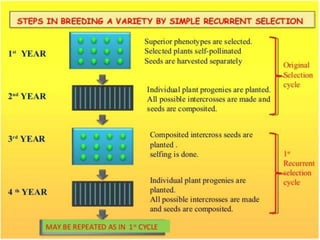
 It was given by Sprague and Brown in 1930
 A number of plants with desirable phenotype are selected and
self pollinated
 In second year separate progeny rows are grown for selfed
seeds
 Progenies are inter crossed by hand in all possible combinations
and equal amount of seed from each is composited to raise next
generation
 For first recurrent cycle the same process is repeated but this
time with composited seed
 Recurrent selection is effective in increasing the frequency of desirable
genes in the selected population
 Suited for highly heritable characters
 In some cases we can see large variability than population
 Recurrent selection is considered to be more effective than selection
with self-pollination
 Inbreeding can be kept low by following ways
 1.population from inter crosses is may be allowed to mate random for
one generation and the seed is subjected to reselection
 2.each intercrops maybe grown separately and it should be ensured
that selected plants are not related by any parentage
Recurrent selection for GCA
 It was first suggested by Jenkins in 1935
 A tester with broad genetic base(OPV Synthetic) can be used for
evaluating lines for GCA
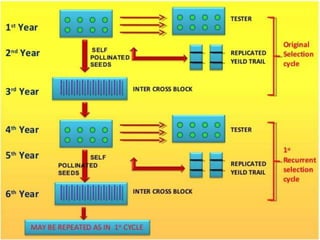
 I year – phenotypically superior plants are selected from population
and selfed seed are harvested separately
 The selected plants are crossed with tester and the seed are
harvested individually
 II year – replicated yield train is conducted using self crossed seed
and superior progenies are identified
 III year – the selfed seed of from first year of superior progenies in
RYT are planted in separate progeny rows and inter mated in all
possible combinations
 Equal amount of seed is composited from each inter cross and used
to raise next generation
IV year – composited seed are planted phenotypically superior plants
are selected selfed and intermated with a tester and harvested
individually
V year – test crossed seed are plants in sperate progeny rows superior
progeny are identified
VI year – same process of third year completes first recurrent cycle
If necessary second and third recurrent cycles may be initiated
It may be used to improve yielding ability of population and at end
product may be released as synthetic variety
May be useful for increasing the frequency of desirable genes in the
population and isolating superior inbreeds
Recurrent selection for SCA
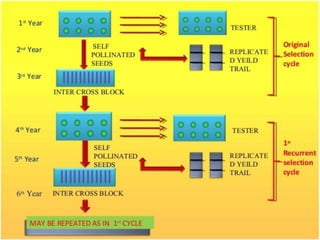
 Recurrent selection for specific combining ability was proposed
by Hull in 1945
 The main objective of tis is to isolate lie from population that
would combine well with given inbred useful for selecting lines for
sca
 The procedure for recurrent selection is identical to that of
RSGCA
 Only difference is here we use inbred as tester which has narrow
genetic base
Reciprocal recurrent
selection
 It was first proposed by Comstock, Robinson and Harvey in 1949
 It is useful for both SCA and GCA
 Useful for improving two source populations simultaneously
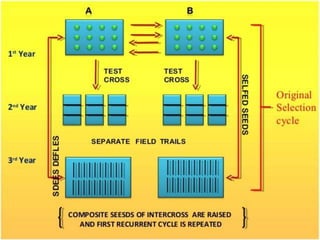
 Procedure :_
 I year – two source populations are taken and phenotypically
superior plants are selected from each population and selfed
 Each of selected plant from A is random mated with plants in B
 Selfed seed are harvested separately and used for planting in III
year
 Top crossed seed from each plant is harvested separately
 II year – two replicated yield trails are conducted progeny rows of test
cross seed of population A and B are grown separately
 Plants producing superior progenies are identified
 III year – selfed seeds of I year from plants selected on basis of
evaluation o progeny is plants in sperate rows in two crossing plants .
 All possible inter crosses are made among the progeny rows in each
plot are made and equal amount of seed from all inter crosses from
crossing plots A is mixed to raise source population of A for next year
and similarly with B crossing plot
 IV – source populations A and B are raised from composited seed of a
and b and same operations of first year re repeated
 V year – tested seed as same in second year are planted and superior
progenies are identified
 VI year – same as third year where A and B are plants in different
crossing blocks selected one are inter mated and seed is harvested
Comparison among different
recurrent selection schemes
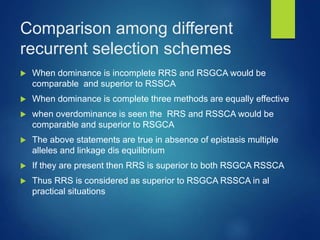
 When dominance is incomplete RRS and RSGCA would be
comparable and superior to RSSCA
 When dominance is complete three methods are equally effective
 when overdominance is seen the RRS and RSSCA would be
comparable and superior to RSGCA
 The above statements are true in absence of epistasis multiple
alleles and linkage dis equilibrium
 If they are present then RRS is superior to both RSGCA RSSCA
 Thus RRS is considered as superior to RSGCA RSSCA in al
practical situations
Merits
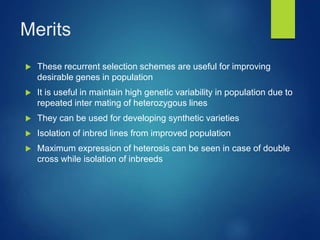
 These recurrent selection schemes are useful for improving
desirable genes in population
 It is useful in maintain high genetic variability in population due to
repeated inter mating of heterozygous lines
 They can be used for developing synthetic varieties
 Isolation of inbred lines from improved population
 Maximum expression of heterosis can be seen in case of double
cross while isolation of inbreeds
Demerits
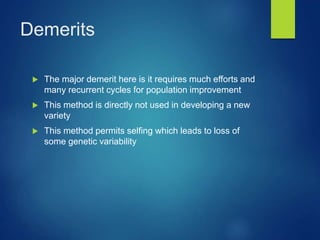
 The major demerit here is it requires much efforts and
many recurrent cycles for population improvement
 This method is directly not used in developing a new
variety
 This method permits selfing which leads to loss of
some genetic variability
Recurrent selection schemes

Recurrent selection schemes

  • 1.
    Recurrent selection schemes SUBMITTED BY JVENKATA YASHWANTH TAM/2019-042 ACHARYA N G RANGA AGRICULTURAL UNIVERSITY S.V.Agricultural college, Tirupati Dept. of Genetics and Plant breeding
  • 2.
     Idea ofrecurrent selection was first suggested by Hayes and Garber in 1919 and East and Jones in 1920  Recurrent breeding schemes were developed after 1945 when Hull suggested that recurrent selection is useful to improve SCA  They are of four different types  Simple recurrent selection  Recurrent selection for GCA  Recurrent selection for SCA  Reciprocal recurrent selection
  • 3.
    Simple recurrent selection It was given by Sprague and Brown in 1930  A number of plants with desirable phenotype are selected and self pollinated  In second year separate progeny rows are grown for selfed seeds  Progenies are inter crossed by hand in all possible combinations and equal amount of seed from each is composited to raise next generation  For first recurrent cycle the same process is repeated but this time with composited seed
  • 5.
     Recurrent selectionis effective in increasing the frequency of desirable genes in the selected population  Suited for highly heritable characters  In some cases we can see large variability than population  Recurrent selection is considered to be more effective than selection with self-pollination  Inbreeding can be kept low by following ways  1.population from inter crosses is may be allowed to mate random for one generation and the seed is subjected to reselection  2.each intercrops maybe grown separately and it should be ensured that selected plants are not related by any parentage
  • 6.
    Recurrent selection forGCA  It was first suggested by Jenkins in 1935  A tester with broad genetic base(OPV Synthetic) can be used for evaluating lines for GCA  I year – phenotypically superior plants are selected from population and selfed seed are harvested separately  The selected plants are crossed with tester and the seed are harvested individually  II year – replicated yield train is conducted using self crossed seed and superior progenies are identified  III year – the selfed seed of from first year of superior progenies in RYT are planted in separate progeny rows and inter mated in all possible combinations  Equal amount of seed is composited from each inter cross and used to raise next generation
  • 8.
    IV year –composited seed are planted phenotypically superior plants are selected selfed and intermated with a tester and harvested individually V year – test crossed seed are plants in sperate progeny rows superior progeny are identified VI year – same process of third year completes first recurrent cycle If necessary second and third recurrent cycles may be initiated It may be used to improve yielding ability of population and at end product may be released as synthetic variety May be useful for increasing the frequency of desirable genes in the population and isolating superior inbreeds
  • 9.
    Recurrent selection forSCA  Recurrent selection for specific combining ability was proposed by Hull in 1945  The main objective of tis is to isolate lie from population that would combine well with given inbred useful for selecting lines for sca  The procedure for recurrent selection is identical to that of RSGCA  Only difference is here we use inbred as tester which has narrow genetic base
  • 11.
    Reciprocal recurrent selection  Itwas first proposed by Comstock, Robinson and Harvey in 1949  It is useful for both SCA and GCA  Useful for improving two source populations simultaneously  Procedure :_  I year – two source populations are taken and phenotypically superior plants are selected from each population and selfed  Each of selected plant from A is random mated with plants in B  Selfed seed are harvested separately and used for planting in III year  Top crossed seed from each plant is harvested separately
  • 12.
     II year– two replicated yield trails are conducted progeny rows of test cross seed of population A and B are grown separately  Plants producing superior progenies are identified  III year – selfed seeds of I year from plants selected on basis of evaluation o progeny is plants in sperate rows in two crossing plants .  All possible inter crosses are made among the progeny rows in each plot are made and equal amount of seed from all inter crosses from crossing plots A is mixed to raise source population of A for next year and similarly with B crossing plot  IV – source populations A and B are raised from composited seed of a and b and same operations of first year re repeated  V year – tested seed as same in second year are planted and superior progenies are identified  VI year – same as third year where A and B are plants in different crossing blocks selected one are inter mated and seed is harvested
  • 14.
    Comparison among different recurrentselection schemes  When dominance is incomplete RRS and RSGCA would be comparable and superior to RSSCA  When dominance is complete three methods are equally effective  when overdominance is seen the RRS and RSSCA would be comparable and superior to RSGCA  The above statements are true in absence of epistasis multiple alleles and linkage dis equilibrium  If they are present then RRS is superior to both RSGCA RSSCA  Thus RRS is considered as superior to RSGCA RSSCA in al practical situations
  • 15.
    Merits  These recurrentselection schemes are useful for improving desirable genes in population  It is useful in maintain high genetic variability in population due to repeated inter mating of heterozygous lines  They can be used for developing synthetic varieties  Isolation of inbred lines from improved population  Maximum expression of heterosis can be seen in case of double cross while isolation of inbreeds
  • 16.
    Demerits  The majordemerit here is it requires much efforts and many recurrent cycles for population improvement  This method is directly not used in developing a new variety  This method permits selfing which leads to loss of some genetic variability