Why are we still
not convinced with
ERA
Dr Kaberi Banerjee
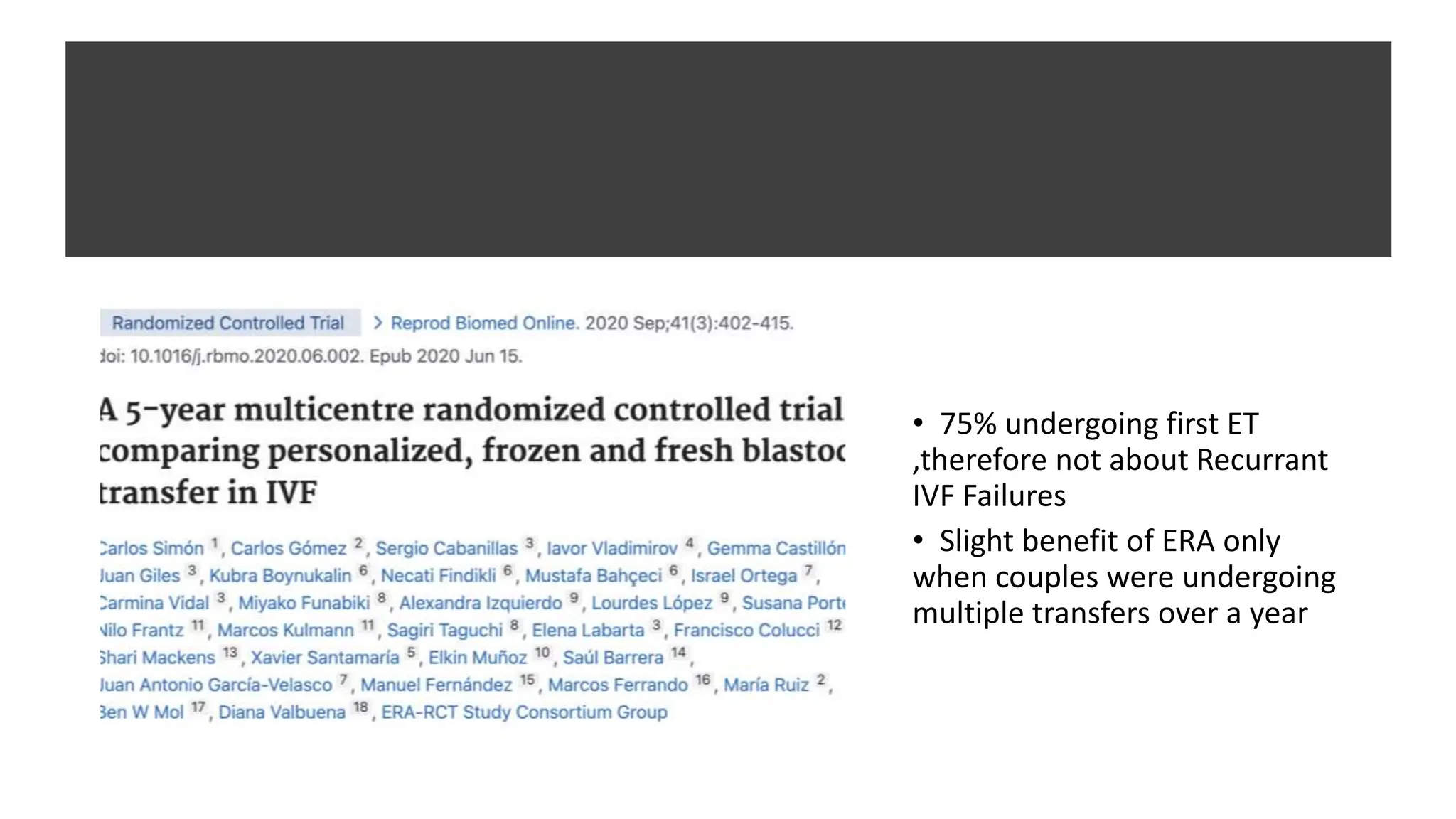
• 133 ERA Patients vs 353 non ERA Patient
• No difference in the pregnancy , miscarriage , or live birth rate
• No difference in pregnancy rate where PET was performed.
• 75% undergoing first ET
,therefore not about Recurrant
IVF Failures
• Slight benefit of ERA only
when couples were undergoing
multiple transfers over a year
• The current case describes a patient with three previously failed IVF cycles, who underwent an ERA testing
in an HRT cycle, with diagnosis of a post receptive endometrium. However, an embryo transfer was performed
on day 5 after progesterone rise in a natural cycle, resulting in successful achievement of pregnancy, despite
timing the embryo transfer outside the assumed window of implantation as diagnosed by
ERA. Conclusion: This puts into perspective the question whether ERA can be regarded as the ultimate tool of
endometrial receptivity assessment.
This article addresses the limitations of the endometrial receptivity
array (ERA) methodology to increase implantation.
• Assumed inconsistency of the endometrial biopsy,
• Variable number of genes found to be dysregulated in endometrium
• Samples without the embryonal-induced effect,
• Failure to account for the simultaneous serum progesterone level,
• Expected low percentage of patients who may need this add-on procedure,
• Difficulties in synchronising the endometrium with hormone replacements in
successive cycles and the
• Inherent perinatal risks associated with routine cryopreservation of embryos.
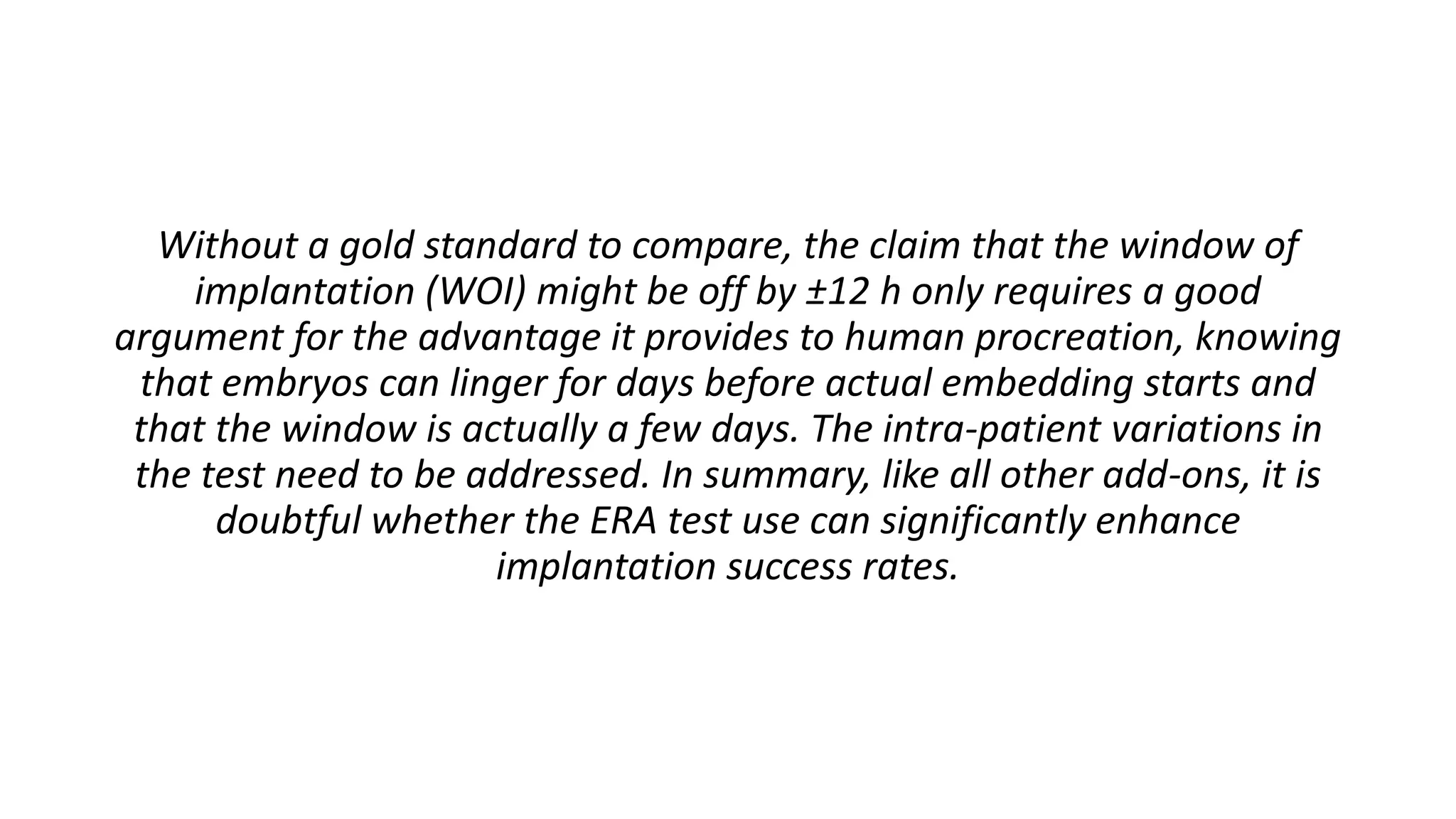
Without a gold standard to compare, the claim that the window of
implantation (WOI) might be off by ±12 h only requires a good
argument for the advantage it provides to human procreation, knowing
that embryos can linger for days before actual embedding starts and
that the window is actually a few days. The intra-patient variations in
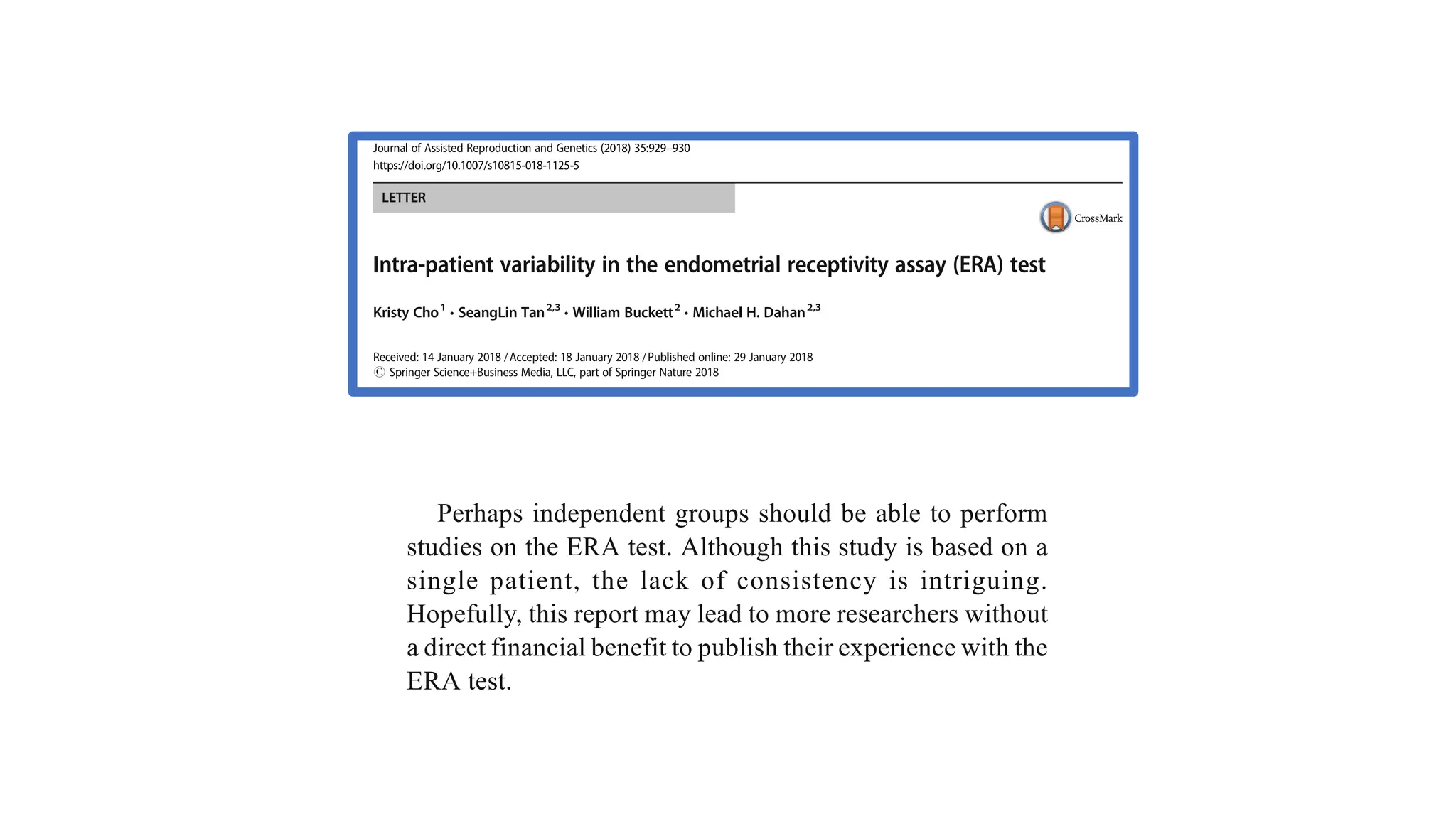
the test need to be addressed. In summary, like all other add-ons, it is
doubtful whether the ERA test use can significantly enhance
implantation success rates.
• After 10 years of its introduction ERA is still
not the game changer it was expected to be.

Endometrial Receptivity Array- Dr Kaberi Banerjee

  • 1.
    Why are westill not convinced with ERA Dr Kaberi Banerjee
  • 3.
    • 133 ERAPatients vs 353 non ERA Patient • No difference in the pregnancy , miscarriage , or live birth rate • No difference in pregnancy rate where PET was performed.
  • 4.
    • 75% undergoingfirst ET ,therefore not about Recurrant IVF Failures • Slight benefit of ERA only when couples were undergoing multiple transfers over a year
  • 6.
    • The currentcase describes a patient with three previously failed IVF cycles, who underwent an ERA testing in an HRT cycle, with diagnosis of a post receptive endometrium. However, an embryo transfer was performed on day 5 after progesterone rise in a natural cycle, resulting in successful achievement of pregnancy, despite timing the embryo transfer outside the assumed window of implantation as diagnosed by ERA. Conclusion: This puts into perspective the question whether ERA can be regarded as the ultimate tool of endometrial receptivity assessment.
  • 9.
    This article addressesthe limitations of the endometrial receptivity array (ERA) methodology to increase implantation. • Assumed inconsistency of the endometrial biopsy, • Variable number of genes found to be dysregulated in endometrium • Samples without the embryonal-induced effect, • Failure to account for the simultaneous serum progesterone level, • Expected low percentage of patients who may need this add-on procedure, • Difficulties in synchronising the endometrium with hormone replacements in successive cycles and the • Inherent perinatal risks associated with routine cryopreservation of embryos.
  • 10.
    Without a goldstandard to compare, the claim that the window of implantation (WOI) might be off by ±12 h only requires a good argument for the advantage it provides to human procreation, knowing that embryos can linger for days before actual embedding starts and that the window is actually a few days. The intra-patient variations in the test need to be addressed. In summary, like all other add-ons, it is doubtful whether the ERA test use can significantly enhance implantation success rates.
  • 12.
    • After 10years of its introduction ERA is still not the game changer it was expected to be.