

















SMS
ENTERPRISES
LEARNING OBJECTIVES
After this lecture, you should be able to,
Understand the concept of recruitment and
selection
Know the process and purpose of recruitment
Attract and encourage more and more candidates to
apply in the organisation
Create a talent pool of candidates to enable the
selection of the best candidates for the organisaion
Minimize unwarranted cost of selection
Help increase the success rate of selection process
by decreasing the number visibly under qualified or
overqualified job applicants
Recruitment planning Searching
Strategy development
Evaluation and Control Screening
-Vacant positions are
analyzed and described
IdentifyingVacancy
Job analysis
Job description
Job Specification
Job evaluation
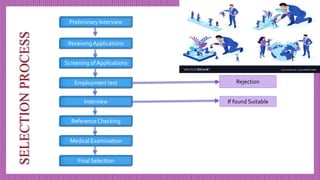
Preliminary Interview
ReceivingApplications
Screening of Applications
Employment test
Interview
Reference Checking
Medical Examination
Final Selection
Rejection
If found Suitable
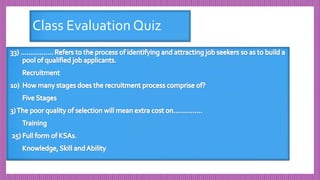
Class Evaluation Quiz
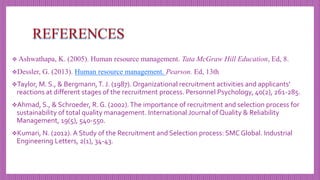
 Ashwathapa, K. (2005). Human resource management. Tata McGraw Hill Education, Ed, 8.
Dessler, G. (2013). Human resource management. Pearson. Ed, 13th
Taylor, M. S., & Bergmann,T. J. (1987). Organizational recruitment activities and applicants'
reactions at different stages of the recruitment process. Personnel Psychology, 40(2), 261-285.
Ahmad, S., & Schroeder, R. G. (2002).The importance of recruitment and selection process for
sustainability of total quality management. International Journal of Quality & Reliability
Management, 19(5), 540-550.
Kumari, N. (2012). A Study of the Recruitment and Selection process: SMC Global. Industrial
Engineering Letters, 2(1), 34-43.
RECRUITMENT AND SELECTION PROCESS.

RECRUITMENT AND SELECTION PROCESS.

  • 4.
  • 6.
    LEARNING OBJECTIVES After thislecture, you should be able to, Understand the concept of recruitment and selection Know the process and purpose of recruitment
  • 10.
    Attract and encouragemore and more candidates to apply in the organisation Create a talent pool of candidates to enable the selection of the best candidates for the organisaion Minimize unwarranted cost of selection Help increase the success rate of selection process by decreasing the number visibly under qualified or overqualified job applicants
  • 13.
    Recruitment planning Searching Strategydevelopment Evaluation and Control Screening
  • 14.
    -Vacant positions are analyzedand described IdentifyingVacancy Job analysis Job description Job Specification Job evaluation
  • 20.
    Preliminary Interview ReceivingApplications Screening ofApplications Employment test Interview Reference Checking Medical Examination Final Selection Rejection If found Suitable
  • 22.
  • 24.
     Ashwathapa, K.(2005). Human resource management. Tata McGraw Hill Education, Ed, 8. Dessler, G. (2013). Human resource management. Pearson. Ed, 13th Taylor, M. S., & Bergmann,T. J. (1987). Organizational recruitment activities and applicants' reactions at different stages of the recruitment process. Personnel Psychology, 40(2), 261-285. Ahmad, S., & Schroeder, R. G. (2002).The importance of recruitment and selection process for sustainability of total quality management. International Journal of Quality & Reliability Management, 19(5), 540-550. Kumari, N. (2012). A Study of the Recruitment and Selection process: SMC Global. Industrial Engineering Letters, 2(1), 34-43.