

Seminar on
Employee
Recruitment
Saroj Timilsina (16531)
Gaurav Shrestha (16524)
Ijan Pradhan (16518)
Mani Raj Gole (16505)
Ajay Raj Singh Dangol (16503)
Recruitment
Recruitment (hiring) is a core function of human
resource management. Recruitment refers to the overall
process of attracting, selecting and appointing suitable
candidates for jobs (either permanent or temporary) within
an organization.
Source google
Other definitions
Edwin Flippo: “Recruitment is the process of searching for
prospective employees and stimulating them to apply for jobs in
the organization.”
DeCenzo and Robbins: “Recruitment is the process of
discovering potential candidates for actual or anticipated
organizational vacancies. Or from another perspective, it is a
linking activity—bringing together those with jobs to fill and those
seeking jobs.”
Plumbley: “Recruitment is a matching process and the
capacities and inclinations of the candidates have to be matched
against the demand and rewards inherent in a given job or
career pattern.”
Why Recruitment is Needed?
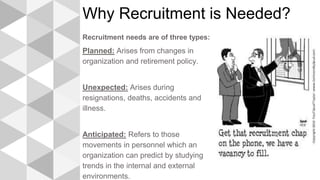
Recruitment needs are of three types:
Planned: Arises from changes in
organization and retirement policy.
Unexpected: Arises during
resignations, deaths, accidents and
illness.
Anticipated: Refers to those
movements in personnel which an
organization can predict by studying
trends in the internal and external
environments.
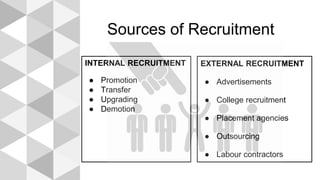
Sources of Recruitment
INTERNAL RECRUITMENT
â—Ź Promotion
â—Ź Transfer
â—Ź Upgrading
â—Ź Demotion
EXTERNAL RECRUITMENT
â—Ź Advertisements
â—Ź College recruitment
â—Ź Placement agencies
â—Ź Outsourcing
â—Ź Labour contractors
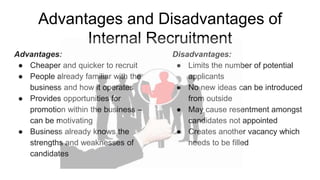
Advantages and Disadvantages of
Internal Recruitment
Advantages:
â—Ź Cheaper and quicker to recruit
â—Ź People already familiar with the
business and how it operates
â—Ź Provides opportunities for
promotion within the business –
can be motivating
â—Ź Business already knows the
strengths and weaknesses of
candidates
Disadvantages:
â—Ź Limits the number of potential
applicants
â—Ź No new ideas can be introduced
from outside
â—Ź May cause resentment amongst
candidates not appointed
â—Ź Creates another vacancy which
needs to be filled
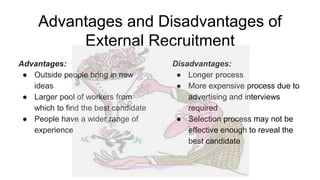
Advantages and Disadvantages of
External Recruitment
Advantages:
â—Ź Outside people bring in new
ideas
â—Ź Larger pool of workers from
which to find the best candidate
â—Ź People have a wider range of
experience
Disadvantages:
â—Ź Longer process
â—Ź More expensive process due to
advertising and interviews
required
â—Ź Selection process may not be
effective enough to reveal the
best candidate
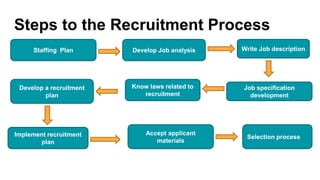
Steps to the Recruitment Process
Develop Job analysis
Job specification
development
Know laws related to
recruitment
Develop a recruitment
plan
Implement recruitment
plan
Accept applicant
materials
Selection process
Staffing Plan Write Job description
Staffing Plan
â—Ź This plan includes Identifying Vacancy and Evaluating
Needs.
â—Ź Can be evaluated through questionnaires.
â—Ź Gives forecasting to determine how many people they
will need.
â—Ź Proper planning and evaluation of the need will lead to
hiring the right person for the role and team
â—Ź The basis of the Plan will be the annual budget of the
organization and the short- to-long term plans of the
organization
â—Ź Plan is based on both internal and external factors.
Develop Job Analysis
â—Ź Job analysis is a systematic approach to determine what
a person actually does in his or her job.
â—Ź Major part includes reviewing job responsibilities of
current employees, researching similar jobs with
competitors, analyzing any new responsibilities that need
to be accomplished by the person with the position.
â—Ź Based on this analysis, an accurate job description and
job specifications can be written
â—Ź The purpose of a job analysis is to ensure creation of
the right fit between the job and the employee.
Prepare Job Description
â—Ź A Job description is the core of a successful recruitment
process.
â—Ź should always include the following components:
(General Information, Position Purpose, Essential
Function, Minimum Requirements, Preferred
Qualifications
â—Ź A well-written position description: Provides a first
impression of the organization to the candidate
Job Description cont..
â—Ź Provides an opportunity to clearly articulate the value
proposition for the role
â—Ź Clearly articulates responsibilities and qualifications to
attract the best suited candidates
â—Ź Identifies tasks, workflow and accountability, enabling
the department to plan how it will operate and grow
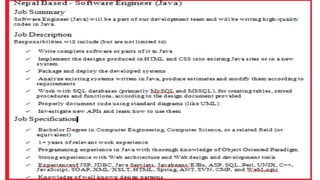
Job specification
â—Ź Skills and abilities the person must have to
perform the job.
â—Ź Define the education, training, qualifications and
experience.
â—Ź Specification can be set out under the following
headings:
a)Technical competencies: able to carry out the role,
including any special aptitudes or skills required
Job specification cont..
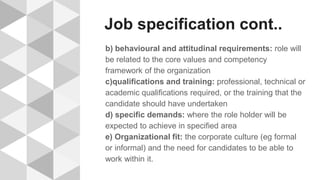
b) behavioural and attitudinal requirements: role will
be related to the core values and competency
framework of the organization
c)qualifications and training: professional, technical or
academic qualifications required, or the training that the
candidate should have undertaken
d) specific demands: where the role holder will be
expected to achieve in specified area
e) Organizational fit: the corporate culture (eg formal
or informal) and the need for candidates to be able to
work within it.
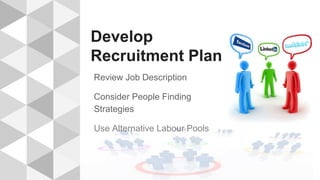
Develop
Recruitment Plan
Review Job Description
Consider People Finding
Strategies
Use Alternative Labour Pools
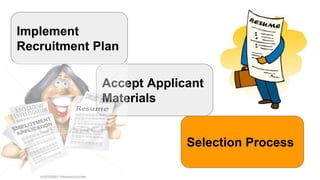
Implement
Recruitment Plan
Accept Applicant
Materials
Selection Process
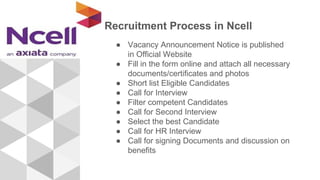
Recruitment Process in Ncell
â—Ź Vacancy Announcement Notice is published
in Official Website
â—Ź Fill in the form online and attach all necessary
documents/certificates and photos
â—Ź Short list Eligible Candidates
â—Ź Call for Interview
â—Ź Filter competent Candidates
â—Ź Call for Second Interview
â—Ź Select the best Candidate
â—Ź Call for HR Interview
â—Ź Call for signing Documents and discussion on
benefits
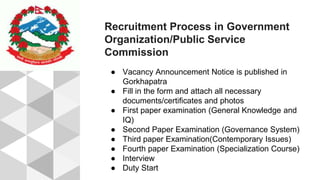
Recruitment Process in Government
Organization/Public Service
Commission
â—Ź Vacancy Announcement Notice is published in
Gorkhapatra
â—Ź Fill in the form and attach all necessary
documents/certificates and photos
â—Ź First paper examination (General Knowledge and
IQ)
â—Ź Second Paper Examination (Governance System)
â—Ź Third paper Examination(Contemporary Issues)
â—Ź Fourth paper Examination (Specialization Course)
â—Ź Interview
â—Ź Duty Start
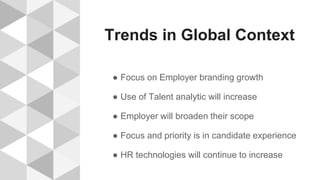
Trends in Global Context
â—Ź Focus on Employer branding growth
â—Ź Use of Talent analytic will increase
â—Ź Employer will broaden their scope
â—Ź Focus and priority is in candidate experience
â—Ź HR technologies will continue to increase
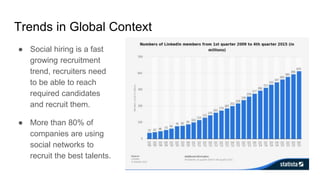
Trends in Global Context
â—Ź Social hiring is a fast
growing recruitment
trend, recruiters need
to be able to reach
required candidates
and recruit them.
â—Ź More than 80% of
companies are using
social networks to
recruit the best talents.
Nepali Context
â—Ź Follow the basic process. Ad-hoc
â—Ź Staffing - Organization adopting this model
â—Ź Headhunting - for specialized positions
â—Ź Outsourcing - Recruitment agencies
â—Ź Increase in Understanding & respect the
process
â—Ź Use of software - online announcement,
application, selection and contract
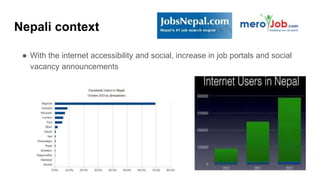
Nepali context
â—Ź With the internet accessibility and social, increase in job portals and social
vacancy announcements
Problem/Challenges and Solutions
â—Ź The best candidates are deciding between multiple offers at once
Problem: Candidates applying multiple companies / Solution: Great interview Experience
â—Ź Too much noise in the market
Problem: Too many recruiters are trying to reach the same candidate/ Solution:Build a brand to attract
â—Ź Shortage of great talent
Problem: Shortage of skilled labor/ Solution: Data drive approach, Linkedin
â—Ź Hiring managers are too picky with what they want
Problem: Hardest problem is collaboration /Solution: Good relationship between recruiters and hiring
Recommendations
â—Ź Recruitment is very critical process - the first
process has to be right
â—Ź JD, Policy Procedures, Training, Involvement
â—Ź Has to be handled correctively
â—Ź Notification to candidates
â—Ź Follow recruitment depending on your
organization and environment
â—Ź Recruitment planning and implementation is
important
â—Ź Employee - Full term, short term, intern,
consultants
References
https://www.shrm.org/resourcesandtools/hr-topics/talent-acquisition/pages/5-
recruiting-trends-2016.aspx
https://business.linkedin.com/talent-solutions/blog/recruiting-tips/2015/4-of-the-
biggest-problems-recruiters-face-and-how-to-overcome-them
https://hr.ucr.edu/recruitment/guidelines/process.html
https://en.wikipedia.org/wiki/Human_resources
Video
https://www.youtube.com/watch?v=SYwUfCCMHvk
THANK YOU

Employee recruitment seminar

  • 1.
    Seminar on Employee Recruitment Saroj Timilsina(16531) Gaurav Shrestha (16524) Ijan Pradhan (16518) Mani Raj Gole (16505) Ajay Raj Singh Dangol (16503)
  • 2.
    Recruitment Recruitment (hiring) isa core function of human resource management. Recruitment refers to the overall process of attracting, selecting and appointing suitable candidates for jobs (either permanent or temporary) within an organization. Source google
  • 3.
    Other definitions Edwin Flippo:“Recruitment is the process of searching for prospective employees and stimulating them to apply for jobs in the organization.” DeCenzo and Robbins: “Recruitment is the process of discovering potential candidates for actual or anticipated organizational vacancies. Or from another perspective, it is a linking activity—bringing together those with jobs to fill and those seeking jobs.” Plumbley: “Recruitment is a matching process and the capacities and inclinations of the candidates have to be matched against the demand and rewards inherent in a given job or career pattern.”
  • 4.
    Why Recruitment isNeeded? Recruitment needs are of three types: Planned: Arises from changes in organization and retirement policy. Unexpected: Arises during resignations, deaths, accidents and illness. Anticipated: Refers to those movements in personnel which an organization can predict by studying trends in the internal and external environments.
  • 5.
    Sources of Recruitment INTERNALRECRUITMENT â—Ź Promotion â—Ź Transfer â—Ź Upgrading â—Ź Demotion EXTERNAL RECRUITMENT â—Ź Advertisements â—Ź College recruitment â—Ź Placement agencies â—Ź Outsourcing â—Ź Labour contractors
  • 6.
    Advantages and Disadvantagesof Internal Recruitment Advantages: ● Cheaper and quicker to recruit ● People already familiar with the business and how it operates ● Provides opportunities for promotion within the business – can be motivating ● Business already knows the strengths and weaknesses of candidates Disadvantages: ● Limits the number of potential applicants ● No new ideas can be introduced from outside ● May cause resentment amongst candidates not appointed ● Creates another vacancy which needs to be filled
  • 7.
    Advantages and Disadvantagesof External Recruitment Advantages: â—Ź Outside people bring in new ideas â—Ź Larger pool of workers from which to find the best candidate â—Ź People have a wider range of experience Disadvantages: â—Ź Longer process â—Ź More expensive process due to advertising and interviews required â—Ź Selection process may not be effective enough to reveal the best candidate
  • 8.
    Steps to theRecruitment Process Develop Job analysis Job specification development Know laws related to recruitment Develop a recruitment plan Implement recruitment plan Accept applicant materials Selection process Staffing Plan Write Job description
  • 9.
    Staffing Plan â—Ź Thisplan includes Identifying Vacancy and Evaluating Needs. â—Ź Can be evaluated through questionnaires. â—Ź Gives forecasting to determine how many people they will need. â—Ź Proper planning and evaluation of the need will lead to hiring the right person for the role and team â—Ź The basis of the Plan will be the annual budget of the organization and the short- to-long term plans of the organization â—Ź Plan is based on both internal and external factors.
  • 10.
    Develop Job Analysis â—ŹJob analysis is a systematic approach to determine what a person actually does in his or her job. â—Ź Major part includes reviewing job responsibilities of current employees, researching similar jobs with competitors, analyzing any new responsibilities that need to be accomplished by the person with the position. â—Ź Based on this analysis, an accurate job description and job specifications can be written â—Ź The purpose of a job analysis is to ensure creation of the right fit between the job and the employee.
  • 11.
    Prepare Job Description â—ŹA Job description is the core of a successful recruitment process. â—Ź should always include the following components: (General Information, Position Purpose, Essential Function, Minimum Requirements, Preferred Qualifications â—Ź A well-written position description: Provides a first impression of the organization to the candidate
  • 12.
    Job Description cont.. â—ŹProvides an opportunity to clearly articulate the value proposition for the role â—Ź Clearly articulates responsibilities and qualifications to attract the best suited candidates â—Ź Identifies tasks, workflow and accountability, enabling the department to plan how it will operate and grow
  • 13.
    Job specification â—Ź Skillsand abilities the person must have to perform the job. â—Ź Define the education, training, qualifications and experience. â—Ź Specification can be set out under the following headings: a)Technical competencies: able to carry out the role, including any special aptitudes or skills required
  • 14.
    Job specification cont.. b)behavioural and attitudinal requirements: role will be related to the core values and competency framework of the organization c)qualifications and training: professional, technical or academic qualifications required, or the training that the candidate should have undertaken d) specific demands: where the role holder will be expected to achieve in specified area e) Organizational fit: the corporate culture (eg formal or informal) and the need for candidates to be able to work within it.
  • 16.
    Develop Recruitment Plan Review JobDescription Consider People Finding Strategies Use Alternative Labour Pools
  • 17.
  • 18.
    Recruitment Process inNcell â—Ź Vacancy Announcement Notice is published in Official Website â—Ź Fill in the form online and attach all necessary documents/certificates and photos â—Ź Short list Eligible Candidates â—Ź Call for Interview â—Ź Filter competent Candidates â—Ź Call for Second Interview â—Ź Select the best Candidate â—Ź Call for HR Interview â—Ź Call for signing Documents and discussion on benefits
  • 19.
    Recruitment Process inGovernment Organization/Public Service Commission â—Ź Vacancy Announcement Notice is published in Gorkhapatra â—Ź Fill in the form and attach all necessary documents/certificates and photos â—Ź First paper examination (General Knowledge and IQ) â—Ź Second Paper Examination (Governance System) â—Ź Third paper Examination(Contemporary Issues) â—Ź Fourth paper Examination (Specialization Course) â—Ź Interview â—Ź Duty Start
  • 20.
    Trends in GlobalContext â—Ź Focus on Employer branding growth â—Ź Use of Talent analytic will increase â—Ź Employer will broaden their scope â—Ź Focus and priority is in candidate experience â—Ź HR technologies will continue to increase
  • 21.
    Trends in GlobalContext â—Ź Social hiring is a fast growing recruitment trend, recruiters need to be able to reach required candidates and recruit them. â—Ź More than 80% of companies are using social networks to recruit the best talents.
  • 22.
    Nepali Context â—Ź Followthe basic process. Ad-hoc â—Ź Staffing - Organization adopting this model â—Ź Headhunting - for specialized positions â—Ź Outsourcing - Recruitment agencies â—Ź Increase in Understanding & respect the process â—Ź Use of software - online announcement, application, selection and contract
  • 23.
    Nepali context â—Ź Withthe internet accessibility and social, increase in job portals and social vacancy announcements
  • 24.
    Problem/Challenges and Solutions â—ŹThe best candidates are deciding between multiple offers at once Problem: Candidates applying multiple companies / Solution: Great interview Experience â—Ź Too much noise in the market Problem: Too many recruiters are trying to reach the same candidate/ Solution:Build a brand to attract â—Ź Shortage of great talent Problem: Shortage of skilled labor/ Solution: Data drive approach, Linkedin â—Ź Hiring managers are too picky with what they want Problem: Hardest problem is collaboration /Solution: Good relationship between recruiters and hiring
  • 25.
    Recommendations â—Ź Recruitment isvery critical process - the first process has to be right â—Ź JD, Policy Procedures, Training, Involvement â—Ź Has to be handled correctively â—Ź Notification to candidates â—Ź Follow recruitment depending on your organization and environment â—Ź Recruitment planning and implementation is important â—Ź Employee - Full term, short term, intern, consultants
  • 26.
  • 27.