OSCON 2015 Portland, OR
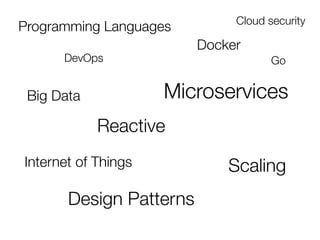
Reactive
Programming Languages Cloud security
Internet of Things
DevOps
Scaling
Docker
Big Data
Go
Microservices
Design Patterns
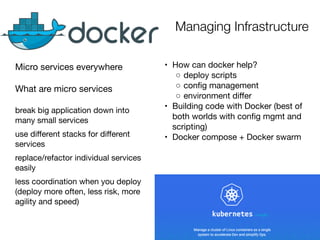
•	 How can docker help?

	 ◦	deploy scripts

	 ◦	config management

	 ◦	environment differ

	•	 Building code with Docker (best of
both worlds with config mgmt and
scripting)

	•	 Docker compose + Docker swarm

Managing Infrastructure
Micro services everywhere 

What are micro services

break big application down into
many small services

use different stacks for different
services

replace/refactor individual services
easily

less coordination when you deploy
(deploy more often, less risk, more
agility and speed)
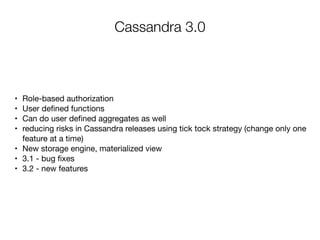
Cassandra 3.0
	•	 Role-based authorization

	•	 User defined functions

	•	 Can do user defined aggregates as well 

	•	 reducing risks in Cassandra releases using tick tock strategy (change only one
feature at a time)

	•	 New storage engine, materialized view

	•	 3.1 - bug fixes

	•	 3.2 - new features 
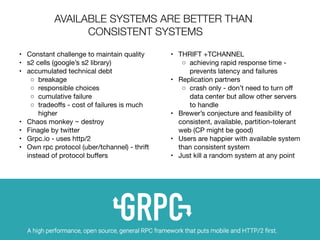
•	 Constant challenge to maintain quality

	 •	 s2 cells (google’s s2 library)

	 •	 accumulated technical debt

	 ◦	 breakage

	 ◦	 responsible choices

	 ◦	 cumulative failure

	 ◦	 tradeoffs - cost of failures is much
higher

	 •	 Chaos monkey ~ destroy

	 •	 Finagle by twitter

	 •	 Grpc.io - uses http/2

	 •	 Own rpc protocol (uber/tchannel) - thrift
instead of protocol buffers

	 •	 THRIFT +TCHANNEL

	 ◦	 achieving rapid response time -
prevents latency and failures

	 •	 Replication partners

	 ◦	 crash only - don’t need to turn off
data center but allow other servers
to handle

	 •	 Brewer’s conjecture and feasibility of
consistent, available, partition-tolerant
web (CP might be good)

	 •	 Users are happier with available system
than consistent system 

	 •	 Just kill a random system at any point 

AVAILABLE SYSTEMS ARE BETTER THAN
CONSISTENT SYSTEMS
Recap: OSCON 2015
Recap: OSCON 2015

Recap: OSCON 2015

  • 1.
  • 4.
    Reactive Programming Languages Cloudsecurity Internet of Things DevOps Scaling Docker Big Data Go Microservices Design Patterns
  • 5.
    • How candocker help? ◦ deploy scripts ◦ config management ◦ environment differ • Building code with Docker (best of both worlds with config mgmt and scripting) • Docker compose + Docker swarm Managing Infrastructure Micro services everywhere What are micro services break big application down into many small services use different stacks for different services replace/refactor individual services easily less coordination when you deploy (deploy more often, less risk, more agility and speed)
  • 8.
    Cassandra 3.0 • Role-basedauthorization • User defined functions • Can do user defined aggregates as well  • reducing risks in Cassandra releases using tick tock strategy (change only one feature at a time) • New storage engine, materialized view • 3.1 - bug fixes • 3.2 - new features 
  • 10.
    • Constant challengeto maintain quality • s2 cells (google’s s2 library) • accumulated technical debt ◦ breakage ◦ responsible choices ◦ cumulative failure ◦ tradeoffs - cost of failures is much higher • Chaos monkey ~ destroy • Finagle by twitter • Grpc.io - uses http/2 • Own rpc protocol (uber/tchannel) - thrift instead of protocol buffers • THRIFT +TCHANNEL ◦ achieving rapid response time - prevents latency and failures • Replication partners ◦ crash only - don’t need to turn off data center but allow other servers to handle • Brewer’s conjecture and feasibility of consistent, available, partition-tolerant web (CP might be good) • Users are happier with available system than consistent system  • Just kill a random system at any point  AVAILABLE SYSTEMS ARE BETTER THAN CONSISTENT SYSTEMS