CEPA “Antonio Machado” (Puertollano)


English Language
Reading Strategies
Before reading

Predicting the content of the text.
Unfamiliar words. Guessing the meaning from the
 context. Use the following analysis.
Taking advantage of what you already know. It
 will help you to understand the text better.
Distinguishing facts from opinions. Believe, think
 or consider (opinion). Adjectives as: horrible,
 fantastic, boring or interesting, express an opinion
 too.
While reading

Skimming.You can often find the main ideas by
 reading the first and the last sentences of each
 paragraph.
Key words. Get the general idea from repeated
 words.
Cognates. They can help you to understand the
 main idea of the text. Beware of false friends!
While reading

Key sentences. You can get the general idea of a
 text by reading the topic sentence of each
 paragraph.
A topic sentence contains the main ideas.
It is often the first or last sentence of a paragraph.
Normally you can locate it by looking for
 sentences which predict someting or state an
 opinion.
While reading


Short easy phrases or sentences.
   Don't panic if the text looks too difficult.
   Look for short, easy pieces of information to get
    the general idea of the text.
   Try to cut down long, difficult sentences into
     shorter, easier components.


Scanning. Although the text seems difficult, it is
 sometimes enough to look for specific information.
After reading

Reference words are usually pronouns
It is important to know what the pronouns refer
   to. Example:


Tom loved chats and was addicted to his computer
Parents should talk to teenagers about the problem
 of addiction to technology and find a solution for it.


                                                T
                                                #Página 13
After reading

Answering 'true or false' questions.
Read the sentences in the exercise first.
Read the text carefully and locate the relevant
 information.
Compare the sentences given with the information
 in the text. Decide if they are True or False.
Rewrite the evidence from the text using your own
 words: The text says..., the author writes...,
 according to the text...
After reading

Using your own wordsNOT repeat questions.
      Remember: Do to answer the
                      text
1. Read the questions carefully and find the
 answers in the text.attention to the verb
      and pay close
                     tense
2. Think of other ways of answering using the
               In the question
 new structures and different words.
3. You may use introductory expressions:
 according to the text/author,...
4. You can also use the question to begin your
 answer.
After reading

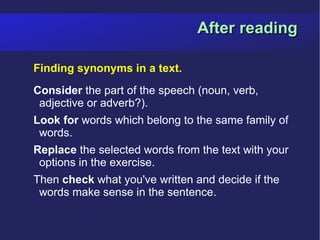
Finding synonyms in a text.
Consider the part of the speech (noun, verb,
 adjective or adverb?).
Look for words which belong to the same family of
 words.
Replace the selected words from the text with your
 options in the exercise.
Then check what you've written and decide if the
 words make sense in the sentence.
After reading

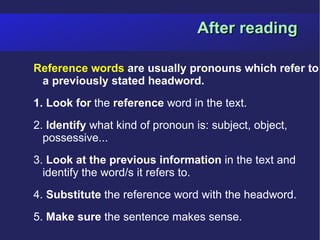
Reference words are usually pronouns which refer to
 a previously stated headword.
1. Look for the reference word in the text.
2. Identify what kind of pronoun is: subject, object,
  possessive...
3. Look at the previous information in the text and
  identify the word/s it refers to.
4. Substitute the reference word with the headword.
5. Make sure the sentence makes sense.
After reading

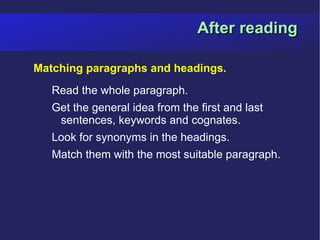
Matching paragraphs and headings.
   Read the whole paragraph.
   Get the general idea from the first and last
    sentences, keywords and cognates.
   Look for synonyms in the headings.
   Match them with the most suitable paragraph.
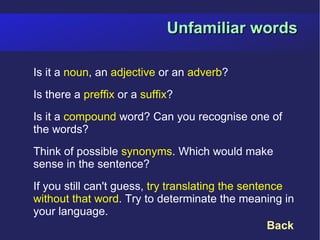
Unfamiliar words

Is it a noun, an adjective or an adverb?
Is there a preffix or a suffix?
Is it a compound word? Can you recognise one of
the words?
Think of possible synonyms. Which would make
sense in the sentence?
If you still can't guess, try translating the sentence
without that word. Try to determinate the meaning in
your language.
                                                   Back
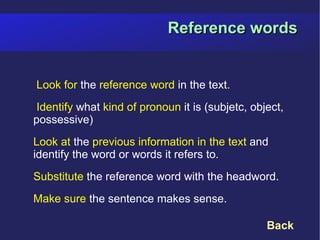
Reference words


Look for the reference word in the text.
 Identify what kind of pronoun it is (subjetc, object,
possessive)
Look at the previous information in the text and
identify the word or words it refers to.
Substitute the reference word with the headword.
Make sure the sentence makes sense.

                                                  Back
Reading_comprehension_tips.odp se encuentra bajo una Licencia Creative
             Commons Reconocimiento-NoComercial-SinObraDerivada 3.0 Unported.


                           Sources:

Tips and ideas were taken from the textbook

  Bachillerato Made Easy 2, Richmond Publishing, 2001

First slide image (thinking man) has been taken from
      http://jeffshore.com/2011/11/future-geniuses/thinking-man/

Slide 6 image (light-bulb-bust) has been taken from
                     http://www.profitandlaws.com/


                                                       José Luis Chamero García

Reading comprehension tips

  • 1.
    CEPA “Antonio Machado”(Puertollano) English Language Reading Strategies
  • 2.
    Before reading Predicting thecontent of the text. Unfamiliar words. Guessing the meaning from the context. Use the following analysis. Taking advantage of what you already know. It will help you to understand the text better. Distinguishing facts from opinions. Believe, think or consider (opinion). Adjectives as: horrible, fantastic, boring or interesting, express an opinion too.
  • 3.
    While reading Skimming.You canoften find the main ideas by reading the first and the last sentences of each paragraph. Key words. Get the general idea from repeated words. Cognates. They can help you to understand the main idea of the text. Beware of false friends!
  • 4.
    While reading Key sentences.You can get the general idea of a text by reading the topic sentence of each paragraph. A topic sentence contains the main ideas. It is often the first or last sentence of a paragraph. Normally you can locate it by looking for sentences which predict someting or state an opinion.
  • 5.
    While reading Short easyphrases or sentences. Don't panic if the text looks too difficult. Look for short, easy pieces of information to get the general idea of the text. Try to cut down long, difficult sentences into shorter, easier components. Scanning. Although the text seems difficult, it is sometimes enough to look for specific information.
  • 6.
    After reading Reference wordsare usually pronouns It is important to know what the pronouns refer to. Example: Tom loved chats and was addicted to his computer Parents should talk to teenagers about the problem of addiction to technology and find a solution for it. T #Página 13
  • 7.
    After reading Answering 'trueor false' questions. Read the sentences in the exercise first. Read the text carefully and locate the relevant information. Compare the sentences given with the information in the text. Decide if they are True or False. Rewrite the evidence from the text using your own words: The text says..., the author writes..., according to the text...
  • 8.
    After reading Using yourown wordsNOT repeat questions. Remember: Do to answer the text 1. Read the questions carefully and find the answers in the text.attention to the verb and pay close tense 2. Think of other ways of answering using the In the question new structures and different words. 3. You may use introductory expressions: according to the text/author,... 4. You can also use the question to begin your answer.
  • 9.
    After reading Finding synonymsin a text. Consider the part of the speech (noun, verb, adjective or adverb?). Look for words which belong to the same family of words. Replace the selected words from the text with your options in the exercise. Then check what you've written and decide if the words make sense in the sentence.
  • 10.
    After reading Reference wordsare usually pronouns which refer to a previously stated headword. 1. Look for the reference word in the text. 2. Identify what kind of pronoun is: subject, object, possessive... 3. Look at the previous information in the text and identify the word/s it refers to. 4. Substitute the reference word with the headword. 5. Make sure the sentence makes sense.
  • 11.
    After reading Matching paragraphsand headings. Read the whole paragraph. Get the general idea from the first and last sentences, keywords and cognates. Look for synonyms in the headings. Match them with the most suitable paragraph.
  • 12.
    Unfamiliar words Is ita noun, an adjective or an adverb? Is there a preffix or a suffix? Is it a compound word? Can you recognise one of the words? Think of possible synonyms. Which would make sense in the sentence? If you still can't guess, try translating the sentence without that word. Try to determinate the meaning in your language. Back
  • 13.
    Reference words Look forthe reference word in the text. Identify what kind of pronoun it is (subjetc, object, possessive) Look at the previous information in the text and identify the word or words it refers to. Substitute the reference word with the headword. Make sure the sentence makes sense. Back
  • 14.
    Reading_comprehension_tips.odp se encuentrabajo una Licencia Creative Commons Reconocimiento-NoComercial-SinObraDerivada 3.0 Unported. Sources: Tips and ideas were taken from the textbook Bachillerato Made Easy 2, Richmond Publishing, 2001 First slide image (thinking man) has been taken from http://jeffshore.com/2011/11/future-geniuses/thinking-man/ Slide 6 image (light-bulb-bust) has been taken from http://www.profitandlaws.com/ José Luis Chamero García

Editor's Notes

  • #3 - Predicting: Use photos and the title to understand what the text is about before you read.
  • #4 Keywords: You can understand the main idea of a text by focussing on the most frequently repeated words. Cognates: are words with similar or identical spellings in two languages. They also have the same meaning. They can help you to understand the main idea of the text.