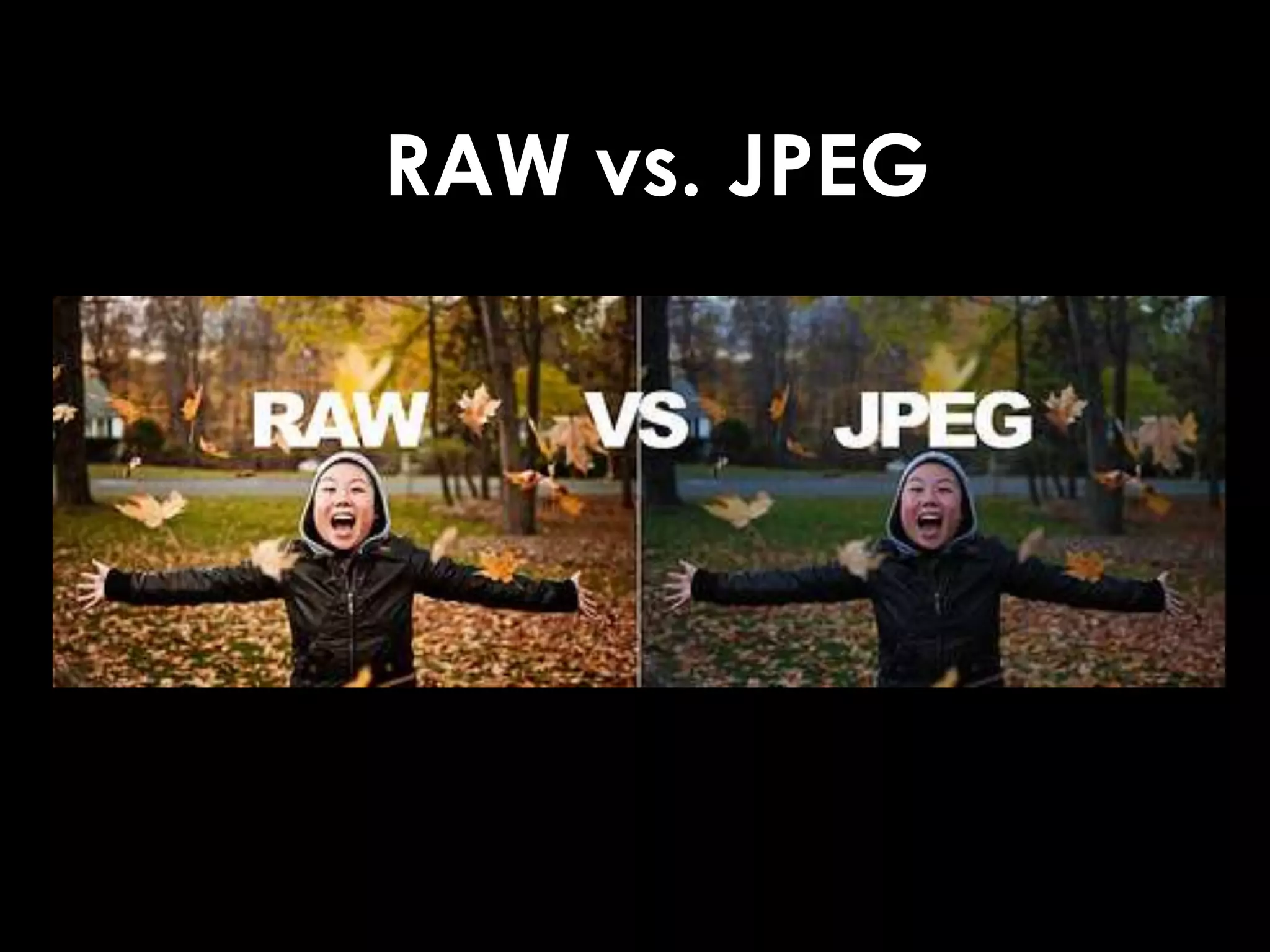
RAW vs. JPEG
RAW is a setting in your camera
• Most advanced cameras can shoot in
RAW
• Some cameras can shoot in RAW + JPEG
• Most cameras offer the ability to convert
a RAW images into JPEG’s directly in the
camera.
• To shoot in RAW you must set your
camera to shoot in RAW before you take
the photo.
• You cannot convert a non RAW file to a
RAW file and achieve the abilities of
RAW.
So, What is RAW?
• RAW is often referred to as digital negative.
• RAW is the data your camera captured from
the sensor when you take a photo.
• You can think of a RAW image similar to
undeveloped film. The information to create
an image is there but it is not usable yet.
• RAW images are not processed much if at all.
• RAW data is usually not compressed which
means the data will take up a little more
space.
What is JPEG?
• A JPEG image is a finalized image.
• The data from the camera’s sensor has
been processed into a pixel image.
• A JPEG image is compressed.
• A JPEG file is a complete and is ready
for distribution or use.
RAW vs. JPEG
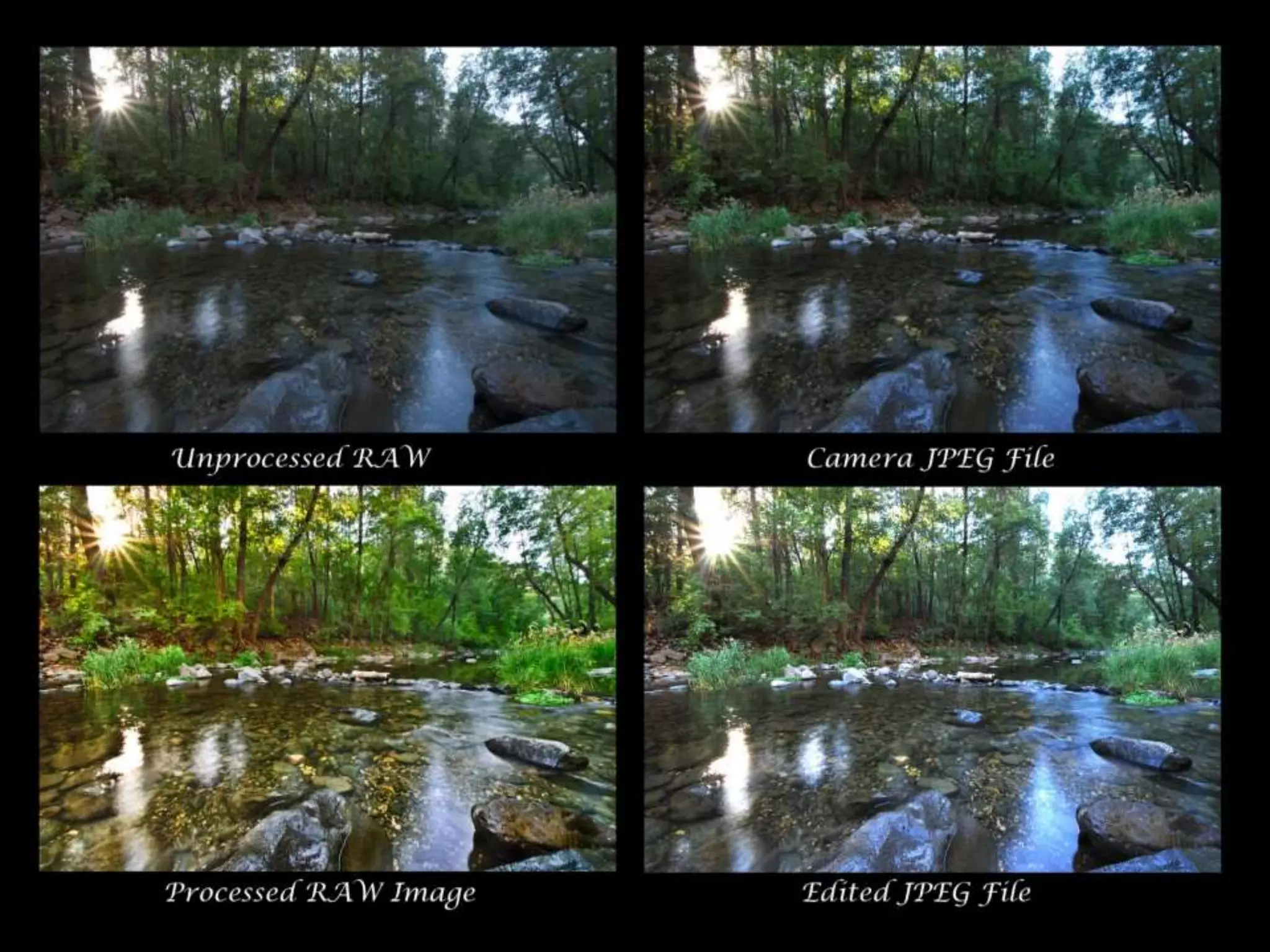
• RAW larger files – JPEG Compressed Files
• RAW retains more detail in highlight and
shadows.
• RAW contains more color detail for more
accurate colors.
• RAW requires processing – JPEG is ready to go
• RAW allows camera settings like white
balance to be changed during processing.
• RAW offers larger flexibility in editing photos.
Which is better?
• Which is better really comes down to what
you want out of the picture you are taking.
– Use JPEG if you just want to record an event.
– Use JPEG if you don’t want to spend a lot of time
editing photos.
– Use JPEG if you need to save space.
– Use RAW if you want to add artistic
interpretation.
– Use RAW if the image contains difficult exposures.
– Use RAW if you want more control of what the
photo looks like.
– Noise is easier to remove in RAW images.
Raw vs Jpeg

Raw vs Jpeg

  • 1.
  • 2.
    RAW is asetting in your camera • Most advanced cameras can shoot in RAW • Some cameras can shoot in RAW + JPEG • Most cameras offer the ability to convert a RAW images into JPEG’s directly in the camera. • To shoot in RAW you must set your camera to shoot in RAW before you take the photo. • You cannot convert a non RAW file to a RAW file and achieve the abilities of RAW.
  • 3.
    So, What isRAW? • RAW is often referred to as digital negative. • RAW is the data your camera captured from the sensor when you take a photo. • You can think of a RAW image similar to undeveloped film. The information to create an image is there but it is not usable yet. • RAW images are not processed much if at all. • RAW data is usually not compressed which means the data will take up a little more space.
  • 4.
    What is JPEG? •A JPEG image is a finalized image. • The data from the camera’s sensor has been processed into a pixel image. • A JPEG image is compressed. • A JPEG file is a complete and is ready for distribution or use.
  • 5.
    RAW vs. JPEG •RAW larger files – JPEG Compressed Files • RAW retains more detail in highlight and shadows. • RAW contains more color detail for more accurate colors. • RAW requires processing – JPEG is ready to go • RAW allows camera settings like white balance to be changed during processing. • RAW offers larger flexibility in editing photos.
  • 6.
    Which is better? •Which is better really comes down to what you want out of the picture you are taking. – Use JPEG if you just want to record an event. – Use JPEG if you don’t want to spend a lot of time editing photos. – Use JPEG if you need to save space. – Use RAW if you want to add artistic interpretation. – Use RAW if the image contains difficult exposures. – Use RAW if you want more control of what the photo looks like. – Noise is easier to remove in RAW images.