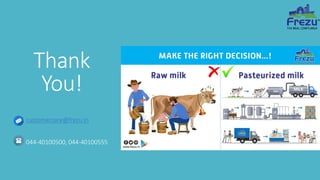
Raw Milk
vs
Pasteurized Milk
Introduction
o Milk and milk products provide a wealth of nutrition
benefits.
o Cow's milk has long been associated with good health,
making it one of the most consumed beverages throughout
the world.
o When choosing milk and milk products, it is important to
consider the differences between Raw milk or Unpasteurized
vs Pasteurized Milk.
Raw Milk or
Unpasteurized Milk
o Raw milk is milk from cows, sheep,
and goats or any other animal that
has not been pasteurized to kill
harmful bacteria.
o In rural areas of Asia where cow’s
milk consumption is popular, milk is
typically unpasteurized.
Dangers of Raw Milk
o Raw milk can carry dangerous
bacteria such as Salmonella, E. coli,
Listeria, Campylobacter.
o These bacteria can seriously injure
the health of anyone who drinks raw
milk or eats products made from raw
milk.
Raw Milk and serious
illness
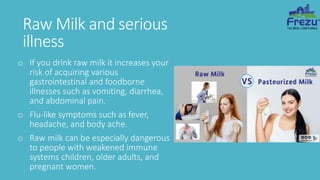
o If you drink raw milk it increases your
risk of acquiring various
gastrointestinal and foodborne
illnesses such as vomiting, diarrhea,
and abdominal pain.
o Flu-like symptoms such as fever,
headache, and body ache.
o Raw milk can be especially dangerous
to people with weakened immune
systems children, older adults, and
pregnant women.
Listeria and Pregnancy
o A pregnant woman will become ill if
they consuming raw milk.
o Listeria – the bacteria in raw milk can
cause miscarriage and fetal or newborn
death.
o Listeria is removed in pasteurized cow's
milk and it is good for pregnant
woman.
Pasteurized Milk
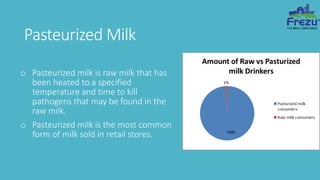
o Pasteurized milk is raw milk that has
been heated to a specified
temperature and time to kill
pathogens that may be found in the
raw milk.
o Pasteurized milk is the most common
form of milk sold in retail stores.
Pasteurization
o Pasteurization is a widely used
process that kills harmful bacteria by
heating and cooling milk to a specific
temperature for a set period of time.
o It was developed by Louis Pasteur in
1864.
Types of Pasteurization
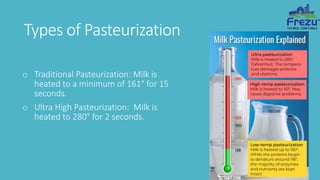
o Traditional Pasteurization: Milk is
heated to a minimum of 161° for 15
seconds.
o Ultra High Pasteurization: Milk is
heated to 280° for 2 seconds.
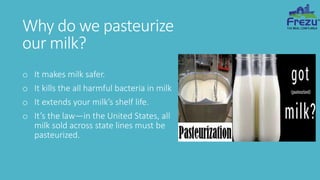
Why do we pasteurize
our milk?
o It makes milk safer.
o It kills the all harmful bacteria in milk
o It extends your milk’s shelf life.
o It’s the law—in the United States, all
milk sold across state lines must be
pasteurized.
Conclusion
o Raw milk vs Pasteurized milk - debate is often a very
dividing topic for not only consumers, but even people
within the dairy industry.
o If you’re thinking about drinking raw milk because you
believe it is a good source of beneficial bacteria, you
need to know that you may get sick from drinking it.
o Frezu provides Pasteurized fresh cow milk good for
health and protects consumers from many of the health
risks.
References
o https://www.fda.gov/food/resourcesforyou/consumers/u
cm079516.htm
o https://www.cdc.gov/features/rawmilk/index.html
o https://www.healthlinkbc.ca/healthlinkbc-
files/pasteurized-and-raw-milk
o https://chopra.com/articles/raw-milk-versus-
pasteurized-milk-benefits-and-risks
Thank
You!
customercare@frezu.in
044-40100500, 044-40100555

Raw milk vs pasteurized milk

  • 1.
  • 2.
    Introduction o Milk andmilk products provide a wealth of nutrition benefits. o Cow's milk has long been associated with good health, making it one of the most consumed beverages throughout the world. o When choosing milk and milk products, it is important to consider the differences between Raw milk or Unpasteurized vs Pasteurized Milk.
  • 3.
    Raw Milk or UnpasteurizedMilk o Raw milk is milk from cows, sheep, and goats or any other animal that has not been pasteurized to kill harmful bacteria. o In rural areas of Asia where cow’s milk consumption is popular, milk is typically unpasteurized.
  • 4.
    Dangers of RawMilk o Raw milk can carry dangerous bacteria such as Salmonella, E. coli, Listeria, Campylobacter. o These bacteria can seriously injure the health of anyone who drinks raw milk or eats products made from raw milk.
  • 5.
    Raw Milk andserious illness o If you drink raw milk it increases your risk of acquiring various gastrointestinal and foodborne illnesses such as vomiting, diarrhea, and abdominal pain. o Flu-like symptoms such as fever, headache, and body ache. o Raw milk can be especially dangerous to people with weakened immune systems children, older adults, and pregnant women.
  • 6.
    Listeria and Pregnancy oA pregnant woman will become ill if they consuming raw milk. o Listeria – the bacteria in raw milk can cause miscarriage and fetal or newborn death. o Listeria is removed in pasteurized cow's milk and it is good for pregnant woman.
  • 7.
    Pasteurized Milk o Pasteurizedmilk is raw milk that has been heated to a specified temperature and time to kill pathogens that may be found in the raw milk. o Pasteurized milk is the most common form of milk sold in retail stores.
  • 8.
    Pasteurization o Pasteurization isa widely used process that kills harmful bacteria by heating and cooling milk to a specific temperature for a set period of time. o It was developed by Louis Pasteur in 1864.
  • 9.
    Types of Pasteurization oTraditional Pasteurization: Milk is heated to a minimum of 161° for 15 seconds. o Ultra High Pasteurization: Milk is heated to 280° for 2 seconds.
  • 10.
    Why do wepasteurize our milk? o It makes milk safer. o It kills the all harmful bacteria in milk o It extends your milk’s shelf life. o It’s the law—in the United States, all milk sold across state lines must be pasteurized.
  • 11.
    Conclusion o Raw milkvs Pasteurized milk - debate is often a very dividing topic for not only consumers, but even people within the dairy industry. o If you’re thinking about drinking raw milk because you believe it is a good source of beneficial bacteria, you need to know that you may get sick from drinking it. o Frezu provides Pasteurized fresh cow milk good for health and protects consumers from many of the health risks.
  • 12.
    References o https://www.fda.gov/food/resourcesforyou/consumers/u cm079516.htm o https://www.cdc.gov/features/rawmilk/index.html ohttps://www.healthlinkbc.ca/healthlinkbc- files/pasteurized-and-raw-milk o https://chopra.com/articles/raw-milk-versus- pasteurized-milk-benefits-and-risks
  • 13.