Good hygienic practice in milk
production and processing
Jama mohamud dirie
Introduction
 Milk and dairy products are highly nutritious media, in
which micro-organisms can multiply and cause spoilage.
 The levels and types of micro-organisms in milk and
dairy products depend on the initial levels present in
raw milk, the microbial quality of other raw materials,
the conditions under which the products are produced
and the temperature and duration of storage.
The most common spoilage micro-organisms of milk and
dairy products are Gram-negative rod-shaped bacteria (e.g.
Pseudomonas spp., coliforms), Gram-positive spore-forming
bacteria (e.g. Bacillus spp., Clostridium spp.), lactic acid
producing bacteria (e.g. Streptococcus spp.) and yeasts.
Milk and milk products have in certain instances been
associated with foodborne illness. In the USA milk and dairy
products were involved in approximately 4% of the
foodborne bacterial disease outbreaks in 2007, i.e. 250
reported cases.
In the EU, investigations of foodborne diseases in 2007
showed that dairy products were involved in about 3% of
reported cases.
Disease is mainly due to consumption of unpasteurized milk
containing pathogenic micro-organisms (e.g. Salmonella,
Escherichia coli, Listeria monocytogenes, and importantly
Campylobacter) or products that have been contaminated
after production or have undergone temperature abuse (e.g.
calicivirus including norovirus, Staphylococcus aureus).
 In this chapter, the principal microbial hazards
concerning milk and milk products, focused on heat-
treated liquid milk products, will be described.
 The importance of good hygienic practice measures and
dairy product safety systems at farm, processing plant
and consumer level will be discussed. Finally, some
future trends in dairy processing are presented.
The principal hazards
Raw milk
 Raw milk, as secreted by healthy cows, is free of micro-
organisms. However, micro-organisms associated with the
teat move up the teat canal and into the interior of the
udder.
 Most of the bacteria present in raw milk are contaminants
of the outside and gain entrance into the milk from various
sources including soil, bedding, manure, feed and milking
equipment. Therefore, raw milk contains levels of a few to
several thousands of bacteria per ml.
 Enzyme activity during storage will result in defects in flavor,
texture and stability in milk and dairy products.
 A variety of pathogenic bacteria have been isolated from raw
milk including Mycobacterium spp., Salmonella, Listeria
monocytogenes, Bacillus cereus, Campylobacter jejune,
Yersinia enterocolitica, Escherichia coli and Staphylococcus
aureus.
 Depending on the country of origin, species, climate and
sanitary conditions, raw milk can contain one or more of the
pathogens listed.
Pasteurized milk
 The health rules in the EU for the production and placing on
the market of raw milk, heat-treated milk and milk-based
products are described in Council Directive 92/46/EEC.
 Pasteurization is applied to inactivate heat-sensitive spoilage
and pathogenic bacteria present in the raw milk.
 The minimum requirements to destroy potential pathogenic
micro-organisms are pasteurization for 15s at 71.7o
C or for
30min at 62.7o
C.
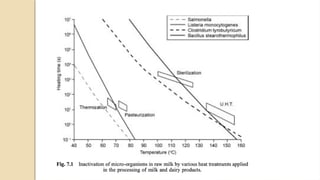
In Fig. the inactivation of vegetative (pathogenic) micro-
organisms (i.e. Listeria monocytogenes and Salmonella) and
bacterial spores (Clostridium tyrobutyricum and Geobacillus
stearothermophilus) by various heat treatments is shown.
The figures demonstrate that the spores are much more
resistant to heat than the vegetative microorganisms.
As can be observed, thermization and pasteurization are not
sufficient to inactivate bacterial spores.
 Further processing steps (pH reduction through the addition
of starter, drying, addition of salt and cooling) are designed to
limit the growth of the thermoduric bacteria that survive the
heat treatment.
 Spoilage of pasteurized milk products is caused by growth
and enzyme production by psychographs before
pasteurization and/or by activity of thermoresistant enzymes.
 The effectiveness of cleaning and sanitizing procedures
greatly influences the level of contamination and the types of
micro-organisms introduced via equipment.
 In properly processed dairy products, most pathogens are
not considered a problem, since pasteurization is effective in
destroying these organisms. How- ever, several cases of
foodborne illness have been reported for, e.g., Salmonella,
Listeria, E. coli and Yersinia, due to post-pasteurization
contamination. Production of heat-stable enterotoxins by
Staph aureus in raw milk may also cause disease via various
dairy products including pasteurized milk, cheese, ice cream,
butter and non-fat dry milk.
UHT
-milk
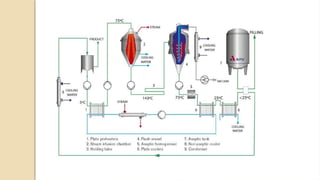
Sterilization is intended to inactivate all the micro-organisms
present, both vegetative forms and spores, or at least make
them incapable of growth in the product, so that a long keeping
quality is obtained without refrigerated storage.
The Milk Hygiene Directive 92/46/EEC demands that the
minimum heating temperature for the manufacture of UHT-
milk should be 135o
C with a minimum holding time .
Typical spoilage organisms include thermoduric and spore-
forming bacteria such as Bacillus species, Geobacillus
species, Streptococcus and Micrococcus and occasionally
some Gram-negative bacteria.
CHAPTER7Presentation1 (1).pptx milk hygeine

CHAPTER7Presentation1 (1).pptx milk hygeine

  • 1.
    Good hygienic practicein milk production and processing Jama mohamud dirie
  • 2.
    Introduction  Milk anddairy products are highly nutritious media, in which micro-organisms can multiply and cause spoilage.  The levels and types of micro-organisms in milk and dairy products depend on the initial levels present in raw milk, the microbial quality of other raw materials, the conditions under which the products are produced and the temperature and duration of storage.
  • 3.
    The most commonspoilage micro-organisms of milk and dairy products are Gram-negative rod-shaped bacteria (e.g. Pseudomonas spp., coliforms), Gram-positive spore-forming bacteria (e.g. Bacillus spp., Clostridium spp.), lactic acid producing bacteria (e.g. Streptococcus spp.) and yeasts. Milk and milk products have in certain instances been associated with foodborne illness. In the USA milk and dairy products were involved in approximately 4% of the foodborne bacterial disease outbreaks in 2007, i.e. 250 reported cases.
  • 4.
    In the EU,investigations of foodborne diseases in 2007 showed that dairy products were involved in about 3% of reported cases. Disease is mainly due to consumption of unpasteurized milk containing pathogenic micro-organisms (e.g. Salmonella, Escherichia coli, Listeria monocytogenes, and importantly Campylobacter) or products that have been contaminated after production or have undergone temperature abuse (e.g. calicivirus including norovirus, Staphylococcus aureus).
  • 5.
     In thischapter, the principal microbial hazards concerning milk and milk products, focused on heat- treated liquid milk products, will be described.  The importance of good hygienic practice measures and dairy product safety systems at farm, processing plant and consumer level will be discussed. Finally, some future trends in dairy processing are presented.
  • 6.
    The principal hazards Rawmilk  Raw milk, as secreted by healthy cows, is free of micro- organisms. However, micro-organisms associated with the teat move up the teat canal and into the interior of the udder.  Most of the bacteria present in raw milk are contaminants of the outside and gain entrance into the milk from various sources including soil, bedding, manure, feed and milking equipment. Therefore, raw milk contains levels of a few to several thousands of bacteria per ml.
  • 7.
     Enzyme activityduring storage will result in defects in flavor, texture and stability in milk and dairy products.  A variety of pathogenic bacteria have been isolated from raw milk including Mycobacterium spp., Salmonella, Listeria monocytogenes, Bacillus cereus, Campylobacter jejune, Yersinia enterocolitica, Escherichia coli and Staphylococcus aureus.  Depending on the country of origin, species, climate and sanitary conditions, raw milk can contain one or more of the pathogens listed.
  • 8.
    Pasteurized milk  Thehealth rules in the EU for the production and placing on the market of raw milk, heat-treated milk and milk-based products are described in Council Directive 92/46/EEC.  Pasteurization is applied to inactivate heat-sensitive spoilage and pathogenic bacteria present in the raw milk.  The minimum requirements to destroy potential pathogenic micro-organisms are pasteurization for 15s at 71.7o C or for 30min at 62.7o C.
  • 9.
    In Fig. theinactivation of vegetative (pathogenic) micro- organisms (i.e. Listeria monocytogenes and Salmonella) and bacterial spores (Clostridium tyrobutyricum and Geobacillus stearothermophilus) by various heat treatments is shown. The figures demonstrate that the spores are much more resistant to heat than the vegetative microorganisms. As can be observed, thermization and pasteurization are not sufficient to inactivate bacterial spores.
  • 10.
     Further processingsteps (pH reduction through the addition of starter, drying, addition of salt and cooling) are designed to limit the growth of the thermoduric bacteria that survive the heat treatment.  Spoilage of pasteurized milk products is caused by growth and enzyme production by psychographs before pasteurization and/or by activity of thermoresistant enzymes.  The effectiveness of cleaning and sanitizing procedures greatly influences the level of contamination and the types of micro-organisms introduced via equipment.
  • 12.
     In properlyprocessed dairy products, most pathogens are not considered a problem, since pasteurization is effective in destroying these organisms. How- ever, several cases of foodborne illness have been reported for, e.g., Salmonella, Listeria, E. coli and Yersinia, due to post-pasteurization contamination. Production of heat-stable enterotoxins by Staph aureus in raw milk may also cause disease via various dairy products including pasteurized milk, cheese, ice cream, butter and non-fat dry milk.
  • 13.
    UHT -milk Sterilization is intendedto inactivate all the micro-organisms present, both vegetative forms and spores, or at least make them incapable of growth in the product, so that a long keeping quality is obtained without refrigerated storage. The Milk Hygiene Directive 92/46/EEC demands that the minimum heating temperature for the manufacture of UHT- milk should be 135o C with a minimum holding time .
  • 14.
    Typical spoilage organismsinclude thermoduric and spore- forming bacteria such as Bacillus species, Geobacillus species, Streptococcus and Micrococcus and occasionally some Gram-negative bacteria.