RATIONALISM
AND ITS INFLUENCES

GAGANDEEP KAUR,
VANDANA SRINIVAS
GARIMA BANSAL
ANCIENT TIMES EMBODIED THE CONCEPT OF RATIONALISM
The first Western philosopher to stress
rationalist insight was Pythagoras , of the 6th
century BCE.

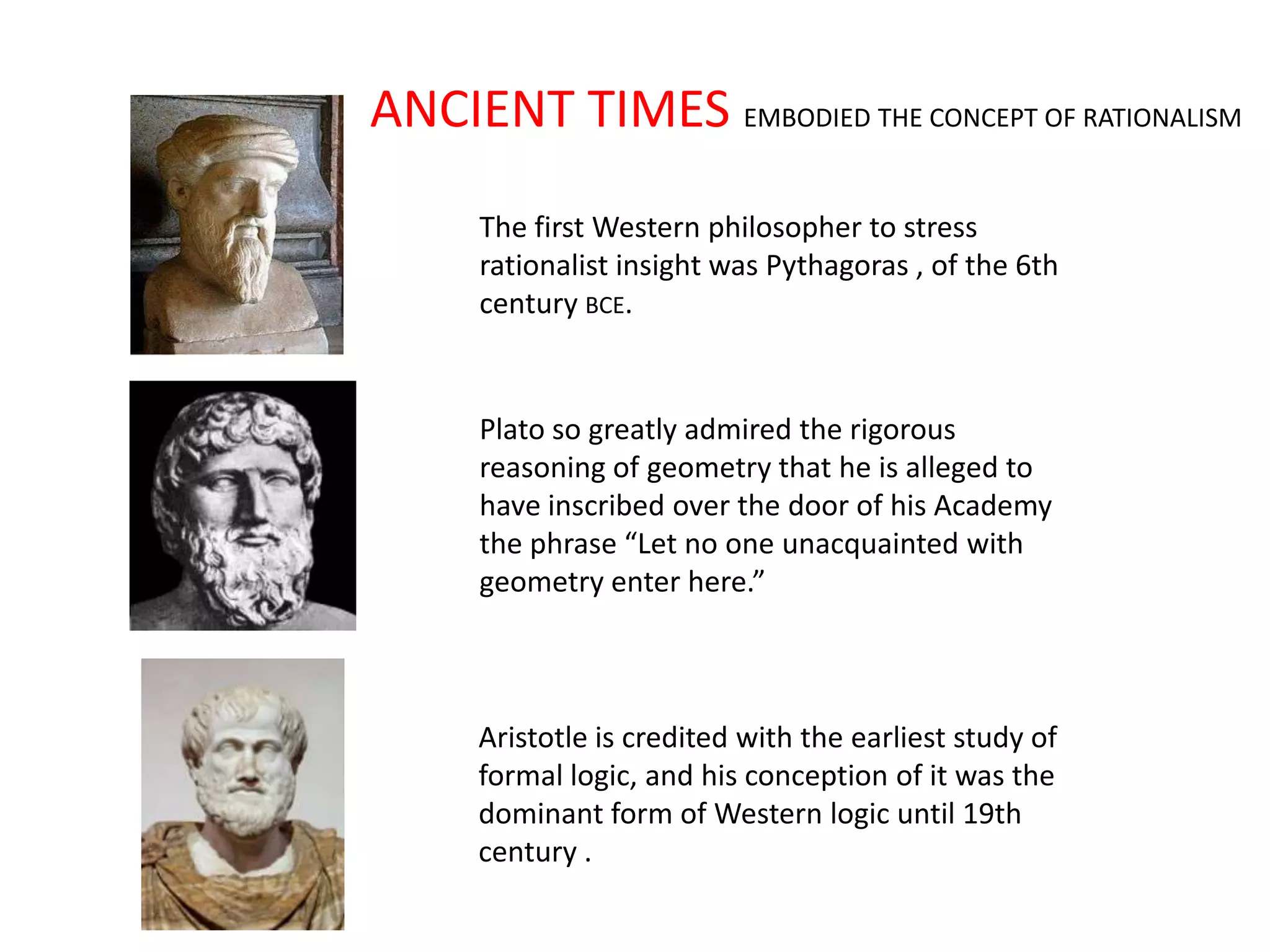
Plato so greatly admired the rigorous
reasoning of geometry that he is alleged to
have inscribed over the door of his Academy
the phrase “Let no one unacquainted with
geometry enter here.”

Aristotle is credited with the earliest study of
formal logic, and his conception of it was the
dominant form of Western logic until 19th
century .
FATHER OF MODERN PHILOSOPHY
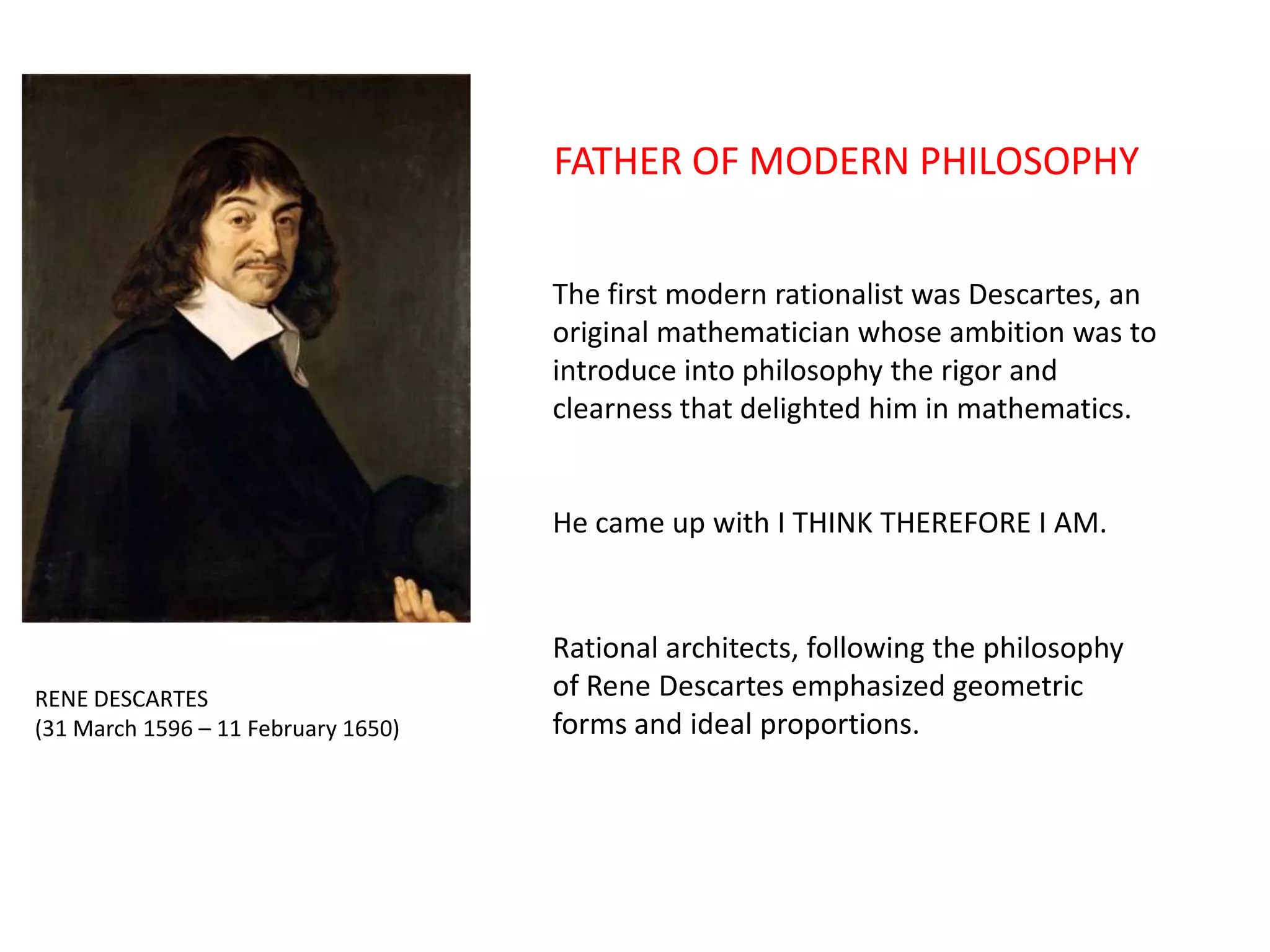
The first modern rationalist was Descartes, an
original mathematician whose ambition was to
introduce into philosophy the rigor and
clearness that delighted him in mathematics.

He came up with I THINK THEREFORE I AM.

RENE DESCARTES
(31 March 1596 – 11 February 1650)

Rational architects, following the philosophy
of Rene Descartes emphasized geometric
forms and ideal proportions.
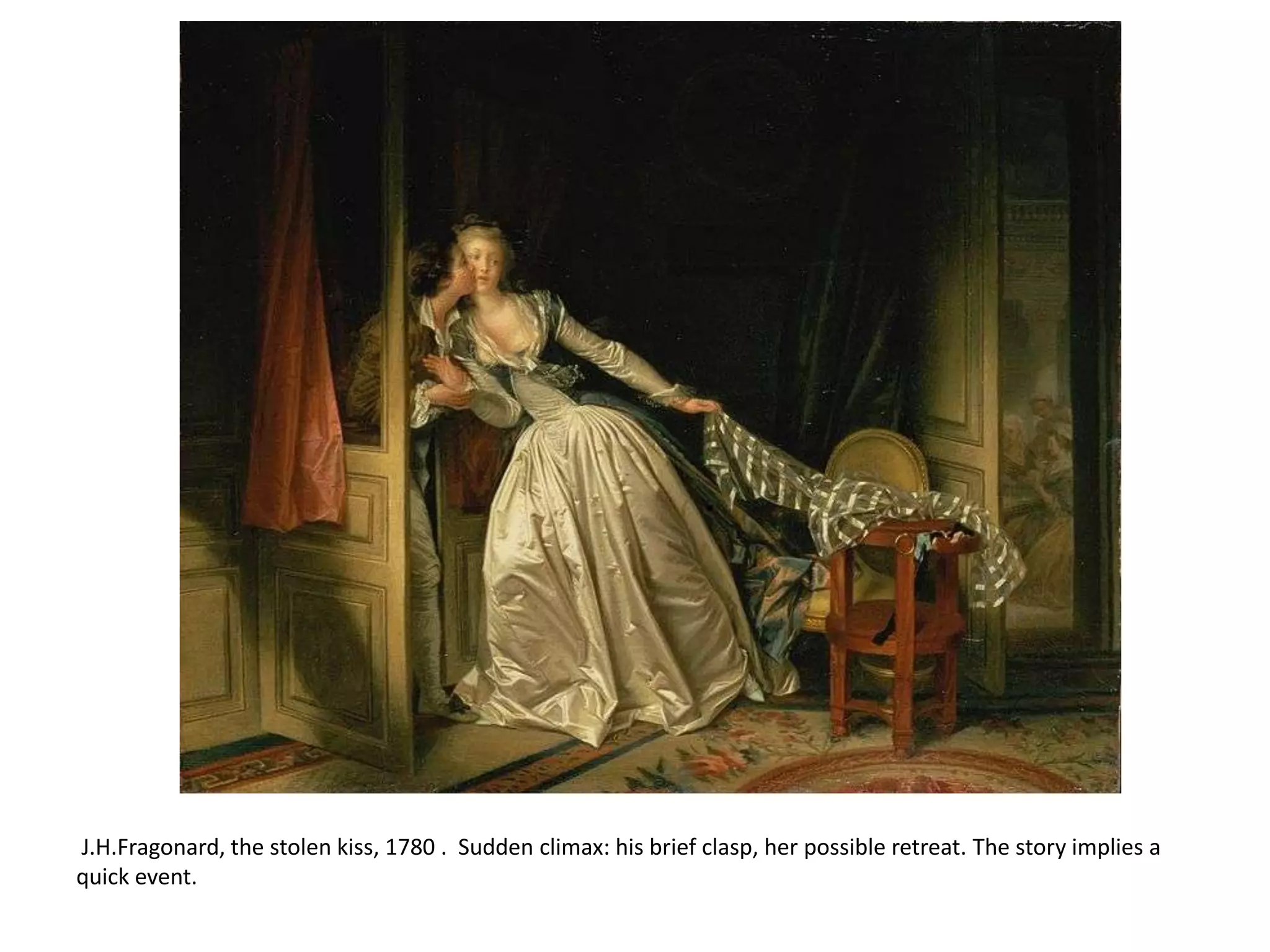
ROCOCO ART
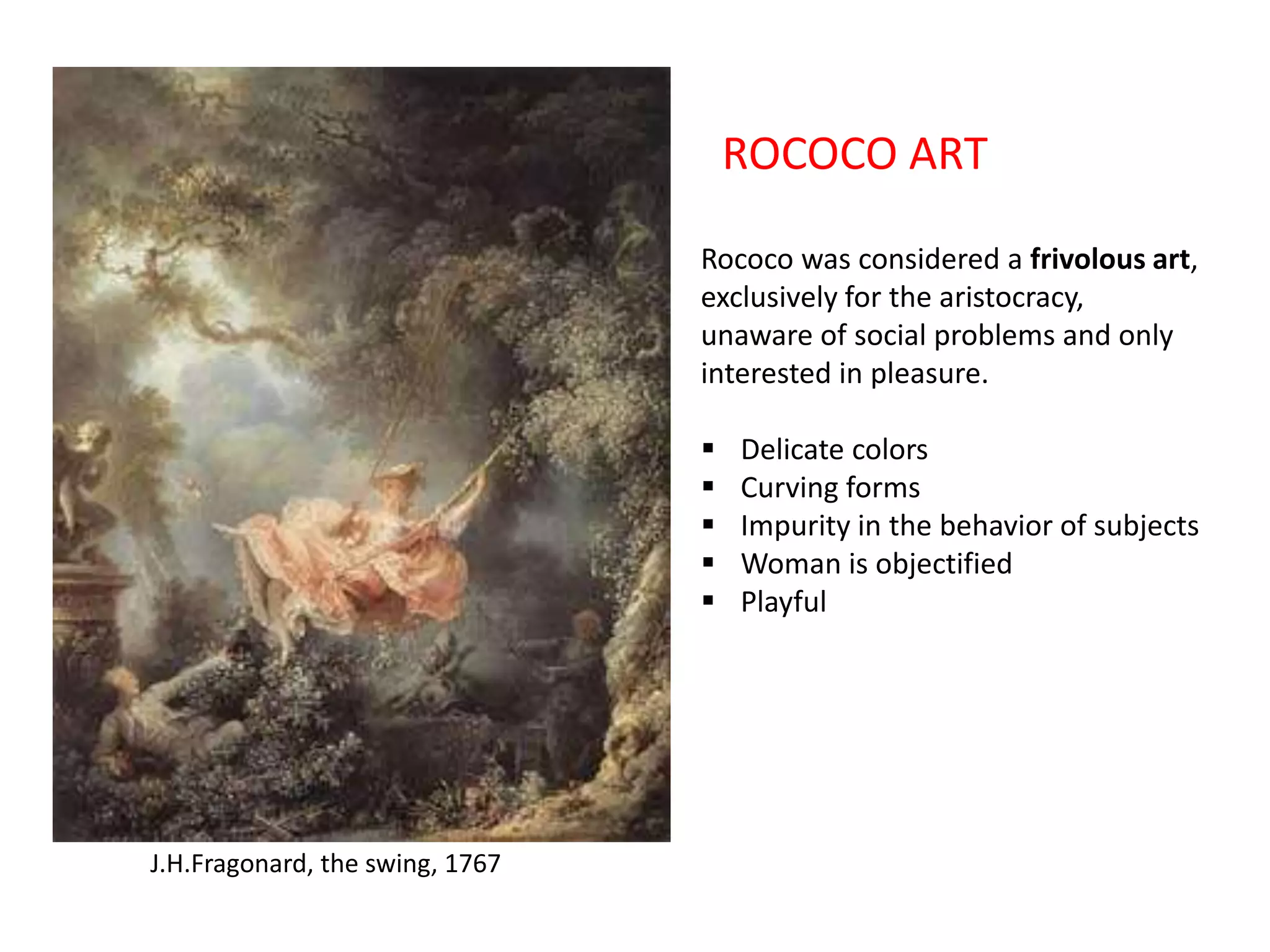
Rococo was considered a frivolous art,
exclusively for the aristocracy,
unaware of social problems and only
interested in pleasure.






J.H.Fragonard, the swing, 1767

Delicate colors
Curving forms
Impurity in the behavior of subjects
Woman is objectified
Playful
J.H.Fragonard, the stolen kiss, 1780 . Sudden climax: his brief clasp, her possible retreat. The story implies a
quick event.
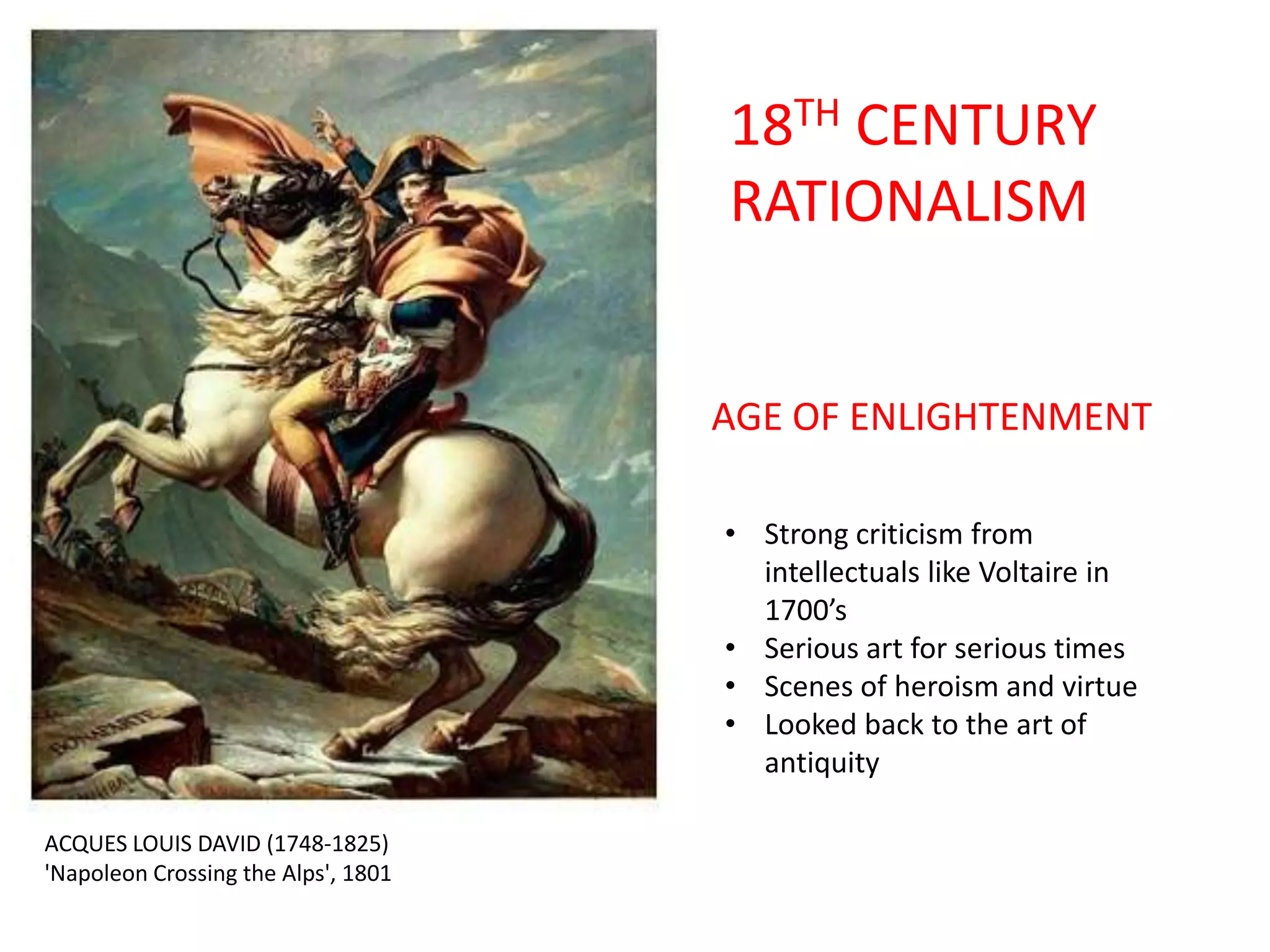
18TH CENTURY
RATIONALISM

AGE OF ENLIGHTENMENT
• Strong criticism from
intellectuals like Voltaire in
1700’s
• Serious art for serious times
• Scenes of heroism and virtue
• Looked back to the art of
antiquity
ACQUES LOUIS DAVID (1748-1825)
'Napoleon Crossing the Alps', 1801
NEOCLASSICISM
• Inspired by the rediscoveries at Pompeii and Herculaneum
• Discovery of the genuine classic interior

• Fresh influx of Greek architectural examples, the Greek revival
• The Enlightenment Architectural Rationalism was focused on being symmetrical,
having accurate measurements of classic shapes, and functionality
• Many new institutions developed like public libraries, coffee houses and debating
societies
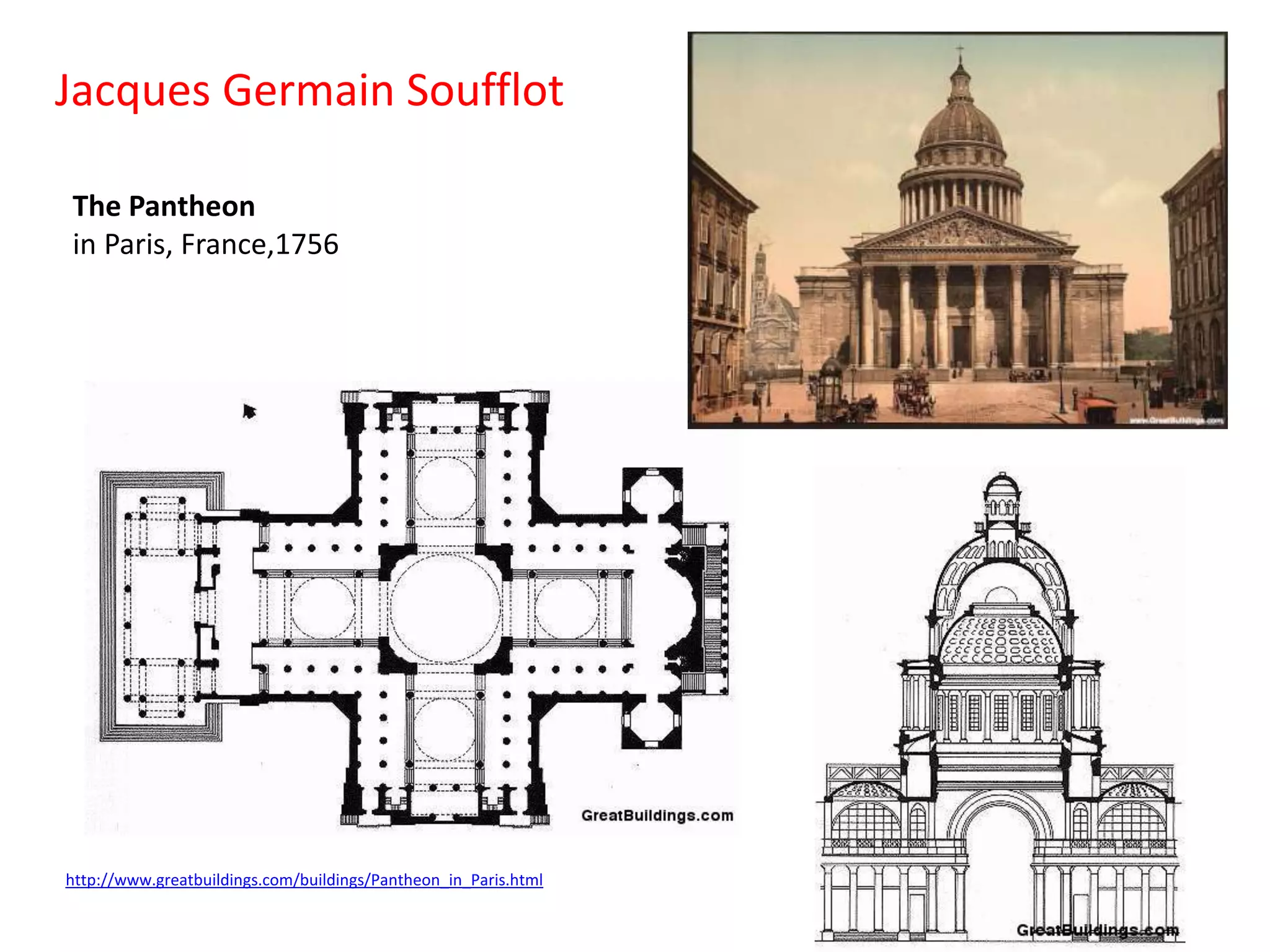
Jacques Germain Soufflot
The Pantheon
in Paris, France,1756

http://www.greatbuildings.com/buildings/Pantheon_in_Paris.html
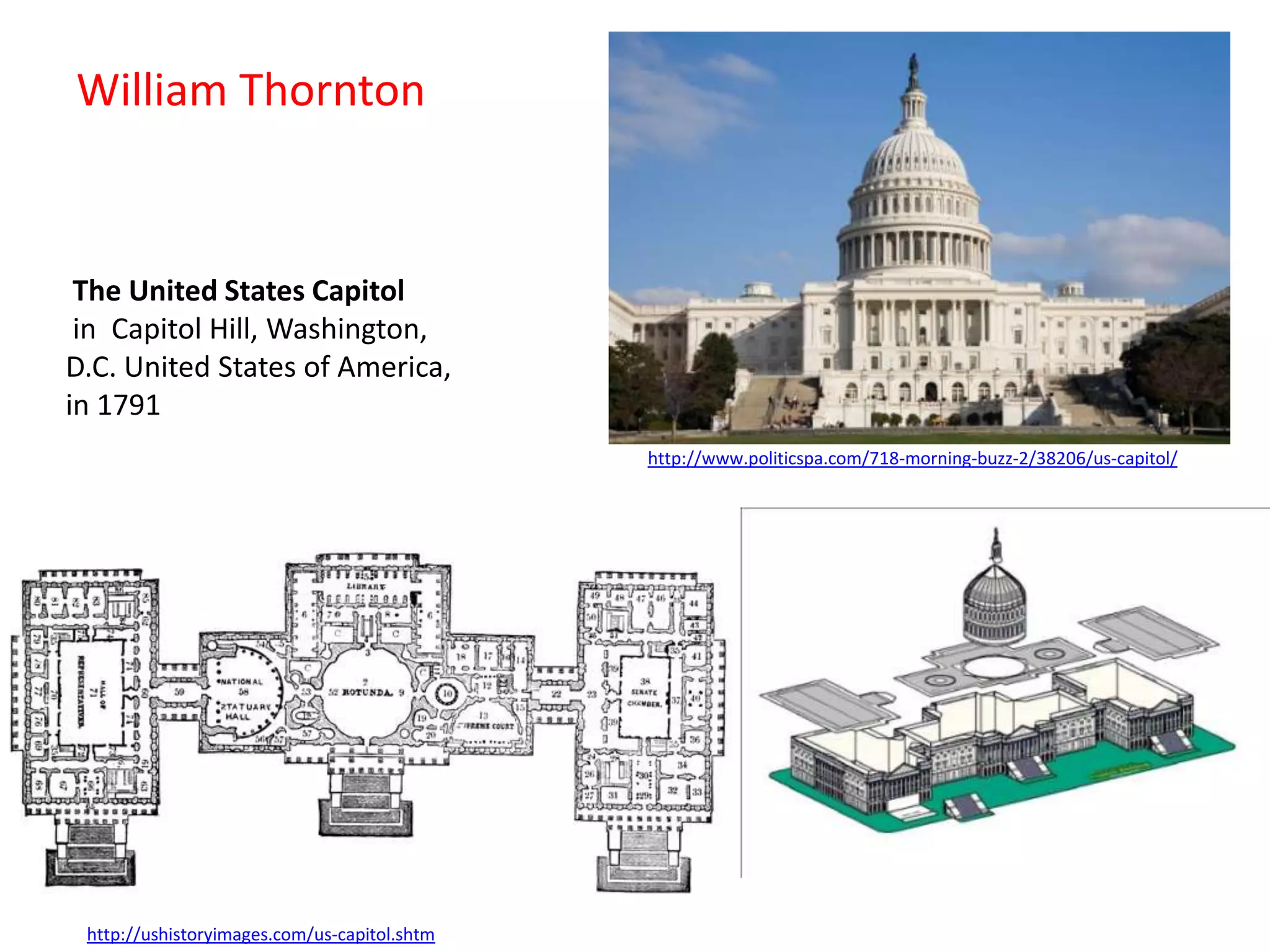
William Thornton

The United States Capitol
in Capitol Hill, Washington,
D.C. United States of America,
in 1791
http://www.politicspa.com/718-morning-buzz-2/38206/us-capitol/

http://ushistoryimages.com/us-capitol.shtm
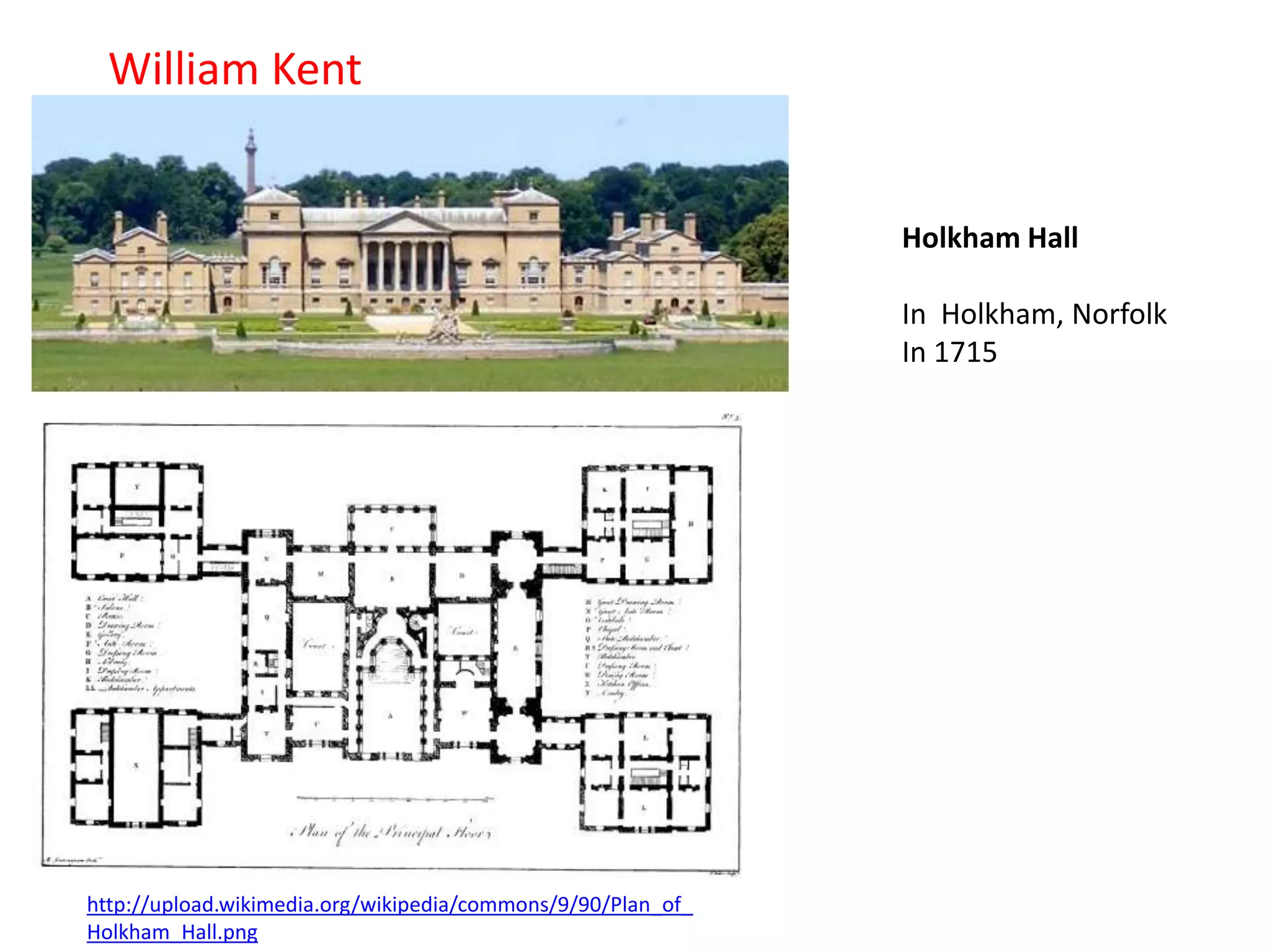
William Kent

Holkham Hall

In Holkham, Norfolk
In 1715

http://upload.wikimedia.org/wikipedia/commons/9/90/Plan_of_
Holkham_Hall.png
20TH CENTURY RATIONALIST
ARCHITECTURE
Conception of an architecture
• Close to logic and rationality

• Based on pure rhythm and the simple constructiveness
• Reason

(based on availability of resources and needs)

They hoped to adapt the conditions of architectural production to the
world of industry.

They were involved in making public buildings and housing.
We can divide the 20th century rationalism into two parts:
• Early 20th-century rationalism
Gruppo 7 : group of Rational Architects include –
Guiseppe Terragni, Carlo Enrico Rava, Luigi Figini and Gino
Pollini, Guido Frette, Ubaldo Castagnoli and Sebastiano Larco

• Neo-rationalism (Late 1960s)
Inspired by both the Enlightenment and early-20th century rationalism
In Italy -Carlo Aymonino , Aldo Rossi, and Giorgio Grassi.
In Germany Oswald Mathias Ungers, Hans Kollhoff, and Max Dudler
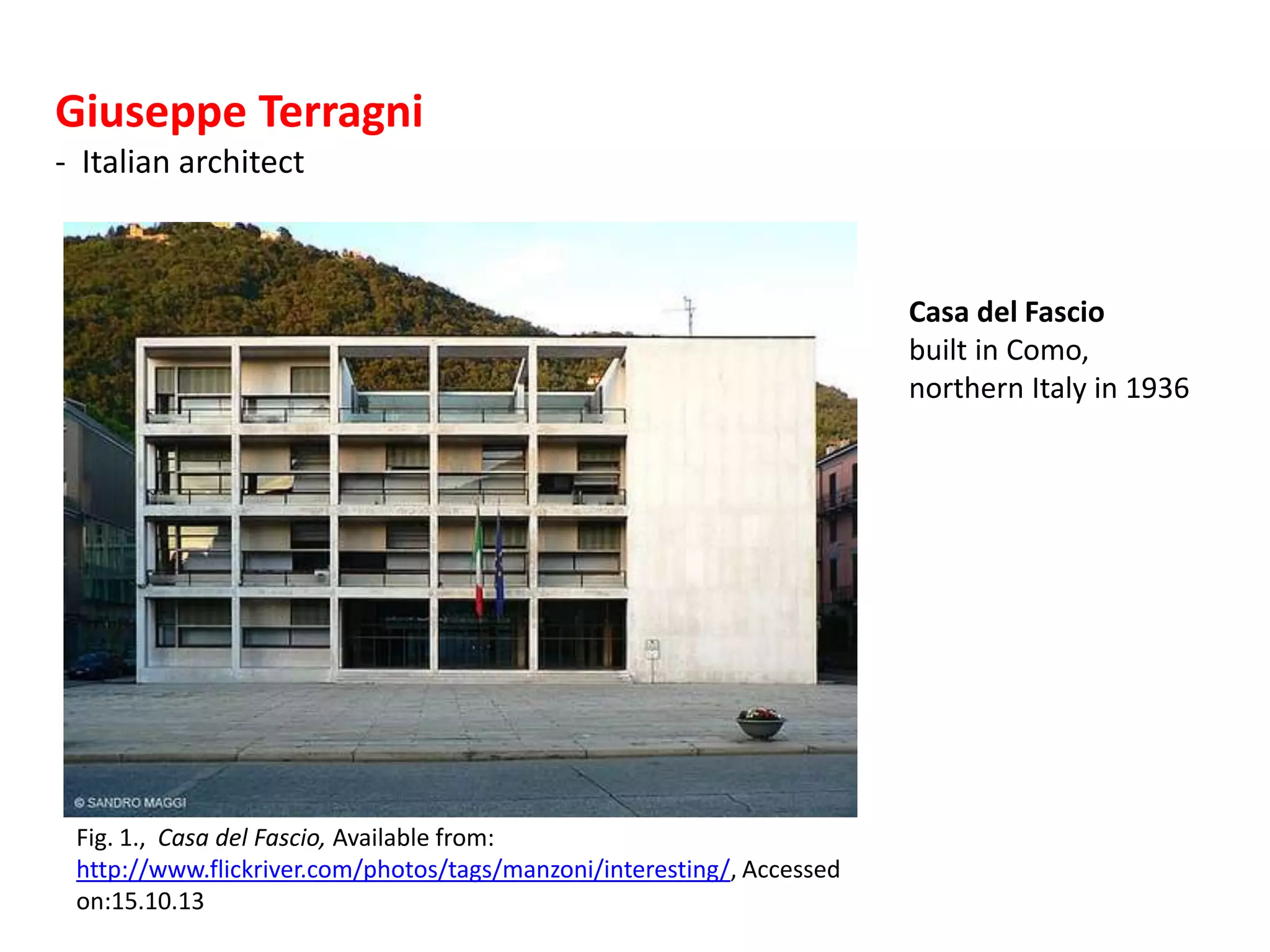
Giuseppe Terragni
- Italian architect

Casa del Fascio
built in Como,
northern Italy in 1936

Fig. 1., Casa del Fascio, Available from:
http://www.flickriver.com/photos/tags/manzoni/interesting/, Accessed
on:15.10.13
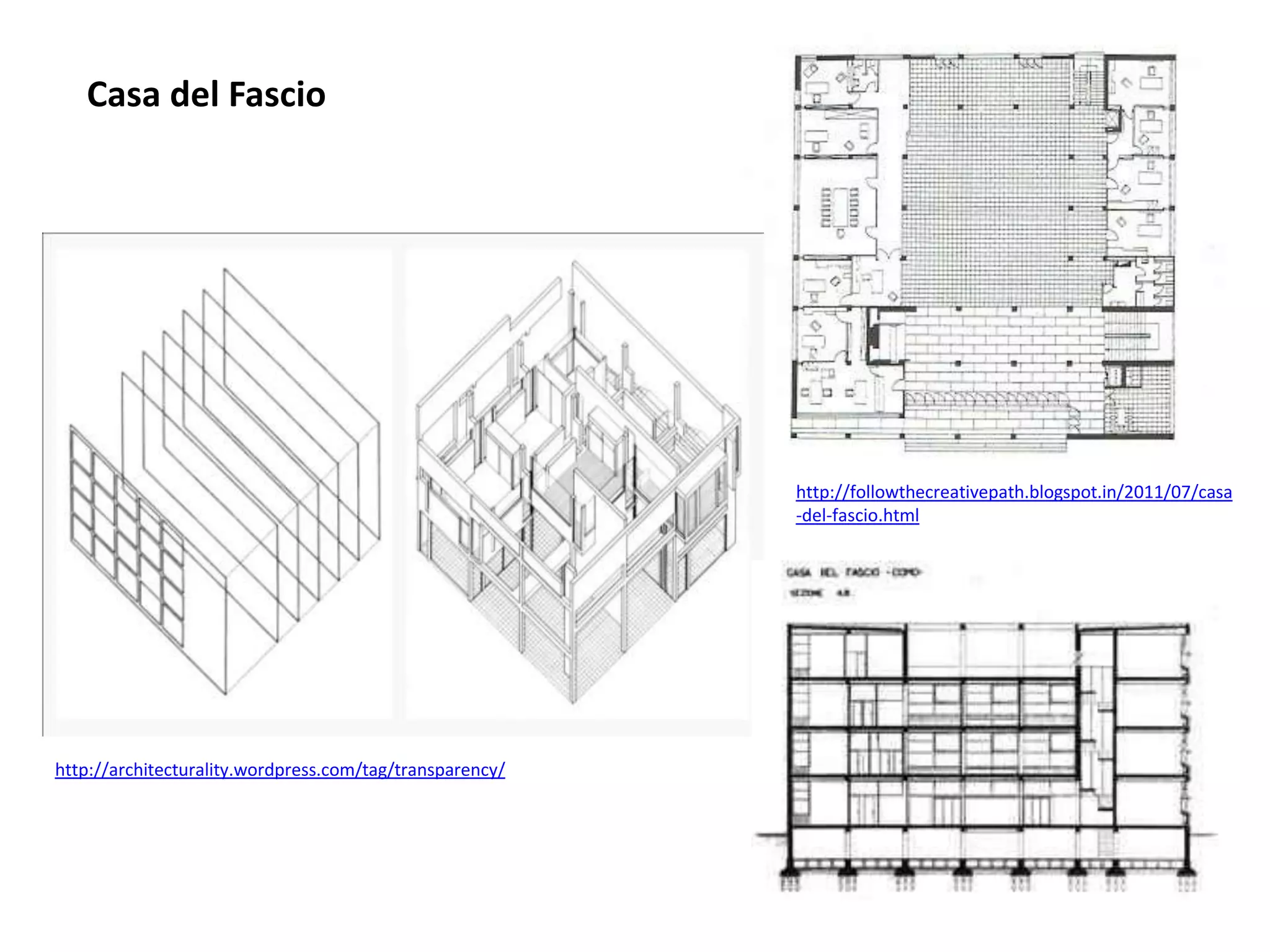
Casa del Fascio

http://followthecreativepath.blogspot.in/2011/07/casa
-del-fascio.html

http://architecturality.wordpress.com/tag/transparency/
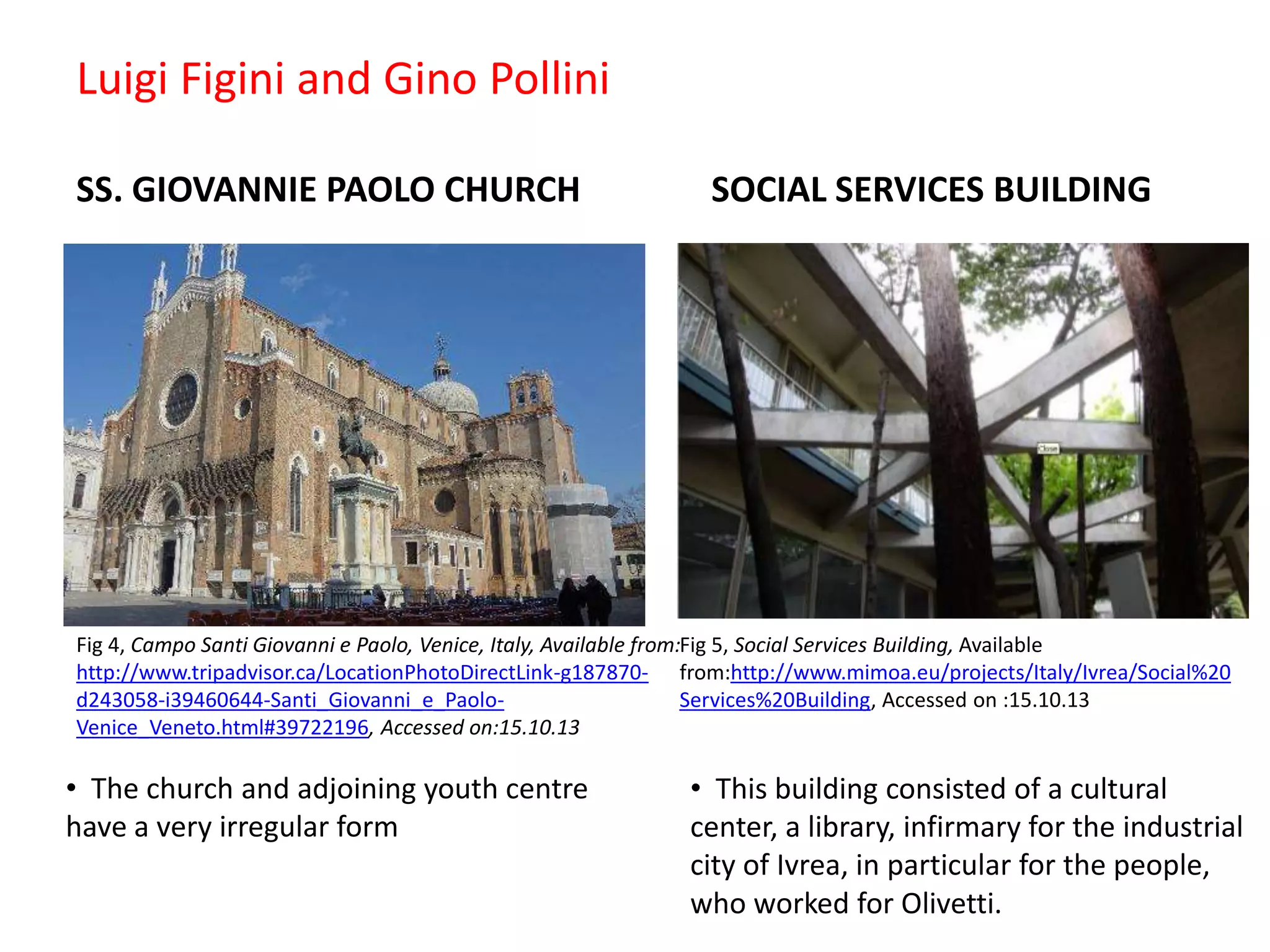
Luigi Figini and Gino Pollini
SS. GIOVANNIE PAOLO CHURCH

SOCIAL SERVICES BUILDING

Fig 4, Campo Santi Giovanni e Paolo, Venice, Italy, Available from:Fig 5, Social Services Building, Available
http://www.tripadvisor.ca/LocationPhotoDirectLink-g187870- from:http://www.mimoa.eu/projects/Italy/Ivrea/Social%20
d243058-i39460644-Santi_Giovanni_e_PaoloServices%20Building, Accessed on :15.10.13
Venice_Veneto.html#39722196, Accessed on:15.10.13

• The church and adjoining youth centre
have a very irregular form

• This building consisted of a cultural
center, a library, infirmary for the industrial
city of Ivrea, in particular for the people,
who worked for Olivetti.
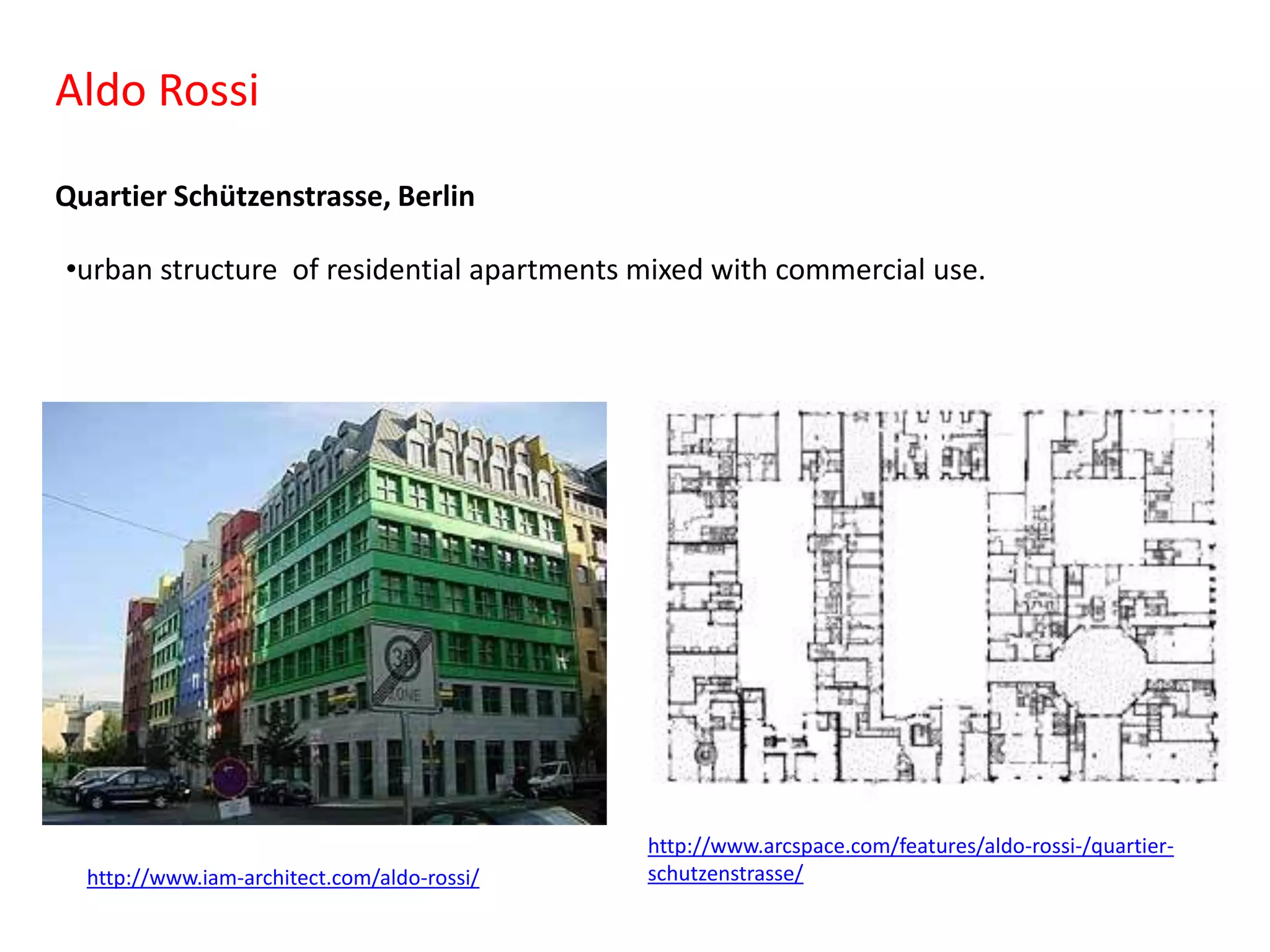
Aldo Rossi
Quartier Schützenstrasse, Berlin
•urban structure of residential apartments mixed with commercial use.

http://www.iam-architect.com/aldo-rossi/

http://www.arcspace.com/features/aldo-rossi-/quartierschutzenstrasse/
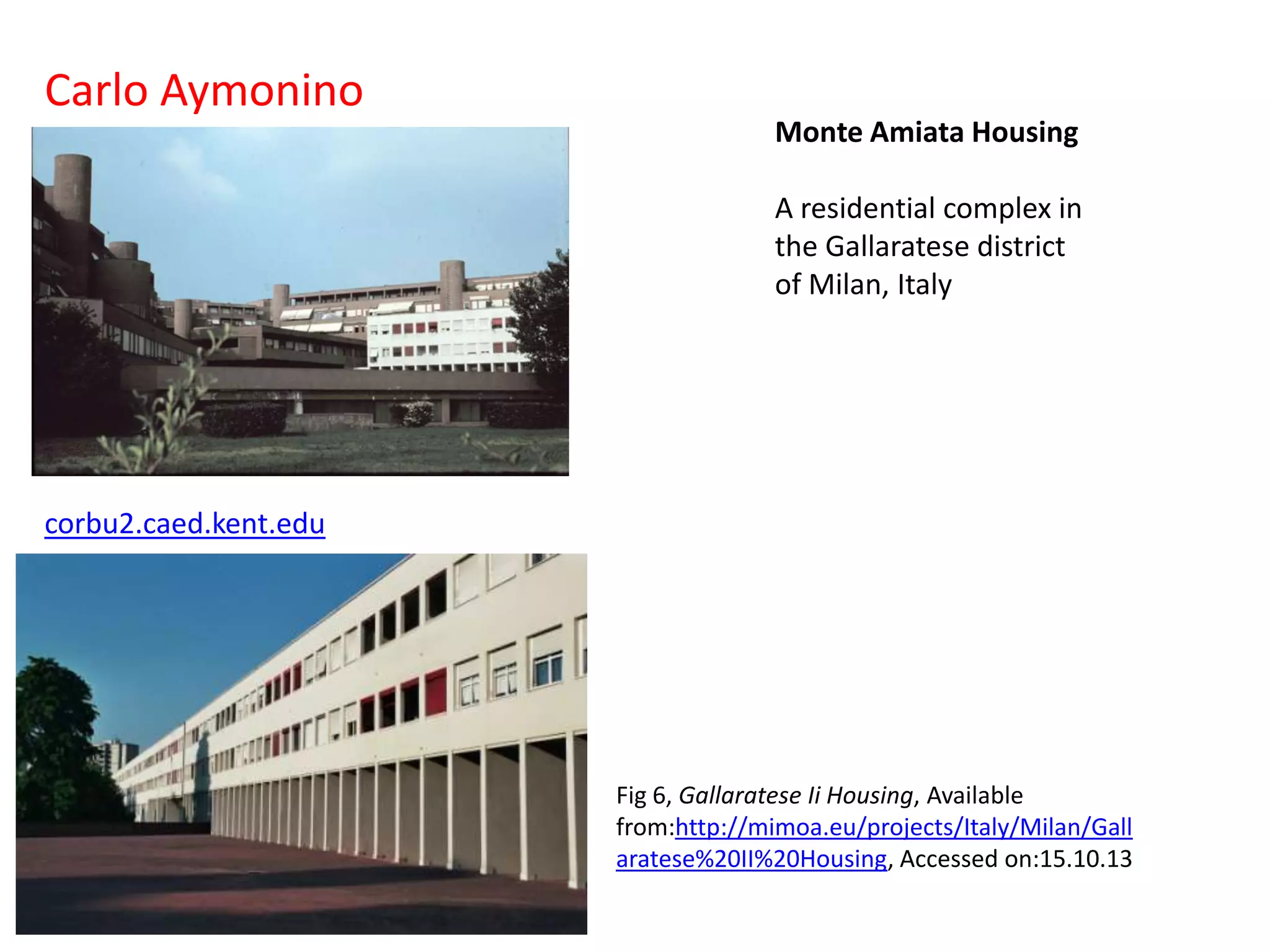
Carlo Aymonino
Monte Amiata Housing
A residential complex in
the Gallaratese district
of Milan, Italy

corbu2.caed.kent.edu

Fig 6, Gallaratese Ii Housing, Available
from:http://mimoa.eu/projects/Italy/Milan/Gall
aratese%20II%20Housing, Accessed on:15.10.13
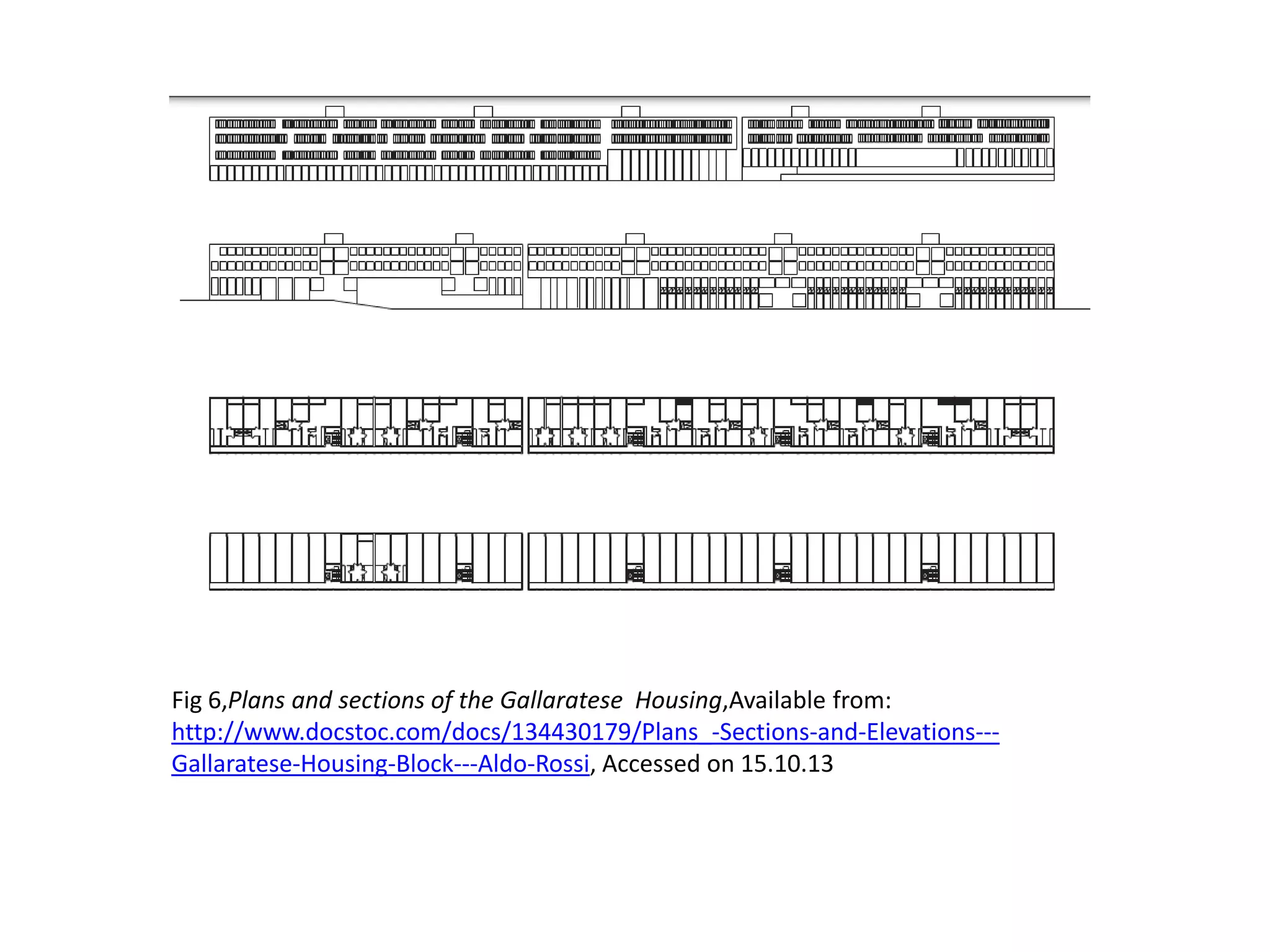
Fig 6,Plans and sections of the Gallaratese Housing,Available from:
http://www.docstoc.com/docs/134430179/Plans_-Sections-and-Elevations--Gallaratese-Housing-Block---Aldo-Rossi, Accessed on 15.10.13
References:
•

•
•

Canniffe , Eamonn , The Politics of the Piazza: The History and Meaning of the
Italian Square,
Polemical Rationalism, Richard Etlin, Available from:
http://www.academia.edu/4546673/Polemical_Rationalism
ArchiTexts Association, Available from:
http://architextsassociation.com/2012/09/19/giuseppe-terragni-and-therationalist-architecture-in-italy/

Rationalism final

  • 1.
    RATIONALISM AND ITS INFLUENCES GAGANDEEPKAUR, VANDANA SRINIVAS GARIMA BANSAL
  • 2.
    ANCIENT TIMES EMBODIEDTHE CONCEPT OF RATIONALISM The first Western philosopher to stress rationalist insight was Pythagoras , of the 6th century BCE. Plato so greatly admired the rigorous reasoning of geometry that he is alleged to have inscribed over the door of his Academy the phrase “Let no one unacquainted with geometry enter here.” Aristotle is credited with the earliest study of formal logic, and his conception of it was the dominant form of Western logic until 19th century .
  • 3.
    FATHER OF MODERNPHILOSOPHY The first modern rationalist was Descartes, an original mathematician whose ambition was to introduce into philosophy the rigor and clearness that delighted him in mathematics. He came up with I THINK THEREFORE I AM. RENE DESCARTES (31 March 1596 – 11 February 1650) Rational architects, following the philosophy of Rene Descartes emphasized geometric forms and ideal proportions.
  • 4.
    ROCOCO ART Rococo wasconsidered a frivolous art, exclusively for the aristocracy, unaware of social problems and only interested in pleasure.      J.H.Fragonard, the swing, 1767 Delicate colors Curving forms Impurity in the behavior of subjects Woman is objectified Playful
  • 5.
    J.H.Fragonard, the stolenkiss, 1780 . Sudden climax: his brief clasp, her possible retreat. The story implies a quick event.
  • 6.
    18TH CENTURY RATIONALISM AGE OFENLIGHTENMENT • Strong criticism from intellectuals like Voltaire in 1700’s • Serious art for serious times • Scenes of heroism and virtue • Looked back to the art of antiquity ACQUES LOUIS DAVID (1748-1825) 'Napoleon Crossing the Alps', 1801
  • 7.
    NEOCLASSICISM • Inspired bythe rediscoveries at Pompeii and Herculaneum • Discovery of the genuine classic interior • Fresh influx of Greek architectural examples, the Greek revival • The Enlightenment Architectural Rationalism was focused on being symmetrical, having accurate measurements of classic shapes, and functionality • Many new institutions developed like public libraries, coffee houses and debating societies
  • 8.
    Jacques Germain Soufflot ThePantheon in Paris, France,1756 http://www.greatbuildings.com/buildings/Pantheon_in_Paris.html
  • 9.
    William Thornton The UnitedStates Capitol in Capitol Hill, Washington, D.C. United States of America, in 1791 http://www.politicspa.com/718-morning-buzz-2/38206/us-capitol/ http://ushistoryimages.com/us-capitol.shtm
  • 10.
    William Kent Holkham Hall InHolkham, Norfolk In 1715 http://upload.wikimedia.org/wikipedia/commons/9/90/Plan_of_ Holkham_Hall.png
  • 11.
    20TH CENTURY RATIONALIST ARCHITECTURE Conceptionof an architecture • Close to logic and rationality • Based on pure rhythm and the simple constructiveness • Reason (based on availability of resources and needs) They hoped to adapt the conditions of architectural production to the world of industry. They were involved in making public buildings and housing.
  • 12.
    We can dividethe 20th century rationalism into two parts: • Early 20th-century rationalism Gruppo 7 : group of Rational Architects include – Guiseppe Terragni, Carlo Enrico Rava, Luigi Figini and Gino Pollini, Guido Frette, Ubaldo Castagnoli and Sebastiano Larco • Neo-rationalism (Late 1960s) Inspired by both the Enlightenment and early-20th century rationalism In Italy -Carlo Aymonino , Aldo Rossi, and Giorgio Grassi. In Germany Oswald Mathias Ungers, Hans Kollhoff, and Max Dudler
  • 13.
    Giuseppe Terragni - Italianarchitect Casa del Fascio built in Como, northern Italy in 1936 Fig. 1., Casa del Fascio, Available from: http://www.flickriver.com/photos/tags/manzoni/interesting/, Accessed on:15.10.13
  • 14.
  • 15.
    Luigi Figini andGino Pollini SS. GIOVANNIE PAOLO CHURCH SOCIAL SERVICES BUILDING Fig 4, Campo Santi Giovanni e Paolo, Venice, Italy, Available from:Fig 5, Social Services Building, Available http://www.tripadvisor.ca/LocationPhotoDirectLink-g187870- from:http://www.mimoa.eu/projects/Italy/Ivrea/Social%20 d243058-i39460644-Santi_Giovanni_e_PaoloServices%20Building, Accessed on :15.10.13 Venice_Veneto.html#39722196, Accessed on:15.10.13 • The church and adjoining youth centre have a very irregular form • This building consisted of a cultural center, a library, infirmary for the industrial city of Ivrea, in particular for the people, who worked for Olivetti.
  • 16.
    Aldo Rossi Quartier Schützenstrasse,Berlin •urban structure of residential apartments mixed with commercial use. http://www.iam-architect.com/aldo-rossi/ http://www.arcspace.com/features/aldo-rossi-/quartierschutzenstrasse/
  • 17.
    Carlo Aymonino Monte AmiataHousing A residential complex in the Gallaratese district of Milan, Italy corbu2.caed.kent.edu Fig 6, Gallaratese Ii Housing, Available from:http://mimoa.eu/projects/Italy/Milan/Gall aratese%20II%20Housing, Accessed on:15.10.13
  • 18.
    Fig 6,Plans andsections of the Gallaratese Housing,Available from: http://www.docstoc.com/docs/134430179/Plans_-Sections-and-Elevations--Gallaratese-Housing-Block---Aldo-Rossi, Accessed on 15.10.13
  • 19.
    References: • • • Canniffe , Eamonn, The Politics of the Piazza: The History and Meaning of the Italian Square, Polemical Rationalism, Richard Etlin, Available from: http://www.academia.edu/4546673/Polemical_Rationalism ArchiTexts Association, Available from: http://architextsassociation.com/2012/09/19/giuseppe-terragni-and-therationalist-architecture-in-italy/

Editor's Notes

  • #14  use of Fascist rallies. Conceptualized as a classical palazzo centered on a glass atrium. built in accordance with the International Style of architecture.