Rate of Increase and
Decrease
© Prof. Vincent Sangalang. All Rights Reserved.
May not be scanned, copied or duplicated, or
posted to a publicly accessible website, in whole
or in part.
Finding the Rate of Increase or
Decrease
 To find the rate of increase or decrease find the
amount or quantity of increase or decrease then
divide this figure by the base or amount increased or
decreased. Lastly, convert the quotient to percent.
 Finding the rate of increase or decrease is like
finding the fractional part of a number, more or less,
in comparison with the base.
Examples:
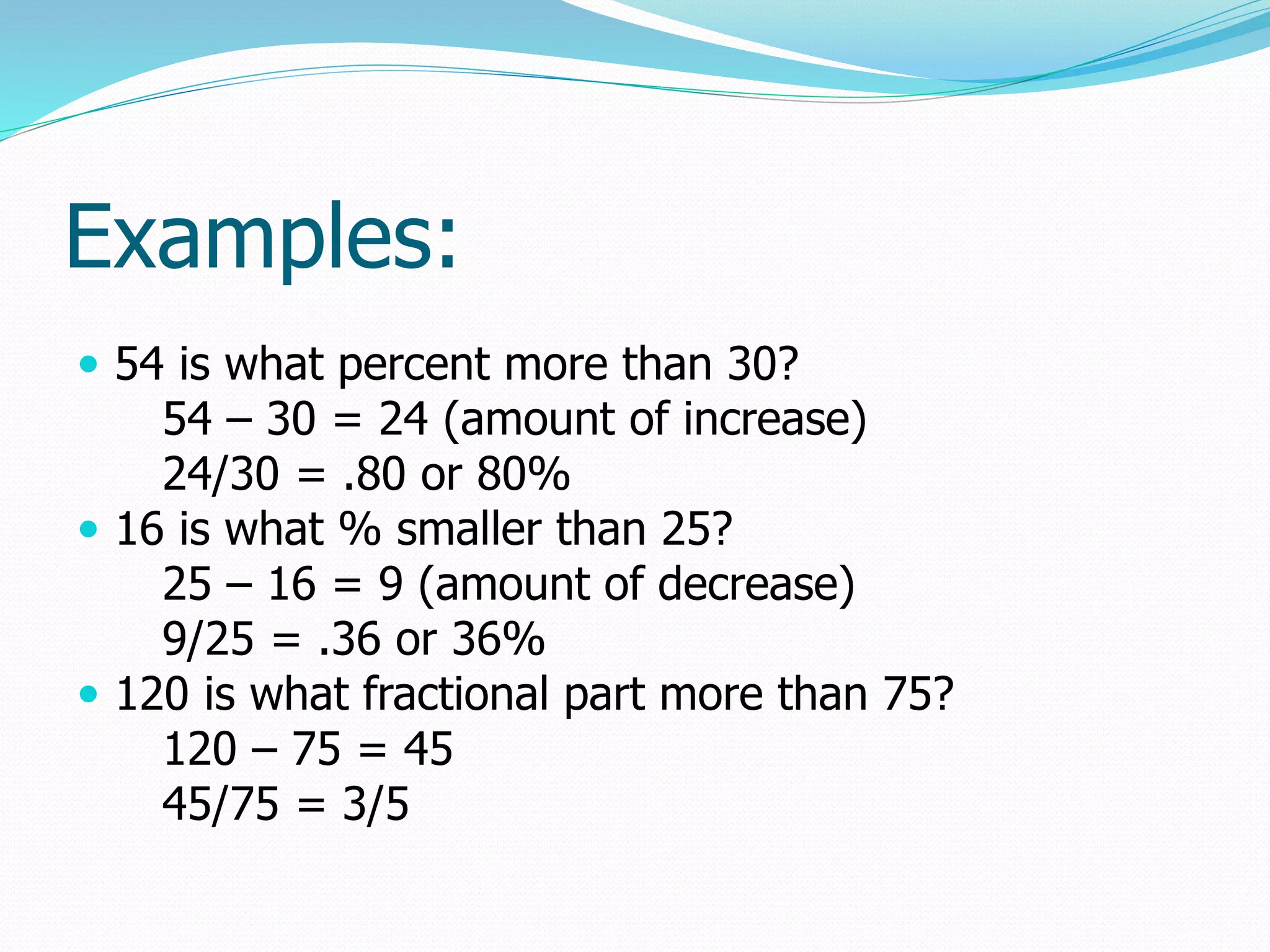
 54 is what percent more than 30?
54 – 30 = 24 (amount of increase)
24/30 = .80 or 80%
 16 is what % smaller than 25?
25 – 16 = 9 (amount of decrease)
9/25 = .36 or 36%
 120 is what fractional part more than 75?
120 – 75 = 45
45/75 = 3/5
Finding the Number which is the sum or
difference of a given number and its applied
rate of increase or decrease
 To find the unknown number, multiply first the given
number by the percent of increase or decrease to
know the amount of increase or decrease.
 If it is an increase, add the obtained amount to the
given number. Another option is to subtract the
obtained amount from the given number if it is a
decrease.
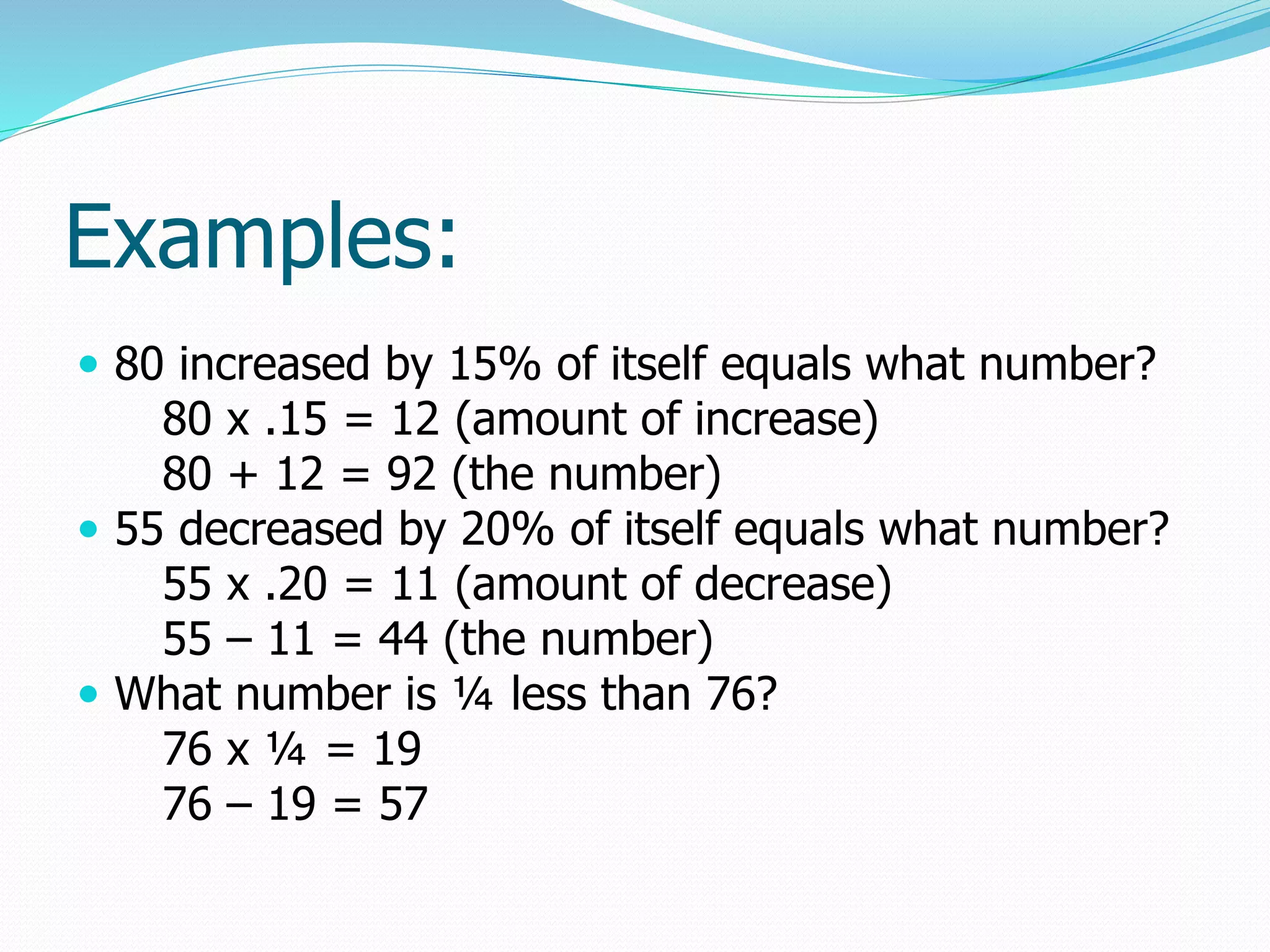
Examples:
 80 increased by 15% of itself equals what number?
80 x .15 = 12 (amount of increase)
80 + 12 = 92 (the number)
 55 decreased by 20% of itself equals what number?
55 x .20 = 11 (amount of decrease)
55 – 11 = 44 (the number)
 What number is ¼ less than 76?
76 x ¼ = 19
76 – 19 = 57
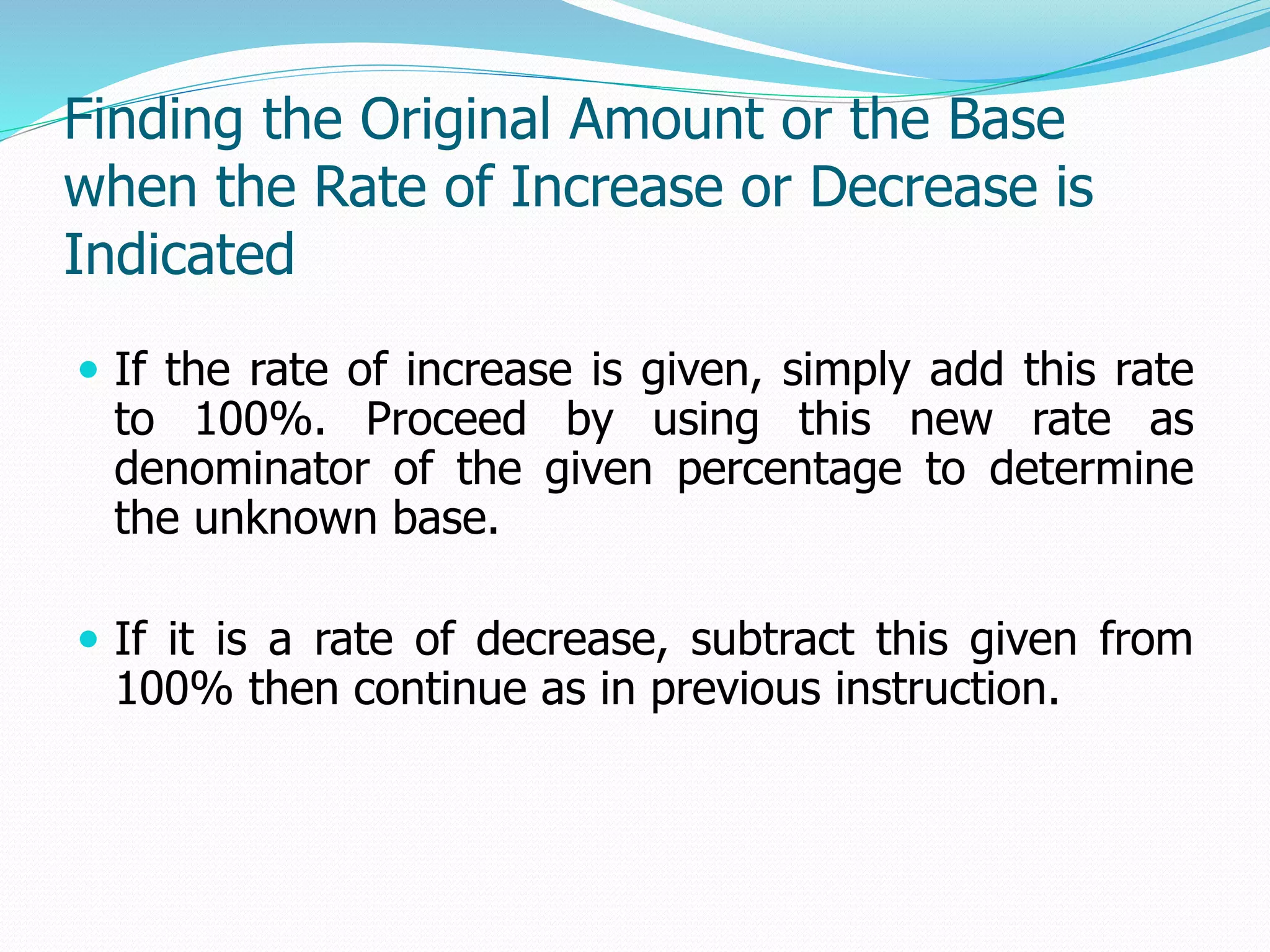
Finding the Original Amount or the Base
when the Rate of Increase or Decrease is
Indicated
 If the rate of increase is given, simply add this rate
to 100%. Proceed by using this new rate as
denominator of the given percentage to determine
the unknown base.
 If it is a rate of decrease, subtract this given from
100% then continue as in previous instruction.
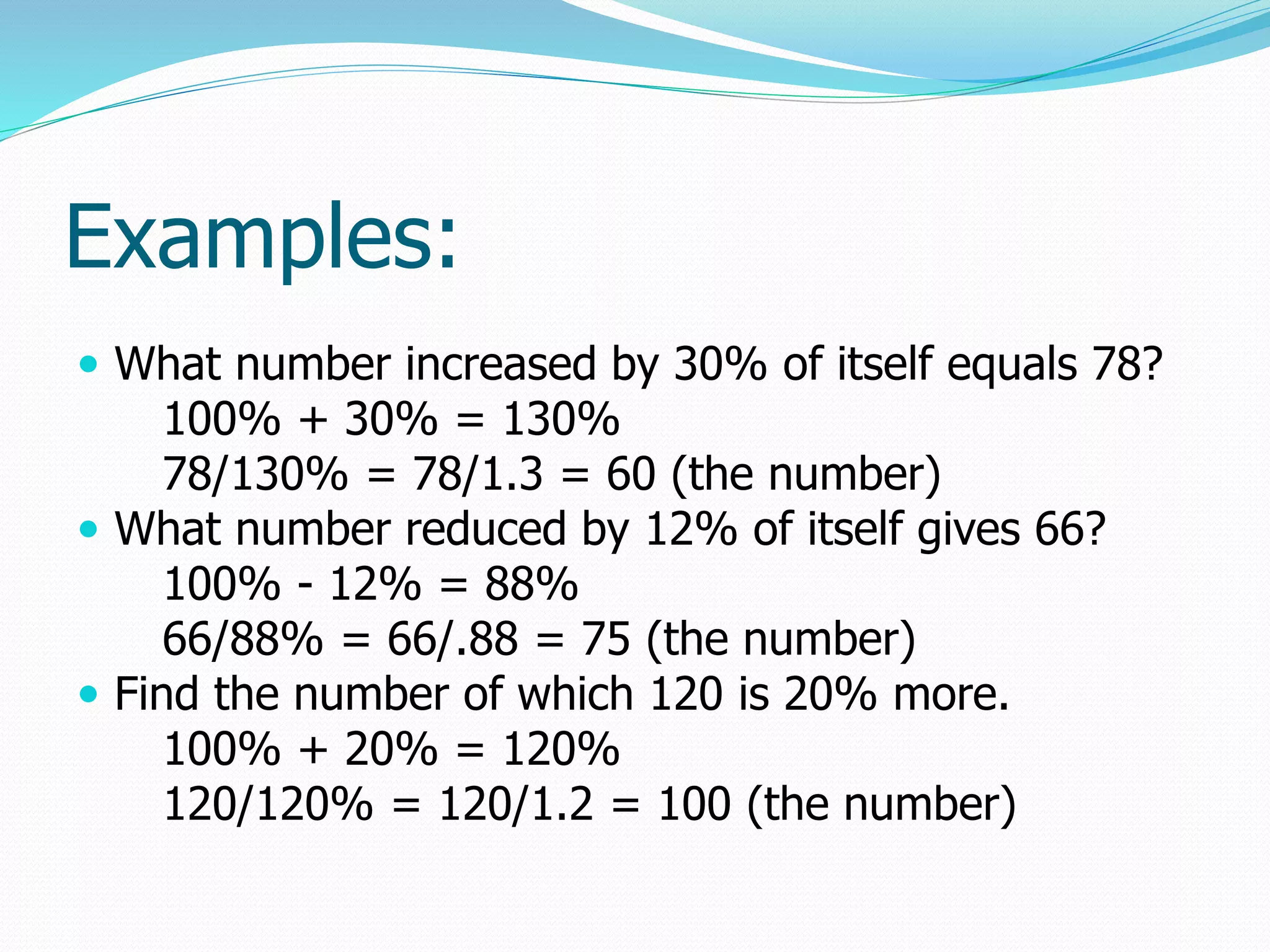
Examples:
 What number increased by 30% of itself equals 78?
100% + 30% = 130%
78/130% = 78/1.3 = 60 (the number)
 What number reduced by 12% of itself gives 66?
100% - 12% = 88%
66/88% = 66/.88 = 75 (the number)
 Find the number of which 120 is 20% more.
100% + 20% = 120%
120/120% = 120/1.2 = 100 (the number)
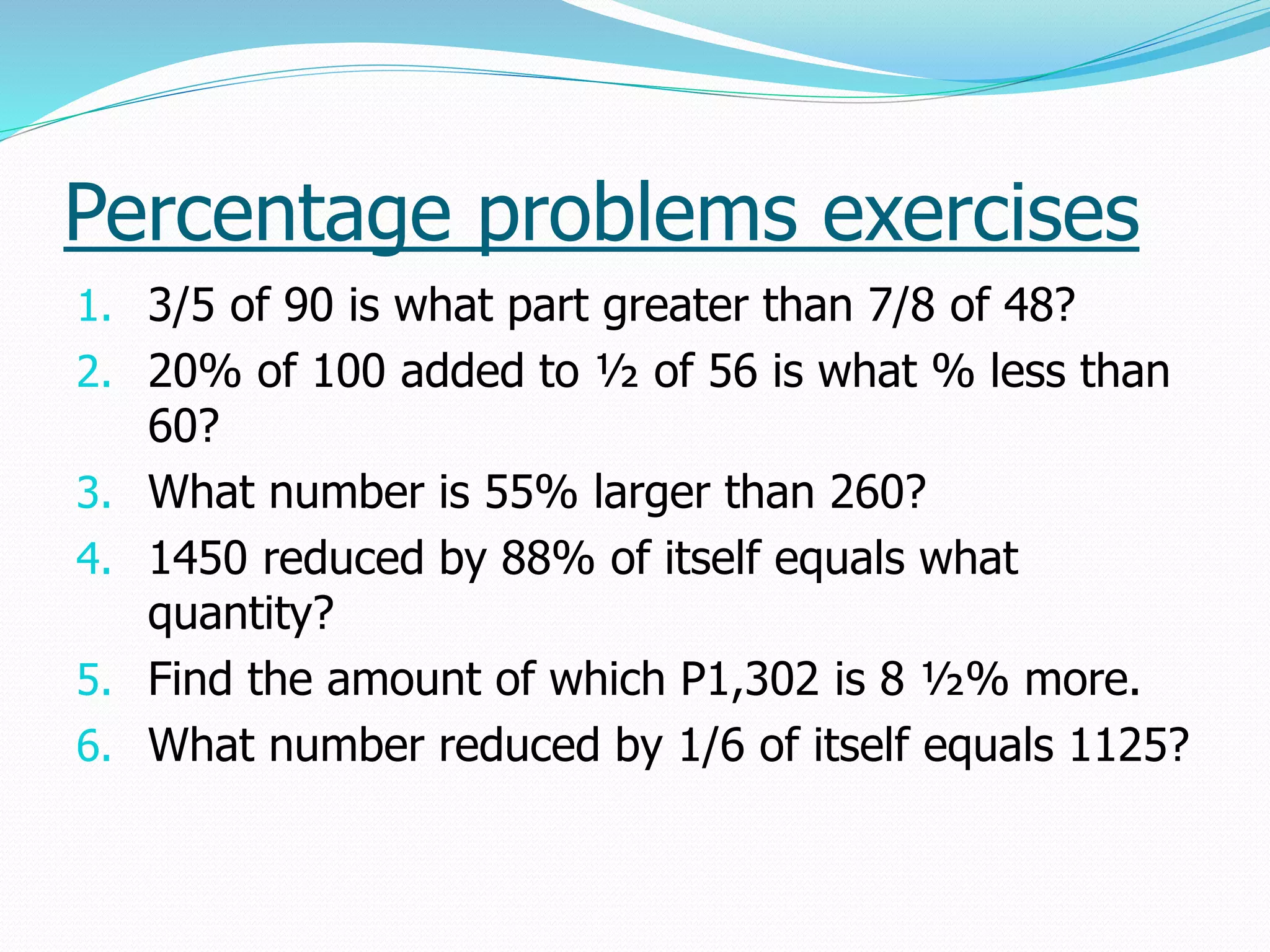
Percentage problems exercises
1. 3/5 of 90 is what part greater than 7/8 of 48?
2. 20% of 100 added to ½ of 56 is what % less than
60?
3. What number is 55% larger than 260?
4. 1450 reduced by 88% of itself equals what
quantity?
5. Find the amount of which P1,302 is 8 ½% more.
6. What number reduced by 1/6 of itself equals 1125?

Rate of increase & decrease

  • 1.
    Rate of Increaseand Decrease © Prof. Vincent Sangalang. All Rights Reserved. May not be scanned, copied or duplicated, or posted to a publicly accessible website, in whole or in part.
  • 2.
    Finding the Rateof Increase or Decrease  To find the rate of increase or decrease find the amount or quantity of increase or decrease then divide this figure by the base or amount increased or decreased. Lastly, convert the quotient to percent.  Finding the rate of increase or decrease is like finding the fractional part of a number, more or less, in comparison with the base.
  • 3.
    Examples:  54 iswhat percent more than 30? 54 – 30 = 24 (amount of increase) 24/30 = .80 or 80%  16 is what % smaller than 25? 25 – 16 = 9 (amount of decrease) 9/25 = .36 or 36%  120 is what fractional part more than 75? 120 – 75 = 45 45/75 = 3/5
  • 4.
    Finding the Numberwhich is the sum or difference of a given number and its applied rate of increase or decrease  To find the unknown number, multiply first the given number by the percent of increase or decrease to know the amount of increase or decrease.  If it is an increase, add the obtained amount to the given number. Another option is to subtract the obtained amount from the given number if it is a decrease.
  • 5.
    Examples:  80 increasedby 15% of itself equals what number? 80 x .15 = 12 (amount of increase) 80 + 12 = 92 (the number)  55 decreased by 20% of itself equals what number? 55 x .20 = 11 (amount of decrease) 55 – 11 = 44 (the number)  What number is ¼ less than 76? 76 x ¼ = 19 76 – 19 = 57
  • 6.
    Finding the OriginalAmount or the Base when the Rate of Increase or Decrease is Indicated  If the rate of increase is given, simply add this rate to 100%. Proceed by using this new rate as denominator of the given percentage to determine the unknown base.  If it is a rate of decrease, subtract this given from 100% then continue as in previous instruction.
  • 7.
    Examples:  What numberincreased by 30% of itself equals 78? 100% + 30% = 130% 78/130% = 78/1.3 = 60 (the number)  What number reduced by 12% of itself gives 66? 100% - 12% = 88% 66/88% = 66/.88 = 75 (the number)  Find the number of which 120 is 20% more. 100% + 20% = 120% 120/120% = 120/1.2 = 100 (the number)
  • 8.
    Percentage problems exercises 1.3/5 of 90 is what part greater than 7/8 of 48? 2. 20% of 100 added to ½ of 56 is what % less than 60? 3. What number is 55% larger than 260? 4. 1450 reduced by 88% of itself equals what quantity? 5. Find the amount of which P1,302 is 8 ½% more. 6. What number reduced by 1/6 of itself equals 1125?