Of particular concern to Indian drama
and literature are the term 'bhAva' or the
state of mind and rasa (Sanskrit रस lit.
'juice' or 'essence') referring generally to
the emotional flavors/essence crafted into
the work by the writer and relished by a
'sensitive spectator' or sahrdaya or one
with positive taste and mind. Rasas are
created by bhavas.[1] They are described
by Bharata Muni in the Nātyasāstra, an
ancient work of dramatic theory.
Rasa Theory
Bharat Muni
“Natyasastra”
A rasa is the developed relishable state of a
permanent mood, which is called sthAyI bhAva.
This development towards a relishable state
results by the interplay on it of attendant
emotional conditions which are called Vibhavas,
anubhAvas and sancharI/ vyAbhichArI bhavas.
The production of aesthetic rasa from bhAvas is
analogous to the production of tastes/juices of
kinds from food with condiments, curries, pastes
and spices.
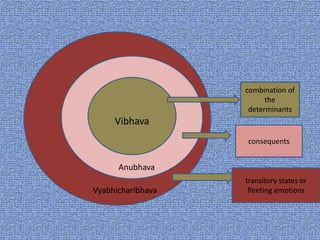
Vibhava
combination of
the
determinants
consequents
transitory states or
fleeting emotions
Anubhava
Vyabhicharibhava
Bharata Muni enunciated the eight Rasas in
the Nātyasāstra, an ancient work of dramatic
theory. Each rasa, according to Nātyasāstra, has a
presiding deity and a specific colour. There are 4
pairs of rasas. For instance, Hāsya arises out
of Sringara. The Aura of a frightened person is
black, and the aura of an angry person is
red. Bharata Muni established the following
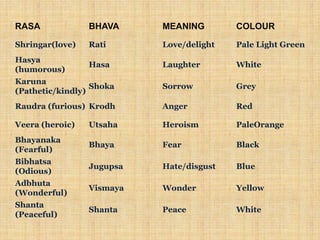
RASA BHAVA MEANING COLOUR
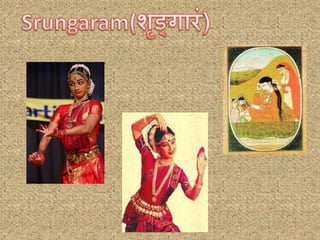
Shringar(love) Rati Love/delight Pale Light Green
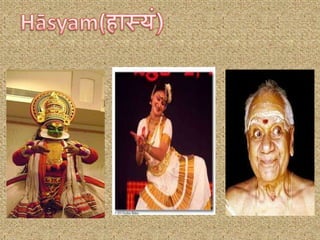
Hasya
(humorous)
Hasa Laughter White
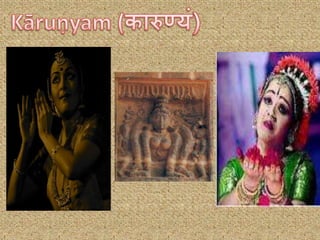
Karuna
(Pathetic/kindly)
Shoka Sorrow Grey
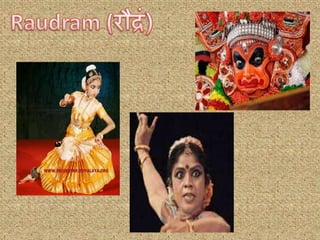
Raudra (furious) Krodh Anger Red
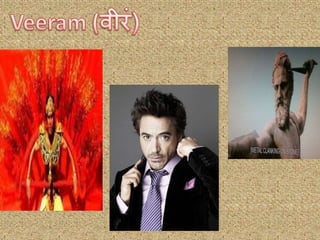
Veera (heroic) Utsaha Heroism PaleOrange
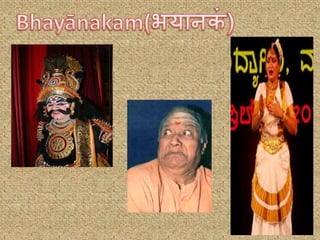
Bhayanaka
(Fearful)
Bhaya Fear Black
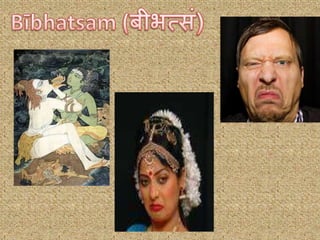
Bibhatsa
(Odious)
Jugupsa Hate/disgust Blue
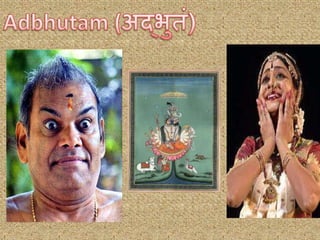
Adbhuta
(Wonderful)
Vismaya Wonder Yellow
Shanta
(Peaceful)
Shanta Peace White
rasa theory__(mrinal)

rasa theory__(mrinal)

  • 2.
    Of particular concernto Indian drama and literature are the term 'bhAva' or the state of mind and rasa (Sanskrit रस lit. 'juice' or 'essence') referring generally to the emotional flavors/essence crafted into the work by the writer and relished by a 'sensitive spectator' or sahrdaya or one with positive taste and mind. Rasas are created by bhavas.[1] They are described by Bharata Muni in the Nātyasāstra, an ancient work of dramatic theory. Rasa Theory Bharat Muni “Natyasastra”
  • 3.
    A rasa isthe developed relishable state of a permanent mood, which is called sthAyI bhAva. This development towards a relishable state results by the interplay on it of attendant emotional conditions which are called Vibhavas, anubhAvas and sancharI/ vyAbhichArI bhavas. The production of aesthetic rasa from bhAvas is analogous to the production of tastes/juices of kinds from food with condiments, curries, pastes and spices.
  • 4.
    Vibhava combination of the determinants consequents transitory statesor fleeting emotions Anubhava Vyabhicharibhava
  • 5.
    Bharata Muni enunciatedthe eight Rasas in the Nātyasāstra, an ancient work of dramatic theory. Each rasa, according to Nātyasāstra, has a presiding deity and a specific colour. There are 4 pairs of rasas. For instance, Hāsya arises out of Sringara. The Aura of a frightened person is black, and the aura of an angry person is red. Bharata Muni established the following
  • 6.
    RASA BHAVA MEANINGCOLOUR Shringar(love) Rati Love/delight Pale Light Green Hasya (humorous) Hasa Laughter White Karuna (Pathetic/kindly) Shoka Sorrow Grey Raudra (furious) Krodh Anger Red Veera (heroic) Utsaha Heroism PaleOrange Bhayanaka (Fearful) Bhaya Fear Black Bibhatsa (Odious) Jugupsa Hate/disgust Blue Adbhuta (Wonderful) Vismaya Wonder Yellow Shanta (Peaceful) Shanta Peace White