RAMAKRISHNA MISSION SIKSHANAMANDIRA
NAME:ALOK MONDAL ROLL NO.:F-97
COURSE: B.Ed
SESSION: 2018-20
TOPIC: THE UNIVERSITY EDUCATION COMMISSION
ABOUT THE COMISSION
First education commission of independent India.
Recommended for university education
Government of India appointed this commission
in 4th Nov. 1948.
Chairman: Dr. S. Radhakrishnan.
Submitted the report on 25th Aug. 1949.
This Commission consists of 10 members.
First
Second
Commission report consist of 2 volume:
volume contains recommendations and
contains the data used for the study
MEMBERS OF THECOMMISSION
1. Dr. S. Radhakrishnan, Splading Professor of Eastern Religious and
ethics at the University of Oxford. (Chairman).
2. Dr. Tara Chand, Secretary and Educational adviser to the
Government of India.
3. Dr. James F. Duff, Vice Chancellor, University of Durham.
4. Dr. Zakir Hussain, Jamia Millia Islamia, Delhi, now vice chancellor of
Muslim University Delhi.
5. Dr. Arthur E Morgan, Former president of Antioch college, First
Chairman of Tennesee Valley Authority, President of Community
service Inc.
6. Dr. A. Lakshmanaswami Mudaliar, Vice Chancellor of University of
Madras.
7. Dr. Meghnad Saha, Palit professor of Physics Dean, Faculty of science,
and President of Post-graduate Council of Science, University of
Calcutta.
8. Dr. Karm. Narayan Bahl, Professor of Zoology, University of Lucknow.
9. Dr. John J. Tigert, formerly Commission of education of the United
States, President Emeritus of the University of Florida.
10. Shri Nirmal Kumar Sidhanta, Professor of English and Dean ,
AIM OF UNIVERSITYEDUCATION
COMMISSION
Training for leadership
To develop character
Intellectual adventure
To develop democratic values
Preservation and development of culture
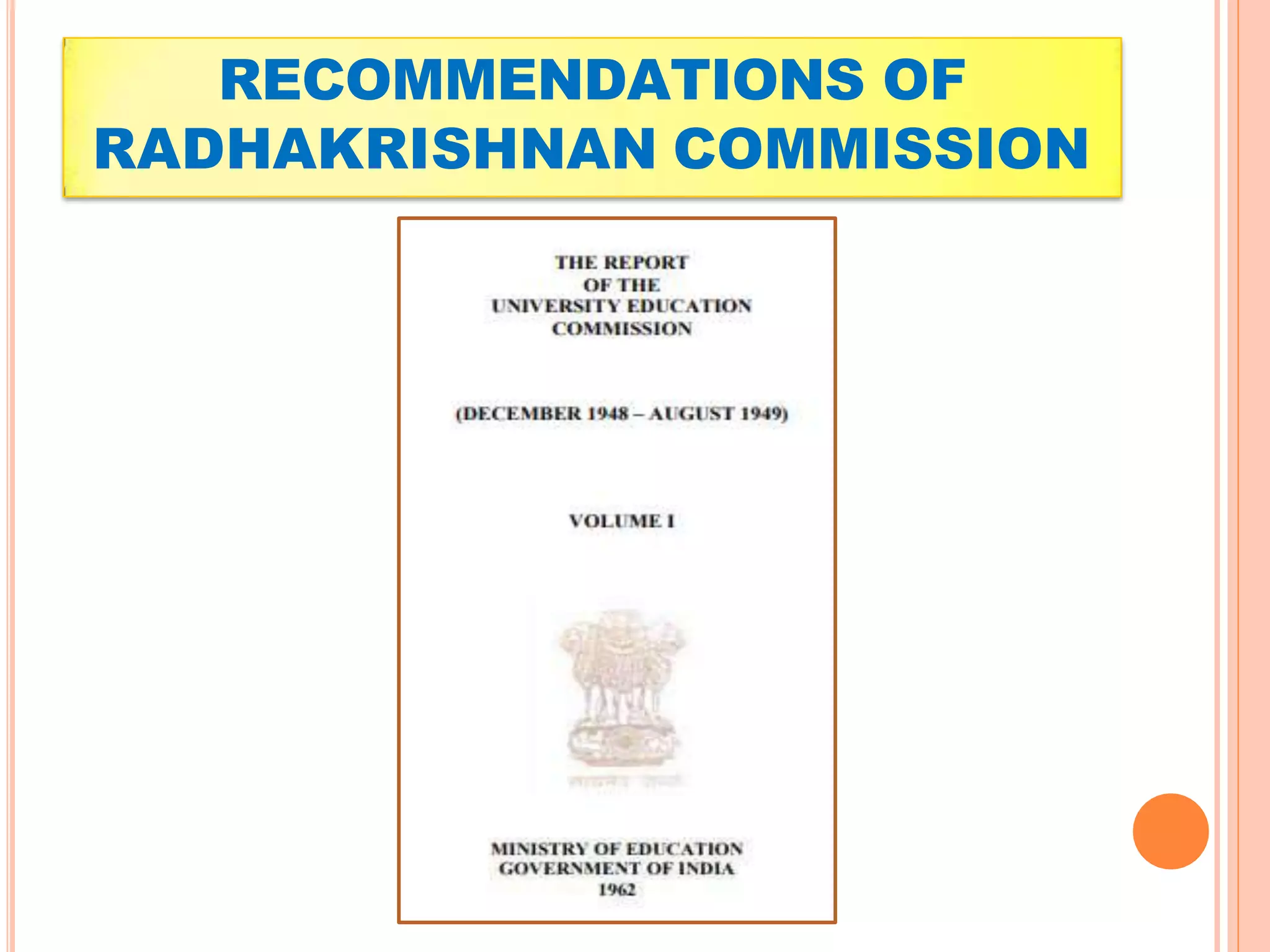
RECOMMENDATIONS OF
RADHAKRISHNAN COMMISSION
CURICULUM
[A]PHASES OF EDUCATION:
1. GENERALEDUCATION:
 Admission to the universities should be after 12years
of school course.
 The first degree should be after 3 years of collegiate
education (both Pass & Honours)
 2years masters degree for Pass and 1 years masters
degree for Honours
 Research facilities based on capability
2. PROFESSIONAL EDUCATION:
 Professional education in the fields of Agriculture,
Commerce, Education, Engineering and Technology,
Law, Medicine, Business administration, Public
industrialadministration and relations should be
started and developed.
[B]COURSES OF STUDY
1. AT SECONDARYEDUCATION:
 Mother tongue, modern Indian languages (Hindi,
Marathi, Guajarati, Tamil, Telegu etc.), English,
Modern European languages (French, German etc.)
 General science (math, physics, chemistry, biology,
home science, soil science)
 History (Indian, European & world), geography, geology,
psychology, accountancy, book keeping etc.
2. AT DEGREE COURSES
 Federal language/mother tongue
 English
hu manities, modern Indian For arts (any two):
language, English, French, philosophy, sociology,
chemistry,
geography, economics, home economics etc.
 For science (any two): math, physics,
botany, zoology, geology etc.
TEACHER
 Role of teacher
 Responsibility of teacher
 Characters of good teacher
 Condition of teacher
Provident fund
Residential facilities
Age of retirement
Work load
Salary scales
TEACHING STANDARDS
Well equipped and well stuffed
colleges
Vocational institutions
Number of students
Number of working days
No prescribed text books
Compulsory attendance
Seminar and workshops
TEACHER EDUCATION
There should be a large number of teacher
training college with excellent staff
The courses on theory of education
should be flexible
More emphasis should be given to
teaching practices
Refresher courses should be organized
from time-to-time
WOMENEDUCATION
Women education should be in
conformity with the requirements of women
Colleges for women should be opened and
co-education should be encouraged
Women should be encouraged to acquire
education in home science
Women should be well-informed about
their rights and duties
STUDENTS AND ACTIVITIES
 Selection
 Scholarship
 Residence
 Student unions
 Medical examinations
MERITS
 Aims
 Raising the status of teacher
 Improvement in curriculum
 Rural, women and religious education
 Student welfare
 Improvement of exam system
 Role of UGC
DEMERITS
 Repetitions
 Curriculum
 Problem of women education
 Three language formulae
Radhakrishnan Commission

Radhakrishnan Commission

  • 1.
    RAMAKRISHNA MISSION SIKSHANAMANDIRA NAME:ALOKMONDAL ROLL NO.:F-97 COURSE: B.Ed SESSION: 2018-20 TOPIC: THE UNIVERSITY EDUCATION COMMISSION
  • 2.
    ABOUT THE COMISSION Firsteducation commission of independent India. Recommended for university education Government of India appointed this commission in 4th Nov. 1948. Chairman: Dr. S. Radhakrishnan. Submitted the report on 25th Aug. 1949. This Commission consists of 10 members. First Second Commission report consist of 2 volume: volume contains recommendations and contains the data used for the study
  • 3.
    MEMBERS OF THECOMMISSION 1.Dr. S. Radhakrishnan, Splading Professor of Eastern Religious and ethics at the University of Oxford. (Chairman). 2. Dr. Tara Chand, Secretary and Educational adviser to the Government of India. 3. Dr. James F. Duff, Vice Chancellor, University of Durham. 4. Dr. Zakir Hussain, Jamia Millia Islamia, Delhi, now vice chancellor of Muslim University Delhi. 5. Dr. Arthur E Morgan, Former president of Antioch college, First Chairman of Tennesee Valley Authority, President of Community service Inc. 6. Dr. A. Lakshmanaswami Mudaliar, Vice Chancellor of University of Madras. 7. Dr. Meghnad Saha, Palit professor of Physics Dean, Faculty of science, and President of Post-graduate Council of Science, University of Calcutta. 8. Dr. Karm. Narayan Bahl, Professor of Zoology, University of Lucknow. 9. Dr. John J. Tigert, formerly Commission of education of the United States, President Emeritus of the University of Florida. 10. Shri Nirmal Kumar Sidhanta, Professor of English and Dean ,
  • 4.
    AIM OF UNIVERSITYEDUCATION COMMISSION Trainingfor leadership To develop character Intellectual adventure To develop democratic values Preservation and development of culture
  • 5.
  • 6.
    CURICULUM [A]PHASES OF EDUCATION: 1.GENERALEDUCATION:  Admission to the universities should be after 12years of school course.  The first degree should be after 3 years of collegiate education (both Pass & Honours)  2years masters degree for Pass and 1 years masters degree for Honours  Research facilities based on capability 2. PROFESSIONAL EDUCATION:  Professional education in the fields of Agriculture, Commerce, Education, Engineering and Technology, Law, Medicine, Business administration, Public industrialadministration and relations should be started and developed.
  • 7.
    [B]COURSES OF STUDY 1.AT SECONDARYEDUCATION:  Mother tongue, modern Indian languages (Hindi, Marathi, Guajarati, Tamil, Telegu etc.), English, Modern European languages (French, German etc.)  General science (math, physics, chemistry, biology, home science, soil science)  History (Indian, European & world), geography, geology, psychology, accountancy, book keeping etc. 2. AT DEGREE COURSES  Federal language/mother tongue  English hu manities, modern Indian For arts (any two): language, English, French, philosophy, sociology, chemistry, geography, economics, home economics etc.  For science (any two): math, physics, botany, zoology, geology etc.
  • 8.
    TEACHER  Role ofteacher  Responsibility of teacher  Characters of good teacher  Condition of teacher Provident fund Residential facilities Age of retirement Work load Salary scales
  • 9.
    TEACHING STANDARDS Well equippedand well stuffed colleges Vocational institutions Number of students Number of working days No prescribed text books Compulsory attendance Seminar and workshops
  • 10.
    TEACHER EDUCATION There shouldbe a large number of teacher training college with excellent staff The courses on theory of education should be flexible More emphasis should be given to teaching practices Refresher courses should be organized from time-to-time
  • 11.
    WOMENEDUCATION Women education shouldbe in conformity with the requirements of women Colleges for women should be opened and co-education should be encouraged Women should be encouraged to acquire education in home science Women should be well-informed about their rights and duties
  • 12.
    STUDENTS AND ACTIVITIES Selection  Scholarship  Residence  Student unions  Medical examinations
  • 13.
    MERITS  Aims  Raisingthe status of teacher  Improvement in curriculum  Rural, women and religious education  Student welfare  Improvement of exam system  Role of UGC
  • 14.
    DEMERITS  Repetitions  Curriculum Problem of women education  Three language formulae