Raising the Level of ICT  Knowledge and skills in the HSC Paul Comac ICT ETD Programme Manager HSC ICT Training Group
Content Background Aims and Objectives Current Situation Conclusions
ICT Training Strategy: Background ICT Training Strategy  recognises  the principle of ‘information’ being valued  as a resource the importance of relevant knowledge and skills in  ICT for Professional staff emphasizes  the extent to which all levels of staff use IT stresses the need for Education, Training and  Development in ICT as being of fundamental importance HSC ICT Training group key sponsor remit to take forward ICT training and development  agenda
HSC ICT Strategy: Key Components Electronic Communication of basic care information Helping care professionals to assess,  plan and deliver care Supporting care delivery across organisational boundaries Meeting e-public service targets Success underpinned by training
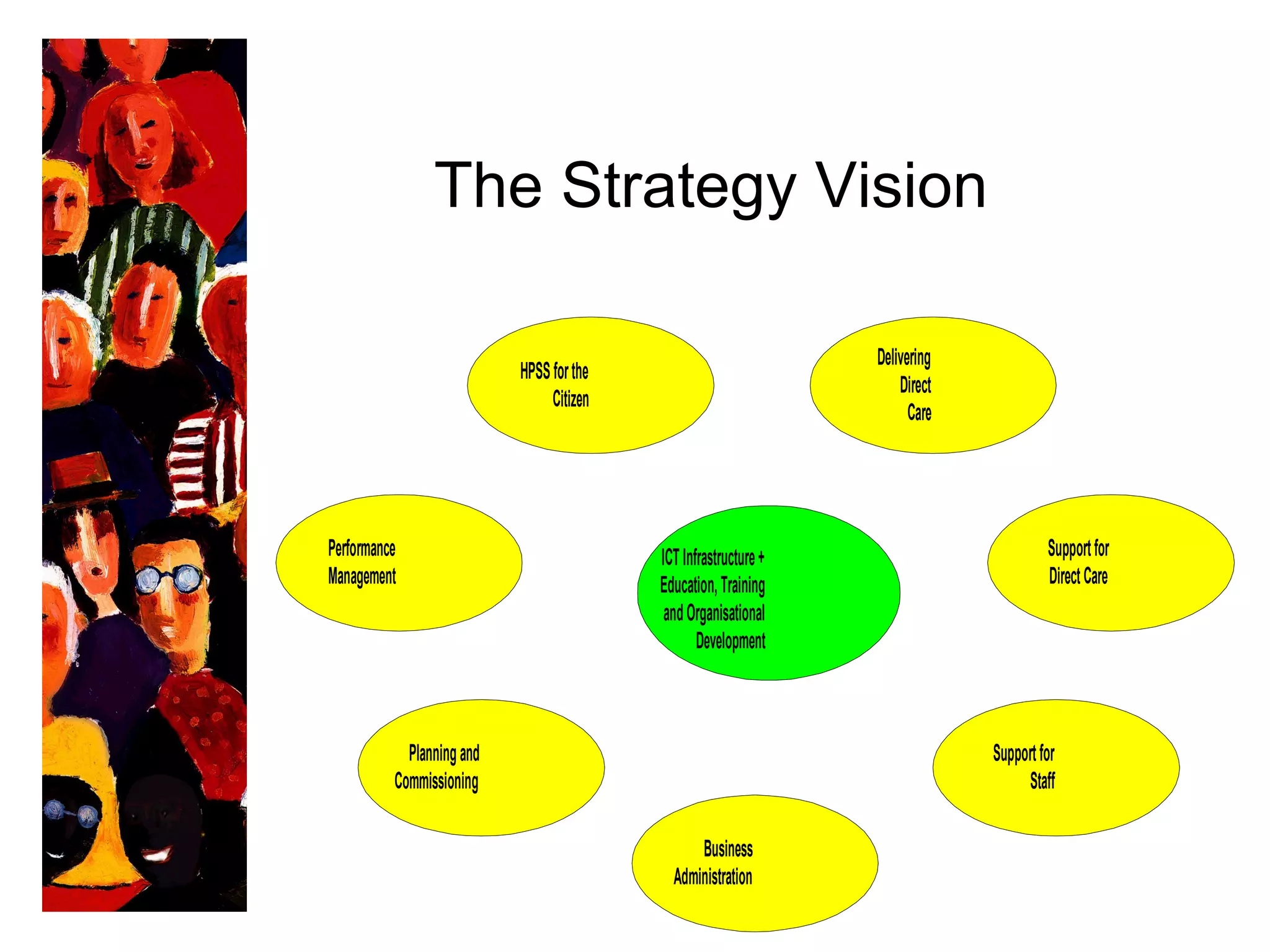
The Strategy Vision
ICT Training Strategy: Aims Create a framework for Education Training and Development (ETD) based on the HSC ICT strategy Assist HSC  organisations  in developing their ICT ETD strategies Provide longer term vision and direction for ETD within the HSC ICT strategy
Objective 1 To establish informatics as a core element in professional education Informatics core curriculum Research into Knowledge, Skills, Abilities of Professionals to ICT
Objective 2 To support the development of Informatics and ICT skills in Primary Care  Coding; ECDL; PRINCE2; Needs Assessment; Commissioning; Practice Development Planning; ICT and Quality and Outcomes Framework; website and intranet training
Objective 3 To identify a range of accredited qualifications for staff European Computer Driving Licence (ECDL); ECDL Health; ELITE; PRINCE2, Managing Successful Programmes (MSP); Microsoft IT Skills Academy Post Graduate Certificate/Diploma in UU; (Junior) Informatics development programme
Objective 4 To establish mechanisms to develop the ICT agenda ICT Trainers network; leading edge seminars;  elearning skills development  (MOODLE)
Objective 5 To provide ETD support to key ICT   infrastructure developments Health and Care No ECR NIPACS
Objective 6 To facilitate HSC organisations ICT ETD responses to relevant legislative and policy requirements.  Freedom Of Information; Data Protection Act; ICT security (e-learning); Gateway Review and Business case training
Current Situation   Competing pressures on resources means that ICT is not always given priority place ICT/Informatics not embedded in professional practice and curricula but; Recognition in ICT Strategy of importance  of ICT Training and; Recognition of importance of ICT in professional CPD Wide range of ICT Training solutions available  e.g e-learning; accredited programmes
Conclusion s Improving staff Knowledge and skills in ICT is crucial to implementation of the ICT strategy to securing the potential of ICT  HSC ICT Training group can play a central role but only in support of organisations and their staff

Raising The Level Of ICT Knowledge and Skills In The HSC - Paul Comac

  • 1.
    Raising the Levelof ICT Knowledge and skills in the HSC Paul Comac ICT ETD Programme Manager HSC ICT Training Group
  • 2.
    Content Background Aimsand Objectives Current Situation Conclusions
  • 3.
    ICT Training Strategy:Background ICT Training Strategy recognises the principle of ‘information’ being valued as a resource the importance of relevant knowledge and skills in ICT for Professional staff emphasizes the extent to which all levels of staff use IT stresses the need for Education, Training and Development in ICT as being of fundamental importance HSC ICT Training group key sponsor remit to take forward ICT training and development agenda
  • 4.
    HSC ICT Strategy:Key Components Electronic Communication of basic care information Helping care professionals to assess, plan and deliver care Supporting care delivery across organisational boundaries Meeting e-public service targets Success underpinned by training
  • 5.
  • 6.
    ICT Training Strategy:Aims Create a framework for Education Training and Development (ETD) based on the HSC ICT strategy Assist HSC organisations in developing their ICT ETD strategies Provide longer term vision and direction for ETD within the HSC ICT strategy
  • 7.
    Objective 1 Toestablish informatics as a core element in professional education Informatics core curriculum Research into Knowledge, Skills, Abilities of Professionals to ICT
  • 8.
    Objective 2 Tosupport the development of Informatics and ICT skills in Primary Care Coding; ECDL; PRINCE2; Needs Assessment; Commissioning; Practice Development Planning; ICT and Quality and Outcomes Framework; website and intranet training
  • 9.
    Objective 3 Toidentify a range of accredited qualifications for staff European Computer Driving Licence (ECDL); ECDL Health; ELITE; PRINCE2, Managing Successful Programmes (MSP); Microsoft IT Skills Academy Post Graduate Certificate/Diploma in UU; (Junior) Informatics development programme
  • 10.
    Objective 4 Toestablish mechanisms to develop the ICT agenda ICT Trainers network; leading edge seminars; elearning skills development (MOODLE)
  • 11.
    Objective 5 Toprovide ETD support to key ICT infrastructure developments Health and Care No ECR NIPACS
  • 12.
    Objective 6 Tofacilitate HSC organisations ICT ETD responses to relevant legislative and policy requirements. Freedom Of Information; Data Protection Act; ICT security (e-learning); Gateway Review and Business case training
  • 13.
    Current Situation Competing pressures on resources means that ICT is not always given priority place ICT/Informatics not embedded in professional practice and curricula but; Recognition in ICT Strategy of importance of ICT Training and; Recognition of importance of ICT in professional CPD Wide range of ICT Training solutions available e.g e-learning; accredited programmes
  • 14.
    Conclusion s Improvingstaff Knowledge and skills in ICT is crucial to implementation of the ICT strategy to securing the potential of ICT HSC ICT Training group can play a central role but only in support of organisations and their staff