WORK-BASED LEARNING
IN VOCATIONAL
EDUCATION AND TRAINING
How to become involved in the OECD study that aims to
deliver policy messages about how to use work-based
learning to achieve better economic and social outcomes
One of the biggest challenges in developing skills for the
labour market is to ensure that learning meets the needs of
the workplace. One of the best ways of doing this is to make
the fullest use of the workplace as a powerful learning
environment, and to find effective mechanisms to link
employer interests to the mix of training provision. This is
more easily said than done. The development of high-level
workplace skills, where work-based learning plays a leading
role, is one of the central challenges both for competitive
enterprises and collectively for a modern productive
economy.
Why work-based learning matters
Work-based learning encompasses a diversity of formal and
informal arrangements including apprenticeships, informal
learning on the job, work placements that form part of
formal vocational qualifications, and internships of various
types. Managed effectively, as in the highest performing
VET systems, it delivers very clear benefits for all
participants and contributes to better labour market and
economic outcomes. For those entering or re-entering the
labour market, work-based learning offers a powerful
means of facilitating the transition.
Why work-based learning matters
• synthesise the evidence on how the benefits of work-based learning
might be more fully exploited to achieve better economic and social
outcomes;
• document global experience of developments and innovations in
policy and practice; and
• on these foundations, deliver key policy messages.
The overall aims of the project are
to:
A large body of research and analysis of work-based learning already exists and this
project aims to add value in making use of the particular comparative advantages of the
OECD, by:
• Linking the analysis to wider OECD work, including related work on education,
labour markets, science, technology and innovation, and inclusive economic growth.
• Exploiting the insights and country examples of work-based learning already gained
through the OECD's extensive experience through country reviews of vocational
education and training.
• Drawing on the OECD's capacity to convene countries and through peer-learning to
use their experience and expertise to inform the project.
• Using the OECD Survey of Adult Skills, to explore the connections between work-
based learning and skills.
This work will also draw on relevant expertise of other international organisations,
including the EU and its agencies, ILO and UNESCO and the World Bank.
How OECD can add value by
focusing on work-based learning
Australia, Canada, Germany, Norway, Scotland,
Switzerland, the United Kingdom, the United States and
the European Commission are providing voluntary
contributions towards the work, either through sponsoring
specific modules or contributing to the project as a whole.
Participants
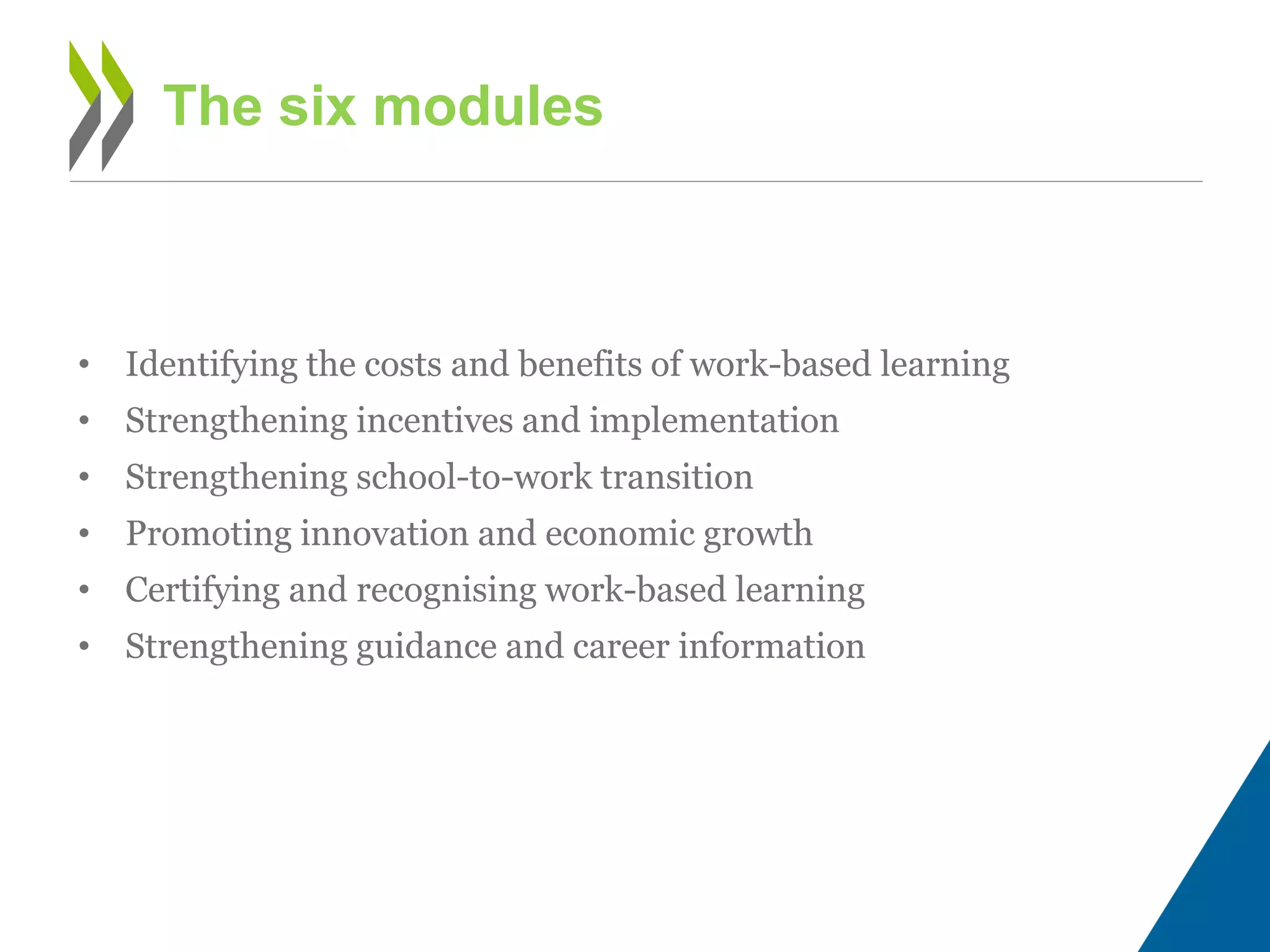
• Identifying the costs and benefits of work-based learning
• Strengthening incentives and implementation
• Strengthening school-to-work transition
• Promoting innovation and economic growth
• Certifying and recognising work-based learning
• Strengthening guidance and career information
The six modules
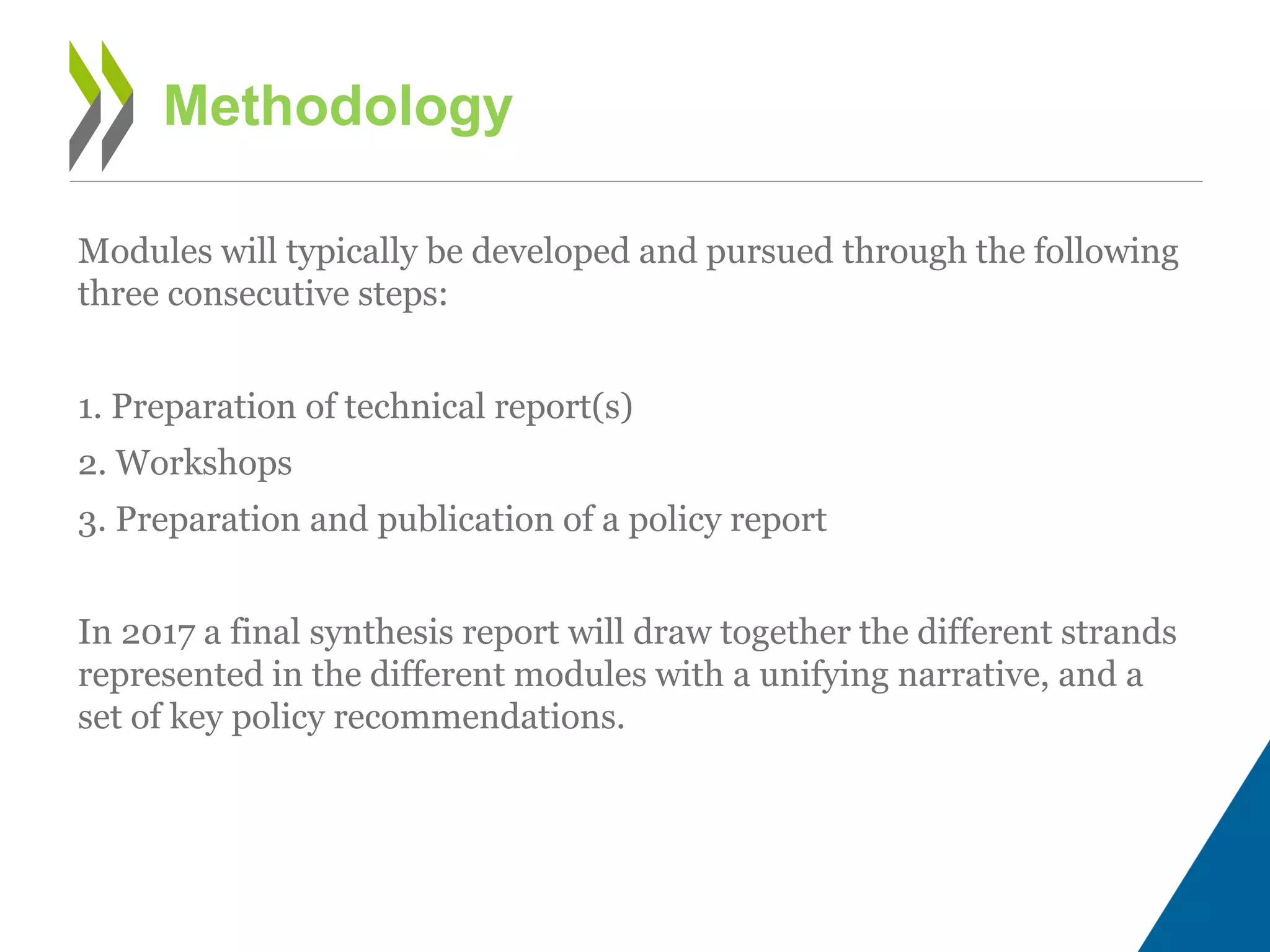
Modules will typically be developed and pursued through the following
three consecutive steps:
1. Preparation of technical report(s)
2. Workshops
3. Preparation and publication of a policy report
In 2017 a final synthesis report will draw together the different strands
represented in the different modules with a unifying narrative, and a
set of key policy recommendations.
Methodology
1. Initial desk-based analysis will review policy and practice across
OECD countries on the basis of available evidence. It will draw on
cross-national data sources whenever available, including the
OECD Survey of Adult Skills. It will assess the key policy challenges
in the field. Depending on the features of each module, this initial
analysis may be presented in one or more technical report(s).
Technical reports will often be prepared by external experts, while
others will be prepared by the Secretariat. The technical report(s)
may be published as working papers and will provide the basis for a
workshop.
3 consecutive steps
2. Countries will be invited to participate in a workshop, which will be
designed to fulfil three purposes. First, to review the initial
analytical work, summarised in the technical report(s) and
augment it with country experience with potential policy solutions
and innovations. Second, to enable countries to learn directly from
each other’s experience. Finally, and more specifically for the host
country, to build stakeholder engagement in a common endeavour.
The workshop could be hosted by the sponsoring country.
3 consecutive steps
3. The policy report will integrate the initial analysis from the
technical report(s) and the outcomes of the workshop, drawing
together conclusions and distilling key policy messages from the
topic of the module in a published OECD report.
For further information and advice please contact the project manager,
Viktória Kis
viktoria.kis@oecd.org
3 consecutive steps

OECD Work Based Learning

  • 1.
    WORK-BASED LEARNING IN VOCATIONAL EDUCATIONAND TRAINING How to become involved in the OECD study that aims to deliver policy messages about how to use work-based learning to achieve better economic and social outcomes
  • 2.
    One of thebiggest challenges in developing skills for the labour market is to ensure that learning meets the needs of the workplace. One of the best ways of doing this is to make the fullest use of the workplace as a powerful learning environment, and to find effective mechanisms to link employer interests to the mix of training provision. This is more easily said than done. The development of high-level workplace skills, where work-based learning plays a leading role, is one of the central challenges both for competitive enterprises and collectively for a modern productive economy. Why work-based learning matters
  • 3.
    Work-based learning encompassesa diversity of formal and informal arrangements including apprenticeships, informal learning on the job, work placements that form part of formal vocational qualifications, and internships of various types. Managed effectively, as in the highest performing VET systems, it delivers very clear benefits for all participants and contributes to better labour market and economic outcomes. For those entering or re-entering the labour market, work-based learning offers a powerful means of facilitating the transition. Why work-based learning matters
  • 4.
    • synthesise theevidence on how the benefits of work-based learning might be more fully exploited to achieve better economic and social outcomes; • document global experience of developments and innovations in policy and practice; and • on these foundations, deliver key policy messages. The overall aims of the project are to:
  • 5.
    A large bodyof research and analysis of work-based learning already exists and this project aims to add value in making use of the particular comparative advantages of the OECD, by: • Linking the analysis to wider OECD work, including related work on education, labour markets, science, technology and innovation, and inclusive economic growth. • Exploiting the insights and country examples of work-based learning already gained through the OECD's extensive experience through country reviews of vocational education and training. • Drawing on the OECD's capacity to convene countries and through peer-learning to use their experience and expertise to inform the project. • Using the OECD Survey of Adult Skills, to explore the connections between work- based learning and skills. This work will also draw on relevant expertise of other international organisations, including the EU and its agencies, ILO and UNESCO and the World Bank. How OECD can add value by focusing on work-based learning
  • 6.
    Australia, Canada, Germany,Norway, Scotland, Switzerland, the United Kingdom, the United States and the European Commission are providing voluntary contributions towards the work, either through sponsoring specific modules or contributing to the project as a whole. Participants
  • 7.
    • Identifying thecosts and benefits of work-based learning • Strengthening incentives and implementation • Strengthening school-to-work transition • Promoting innovation and economic growth • Certifying and recognising work-based learning • Strengthening guidance and career information The six modules
  • 8.
    Modules will typicallybe developed and pursued through the following three consecutive steps: 1. Preparation of technical report(s) 2. Workshops 3. Preparation and publication of a policy report In 2017 a final synthesis report will draw together the different strands represented in the different modules with a unifying narrative, and a set of key policy recommendations. Methodology
  • 9.
    1. Initial desk-basedanalysis will review policy and practice across OECD countries on the basis of available evidence. It will draw on cross-national data sources whenever available, including the OECD Survey of Adult Skills. It will assess the key policy challenges in the field. Depending on the features of each module, this initial analysis may be presented in one or more technical report(s). Technical reports will often be prepared by external experts, while others will be prepared by the Secretariat. The technical report(s) may be published as working papers and will provide the basis for a workshop. 3 consecutive steps
  • 10.
    2. Countries willbe invited to participate in a workshop, which will be designed to fulfil three purposes. First, to review the initial analytical work, summarised in the technical report(s) and augment it with country experience with potential policy solutions and innovations. Second, to enable countries to learn directly from each other’s experience. Finally, and more specifically for the host country, to build stakeholder engagement in a common endeavour. The workshop could be hosted by the sponsoring country. 3 consecutive steps
  • 11.
    3. The policyreport will integrate the initial analysis from the technical report(s) and the outcomes of the workshop, drawing together conclusions and distilling key policy messages from the topic of the module in a published OECD report. For further information and advice please contact the project manager, Viktória Kis viktoria.kis@oecd.org 3 consecutive steps