Downloaded 25 times
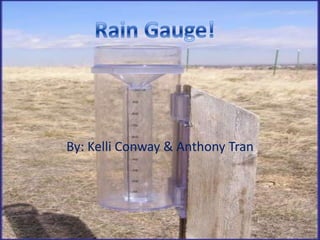


King Sejong of Korea invented the first rain gauge in 1441 to improve agricultural technology and measure rainfall levels. He distributed rain gauges to villages so farmers could track rainfall and predict harvest yields. The Korean invention of the rain gauge preceded the European version by over 200 years. A rain gauge catches and measures liquid precipitation through a funnel and tube system. It can measure rain or the liquid equivalent of snow. Standard rain gauges are manually read, while tipping bucket and weighing rain gauges electronically detect rainfall amounts and intensities. King Sejong also used rain gauge data to determine taxes for farmers.


