KNOWLEDGE AND
CURRICULUM:
PHILOSOPHICAL AND
SOCIOLOGICAL PERSPECTIVES
SUBMITTTED BY
DHANYA VIJAY P V
SHAJINA J S
SREELEKSHMI SREEKUMAR
OPTIONAL
ENGLISH
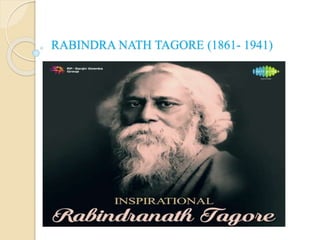
RABINDRA NATH TAGORE (1861- 1941)
 Rabindra Nath Tagore was a poet, dramatist, novelist,
actor, composer, educator, philosopher and painter.
 He was born in Calcutta.
 He established Shantinikethan in 1901.
 In 1913 , he was awarded the “Nobel prize” for his
‘Gitanjali’.
 “ In 1921 he established ‘ Viswa Bharathy’ which is
conceived as an international university.
 Greater India, My School, Creative Unity, Personality
are some of his main publications.
Tagore believed in Vedas. He was of
the view that God is one and he is
the creator of man as well as of
nature. He believed that in him and
through him we find unity between
man and man and unity between
man and nature.
MAJOR CONTRIBUTIONS
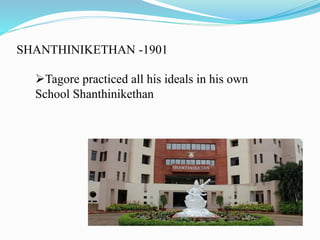
SHANTHINIKETHAN -1901
Tagore practiced all his ideals in his own
School Shanthinikethan
VISWA BHARATHI - 1921
An international university, is the living symbol
of Tagore’s philosophy of life and education.
Basic principles of his educational philosophy
 Harmony with all things
Freedom
Creative self expression
Active Communication with nature and man.
Internationalism
Aims of education
Physical Development
Moral and spiritual Development
Intellectual Development
Harmonious Development
Toleration
Purposeful education
International Understanding
Synthesis between Individual and Social aims
Utilitarian Aim
Views about Curriculum
Broad- Based curriculum
a. Subjects
b. Activities
c. Actual living and Community Service
Meaning of education
“Education is reformatory and expansive process
which seeks to unfold all that is good and noble to
individual. True knowledge brings enlightenment and self
realization”.
“Education is a permanent part of the venture of
life. It is not like a painful hospital treatment of curing
students of the malady, their ignorance, but it is a function of
health, the natural expression of their mind”.
Contents of Education
 Subjects
Activities
Actual living and community Service
Views about Methods of Teaching
Heuristic Method
Direct Experience
Activity Method
Teaching While Walking
Debate and Discussion Method
His Views about teacher
A teacher must know his students
A teacher must be a learner Himself
Concept Of Discipline
 Didn’t believe in harsh discipline
 Against the traditional theory of discipline
His concept of discipline
No Suppression of the child
Sympathy for the Child
Self Discipline
Discipline and Responsibility are intertwined
Merits
Firm belief in the philosophy of Veda
Faith in absolute values.
Considered nature as a great teacher.
Emphasized moral training and development of
character.
Scientific enquiry and mechanical order was
replaced by spiritualism and harmony among various
human manifestations.
Demerits
Tagore did not claim to produce any original philosophy.
He expressed his own vivid phrases and showed its
relevance to modern life.

Rabindranathtagore 171109132328

  • 1.
  • 2.
    SUBMITTTED BY DHANYA VIJAYP V SHAJINA J S SREELEKSHMI SREEKUMAR OPTIONAL ENGLISH
  • 3.
  • 4.
     Rabindra NathTagore was a poet, dramatist, novelist, actor, composer, educator, philosopher and painter.  He was born in Calcutta.  He established Shantinikethan in 1901.  In 1913 , he was awarded the “Nobel prize” for his ‘Gitanjali’.  “ In 1921 he established ‘ Viswa Bharathy’ which is conceived as an international university.  Greater India, My School, Creative Unity, Personality are some of his main publications.
  • 5.
    Tagore believed inVedas. He was of the view that God is one and he is the creator of man as well as of nature. He believed that in him and through him we find unity between man and man and unity between man and nature.
  • 6.
  • 7.
    SHANTHINIKETHAN -1901 Tagore practicedall his ideals in his own School Shanthinikethan
  • 8.
    VISWA BHARATHI -1921 An international university, is the living symbol of Tagore’s philosophy of life and education.
  • 9.
    Basic principles ofhis educational philosophy  Harmony with all things Freedom Creative self expression Active Communication with nature and man. Internationalism
  • 10.
    Aims of education PhysicalDevelopment Moral and spiritual Development Intellectual Development Harmonious Development Toleration Purposeful education International Understanding Synthesis between Individual and Social aims Utilitarian Aim
  • 11.
    Views about Curriculum Broad-Based curriculum a. Subjects b. Activities c. Actual living and Community Service
  • 12.
    Meaning of education “Educationis reformatory and expansive process which seeks to unfold all that is good and noble to individual. True knowledge brings enlightenment and self realization”. “Education is a permanent part of the venture of life. It is not like a painful hospital treatment of curing students of the malady, their ignorance, but it is a function of health, the natural expression of their mind”.
  • 13.
    Contents of Education Subjects Activities Actual living and community Service
  • 14.
    Views about Methodsof Teaching Heuristic Method Direct Experience Activity Method Teaching While Walking Debate and Discussion Method
  • 15.
    His Views aboutteacher A teacher must know his students A teacher must be a learner Himself
  • 16.
    Concept Of Discipline Didn’t believe in harsh discipline  Against the traditional theory of discipline His concept of discipline No Suppression of the child Sympathy for the Child Self Discipline Discipline and Responsibility are intertwined
  • 17.
    Merits Firm belief inthe philosophy of Veda Faith in absolute values. Considered nature as a great teacher. Emphasized moral training and development of character. Scientific enquiry and mechanical order was replaced by spiritualism and harmony among various human manifestations.
  • 18.
    Demerits Tagore did notclaim to produce any original philosophy. He expressed his own vivid phrases and showed its relevance to modern life.