The importance of fibre
in rabbits’ diet
…and introducing ‘Fibrevores’
In this presentation
 What are ‘fibrevores’?
 Why is fibre important?
– Rabbit digestion, how it works and what it needs
 What are the types of fibre
 The importance of fibre to the health and wellbeing of
rabbits
 Sources of high quality fibre
 The best way to feed pet rabbits
‘Fibrevores’
‘Fibrevores’ are animals that are obligatory fibre-eaters
– This means that they absolutely NEED to eat fibre, first and
foremost
• In a similar way, cats are obligatory meat-eaters
Fibrevores are:
– Rabbits
– Guinea pigs
– Chinchillas
– Degus
Fibre
Fibre is found particularly in plant cell walls
– It includes pectins, hemi-cellulose, cellulose and
lignin
It can be divided into:
– Digestible Fibre and
– Indigestible Fibre
Together both types are beneficial fibre and are
essential in rabbit nutrition
What Rabbits Want
FIBRE!
 In the wild, rabbits mainly eat grass
– with a few leaves, vegetable matter and occasionally bits of twig & bark
 Rabbits have a digestive system perfectly developed for eating fibre,
such as grass
 Pet rabbits rely on their owners feeding them a diet that mimics what
they would eat in the wild
 Their digestive system relies on:
– A very delicate balance of bacteria
– Fibre moving through their gut at all times
 If levels of bacteria change
– Health problems such as diarrhoea and sticky bottom occur
 If movement of fibre through the gut stops
– This can quickly be a cause of death
Rabbits are prey animals
 Grass is not rich in nutrients but rabbits have evolved to be able to
digest grass and fibre to extract all the nutrients they need
 Cows are big animals that also eat grass and so have developed
massive stomachs (80 litres big) and a rumination process to
digest grass and nutrients.
 Rabbits however, are prey animals who have many predators in
the wild
– They need to be a size and build that enables them to quickly run
away from predators
– So they can’t have a large stomach & digestive system like a cow
 When eating they are looking for predators not at what they are
eating
– Hence evolved with eyes toward top of head
– They cannot see what they eat
– So the look and colour of food is irrelevant to them
Rabbits
Let’s talk about droppings!
Rabbits need to process their food twice to get all the
nutrients they need from it
So rabbits are physically unique
They eat their own droppings
And they should and NEED to do this
– It is not the same issue as for dogs!
Actually, rabbits have 2 types of droppings
The droppings that rabbits eat are special
– They are full of additional nutrients that the rabbit needs
– Called ‘sticky droppings’ or caecotrophs
Rabbits
Let’s talk about droppings!
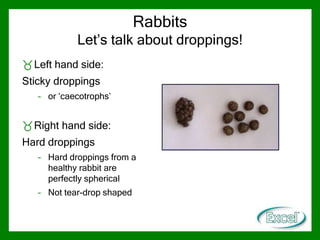
Left hand side:
Sticky droppings
– or ‘caecotrophs’
Right hand side:
Hard droppings
– Hard droppings from a
healthy rabbit are
perfectly spherical
– Not tear-drop shaped
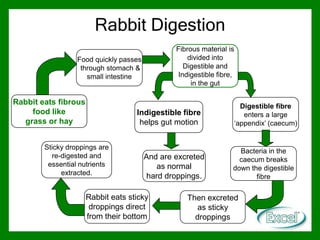
Rabbit Digestion
Rabbit eats fibrous
food like
grass or hay
Fibrous material is
divided into
Digestible and
Indigestible fibre,
in the gut
Bacteria in the
caecum breaks
down the digestible
fibre
Then excreted
as sticky
droppings
Rabbit eats sticky
droppings direct
from their bottom
Sticky droppings are
re-digested and
essential nutrients
extracted.
Food quickly passes
through stomach &
small intestine
Digestible fibre
enters a large
‘appendix’ (caecum)
Indigestible fibre
helps gut motion
And are excreted
as normal
hard droppings.
Feeding the good bacteria
in the rabbit
Rabbits cannot digest their food without the help of
beneficial bacteria and other microbes
Maintaining the balance of bacteria in their digestive
system keeps rabbits alive
Feeding rabbits the right sort of food is therefore one of
THE most important aspects of rabbit care to ensure
healthy, happy bunnies!
– Choice of food is therefore critical
Rabbit Diet
…and the role that fibre plays
The problem with muesli-style food for rabbits
1. Selective feeding
 Rabbits can become fussy eaters
 They will eat sweet foods, as an easy way to get a glucose fix
 This can result in rabbits picking out bits of their food and leaving the
rest
 Leading to an imbalanced diet, with rabbit missing out on essential
nutrients, like fibre, calcium, phosphorous and Vitamin D
2. Lack of fibre
 Muesli-style foods do not contain enough fibre
3. Unhealthy ingredients
 Often, the actual ingredients in muesli foods are high in sugar and
starch
 These are difficult for the rabbit to digest and can lead to health
problems and obesity
Remember: Rabbits can’t see the food they’re eating, so what it
looks like really doesn’t matter!
Fibre in the rabbit’s diet
 Indigestible fibre
– Longer in size
– Is needed by the rabbit to keep digestive system going
• Gut motility
– Also plays an essential part in keeping teeth ground down
– And helps stimulate appetite
Too little indigestible fibre in the diet leads to gut stasis
– Movement round the digestive system stops
– This is fatal for rabbits
Fibre in the rabbit’s diet
 Digestible fibre
– Very short fibre, less than 0.3 – 0.5mm after being eaten
– Is needed by the rabbit for essential nutrition
– Maintains right level of good bacteria in the gut
• Essential for digestion to work
 Too little digestible fibre in the diet leads to malnutrition
Fibre
Physical & Emotional Health
Fibre is vital for:
– Digestive health
– Dental health
– Emotional health
Fibre
Digestive Health
 Fibre promotes healthy digestion by:
– ensuring gut motility
– promoting the optimal balance of bacteria in the gut
– helping to prevent abnormal droppings and caecotrophs
– helping stimulate appetite
 Burgess Excel Nuggets
– Contain high levels of beneficial fibre (digestible and indigestible fibre)
and all the nutrients rabbits need, in every mouthful
• Prevents selective feeding
– Contain a prebiotic – promotes beneficial bacteria for healthy digestion
Fibre
Dental Health
Rabbits teeth grow continuously
– 8-12cm / year
Fibre promotes dental health by:
– encouraging greater use of the teeth
– helping with optimal dental wear
Excel Herbage and Forage
– Excel Herbage: Timothy hay with Marigolds & Dandelions
• An excellent source of beneficial long fibre
• Nibbling on hay assists the grinding of teeth, keeping them in great
shape
– Excel Forage: Barn-dried grass
• Another great source of fibre and essential nutrients
Remember: Hay is essential food for rabbits, not just bedding!
Fibre
Emotional Health
In many ways, fibre promotes emotional health for rabbits
Fibre in the form of hay or dried grass:
– Encourages natural foraging behaviour
– Prevents boredom
– Can be provided in ‘containers’ that stimulate the rabbit
• Tunnels, hay balls etc
Fibrous healthy snacks (like Excel Nature Snacks):
– Provide emotional enrichment
– Encourage interaction and bonding between pet and owner
The Excel Feeding Plan:
Complete nutrition in 5 simple steps
Provides all the beneficial fibre and
nutrients that rabbits need
Burgess Excel
Also available in the Excel range:
- Excel Junior & Dwarf Nuggets
- Excel Lite Nuggets: lower calorie
- Excel Nuggets for Guinea Pigs
- Excel Apple Snacks: a healthy treat, ideal if your rabbit is
off their food

Rabbits - Fibrevores

  • 1.
    The importance offibre in rabbits’ diet …and introducing ‘Fibrevores’
  • 2.
    In this presentation What are ‘fibrevores’?  Why is fibre important? – Rabbit digestion, how it works and what it needs  What are the types of fibre  The importance of fibre to the health and wellbeing of rabbits  Sources of high quality fibre  The best way to feed pet rabbits
  • 3.
    ‘Fibrevores’ ‘Fibrevores’ are animalsthat are obligatory fibre-eaters – This means that they absolutely NEED to eat fibre, first and foremost • In a similar way, cats are obligatory meat-eaters Fibrevores are: – Rabbits – Guinea pigs – Chinchillas – Degus
  • 4.
    Fibre Fibre is foundparticularly in plant cell walls – It includes pectins, hemi-cellulose, cellulose and lignin It can be divided into: – Digestible Fibre and – Indigestible Fibre Together both types are beneficial fibre and are essential in rabbit nutrition
  • 5.
  • 6.
    FIBRE!  In thewild, rabbits mainly eat grass – with a few leaves, vegetable matter and occasionally bits of twig & bark  Rabbits have a digestive system perfectly developed for eating fibre, such as grass  Pet rabbits rely on their owners feeding them a diet that mimics what they would eat in the wild  Their digestive system relies on: – A very delicate balance of bacteria – Fibre moving through their gut at all times  If levels of bacteria change – Health problems such as diarrhoea and sticky bottom occur  If movement of fibre through the gut stops – This can quickly be a cause of death
  • 7.
    Rabbits are preyanimals  Grass is not rich in nutrients but rabbits have evolved to be able to digest grass and fibre to extract all the nutrients they need  Cows are big animals that also eat grass and so have developed massive stomachs (80 litres big) and a rumination process to digest grass and nutrients.  Rabbits however, are prey animals who have many predators in the wild – They need to be a size and build that enables them to quickly run away from predators – So they can’t have a large stomach & digestive system like a cow  When eating they are looking for predators not at what they are eating – Hence evolved with eyes toward top of head – They cannot see what they eat – So the look and colour of food is irrelevant to them
  • 8.
    Rabbits Let’s talk aboutdroppings! Rabbits need to process their food twice to get all the nutrients they need from it So rabbits are physically unique They eat their own droppings And they should and NEED to do this – It is not the same issue as for dogs! Actually, rabbits have 2 types of droppings The droppings that rabbits eat are special – They are full of additional nutrients that the rabbit needs – Called ‘sticky droppings’ or caecotrophs
  • 9.
    Rabbits Let’s talk aboutdroppings! Left hand side: Sticky droppings – or ‘caecotrophs’ Right hand side: Hard droppings – Hard droppings from a healthy rabbit are perfectly spherical – Not tear-drop shaped
  • 10.
    Rabbit Digestion Rabbit eatsfibrous food like grass or hay Fibrous material is divided into Digestible and Indigestible fibre, in the gut Bacteria in the caecum breaks down the digestible fibre Then excreted as sticky droppings Rabbit eats sticky droppings direct from their bottom Sticky droppings are re-digested and essential nutrients extracted. Food quickly passes through stomach & small intestine Digestible fibre enters a large ‘appendix’ (caecum) Indigestible fibre helps gut motion And are excreted as normal hard droppings.
  • 12.
    Feeding the goodbacteria in the rabbit Rabbits cannot digest their food without the help of beneficial bacteria and other microbes Maintaining the balance of bacteria in their digestive system keeps rabbits alive Feeding rabbits the right sort of food is therefore one of THE most important aspects of rabbit care to ensure healthy, happy bunnies! – Choice of food is therefore critical
  • 13.
    Rabbit Diet …and therole that fibre plays
  • 14.
    The problem withmuesli-style food for rabbits 1. Selective feeding  Rabbits can become fussy eaters  They will eat sweet foods, as an easy way to get a glucose fix  This can result in rabbits picking out bits of their food and leaving the rest  Leading to an imbalanced diet, with rabbit missing out on essential nutrients, like fibre, calcium, phosphorous and Vitamin D 2. Lack of fibre  Muesli-style foods do not contain enough fibre 3. Unhealthy ingredients  Often, the actual ingredients in muesli foods are high in sugar and starch  These are difficult for the rabbit to digest and can lead to health problems and obesity Remember: Rabbits can’t see the food they’re eating, so what it looks like really doesn’t matter!
  • 15.
    Fibre in therabbit’s diet  Indigestible fibre – Longer in size – Is needed by the rabbit to keep digestive system going • Gut motility – Also plays an essential part in keeping teeth ground down – And helps stimulate appetite Too little indigestible fibre in the diet leads to gut stasis – Movement round the digestive system stops – This is fatal for rabbits
  • 16.
    Fibre in therabbit’s diet  Digestible fibre – Very short fibre, less than 0.3 – 0.5mm after being eaten – Is needed by the rabbit for essential nutrition – Maintains right level of good bacteria in the gut • Essential for digestion to work  Too little digestible fibre in the diet leads to malnutrition
  • 17.
    Fibre Physical & EmotionalHealth Fibre is vital for: – Digestive health – Dental health – Emotional health
  • 18.
    Fibre Digestive Health  Fibrepromotes healthy digestion by: – ensuring gut motility – promoting the optimal balance of bacteria in the gut – helping to prevent abnormal droppings and caecotrophs – helping stimulate appetite  Burgess Excel Nuggets – Contain high levels of beneficial fibre (digestible and indigestible fibre) and all the nutrients rabbits need, in every mouthful • Prevents selective feeding – Contain a prebiotic – promotes beneficial bacteria for healthy digestion
  • 19.
    Fibre Dental Health Rabbits teethgrow continuously – 8-12cm / year Fibre promotes dental health by: – encouraging greater use of the teeth – helping with optimal dental wear Excel Herbage and Forage – Excel Herbage: Timothy hay with Marigolds & Dandelions • An excellent source of beneficial long fibre • Nibbling on hay assists the grinding of teeth, keeping them in great shape – Excel Forage: Barn-dried grass • Another great source of fibre and essential nutrients Remember: Hay is essential food for rabbits, not just bedding!
  • 20.
    Fibre Emotional Health In manyways, fibre promotes emotional health for rabbits Fibre in the form of hay or dried grass: – Encourages natural foraging behaviour – Prevents boredom – Can be provided in ‘containers’ that stimulate the rabbit • Tunnels, hay balls etc Fibrous healthy snacks (like Excel Nature Snacks): – Provide emotional enrichment – Encourage interaction and bonding between pet and owner
  • 21.
    The Excel FeedingPlan: Complete nutrition in 5 simple steps Provides all the beneficial fibre and nutrients that rabbits need
  • 22.
    Burgess Excel Also availablein the Excel range: - Excel Junior & Dwarf Nuggets - Excel Lite Nuggets: lower calorie - Excel Nuggets for Guinea Pigs - Excel Apple Snacks: a healthy treat, ideal if your rabbit is off their food