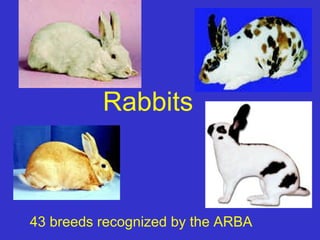
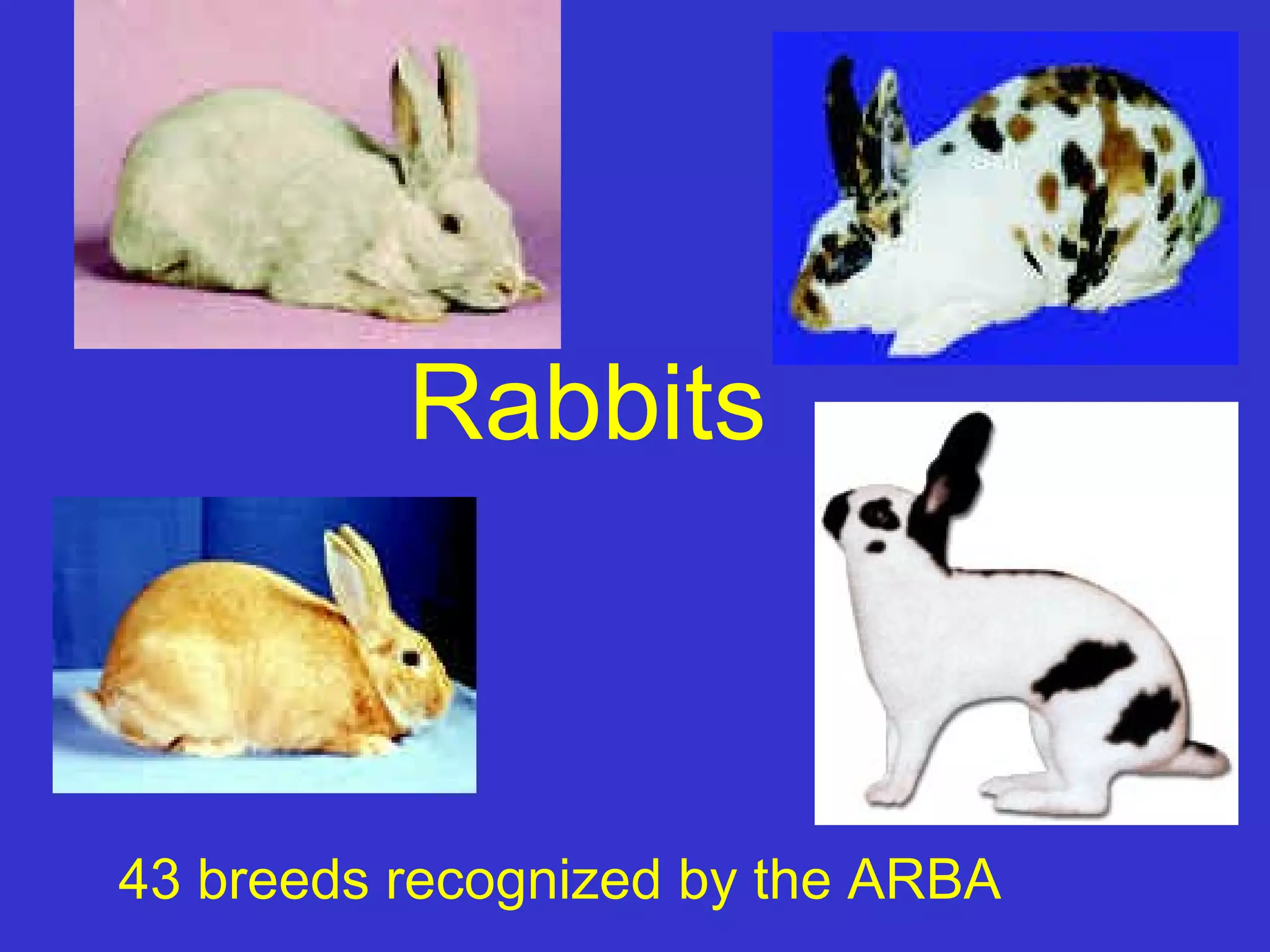
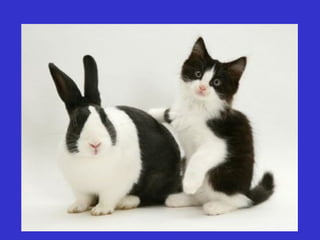
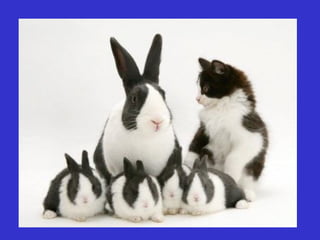
Rabbits


43 breeds recognized by the ARBA
Milo : available for adoption
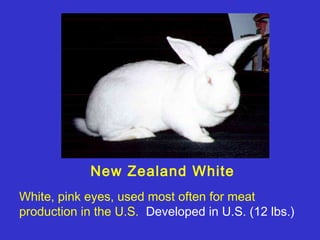
New Zealand White
White, pink eyes, used most often for meat
production in the U.S. Developed in U.S. (12 lbs.)
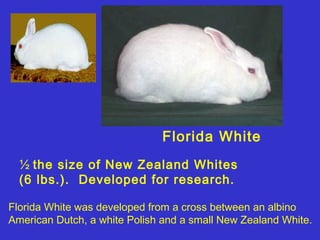
Florida White
  ½ the size of New Zealand Whites
  (6 lbs.). Developed for research.

Florida White was developed from a cross between an albino
American Dutch, a white Polish and a small New Zealand White.

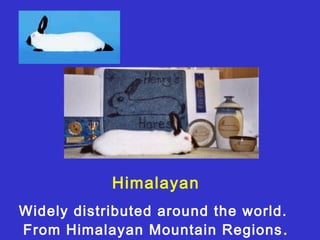
Himalayan
Widely distributed around the world.

From Himalayan Mountain Regions .
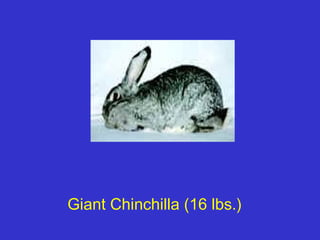
Giant Chinchilla (16 lbs.)
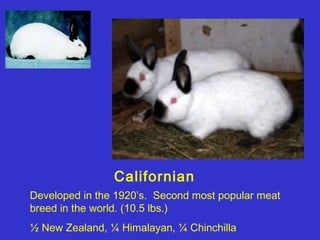
Californian
Developed in the 1920’s. Second most popular meat
breed in the world. (10.5 lbs.)
½ New Zealand, ¼ Himalayan, ¼ Chinchilla
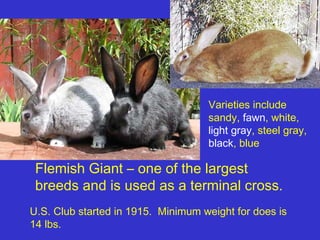
Varieties include
                                    sandy, fawn, white,
                                    light gray, steel gray,
                                    black, blue

 Flemish Giant – one of the largest
 breeds and is used as a terminal cross.
U.S. Club started in 1915. Minimum weight for does is
14 lbs.
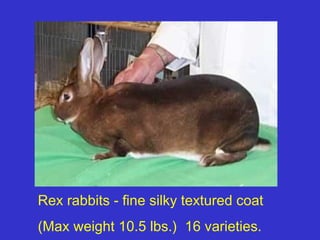
Rex rabbits - fine silky textured coat
(Max weight 10.5 lbs.) 16 varieties.
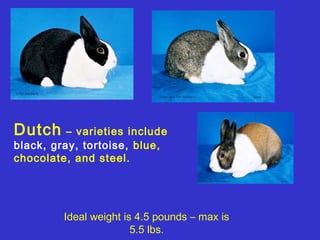
Dutch     – varieties include
black, gray, tortoise, blue,
chocolate, and steel.


         Ideal weight is 4.5 pounds – max is
                        5.5 lbs.
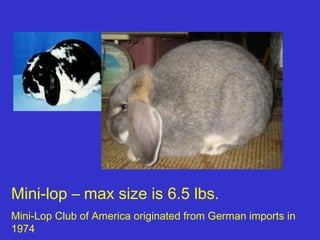
Mini-lop – max size is 6.5 lbs.
Mini-Lop Club of America originated from German imports in
1974
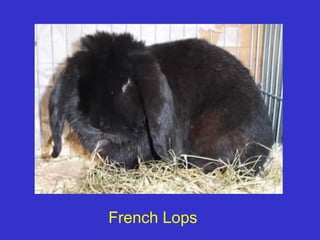
French Lops
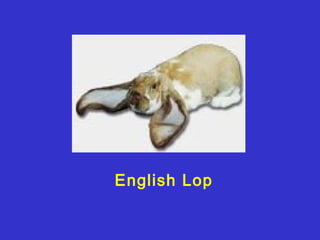
English Lop
Belgian Hare – max weight 9.5
             lbs.
Lionhead rabbit
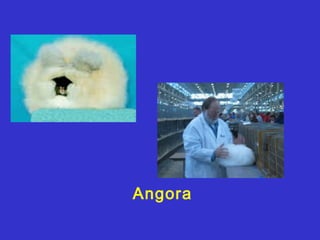
Angora
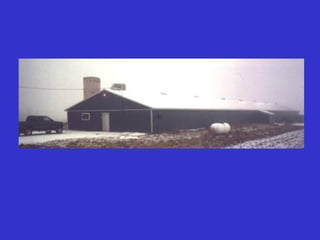
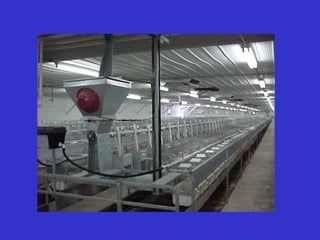
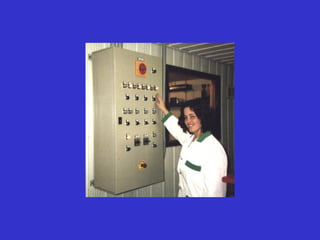
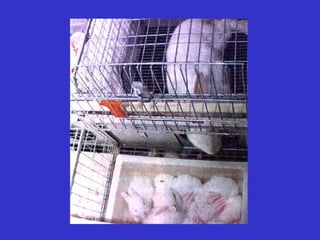
Manure removal
Twenty-two lb. Herman
belongs to a breed
called the German
Giant, reports the
newspaper The Daily
Mail.

A spokesperson from
the German Rabbit
Breeders' Association
said: "They are good-
natured, reliable and
calm. They are,
however, because of
their size, not very
suitable for children."
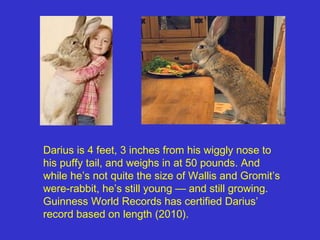
Darius is 4 feet, 3 inches from his wiggly nose to
his puffy tail, and weighs in at 50 pounds. And
while he’s not quite the size of Wallis and Gromit’s
were-rabbit, he’s still young — and still growing.
Guinness World Records has certified Darius’
record based on length (2010).
B. Genera – 11 different ones
                                         # of
pairs
chromosomes
      1. Lepus (hares) : Jack Rabbits
24
      2. Sylvilagus: Cottontails
21
      3. Oryctolagus: Wild European
22
         rabbits and domestic
         descendants

If a buck breeds a doe of a different genera
the eggs are fertilized but the embryos die
early in gestation.
Jack Rabbits are fully haired, eyes
open, and can run within a few
minutes of birth.
Cottontail Rabbit
European wild hares engage in a courtship
ritual involving dashing about wildly and
leaping into the air. Hence the term – March
Madness or “mad as a hare in March”.
II. Domestication
    A. Iberian Peninsula – Spain and
Portugal
    B. Early Roman times kept in walled
rabbit gardens
    C. Released on islands in sea lanes to
       be used as a food source
    D. 1859; a pair was released in Victoria,
       Australia. In 30 years   multiplied to
20 million rabbits
    E. True domestication began in the
1500’s at French monasteries.
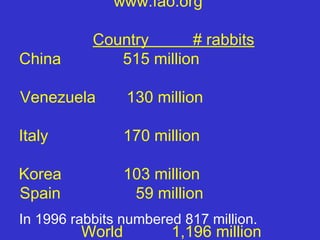
www.fao.org

           Country      # rabbits
China         515 million

Venezuela        130 million

Italy            170 million

Korea            103 million
Spain             59 million
In 1996 rabbits numbered 817 million.
         World         1,196 million
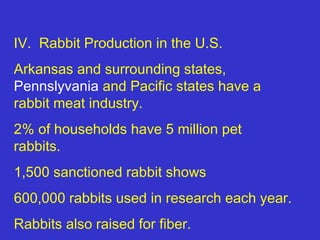
IV. Rabbit Production in the U.S.
Arkansas and surrounding states,
Pennslyvania and Pacific states have a
rabbit meat industry.
2% of households have 5 million pet
rabbits.
1,500 sanctioned rabbit shows
600,000 rabbits used in research each year.
Rabbits also raised for fiber.
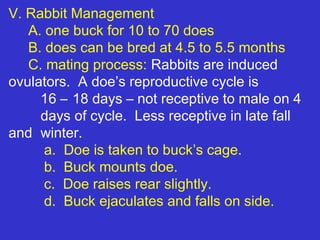
V. Rabbit Management
   A. one buck for 10 to 70 does
   B. does can be bred at 4.5 to 5.5 months
   C. mating process: Rabbits are induced
ovulators. A doe’s reproductive cycle is
     16 – 18 days – not receptive to male on 4
     days of cycle. Less receptive in late fall
and winter.
      a. Doe is taken to buck’s cage.
      b. Buck mounts doe.
      c. Doe raises rear slightly.
      d. Buck ejaculates and falls on side.
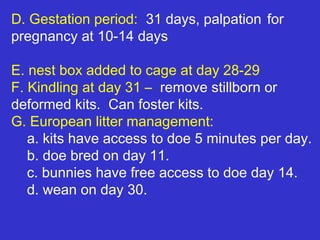
D. Gestation period: 31 days, palpation for
pregnancy at 10-14 days

E. nest box added to cage at day 28-29
F. Kindling at day 31 – remove stillborn or
deformed kits. Can foster kits.
G. European litter management:
   a. kits have access to doe 5 minutes per day.
   b. doe bred on day 11.
   c. bunnies have free access to doe day 14.
   d. wean on day 30.
H. Identification systems:

  a. Tattoo numbers in ears
  b. Ear tags – chicken wing bands
  c. Temporary ID – write with felt tip pen in
         ear.
Advantages and Disadvantages of
Rabbits for Meat Production.
Advantages:
1.Relatively cheap to get started on small scale.
2.Can raise in urban back yard without a permit.
3.Easy to handle.
4.Multiply rapidly.
5.Short generation interval.
6.Lean, white meat.
7.Excellent feed efficiency.
Disadvantages:
1.Few established markets.
2.Too cute to eat for some people.
3.Butchering more difficult than chicken.
4.Must be slaughtered young for best quality.
5.Because it is very lean, very easy to over cook.
6.Waste can generate strong ammonia smell.
VII. Sample yearly cash flow for a 50-doe rabbitry
   Expense:                        Income:
    housing          $267      fryers 1750 @ $2.90 = $5075
    equipment         240     stewers 50 @ $2.00= 100
    breeding stock 100
    feed            2760
    utilities        120
    insurance          60
    misc.              60

                    $3607                   $5175

Net of $1568 for the 50 does.

10 hours of labor are required per doe per year.
Rare bunny, born without ears,
stepped on, killed at his own press
conference – 3/15/2012, Germany.
The End!

Rabbits

  • 1.
  • 2.
    Milo : availablefor adoption
  • 3.
    New Zealand White White,pink eyes, used most often for meat production in the U.S. Developed in U.S. (12 lbs.)
  • 4.
    Florida White ½ the size of New Zealand Whites (6 lbs.). Developed for research. Florida White was developed from a cross between an albino American Dutch, a white Polish and a small New Zealand White.
  • 5.
    Himalayan Widely distributed aroundthe world. From Himalayan Mountain Regions .
  • 6.
  • 7.
    Californian Developed in the1920’s. Second most popular meat breed in the world. (10.5 lbs.) ½ New Zealand, ¼ Himalayan, ¼ Chinchilla
  • 8.
    Varieties include sandy, fawn, white, light gray, steel gray, black, blue Flemish Giant – one of the largest breeds and is used as a terminal cross. U.S. Club started in 1915. Minimum weight for does is 14 lbs.
  • 9.
    Rex rabbits -fine silky textured coat (Max weight 10.5 lbs.) 16 varieties.
  • 10.
    Dutch – varieties include black, gray, tortoise, blue, chocolate, and steel. Ideal weight is 4.5 pounds – max is 5.5 lbs.
  • 11.
    Mini-lop – maxsize is 6.5 lbs. Mini-Lop Club of America originated from German imports in 1974
  • 12.
  • 13.
  • 14.
    Belgian Hare –max weight 9.5 lbs.
  • 15.
  • 16.
  • 21.
  • 24.
    Twenty-two lb. Herman belongsto a breed called the German Giant, reports the newspaper The Daily Mail. A spokesperson from the German Rabbit Breeders' Association said: "They are good- natured, reliable and calm. They are, however, because of their size, not very suitable for children."
  • 25.
    Darius is 4feet, 3 inches from his wiggly nose to his puffy tail, and weighs in at 50 pounds. And while he’s not quite the size of Wallis and Gromit’s were-rabbit, he’s still young — and still growing. Guinness World Records has certified Darius’ record based on length (2010).
  • 26.
    B. Genera –11 different ones # of pairs chromosomes 1. Lepus (hares) : Jack Rabbits 24 2. Sylvilagus: Cottontails 21 3. Oryctolagus: Wild European 22 rabbits and domestic descendants If a buck breeds a doe of a different genera the eggs are fertilized but the embryos die early in gestation.
  • 27.
    Jack Rabbits arefully haired, eyes open, and can run within a few minutes of birth.
  • 28.
  • 30.
    European wild haresengage in a courtship ritual involving dashing about wildly and leaping into the air. Hence the term – March Madness or “mad as a hare in March”.
  • 31.
    II. Domestication A. Iberian Peninsula – Spain and Portugal B. Early Roman times kept in walled rabbit gardens C. Released on islands in sea lanes to be used as a food source D. 1859; a pair was released in Victoria, Australia. In 30 years multiplied to 20 million rabbits E. True domestication began in the 1500’s at French monasteries.
  • 32.
    www.fao.org Country # rabbits China 515 million Venezuela 130 million Italy 170 million Korea 103 million Spain 59 million In 1996 rabbits numbered 817 million. World 1,196 million
  • 33.
    IV. Rabbit Productionin the U.S. Arkansas and surrounding states, Pennslyvania and Pacific states have a rabbit meat industry. 2% of households have 5 million pet rabbits. 1,500 sanctioned rabbit shows 600,000 rabbits used in research each year. Rabbits also raised for fiber.
  • 34.
    V. Rabbit Management A. one buck for 10 to 70 does B. does can be bred at 4.5 to 5.5 months C. mating process: Rabbits are induced ovulators. A doe’s reproductive cycle is 16 – 18 days – not receptive to male on 4 days of cycle. Less receptive in late fall and winter. a. Doe is taken to buck’s cage. b. Buck mounts doe. c. Doe raises rear slightly. d. Buck ejaculates and falls on side.
  • 35.
    D. Gestation period:31 days, palpation for pregnancy at 10-14 days E. nest box added to cage at day 28-29 F. Kindling at day 31 – remove stillborn or deformed kits. Can foster kits. G. European litter management: a. kits have access to doe 5 minutes per day. b. doe bred on day 11. c. bunnies have free access to doe day 14. d. wean on day 30.
  • 36.
    H. Identification systems: a. Tattoo numbers in ears b. Ear tags – chicken wing bands c. Temporary ID – write with felt tip pen in ear.
  • 37.
    Advantages and Disadvantagesof Rabbits for Meat Production.
  • 38.
    Advantages: 1.Relatively cheap toget started on small scale. 2.Can raise in urban back yard without a permit. 3.Easy to handle. 4.Multiply rapidly. 5.Short generation interval. 6.Lean, white meat. 7.Excellent feed efficiency.
  • 39.
    Disadvantages: 1.Few established markets. 2.Toocute to eat for some people. 3.Butchering more difficult than chicken. 4.Must be slaughtered young for best quality. 5.Because it is very lean, very easy to over cook. 6.Waste can generate strong ammonia smell.
  • 40.
    VII. Sample yearlycash flow for a 50-doe rabbitry Expense: Income: housing $267 fryers 1750 @ $2.90 = $5075 equipment 240 stewers 50 @ $2.00= 100 breeding stock 100 feed 2760 utilities 120 insurance 60 misc. 60 $3607 $5175 Net of $1568 for the 50 does. 10 hours of labor are required per doe per year.
  • 41.
    Rare bunny, bornwithout ears, stepped on, killed at his own press conference – 3/15/2012, Germany.
  • 59.

Editor's Notes

  • #6 Himalayan are long and narrow. Note how level they are from the shoulders to the rump compared to other rabbits. They have a calm disposition and make good pets.
  • #33 Rabbit numbers have been increasing