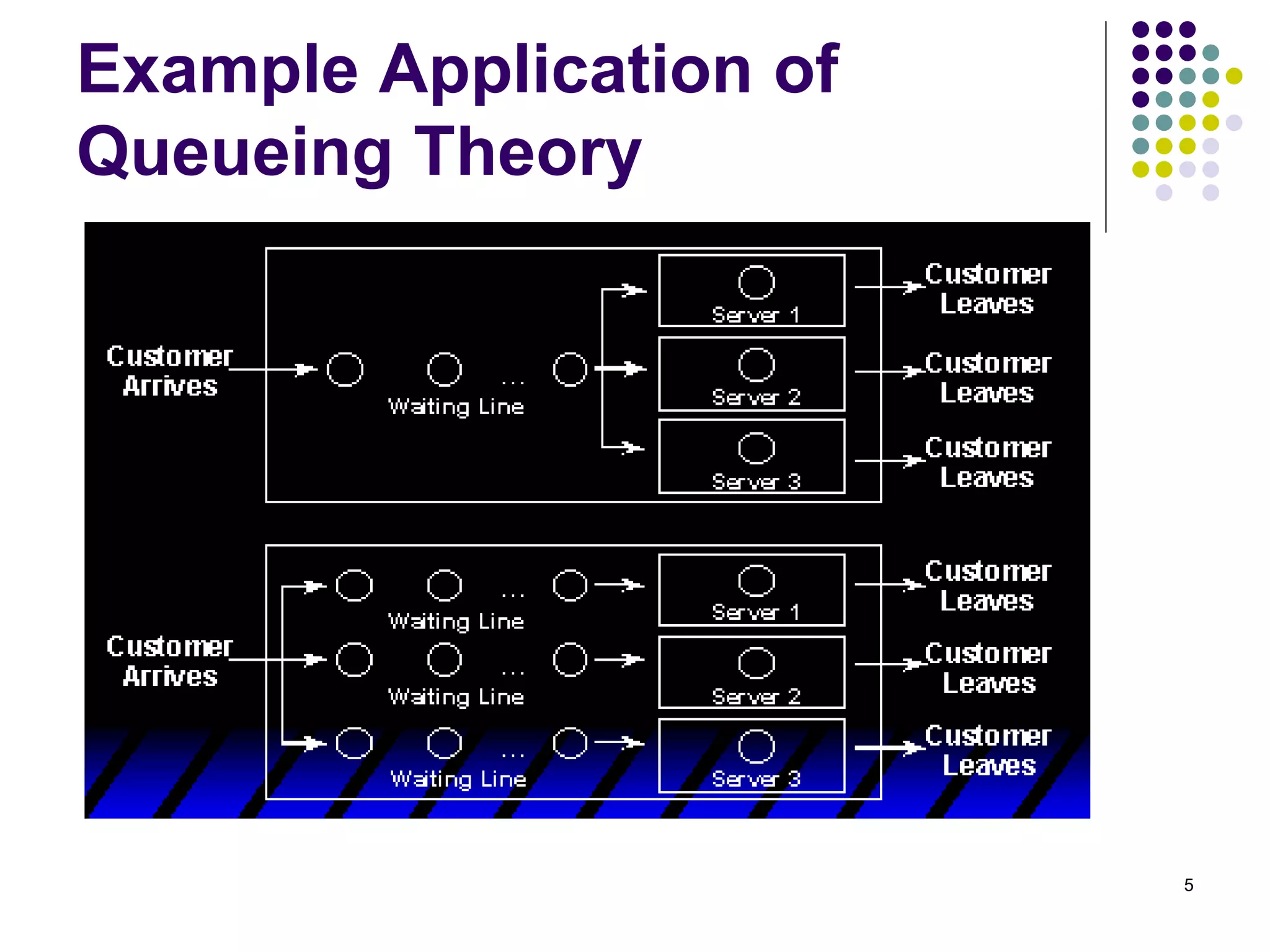
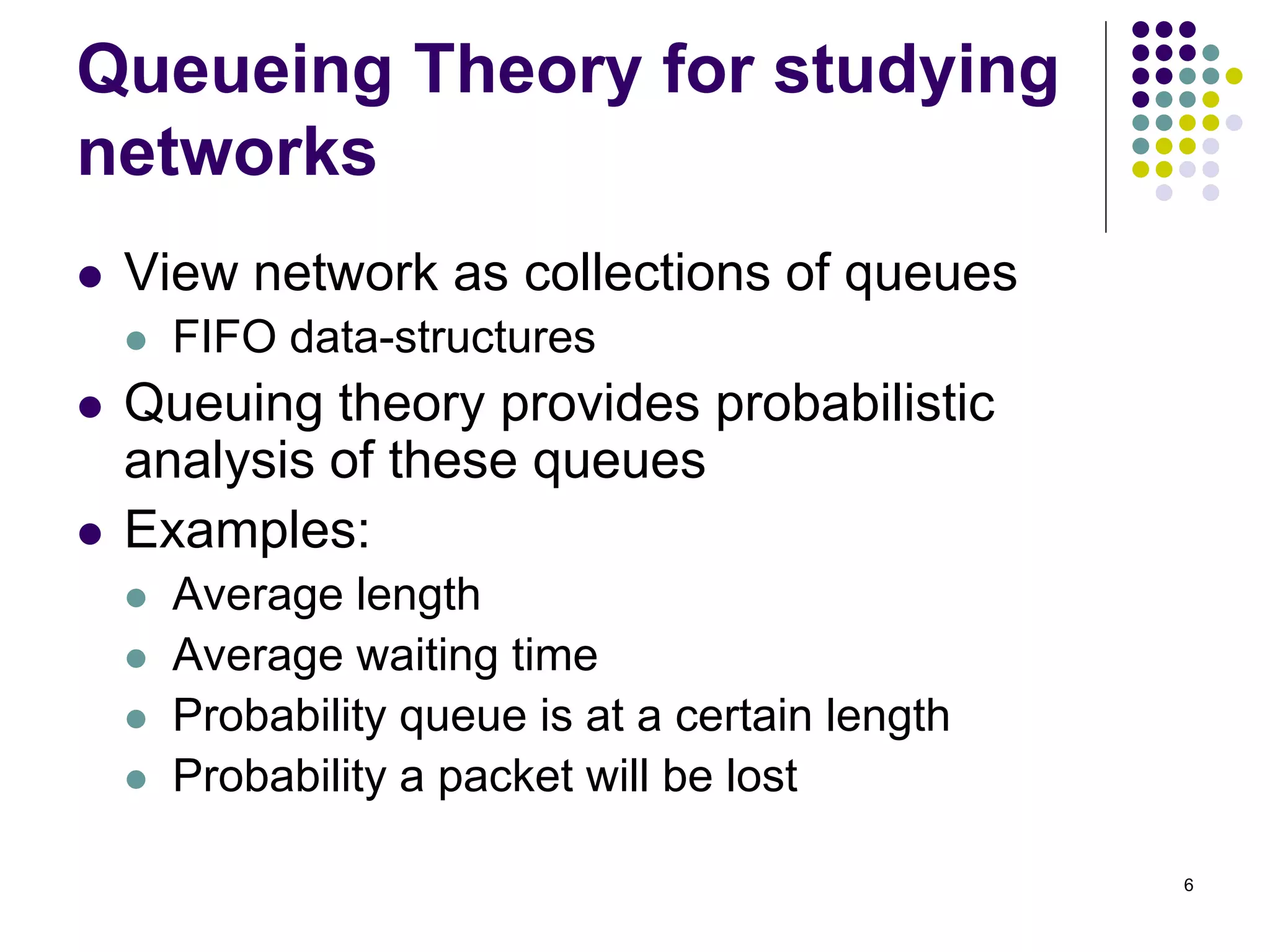
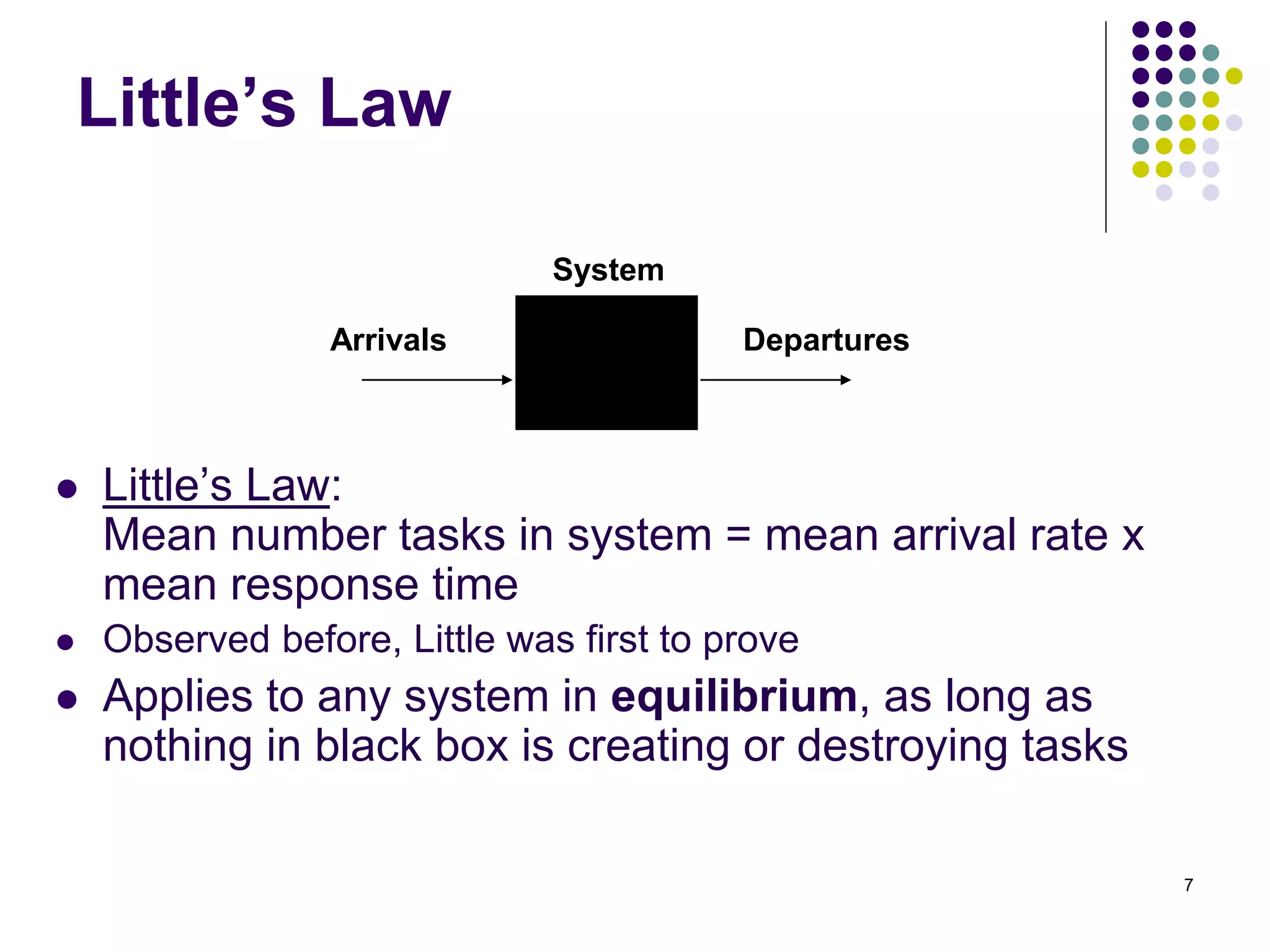
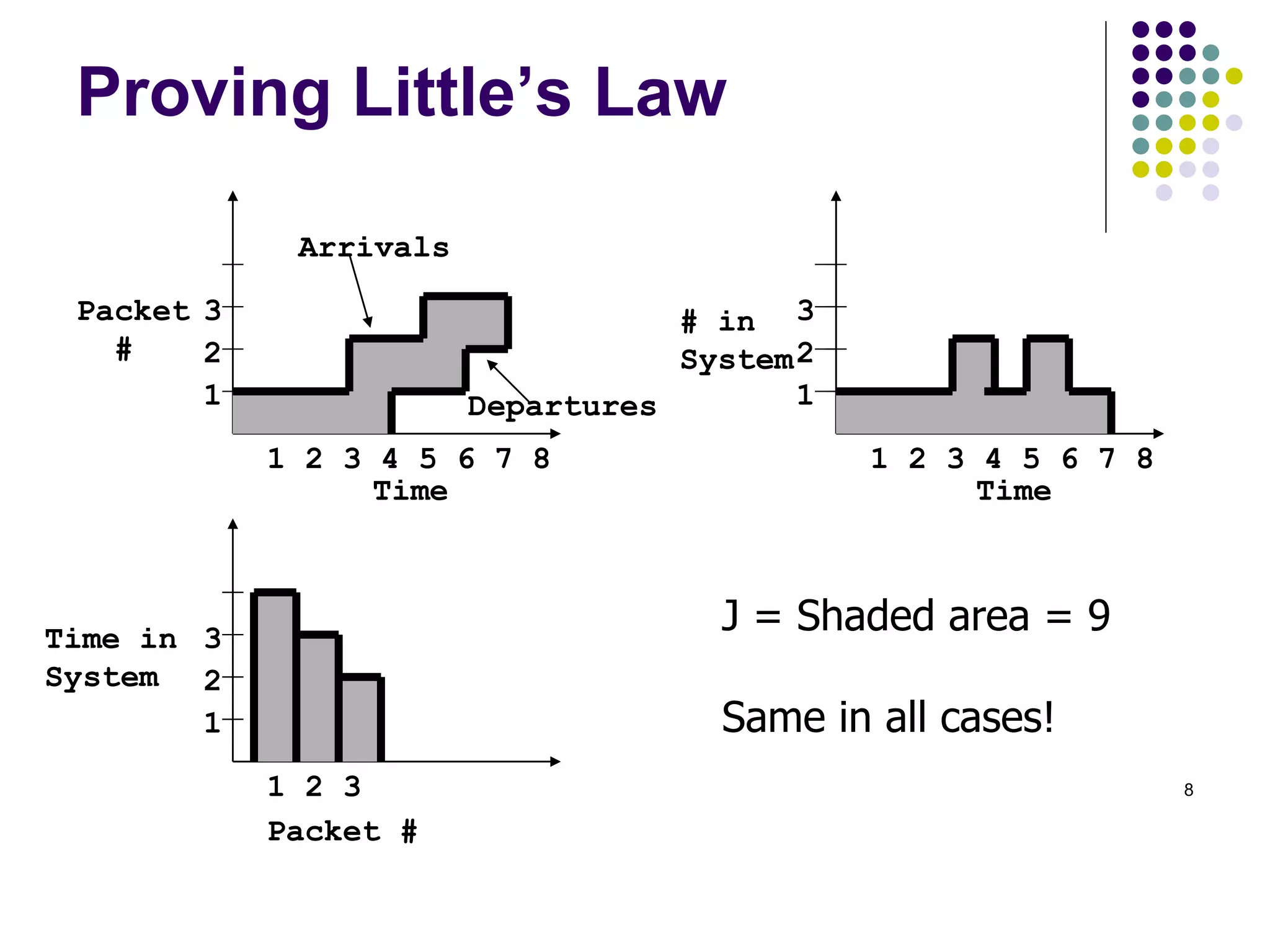
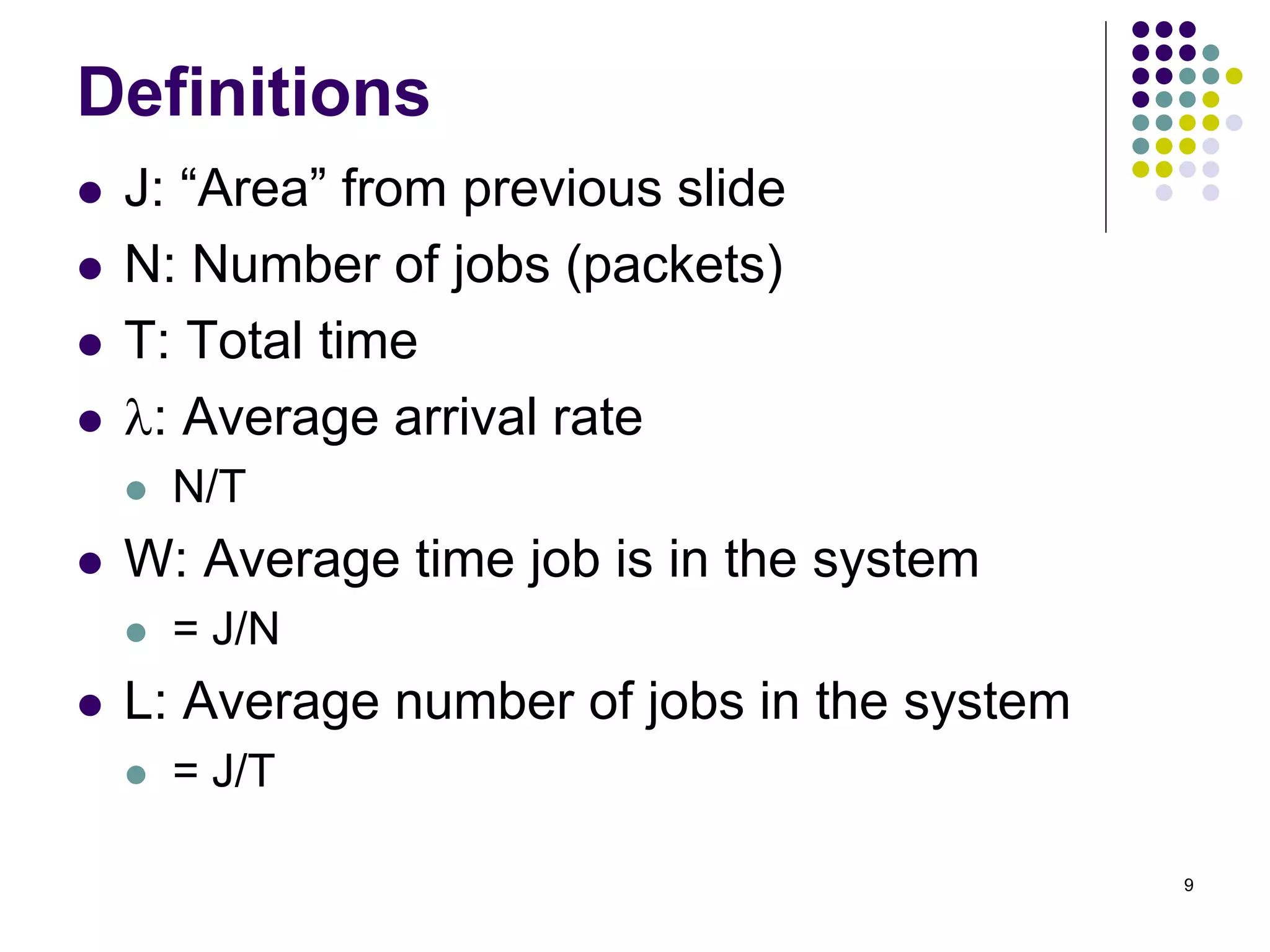
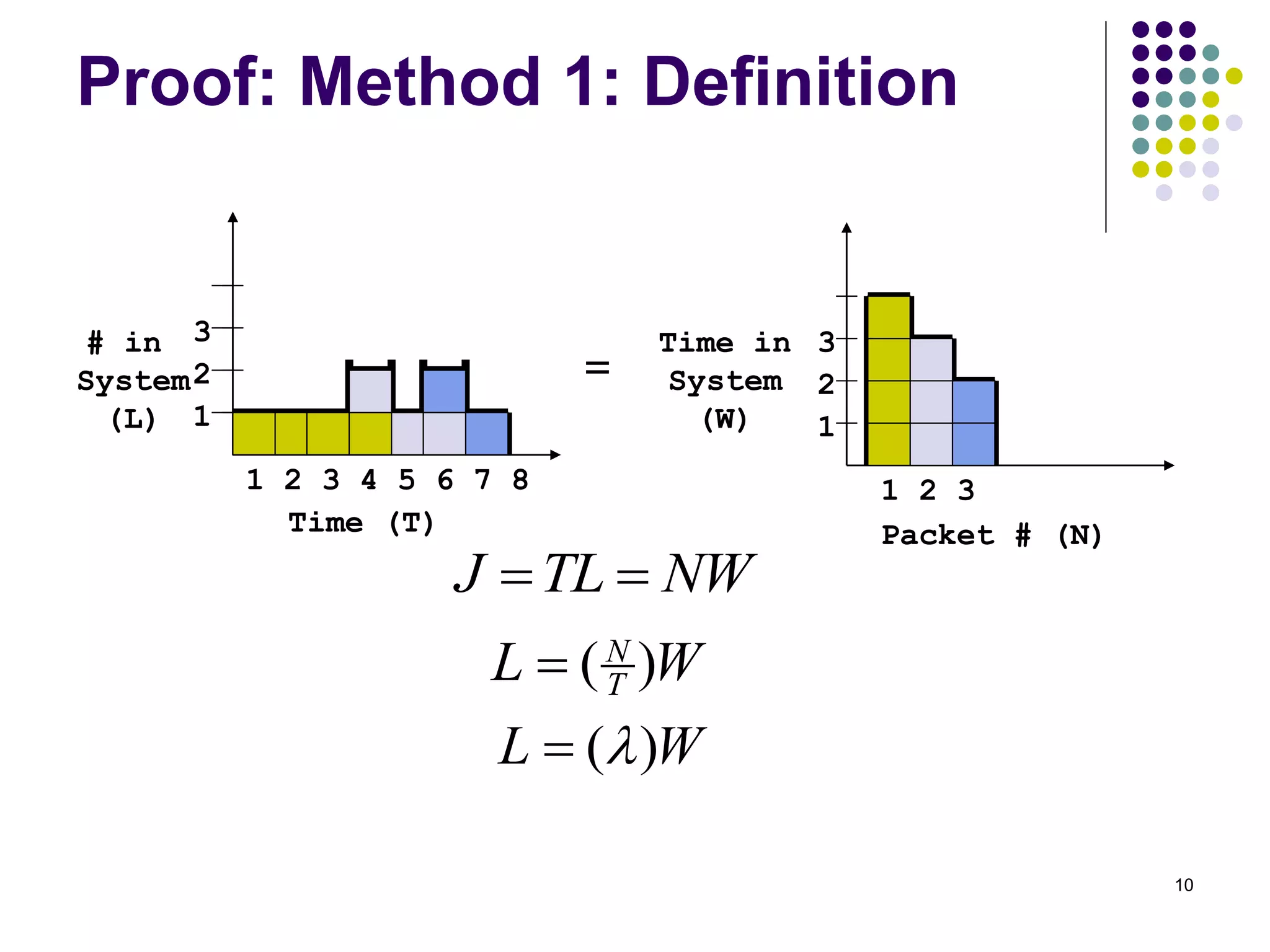
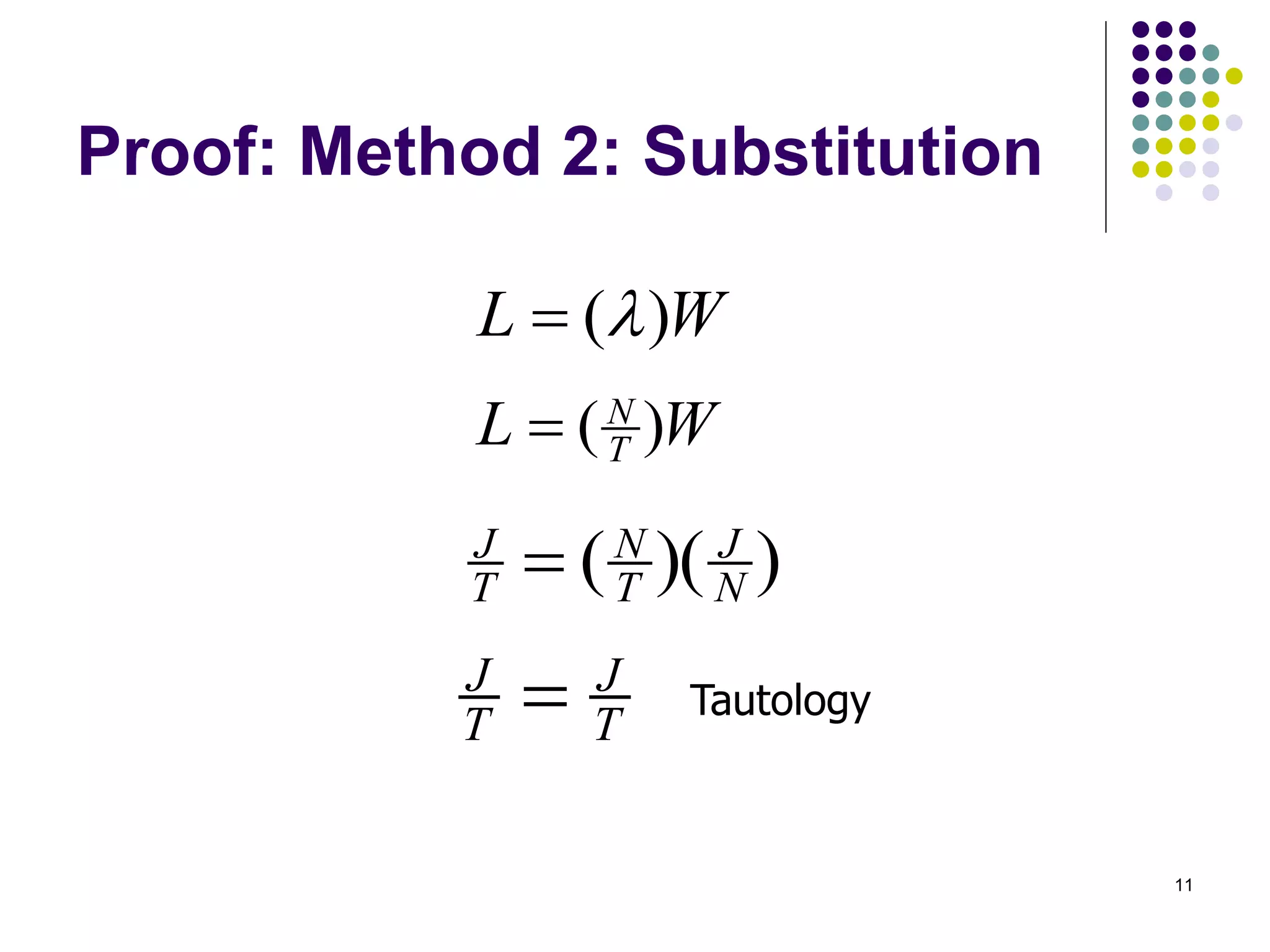
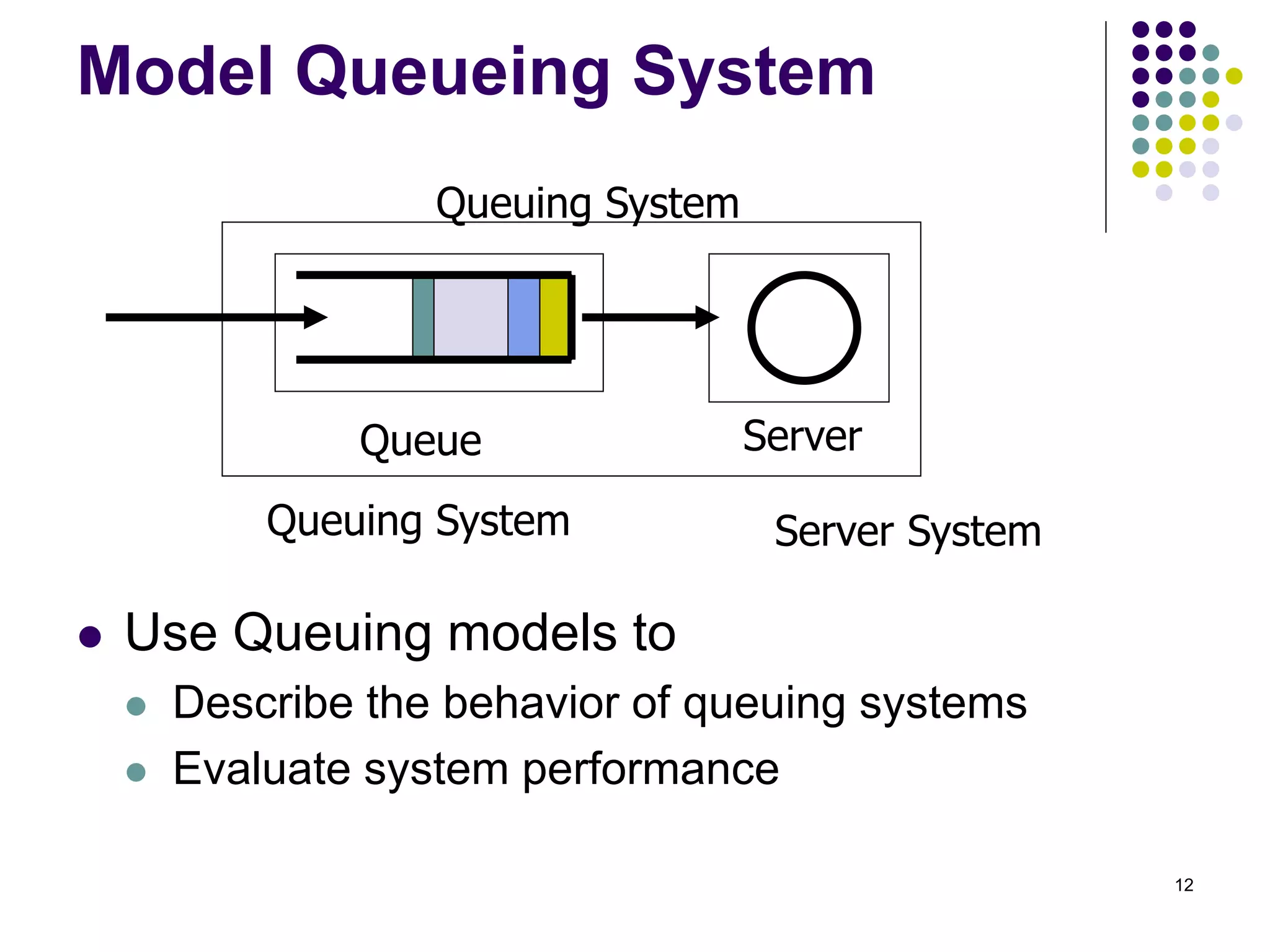
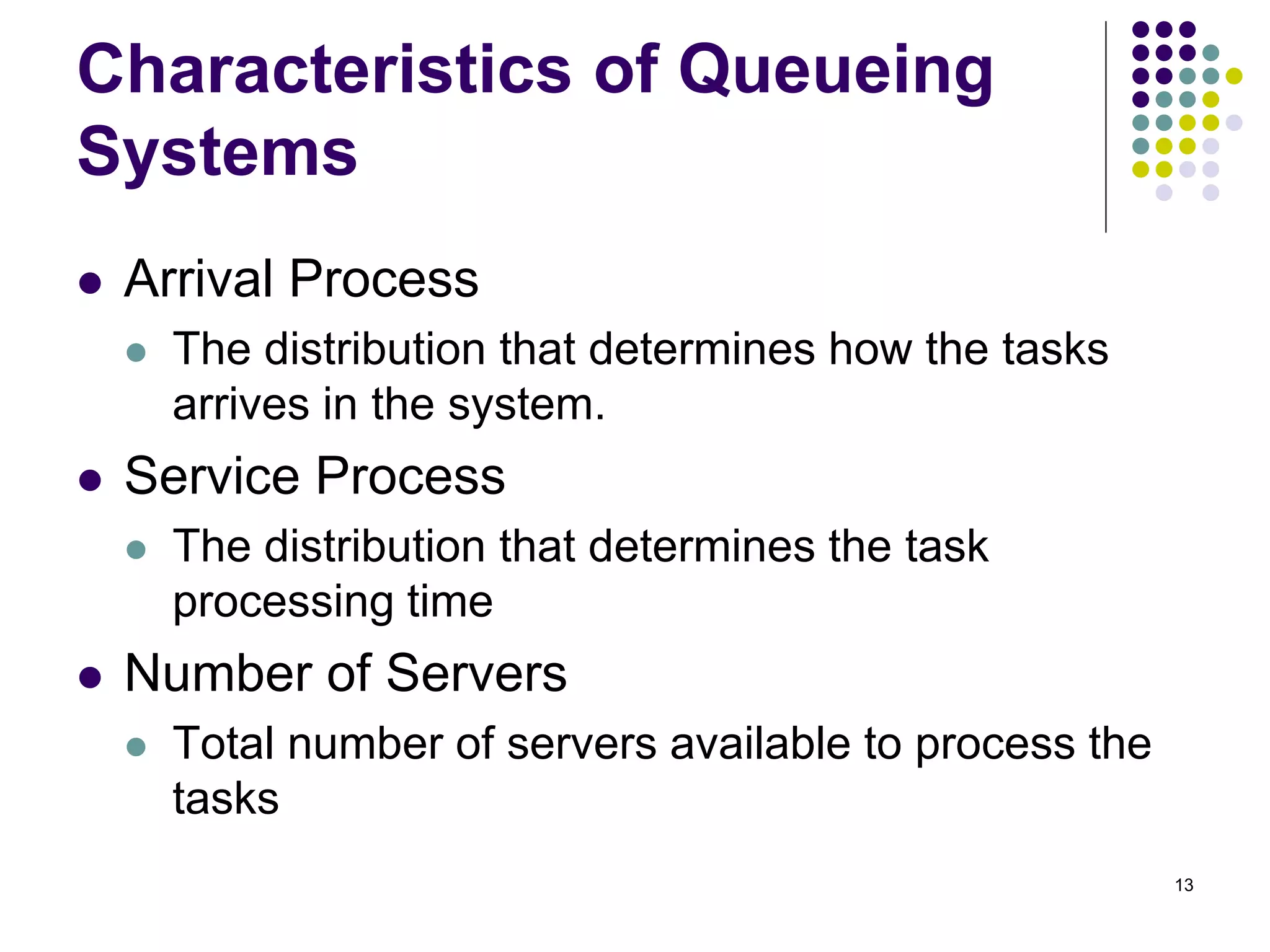
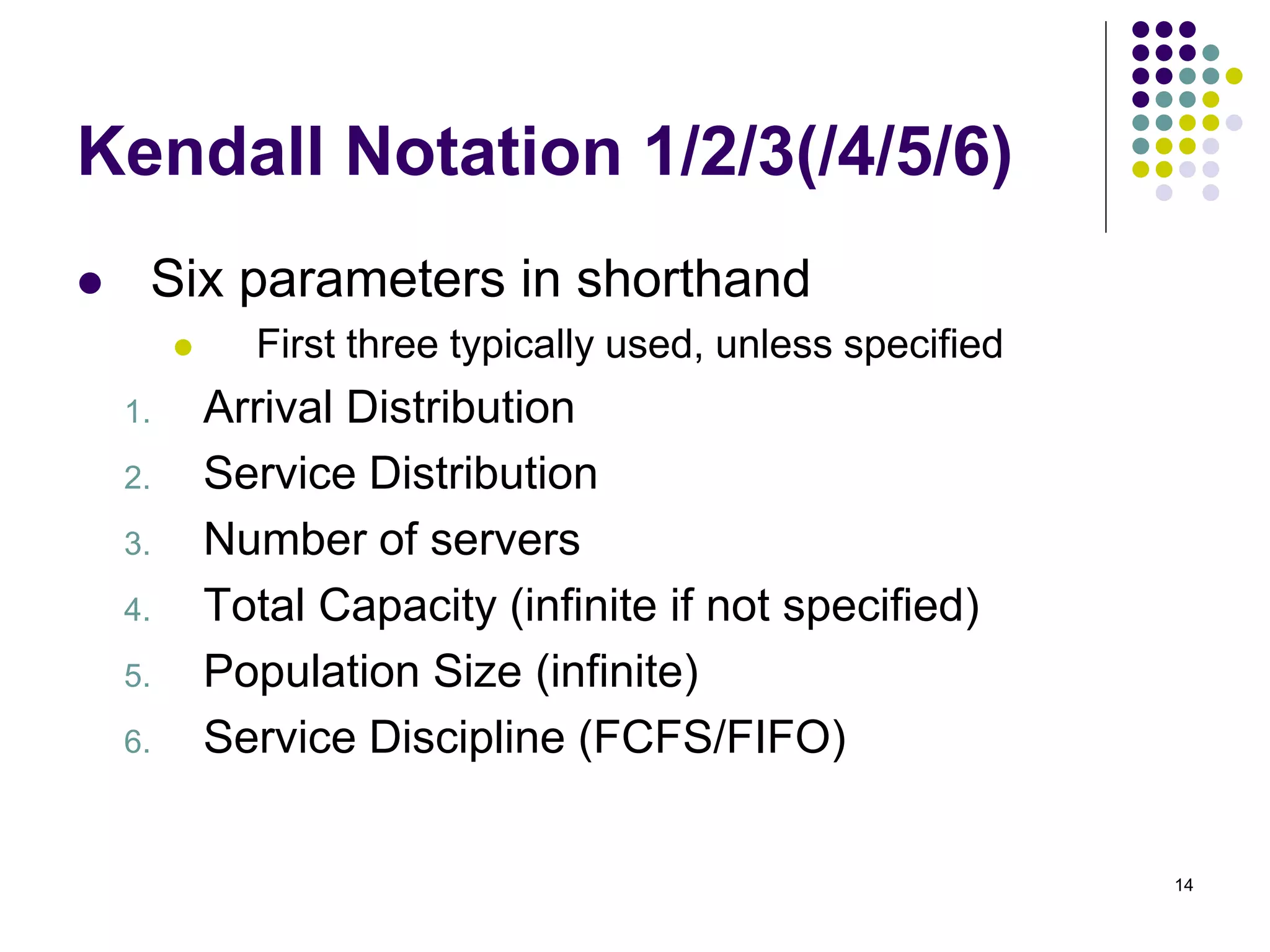
This document provides an introduction to queueing theory. It defines key terms like queues, congestion, and queueing systems. Queueing theory is applied in many fields like telecommunications, healthcare, and manufacturing to model waiting lines and predict performance. Little's Law relates the average number of tasks in a system to the arrival rate and average time spent in the system. The document gives examples of applying queueing theory to model retail checkout lines and computer networks. It outlines the key characteristics used to describe queueing systems, such as arrival and service processes, and the Kendall notation used to specify queueing models.
![2
Queueing theory definitions
(Bose) “the basic phenomenon of queueing arises
whenever a shared facility needs to be accessed
for service by a large number of jobs or
customers.”
(Wolff) “The primary tool for studying these
problems [of congestions] is known as queueing
theory.”
(Kleinrock) “We study the phenomena of
standing, waiting, and serving, and we call this
study Queueing Theory." "Any system in which
arrivals place demands upon a finite capacity
resource may be termed a queueing system.”
(Mathworld) “The study of the waiting times,
lengths, and other properties of queues.”](https://image.slidesharecdn.com/queueingtheory-230511060109-686ceace/75/Queueing-Theory-pptx-2-2048.jpg)