Question 3
  Part 2
By Larelle Benjamin-Forrester
According to Stuart Hall’s reception theory, there are
three different types of reception models which refers to
the way people read texts. The three readings consist of
      the dominant, negotiated and oppositional. A
 dominant/preferred reading is one whereby the reader
  accepts the reading in comparison to an oppositional
reading whereby the reader understands the reading but
does not share the texts code and instead rejects it. This
 type of reader has a oppositional view to the dominant
code due to their social situation which influences them.

Lastly, the negotiated reading accepts the reading and
partly shares it but can resist or modify it in order for it to
reflect their experiences and interests. By understanding
these reception models, I prepared myself for the type of
   feedback we was going to receive because people’s
 cultural and life experiences can be highly influential on
    the way they interpret media texts. I also took into
  account that people weren’t passive and text was not
              going to be passively accepted.
Target Audience


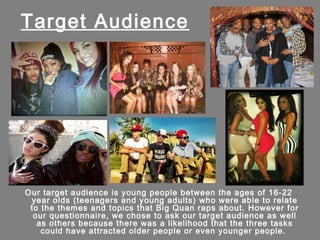
Our target audience is young people between the ages of 16-22
 year olds (teenagers and young adults) who were able to relate
 to the themes and topics that Big Quan raps about. However for
  our questionnaire, we chose to ask our target audience as well
   as others because there was a likelihood that the three tasks
    could have attracted older people or even younger people.
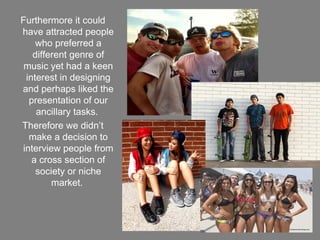
Furthermore it could
have attracted people
    who preferred a
   different genre of
 music yet had a keen
 interest in designing
and perhaps liked the
  presentation of our
    ancillary tasks.
Therefore we didn’t
  make a decision to
interview people from
   a cross section of
    society or niche
        market.
I found the audience feedback
   varied for each of the three
  tasks. This goes as follows:
Music Video


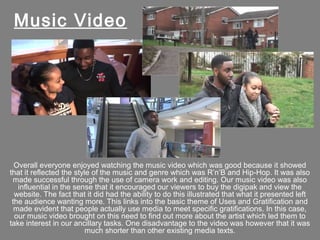
  Overall everyone enjoyed watching the music video which was good because it showed
that it reflected the style of the music and genre which was R’n’B and Hip-Hop. It was also
 made successful through the use of camera work and editing. Our music video was also
   influential in the sense that it encouraged our viewers to buy the digipak and view the
  website. The fact that it did had the ability to do this illustrated that what it presented left
 the audience wanting more. This links into the basic theme of Uses and Gratification and
  made evident that people actually use media to meet specific gratifications. In this case,
  our music video brought on this need to find out more about the artist which led them to
take interest in our ancillary tasks. One disadvantage to the video was however that it was
                          much shorter than other existing media texts.
Ancillary Tasks
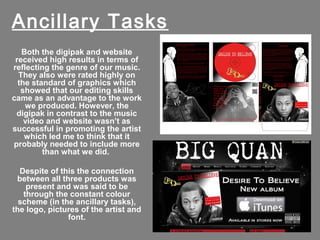
   Both the digipak and website
 received high results in terms of
reflecting the genre of our music.
  They also were rated highly on
  the standard of graphics which
   showed that our editing skills
came as an advantage to the work
    we produced. However, the
 digipak in contrast to the music
    video and website wasn’t as
successful in promoting the artist
    which led me to think that it
probably needed to include more
         than what we did.

  Despite of this the connection
 between all three products was
    present and was said to be
   through the constant colour
  scheme (in the ancillary tasks),
the logo, pictures of the artist and
               font.
Improvements


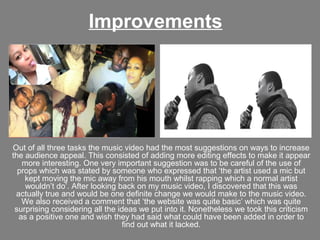
Out of all three tasks the music video had the most suggestions on ways to increase
the audience appeal. This consisted of adding more editing effects to make it appear
   more interesting. One very important suggestion was to be careful of the use of
  props which was stated by someone who expressed that ‘the artist used a mic but
    kept moving the mic away from his mouth whilst rapping which a normal artist
    wouldn’t do’. After looking back on my music video, I discovered that this was
 actually true and would be one definite change we would make to the music video.
   We also received a comment that ‘the website was quite basic’ which was quite
 surprising considering all the ideas we put into it. Nonetheless we took this criticism
  as a positive one and wish they had said what could have been added in order to
                                  find out what it lacked.
Conclusion

To conclude, I thought it was very essential for
 my group and I to receive audience feedback
   because it initially was for them. It also felt
 good as creator of these products to see how
  effective our music video and ancillary tasks
  actually were. Overall, I think we did a good
   job and if we had to make any changes to
 what we had produced, would definitely know
          the right way of going about it.
Conclusion

To conclude, I thought it was very essential for
 my group and I to receive audience feedback
   because it initially was for them. It also felt
 good as creator of these products to see how
  effective our music video and ancillary tasks
  actually were. Overall, I think we did a good
   job and if we had to make any changes to
 what we had produced, would definitely know
          the right way of going about it.

Question 3 - Part 2

  • 1.
    Question 3 Part 2 By Larelle Benjamin-Forrester
  • 2.
    According to StuartHall’s reception theory, there are three different types of reception models which refers to the way people read texts. The three readings consist of the dominant, negotiated and oppositional. A dominant/preferred reading is one whereby the reader accepts the reading in comparison to an oppositional reading whereby the reader understands the reading but does not share the texts code and instead rejects it. This type of reader has a oppositional view to the dominant code due to their social situation which influences them. Lastly, the negotiated reading accepts the reading and partly shares it but can resist or modify it in order for it to reflect their experiences and interests. By understanding these reception models, I prepared myself for the type of feedback we was going to receive because people’s cultural and life experiences can be highly influential on the way they interpret media texts. I also took into account that people weren’t passive and text was not going to be passively accepted.
  • 3.
    Target Audience Our targetaudience is young people between the ages of 16-22 year olds (teenagers and young adults) who were able to relate to the themes and topics that Big Quan raps about. However for our questionnaire, we chose to ask our target audience as well as others because there was a likelihood that the three tasks could have attracted older people or even younger people.
  • 4.
    Furthermore it could haveattracted people who preferred a different genre of music yet had a keen interest in designing and perhaps liked the presentation of our ancillary tasks. Therefore we didn’t make a decision to interview people from a cross section of society or niche market.
  • 5.
    I found theaudience feedback varied for each of the three tasks. This goes as follows:
  • 6.
    Music Video Overall everyone enjoyed watching the music video which was good because it showed that it reflected the style of the music and genre which was R’n’B and Hip-Hop. It was also made successful through the use of camera work and editing. Our music video was also influential in the sense that it encouraged our viewers to buy the digipak and view the website. The fact that it did had the ability to do this illustrated that what it presented left the audience wanting more. This links into the basic theme of Uses and Gratification and made evident that people actually use media to meet specific gratifications. In this case, our music video brought on this need to find out more about the artist which led them to take interest in our ancillary tasks. One disadvantage to the video was however that it was much shorter than other existing media texts.
  • 7.
    Ancillary Tasks Both the digipak and website received high results in terms of reflecting the genre of our music. They also were rated highly on the standard of graphics which showed that our editing skills came as an advantage to the work we produced. However, the digipak in contrast to the music video and website wasn’t as successful in promoting the artist which led me to think that it probably needed to include more than what we did. Despite of this the connection between all three products was present and was said to be through the constant colour scheme (in the ancillary tasks), the logo, pictures of the artist and font.
  • 8.
    Improvements Out of allthree tasks the music video had the most suggestions on ways to increase the audience appeal. This consisted of adding more editing effects to make it appear more interesting. One very important suggestion was to be careful of the use of props which was stated by someone who expressed that ‘the artist used a mic but kept moving the mic away from his mouth whilst rapping which a normal artist wouldn’t do’. After looking back on my music video, I discovered that this was actually true and would be one definite change we would make to the music video. We also received a comment that ‘the website was quite basic’ which was quite surprising considering all the ideas we put into it. Nonetheless we took this criticism as a positive one and wish they had said what could have been added in order to find out what it lacked.
  • 9.
    Conclusion To conclude, Ithought it was very essential for my group and I to receive audience feedback because it initially was for them. It also felt good as creator of these products to see how effective our music video and ancillary tasks actually were. Overall, I think we did a good job and if we had to make any changes to what we had produced, would definitely know the right way of going about it.
  • 10.
    Conclusion To conclude, Ithought it was very essential for my group and I to receive audience feedback because it initially was for them. It also felt good as creator of these products to see how effective our music video and ancillary tasks actually were. Overall, I think we did a good job and if we had to make any changes to what we had produced, would definitely know the right way of going about it.