Quality Control & Testing Parameters in Alcoholic Beverage Production
By--
M.Rachana Sai,
Food Technology,
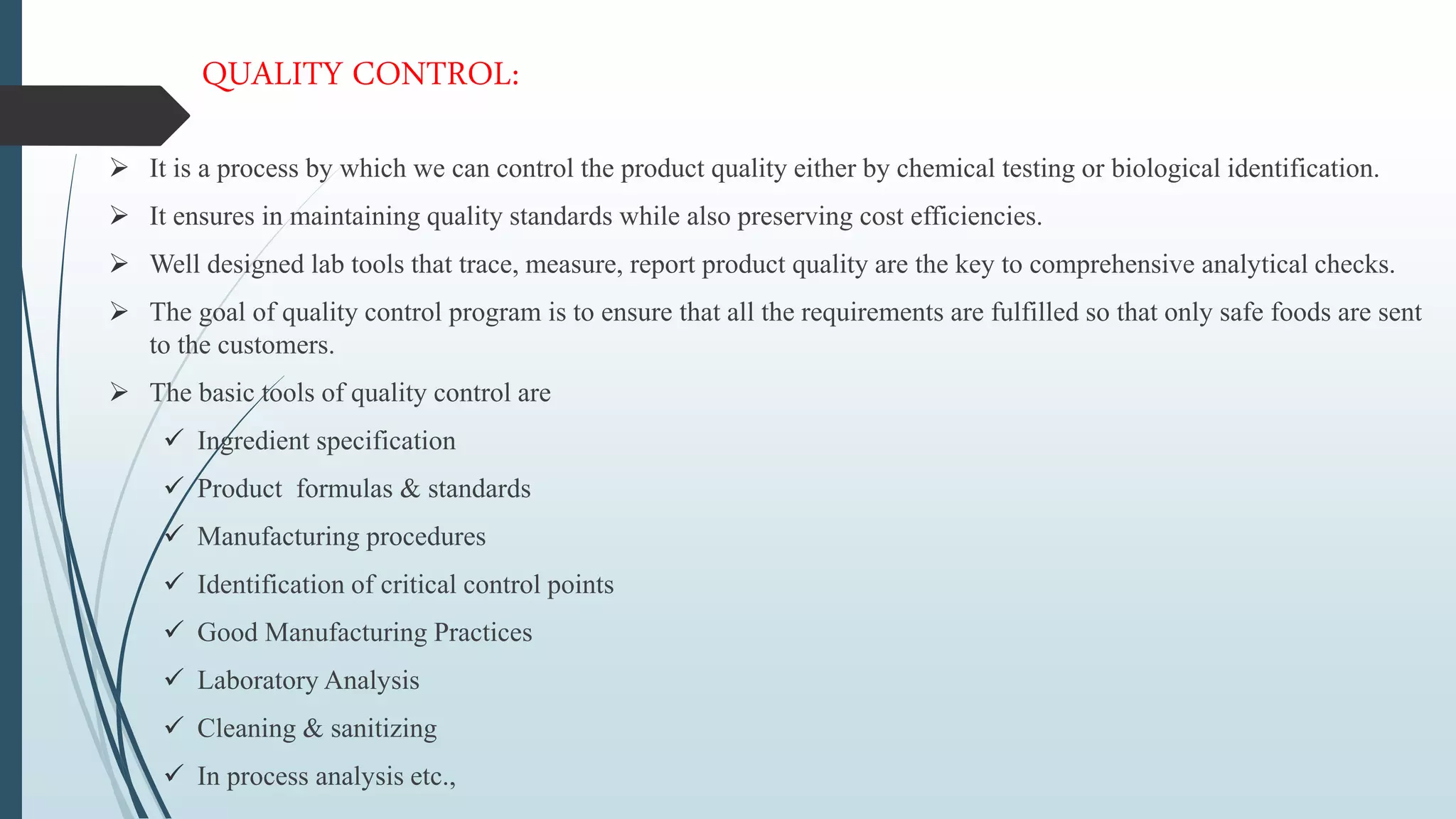
QUALITY CONTROL:
 It is a process by which we can control the product quality either by chemical testing or biological identification.
 It ensures in maintaining quality standards while also preserving cost efficiencies.
 Well designed lab tools that trace, measure, report product quality are the key to comprehensive analytical checks.
 The goal of quality control program is to ensure that all the requirements are fulfilled so that only safe foods are sent
to the customers.
 The basic tools of quality control are
 Ingredient specification
 Product formulas & standards
 Manufacturing procedures
 Identification of critical control points
 Good Manufacturing Practices
 Laboratory Analysis
 Cleaning & sanitizing
 In process analysis etc.,
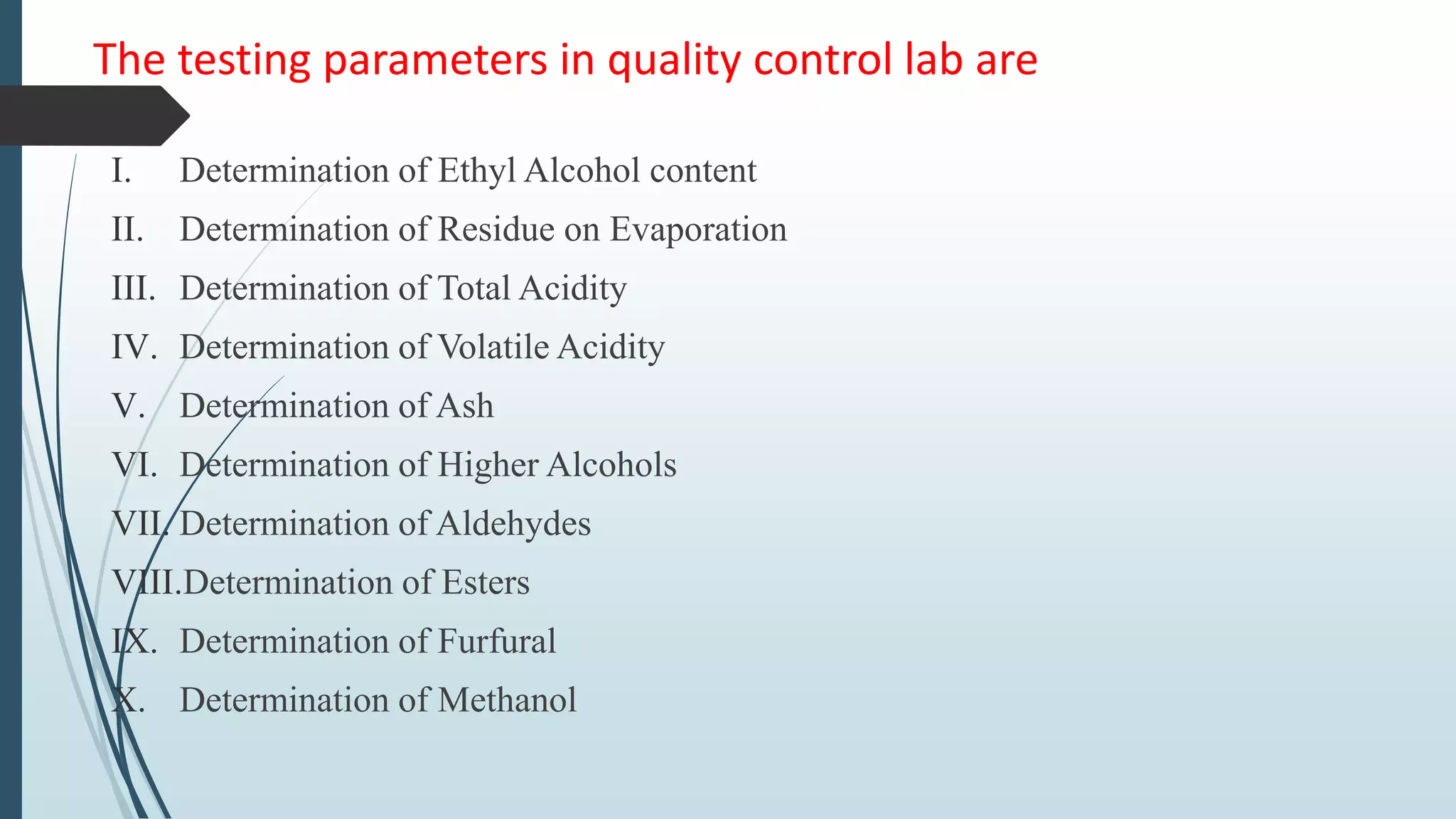
The testing parameters in quality control lab are
I. Determination of Ethyl Alcohol content
II. Determination of Residue on Evaporation
III. Determination of Total Acidity
IV. Determination of Volatile Acidity
V. Determination of Ash
VI. Determination of Higher Alcohols
VII. Determination of Aldehydes
VIII.Determination of Esters
IX. Determination of Furfural
X. Determination of Methanol
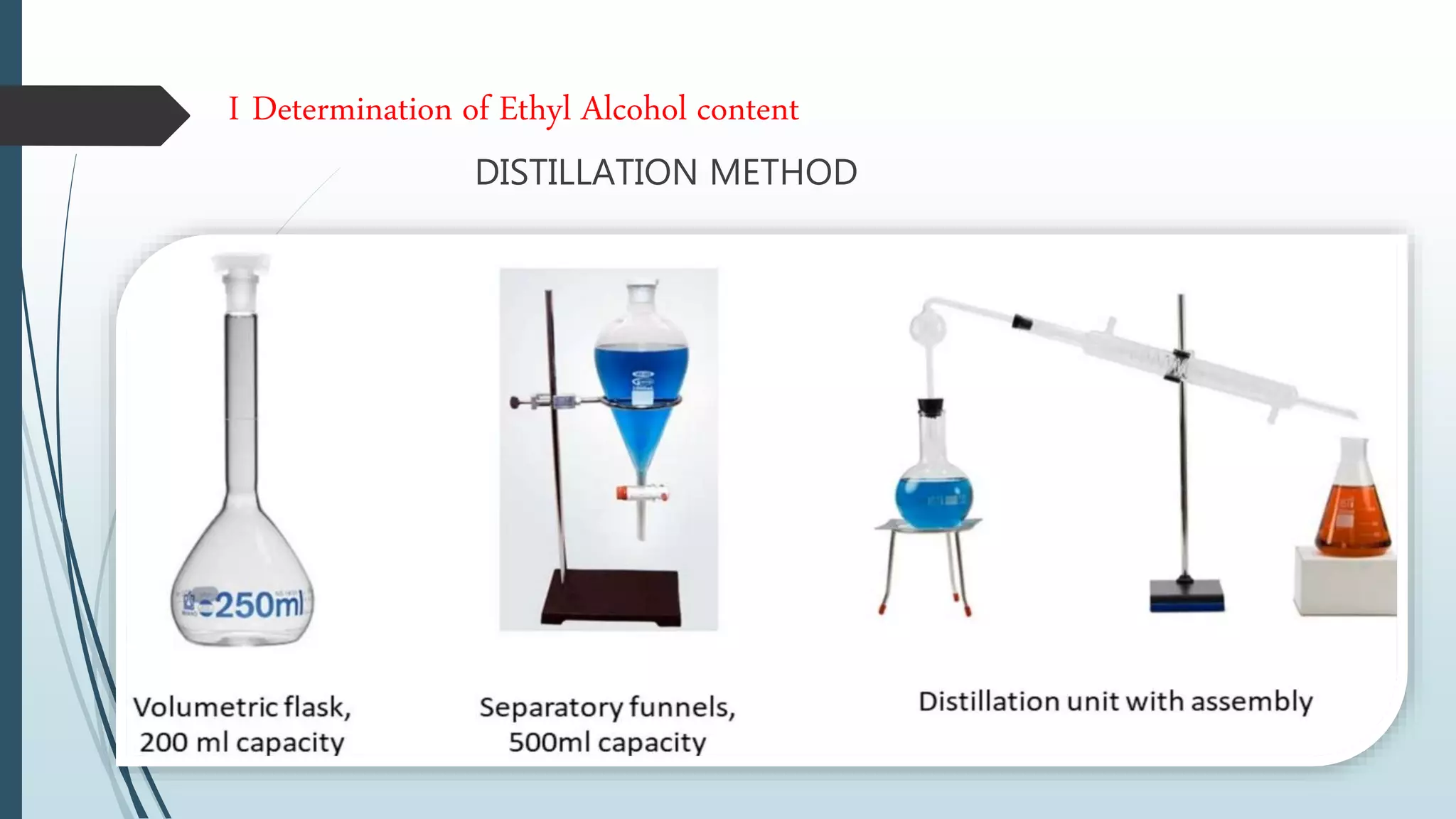
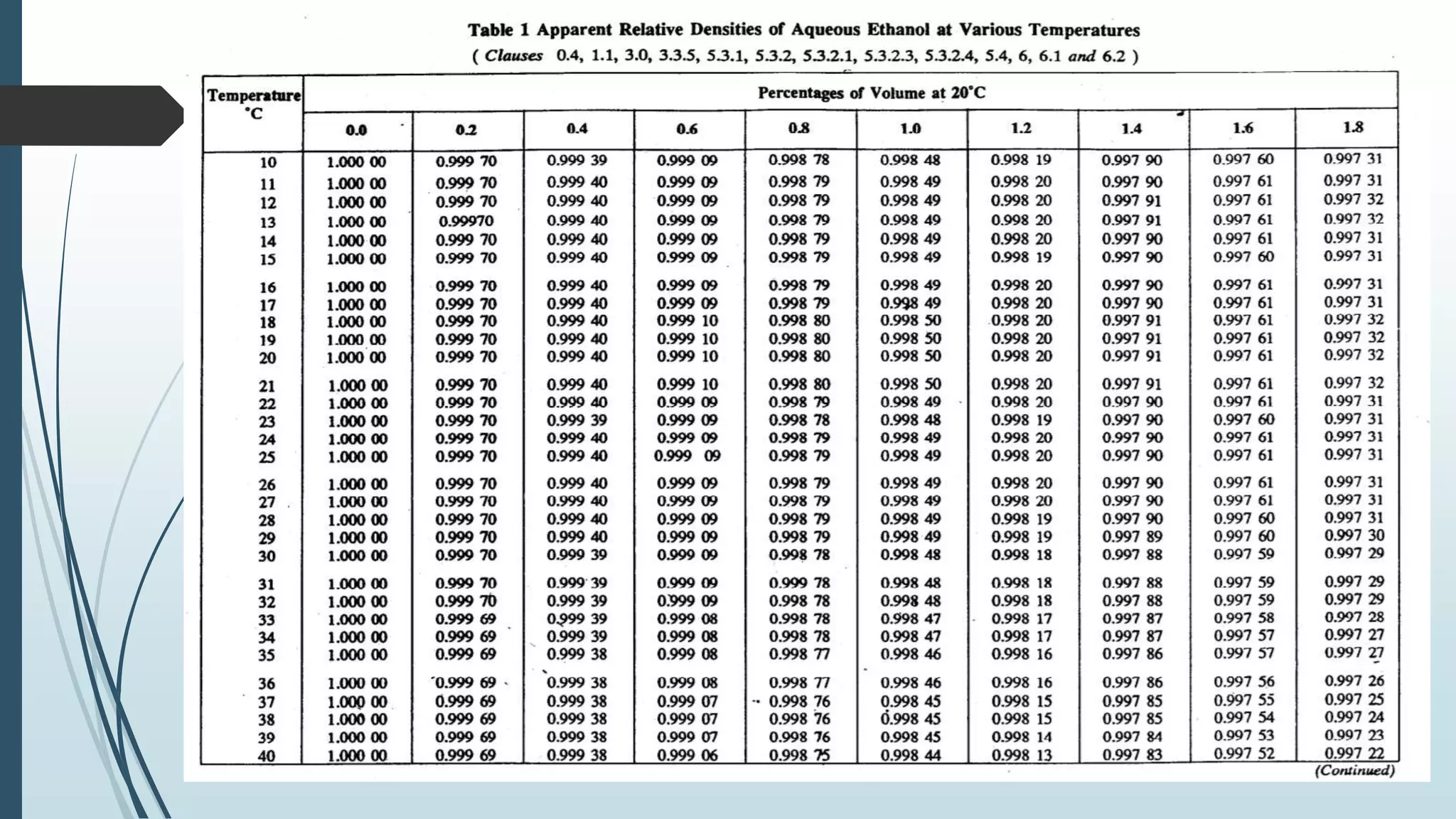
I Determination of Ethyl Alcohol content
DISTILLATION METHOD
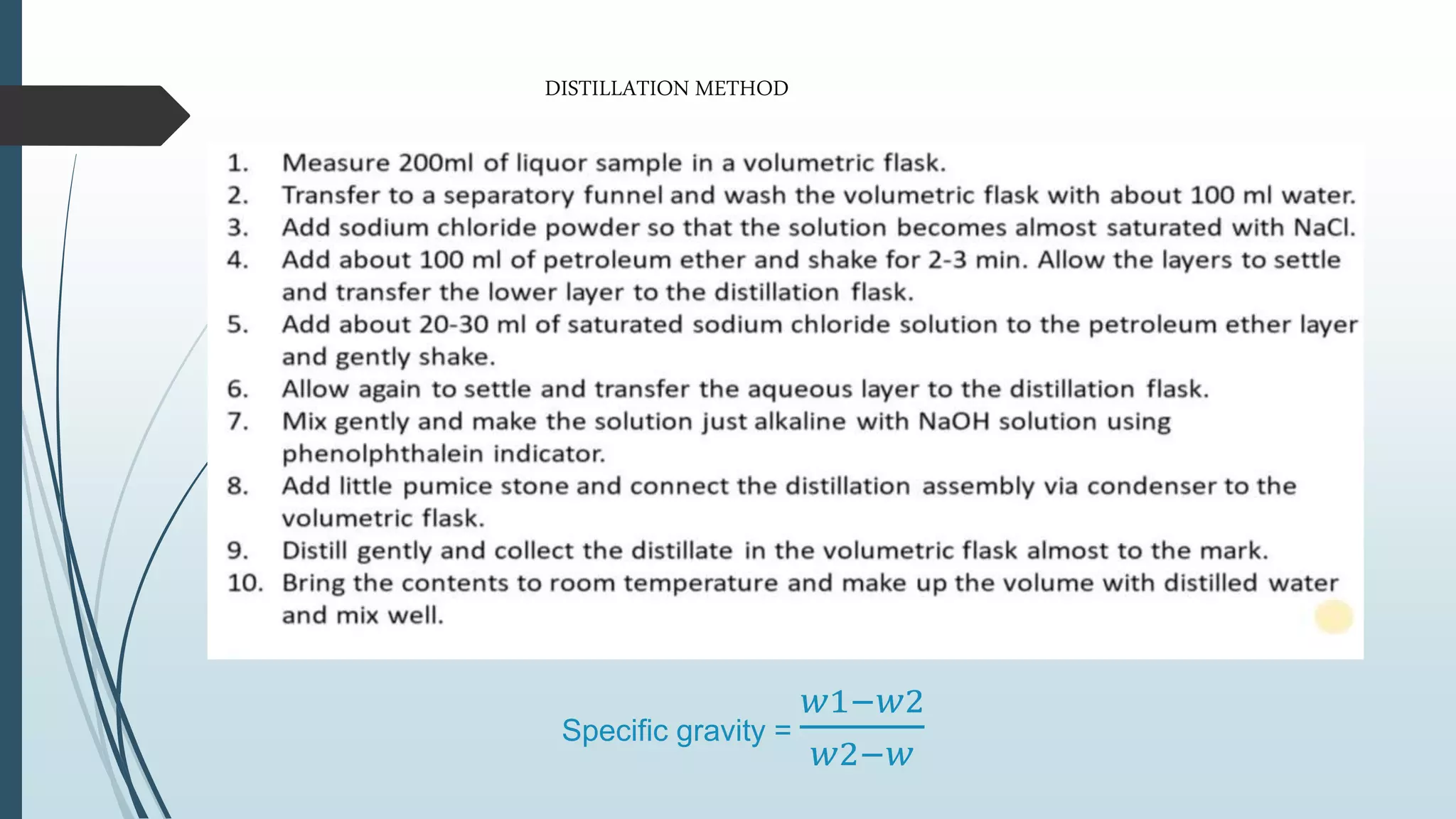
Specific gravity =
𝑤1−𝑤2
𝑤2−𝑤
DISTILLATION METHOD
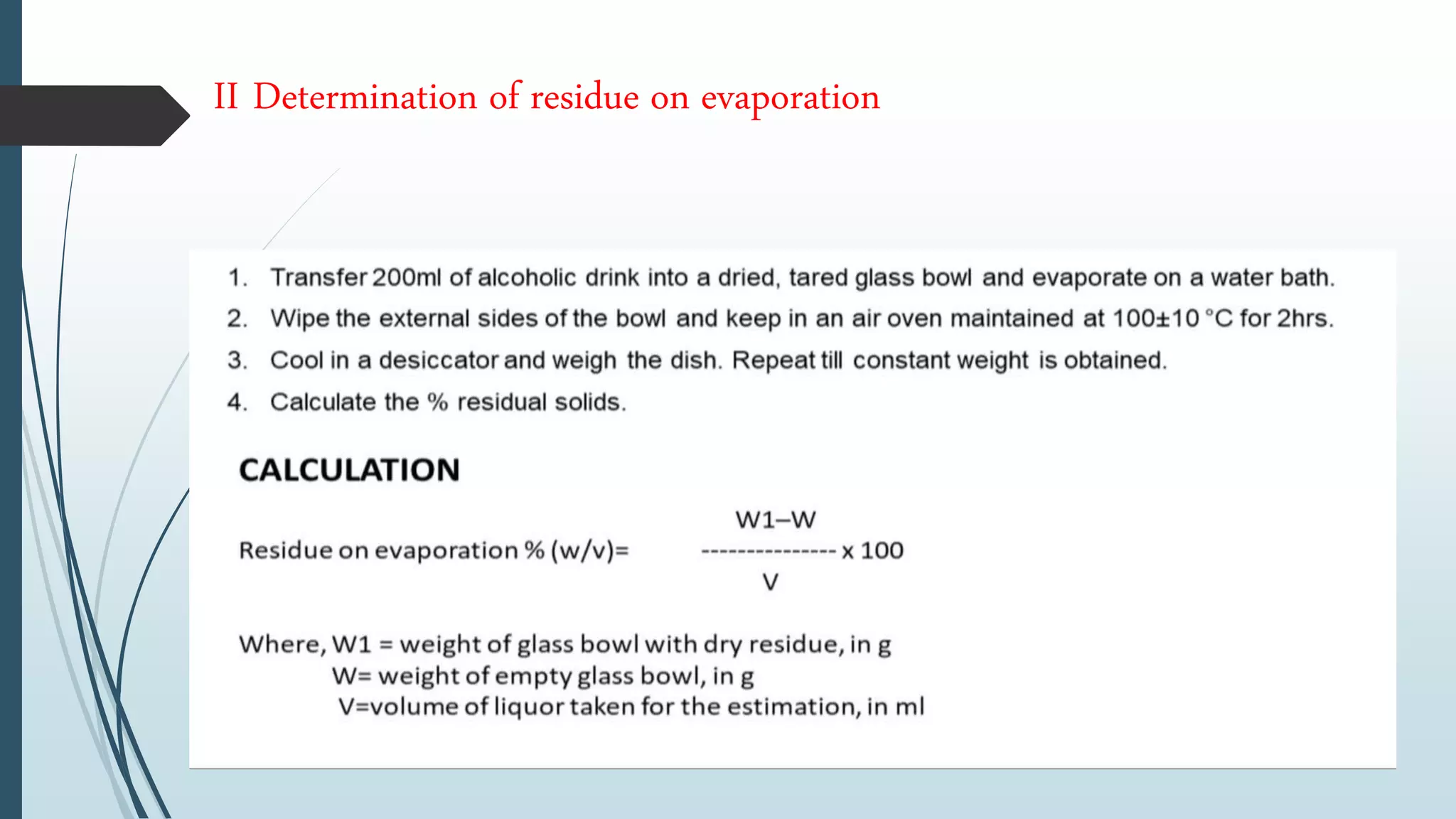
II Determination of residue on evaporation
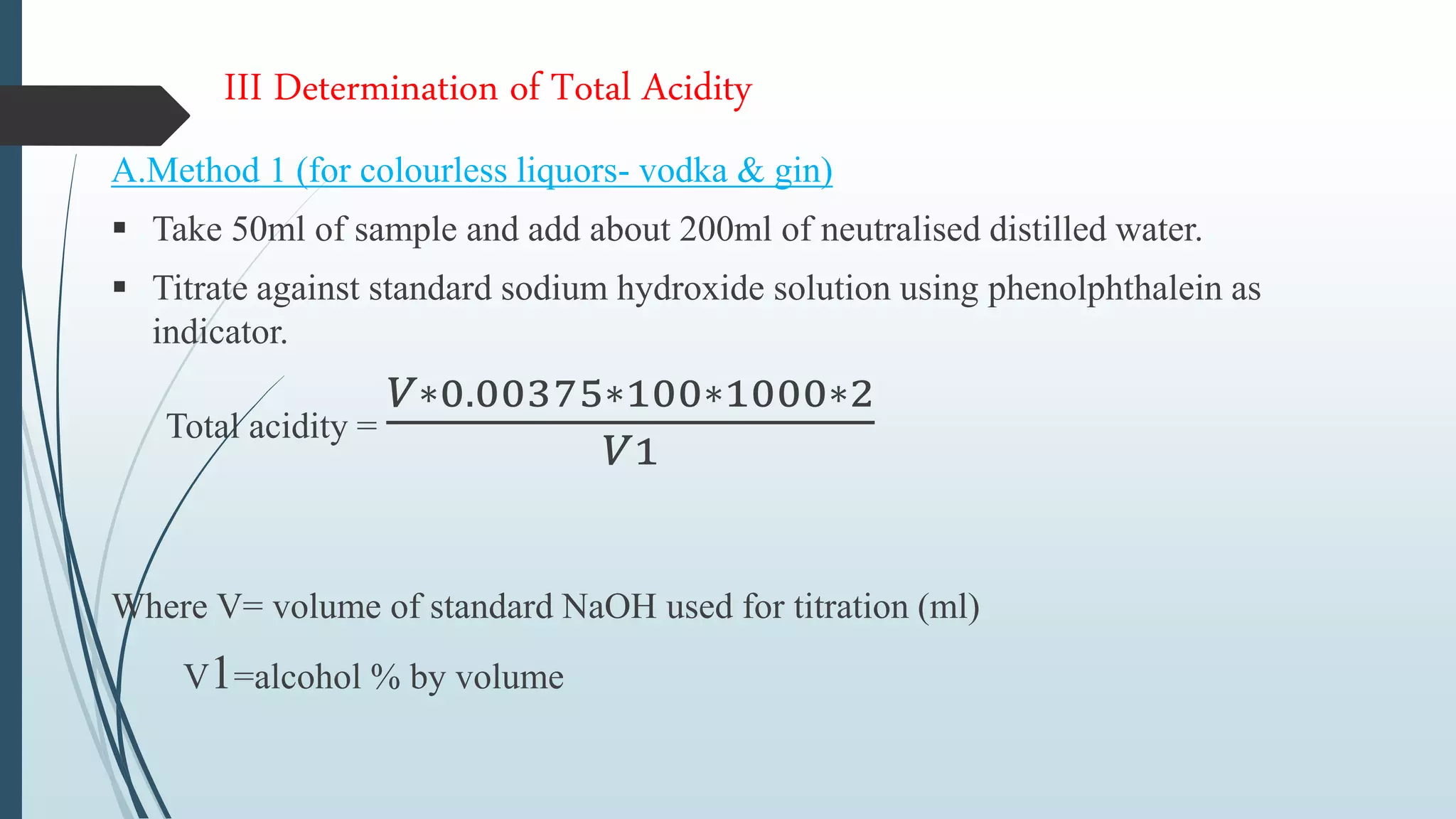
III Determination of Total Acidity
A.Method 1 (for colourless liquors- vodka & gin)
 Take 50ml of sample and add about 200ml of neutralised distilled water.
 Titrate against standard sodium hydroxide solution using phenolphthalein as
indicator.
Total acidity =
𝑉∗0.00375∗100∗1000∗2
𝑉1
Where V= volume of standard NaOH used for titration (ml)
V1=alcohol % by volume
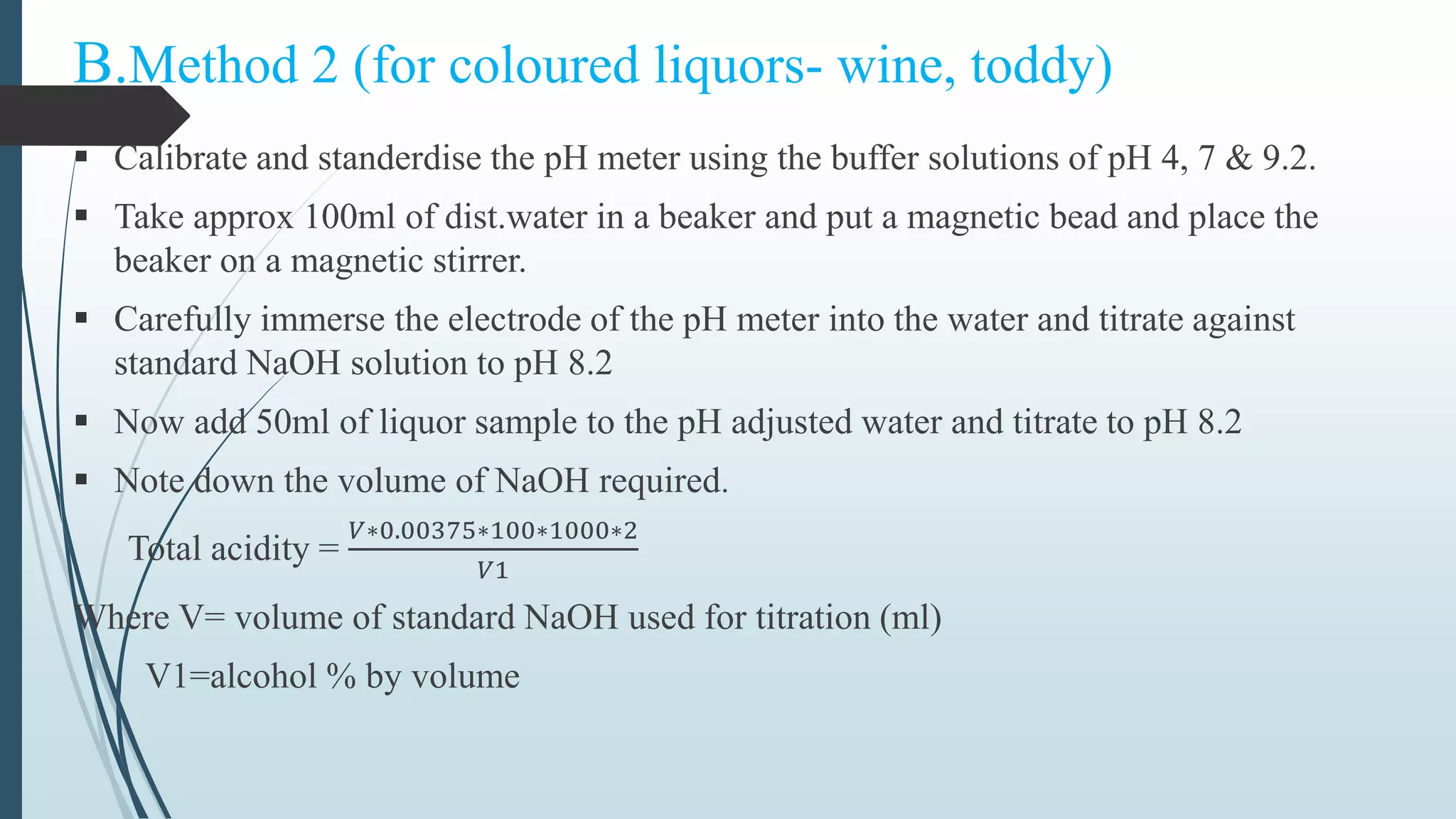
B.Method 2 (for coloured liquors- wine, toddy)
 Calibrate and standerdise the pH meter using the buffer solutions of pH 4, 7 & 9.2.
 Take approx 100ml of dist.water in a beaker and put a magnetic bead and place the
beaker on a magnetic stirrer.
 Carefully immerse the electrode of the pH meter into the water and titrate against
standard NaOH solution to pH 8.2
 Now add 50ml of liquor sample to the pH adjusted water and titrate to pH 8.2
 Note down the volume of NaOH required.
Total acidity =
𝑉∗0.00375∗100∗1000∗2
𝑉1
Where V= volume of standard NaOH used for titration (ml)
V1=alcohol % by volume
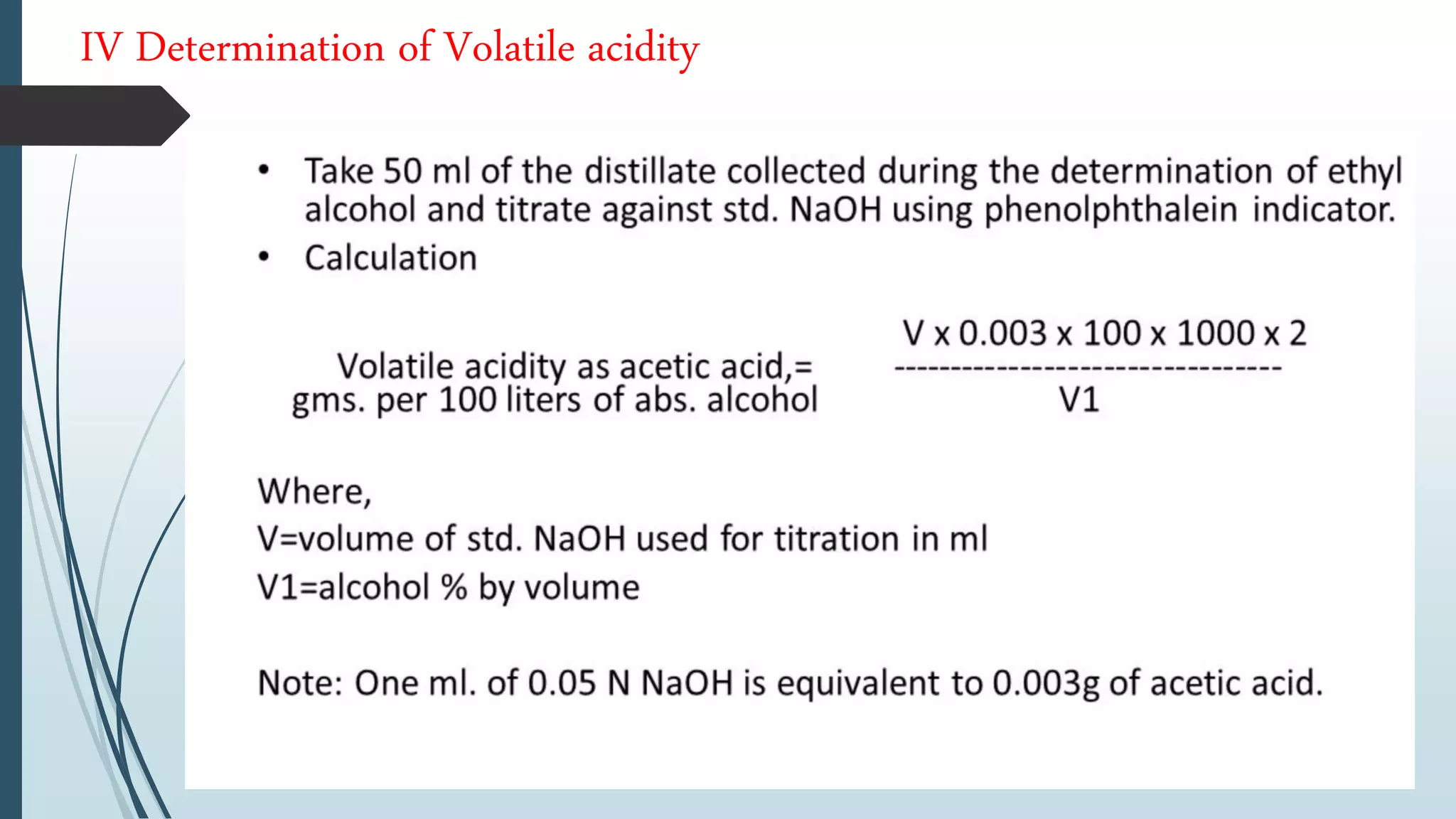
IV Determination of Volatile acidity
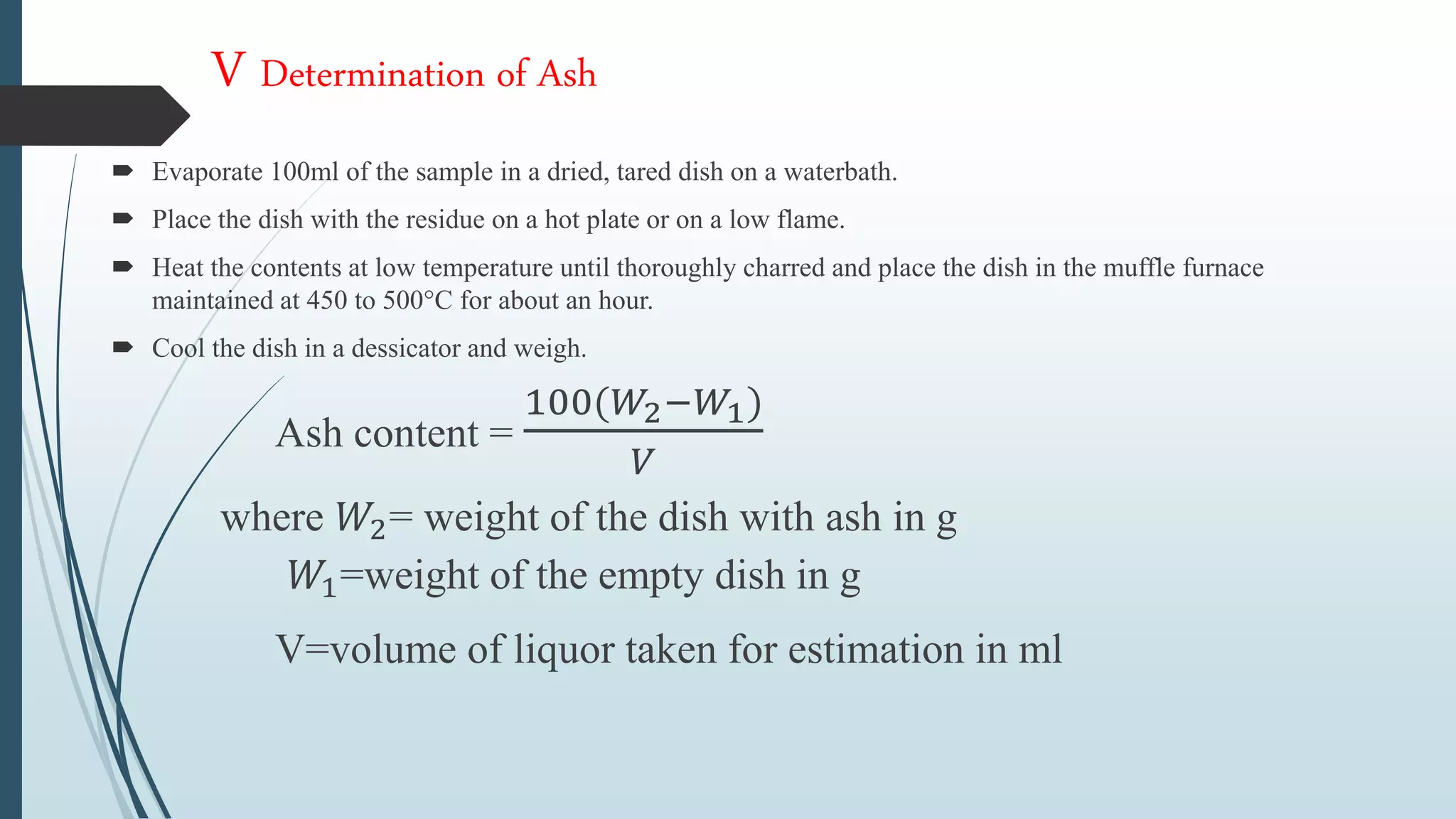
V Determination of Ash
 Evaporate 100ml of the sample in a dried, tared dish on a waterbath.
 Place the dish with the residue on a hot plate or on a low flame.
 Heat the contents at low temperature until thoroughly charred and place the dish in the muffle furnace
maintained at 450 to 500°C for about an hour.
 Cool the dish in a dessicator and weigh.
Ash content =
100(𝑊2−𝑊1)
𝑉
where 𝑊2= weight of the dish with ash in g
𝑊1=weight of the empty dish in g
V=volume of liquor taken for estimation in ml
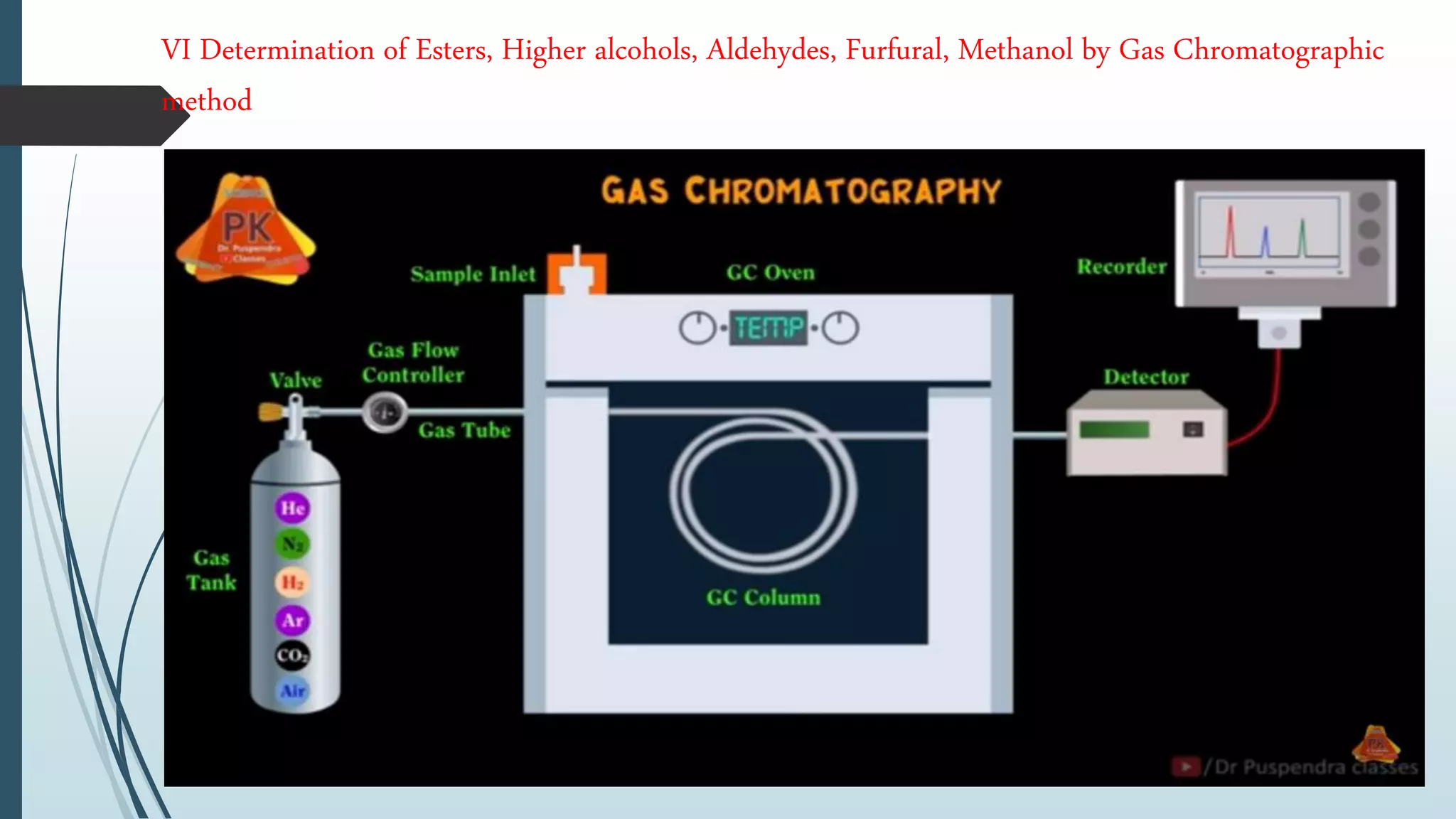
VI Determination of Esters, Higher alcohols, Aldehydes, Furfural, Methanol by Gas Chromatographic
method
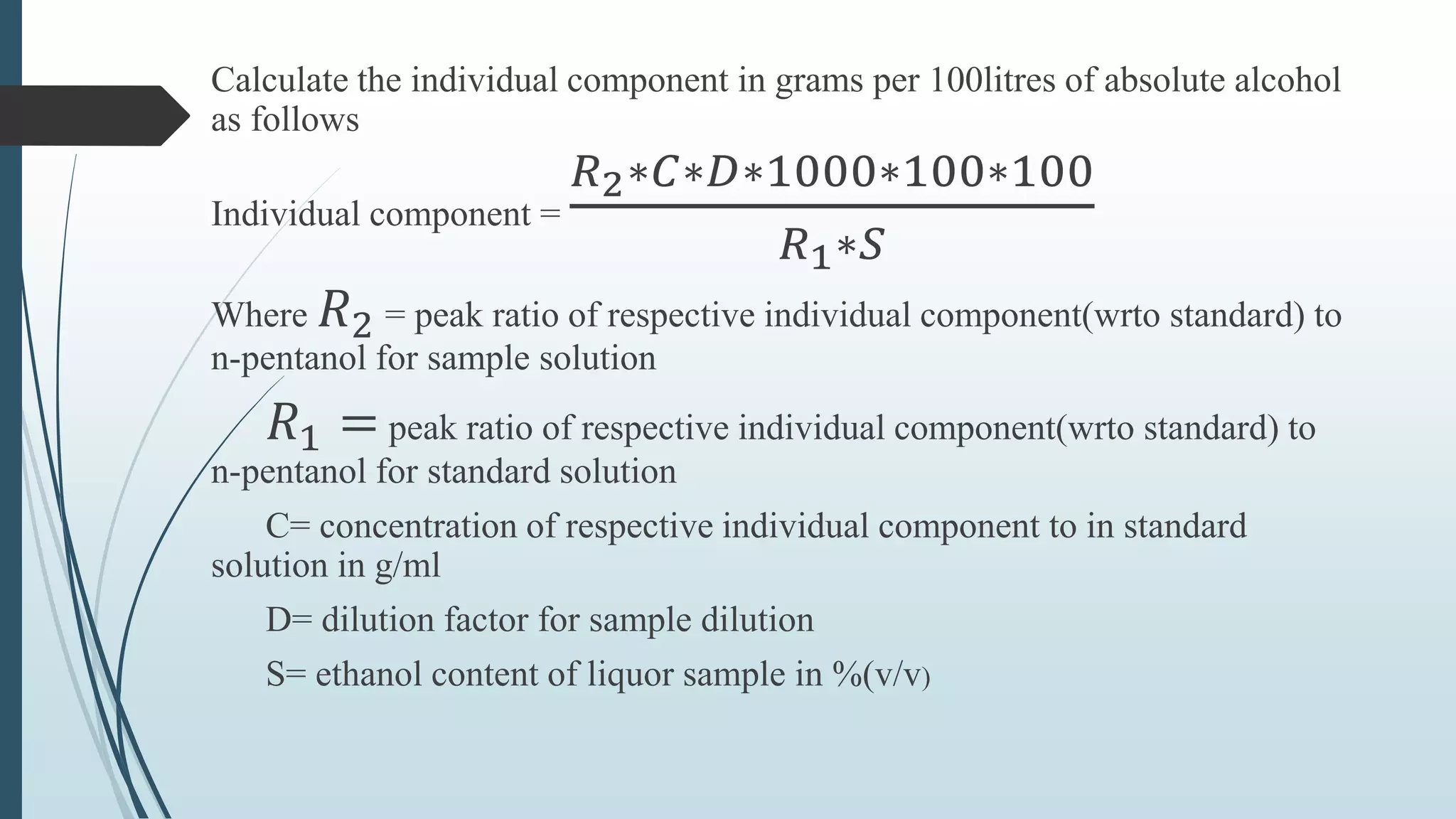
Calculate the individual component in grams per 100litres of absolute alcohol
as follows
Individual component =
𝑅2∗𝐶∗𝐷∗1000∗100∗100
𝑅1∗𝑆
Where 𝑅2 = peak ratio of respective individual component(wrto standard) to
n-pentanol for sample solution
𝑅1 = peak ratio of respective individual component(wrto standard) to
n-pentanol for standard solution
C= concentration of respective individual component to in standard
solution in g/ml
D= dilution factor for sample dilution
S= ethanol content of liquor sample in %(v/v)
Quality control & testing parameters in alcoholic beverage

Quality control & testing parameters in alcoholic beverage

  • 1.
    Quality Control &Testing Parameters in Alcoholic Beverage Production By-- M.Rachana Sai, Food Technology,
  • 2.
    QUALITY CONTROL:  Itis a process by which we can control the product quality either by chemical testing or biological identification.  It ensures in maintaining quality standards while also preserving cost efficiencies.  Well designed lab tools that trace, measure, report product quality are the key to comprehensive analytical checks.  The goal of quality control program is to ensure that all the requirements are fulfilled so that only safe foods are sent to the customers.  The basic tools of quality control are  Ingredient specification  Product formulas & standards  Manufacturing procedures  Identification of critical control points  Good Manufacturing Practices  Laboratory Analysis  Cleaning & sanitizing  In process analysis etc.,
  • 3.
    The testing parametersin quality control lab are I. Determination of Ethyl Alcohol content II. Determination of Residue on Evaporation III. Determination of Total Acidity IV. Determination of Volatile Acidity V. Determination of Ash VI. Determination of Higher Alcohols VII. Determination of Aldehydes VIII.Determination of Esters IX. Determination of Furfural X. Determination of Methanol
  • 4.
    I Determination ofEthyl Alcohol content DISTILLATION METHOD
  • 5.
  • 7.
    II Determination ofresidue on evaporation
  • 8.
    III Determination ofTotal Acidity A.Method 1 (for colourless liquors- vodka & gin)  Take 50ml of sample and add about 200ml of neutralised distilled water.  Titrate against standard sodium hydroxide solution using phenolphthalein as indicator. Total acidity = 𝑉∗0.00375∗100∗1000∗2 𝑉1 Where V= volume of standard NaOH used for titration (ml) V1=alcohol % by volume
  • 9.
    B.Method 2 (forcoloured liquors- wine, toddy)  Calibrate and standerdise the pH meter using the buffer solutions of pH 4, 7 & 9.2.  Take approx 100ml of dist.water in a beaker and put a magnetic bead and place the beaker on a magnetic stirrer.  Carefully immerse the electrode of the pH meter into the water and titrate against standard NaOH solution to pH 8.2  Now add 50ml of liquor sample to the pH adjusted water and titrate to pH 8.2  Note down the volume of NaOH required. Total acidity = 𝑉∗0.00375∗100∗1000∗2 𝑉1 Where V= volume of standard NaOH used for titration (ml) V1=alcohol % by volume
  • 10.
    IV Determination ofVolatile acidity
  • 11.
    V Determination ofAsh  Evaporate 100ml of the sample in a dried, tared dish on a waterbath.  Place the dish with the residue on a hot plate or on a low flame.  Heat the contents at low temperature until thoroughly charred and place the dish in the muffle furnace maintained at 450 to 500°C for about an hour.  Cool the dish in a dessicator and weigh. Ash content = 100(𝑊2−𝑊1) 𝑉 where 𝑊2= weight of the dish with ash in g 𝑊1=weight of the empty dish in g V=volume of liquor taken for estimation in ml
  • 12.
    VI Determination ofEsters, Higher alcohols, Aldehydes, Furfural, Methanol by Gas Chromatographic method
  • 13.
    Calculate the individualcomponent in grams per 100litres of absolute alcohol as follows Individual component = 𝑅2∗𝐶∗𝐷∗1000∗100∗100 𝑅1∗𝑆 Where 𝑅2 = peak ratio of respective individual component(wrto standard) to n-pentanol for sample solution 𝑅1 = peak ratio of respective individual component(wrto standard) to n-pentanol for standard solution C= concentration of respective individual component to in standard solution in g/ml D= dilution factor for sample dilution S= ethanol content of liquor sample in %(v/v)