Presented To You By:Presented To You By:
The Students Of B-Tech (E.C.)The Students Of B-Tech (E.C.)
22ndnd
Year(3rdSemester)Year(3rdSemester)
Banasthali UniversityBanasthali University
- Devanshi Agarwal- Devanshi Agarwal
- Sonakshi Goyal- Sonakshi Goyal
- Trisha Gera- Trisha Gera
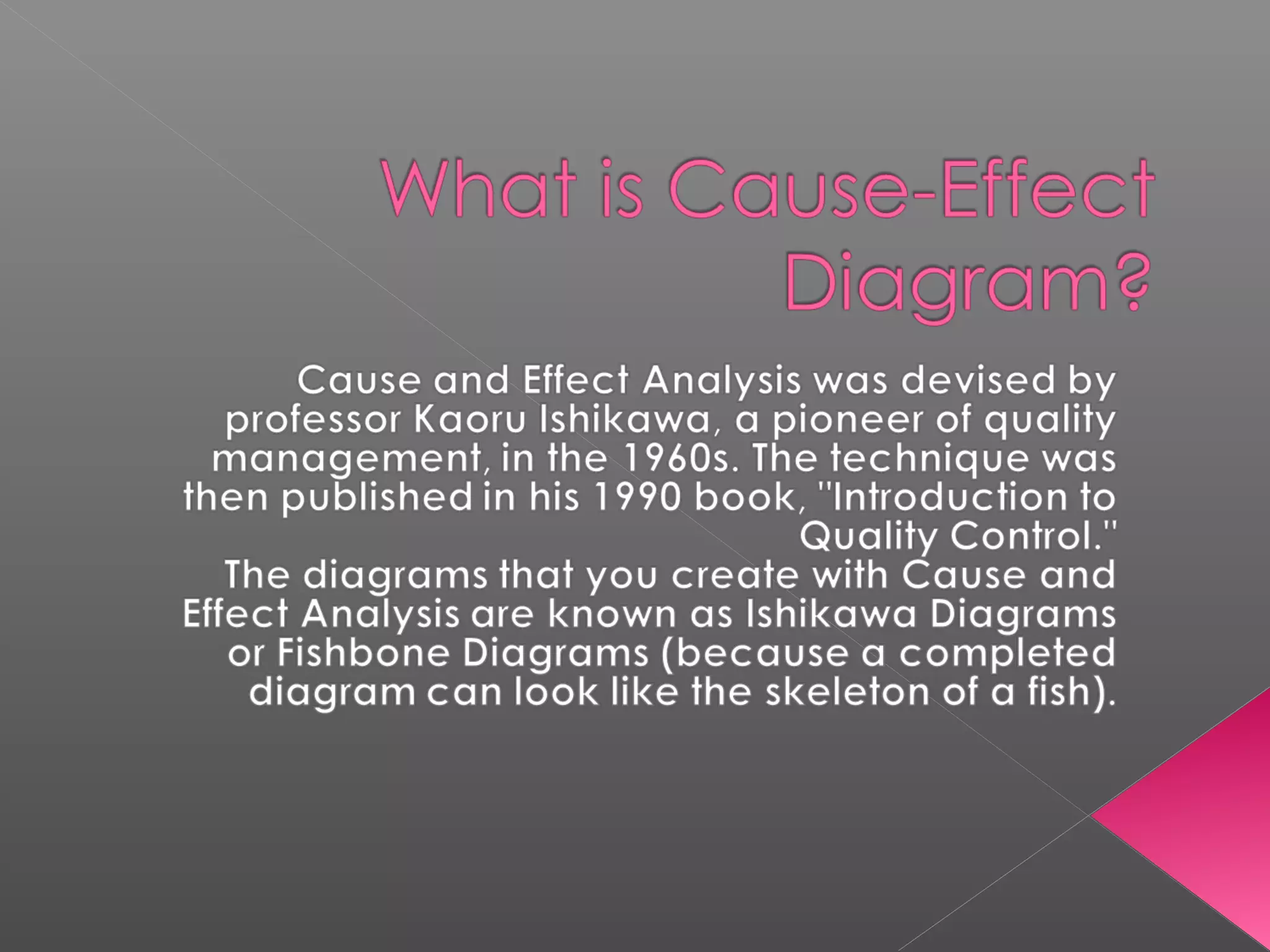
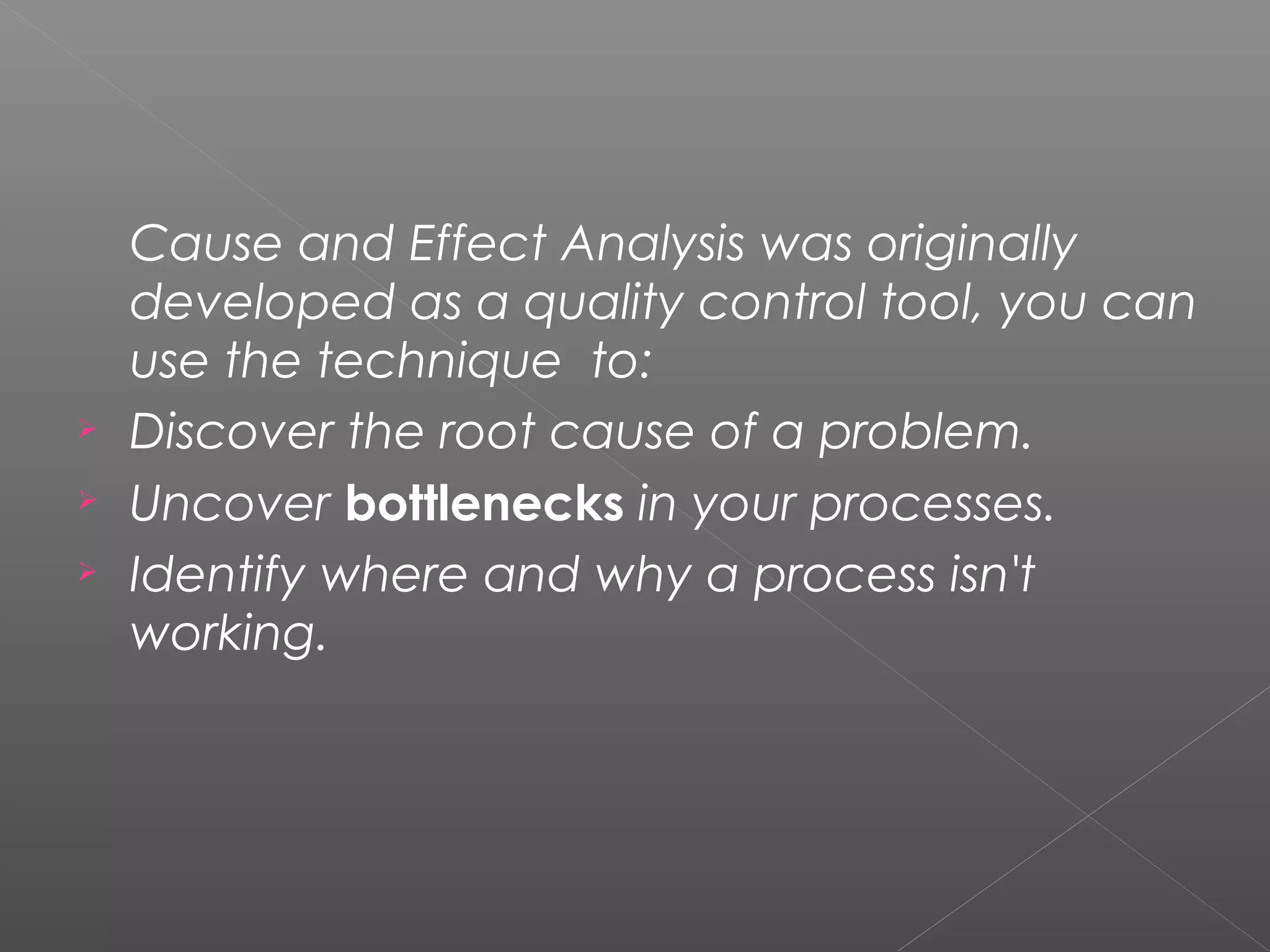
Cause and Effect Analysis was originally
developed as a quality control tool, you can
use the technique  to:
 Discover the root cause of a problem.
 Uncover bottlenecks in your processes.
 Identify where and why a process isn't
working.
Step 1: Identify the ProblemStep 1: Identify the Problem
 First, write down the exact problem you face.
Where appropriate, identify who is involved, what
the problem is, and when and where it occurs.
 Then, write the problem in a box on the left-hand
side of a large sheet of paper, and draw a line
across the paper horizontally from the box. This
arrangement, looking like the head and spine of a
fish, gives you space to develop ideas.
Step 2: Work Out the Major Factors InvolvedStep 2: Work Out the Major Factors Involved
 Next, identify the factors that may be part of the
problem. These may be systems, equipment,
materials, external forces, people involved with the
problem, and so on.
 Try to draw out as many of these as possible. As a
starting point, you can use models such as
the McKinsey 7S Framework   (which offers you
Strategy, Structure, Systems, Shared values, Skills,
Style and Staff as factors that you can consider) or
the4Ps of Marketing   (which offers Product, Place,
Price, and Promotion as possible factors).
Step 3: Identify Possible CausesStep 3: Identify Possible Causes
 Now, for each of the factors you considered in step
2, brainstorm possible causes of the problem that
may be related to the factor.
 Show these possible causes as shorter lines coming
off the "bones" of the diagram. Where a cause is
large or complex, then it may be best to break it
down into sub-causes. Show these as lines coming
off each cause line.
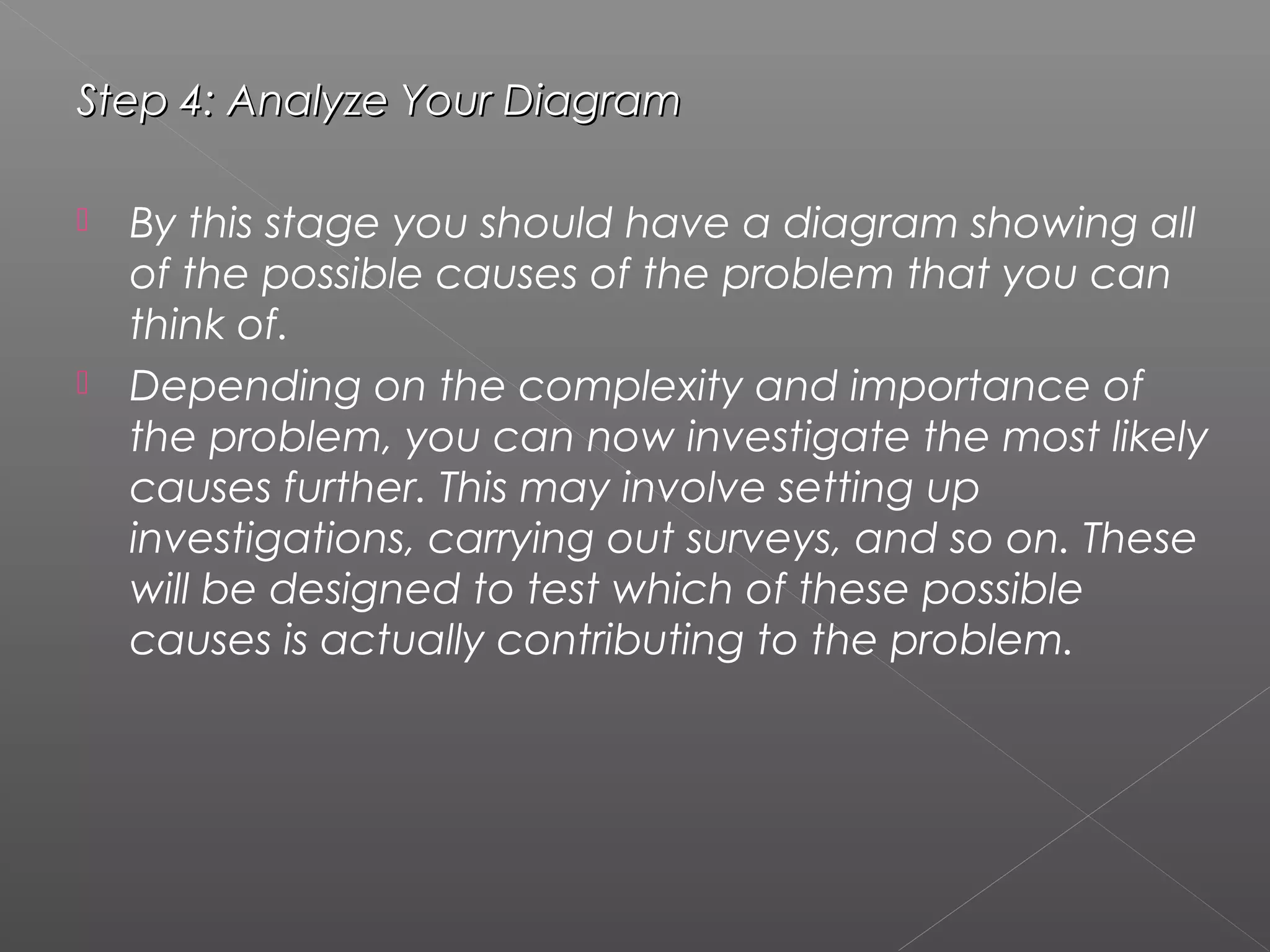
Step 4: Analyze Your DiagramStep 4: Analyze Your Diagram
 By this stage you should have a diagram showing all
of the possible causes of the problem that you can
think of.
 Depending on the complexity and importance of
the problem, you can now investigate the most likely
causes further. This may involve setting up
investigations, carrying out surveys, and so on. These
will be designed to test which of these possible
causes is actually contributing to the problem.
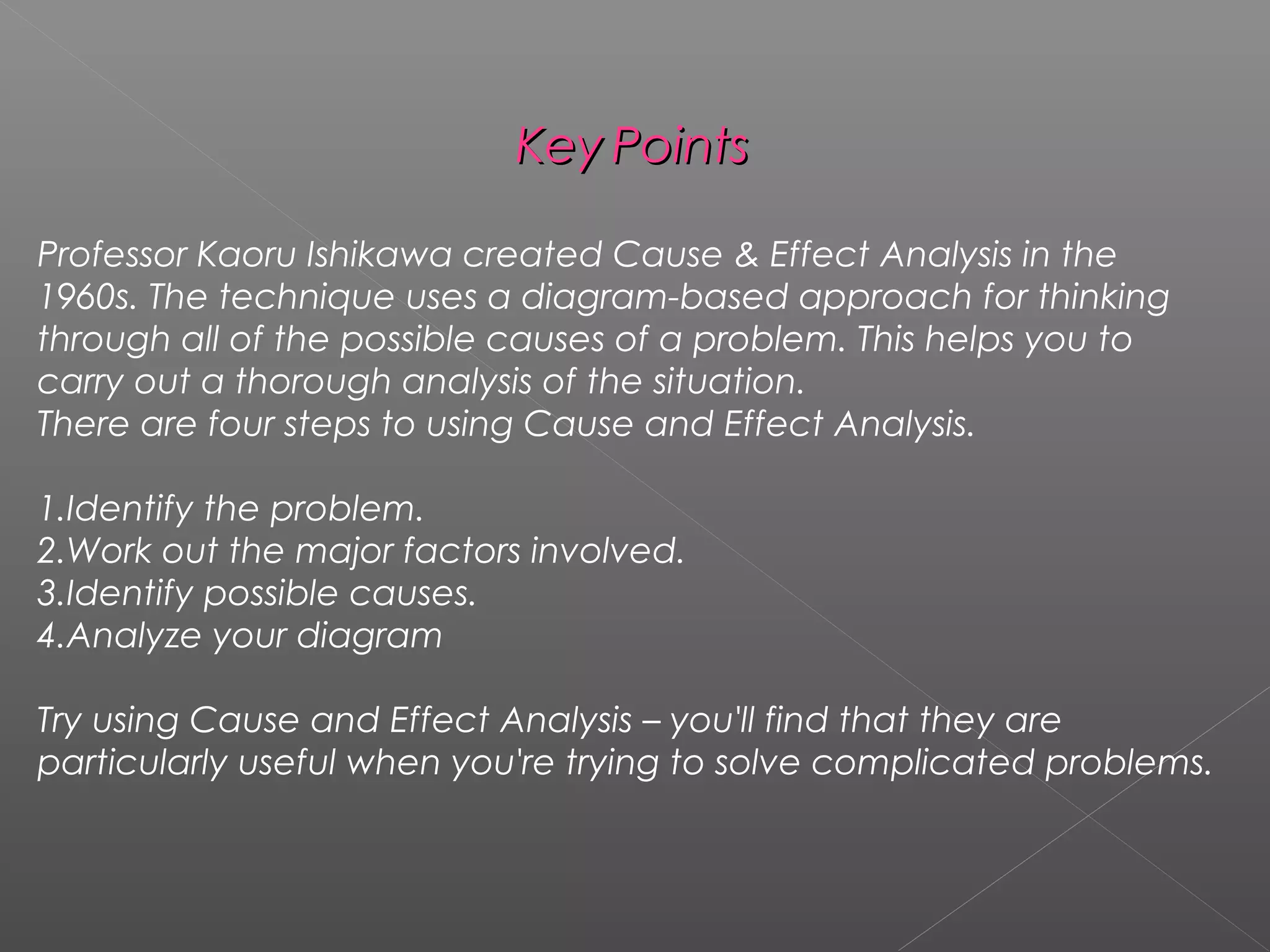
KeyKey PointsPoints
Professor Kaoru Ishikawa created Cause & Effect Analysis in the
1960s. The technique uses a diagram-based approach for thinking
through all of the possible causes of a problem. This helps you to
carry out a thorough analysis of the situation.
There are four steps to using Cause and Effect Analysis.
1.Identify the problem.
2.Work out the major factors involved.
3.Identify possible causes.
4.Analyze your diagram
Try using Cause and Effect Analysis – you'll find that they are
particularly useful when you're trying to solve complicated problems.
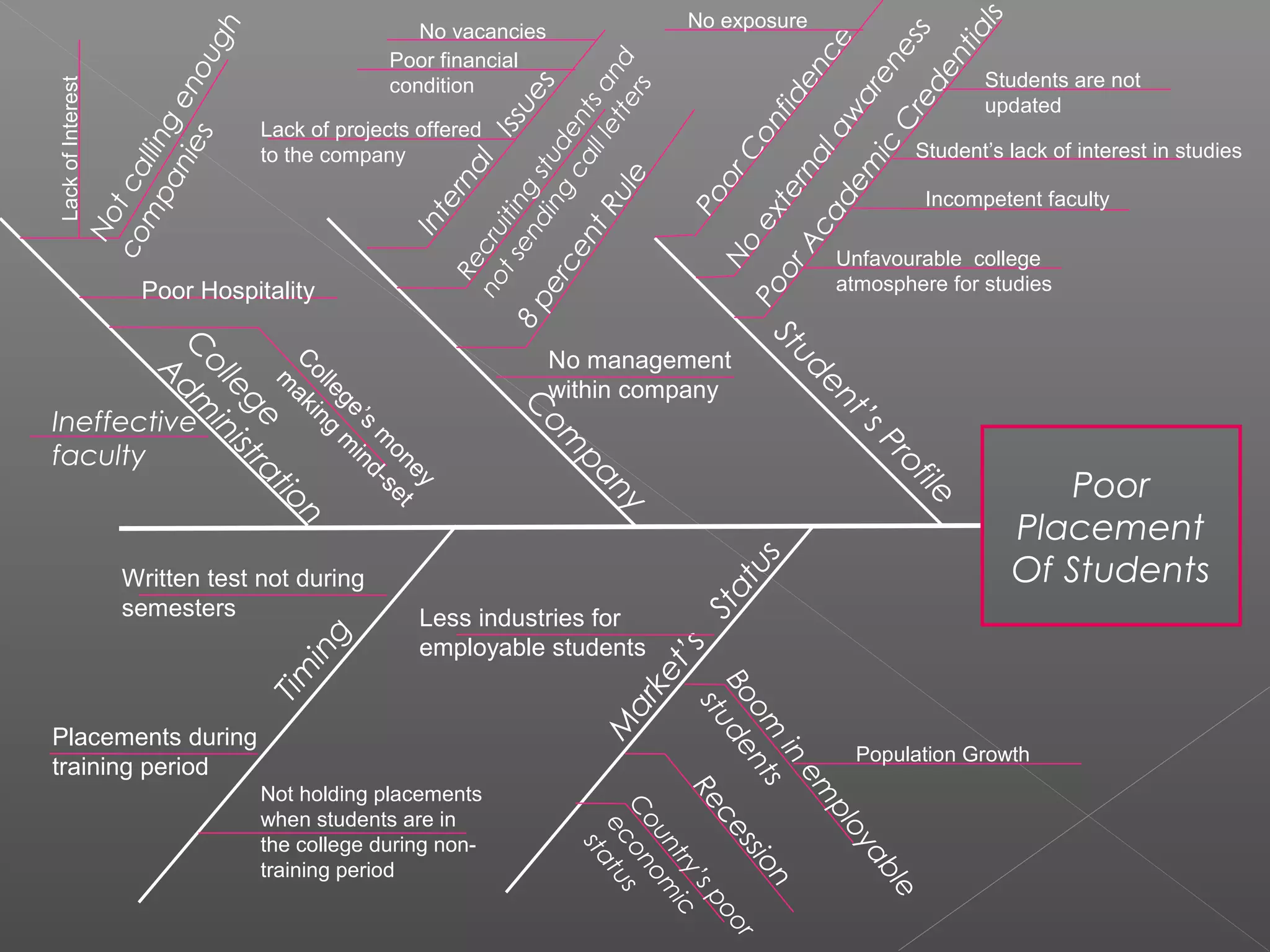
Poor
Placement
Of Students
Student’sProfile
C
om
pany
C
ollege
A
dm
inistration
M
arket’s
Status
Tim
ing
Notcalling
enough
com
panies
Ineffective
faculty
8percentRule
PoorAcadem
ic
C
redentials
PoorC
onfidence
No
externalaw
areness
Recession
Boom
in
em
ployable
students
Student’s lack of interest in studies
Incompetent faculty
Unfavourable college
atmosphere for studies
Population Growth
No exposure
Recruiting
studentsand
notsending
callletters
Internal
Issues
No vacancies
Poor financial
condition
Lack of projects offered
to the company
No management
within company
LackofInterest
Poor Hospitality
Written test not during
semesters Less industries for
employable students
Placements during
training period
C
ountry’spoor
econom
ic
status
C
ollege’s
m
oney
m
aking
m
ind-set
Students are not
updated
Not holding placements
when students are in
the college during non-
training period
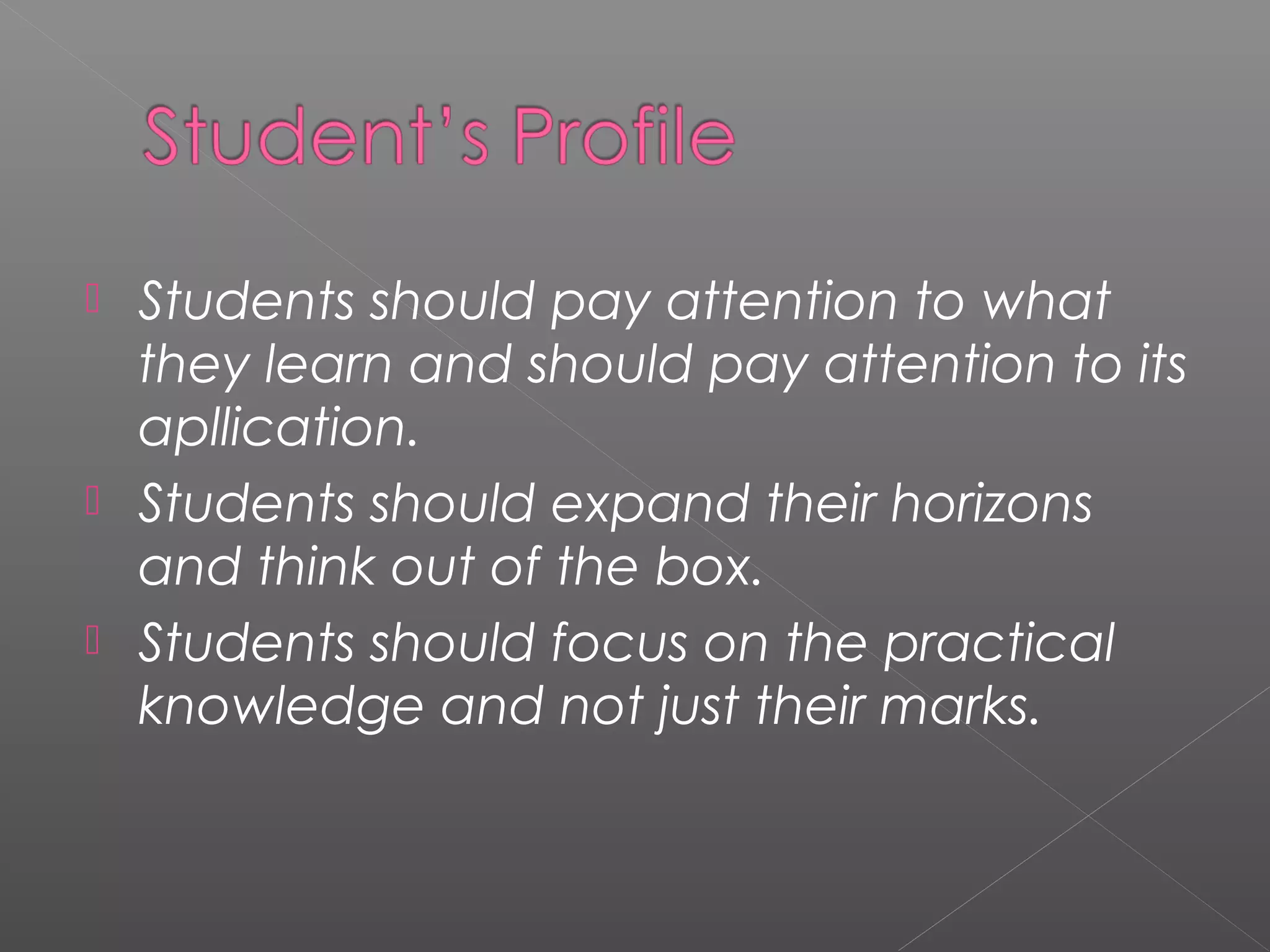
 Students should pay attention to what
they learn and should pay attention to its
apllication.
 Students should expand their horizons
and think out of the box.
 Students should focus on the practical
knowledge and not just their marks.
 College administration should take more
interest in the placement drives.
 Proper hospitality to the HR team present
in the campus.
 College administrartion should lure more
companies for on-campus placements
of their students.
 The placement drives should be held on
a more convenient time and not close to
semester exams.
 It should be held in the 8th
semester as the
students are already in college during
that period and they don’t have to
travel from far-off places just for their
placements again and again.
 The students eligbility happens to be
more in 8th
semester.
 Companies with more vacancies, better
financial status, management team and
better projects should come.
This assignment helps us deduce
1. Student’s enthusiasm for studies is utmost.
2. College’s interest must lie with student’s
future’s welfare.
3. Companies must recruit students only
when they are able to employ them
instead of not sending call letters.
Qcl 14-v3 [cause-effect-diagram]-[banasthali university]_[devanshi agarwal] (1)

Qcl 14-v3 [cause-effect-diagram]-[banasthali university]_[devanshi agarwal] (1)

  • 2.
    Presented To YouBy:Presented To You By: The Students Of B-Tech (E.C.)The Students Of B-Tech (E.C.) 22ndnd Year(3rdSemester)Year(3rdSemester) Banasthali UniversityBanasthali University - Devanshi Agarwal- Devanshi Agarwal - Sonakshi Goyal- Sonakshi Goyal - Trisha Gera- Trisha Gera
  • 4.
    Cause and EffectAnalysis was originally developed as a quality control tool, you can use the technique  to:  Discover the root cause of a problem.  Uncover bottlenecks in your processes.  Identify where and why a process isn't working.
  • 6.
    Step 1: Identifythe ProblemStep 1: Identify the Problem  First, write down the exact problem you face. Where appropriate, identify who is involved, what the problem is, and when and where it occurs.  Then, write the problem in a box on the left-hand side of a large sheet of paper, and draw a line across the paper horizontally from the box. This arrangement, looking like the head and spine of a fish, gives you space to develop ideas.
  • 7.
    Step 2: WorkOut the Major Factors InvolvedStep 2: Work Out the Major Factors Involved  Next, identify the factors that may be part of the problem. These may be systems, equipment, materials, external forces, people involved with the problem, and so on.  Try to draw out as many of these as possible. As a starting point, you can use models such as the McKinsey 7S Framework   (which offers you Strategy, Structure, Systems, Shared values, Skills, Style and Staff as factors that you can consider) or the4Ps of Marketing   (which offers Product, Place, Price, and Promotion as possible factors).
  • 8.
    Step 3: IdentifyPossible CausesStep 3: Identify Possible Causes  Now, for each of the factors you considered in step 2, brainstorm possible causes of the problem that may be related to the factor.  Show these possible causes as shorter lines coming off the "bones" of the diagram. Where a cause is large or complex, then it may be best to break it down into sub-causes. Show these as lines coming off each cause line.
  • 9.
    Step 4: AnalyzeYour DiagramStep 4: Analyze Your Diagram  By this stage you should have a diagram showing all of the possible causes of the problem that you can think of.  Depending on the complexity and importance of the problem, you can now investigate the most likely causes further. This may involve setting up investigations, carrying out surveys, and so on. These will be designed to test which of these possible causes is actually contributing to the problem.
  • 10.
    KeyKey PointsPoints Professor KaoruIshikawa created Cause & Effect Analysis in the 1960s. The technique uses a diagram-based approach for thinking through all of the possible causes of a problem. This helps you to carry out a thorough analysis of the situation. There are four steps to using Cause and Effect Analysis. 1.Identify the problem. 2.Work out the major factors involved. 3.Identify possible causes. 4.Analyze your diagram Try using Cause and Effect Analysis – you'll find that they are particularly useful when you're trying to solve complicated problems.
  • 11.
    Poor Placement Of Students Student’sProfile C om pany C ollege A dm inistration M arket’s Status Tim ing Notcalling enough com panies Ineffective faculty 8percentRule PoorAcadem ic C redentials PoorC onfidence No externalaw areness Recession Boom in em ployable students Student’s lackof interest in studies Incompetent faculty Unfavourable college atmosphere for studies Population Growth No exposure Recruiting studentsand notsending callletters Internal Issues No vacancies Poor financial condition Lack of projects offered to the company No management within company LackofInterest Poor Hospitality Written test not during semesters Less industries for employable students Placements during training period C ountry’spoor econom ic status C ollege’s m oney m aking m ind-set Students are not updated Not holding placements when students are in the college during non- training period
  • 13.
     Students shouldpay attention to what they learn and should pay attention to its apllication.  Students should expand their horizons and think out of the box.  Students should focus on the practical knowledge and not just their marks.
  • 14.
     College administrationshould take more interest in the placement drives.  Proper hospitality to the HR team present in the campus.  College administrartion should lure more companies for on-campus placements of their students.
  • 15.
     The placementdrives should be held on a more convenient time and not close to semester exams.  It should be held in the 8th semester as the students are already in college during that period and they don’t have to travel from far-off places just for their placements again and again.  The students eligbility happens to be more in 8th semester.
  • 16.
     Companies withmore vacancies, better financial status, management team and better projects should come.
  • 17.
    This assignment helpsus deduce 1. Student’s enthusiasm for studies is utmost. 2. College’s interest must lie with student’s future’s welfare. 3. Companies must recruit students only when they are able to employ them instead of not sending call letters.