Atomic Structure
2.1 Protons
2.2 Neutrons
2.3 Electrons

Atoms are electrical in nature.
They contain particles with
positive and negative charges. The
proton carries a positive charge
(+1). The electron carries a
negative charge (-1).

Atoms in their most stable state are
neutral with an equal number of
protons and electrons. For example,
if an atom has 5 electrons, then it
also has 5 protons. The other
particle in an atom is neutron, which
does not carry any charge or is
neutral.




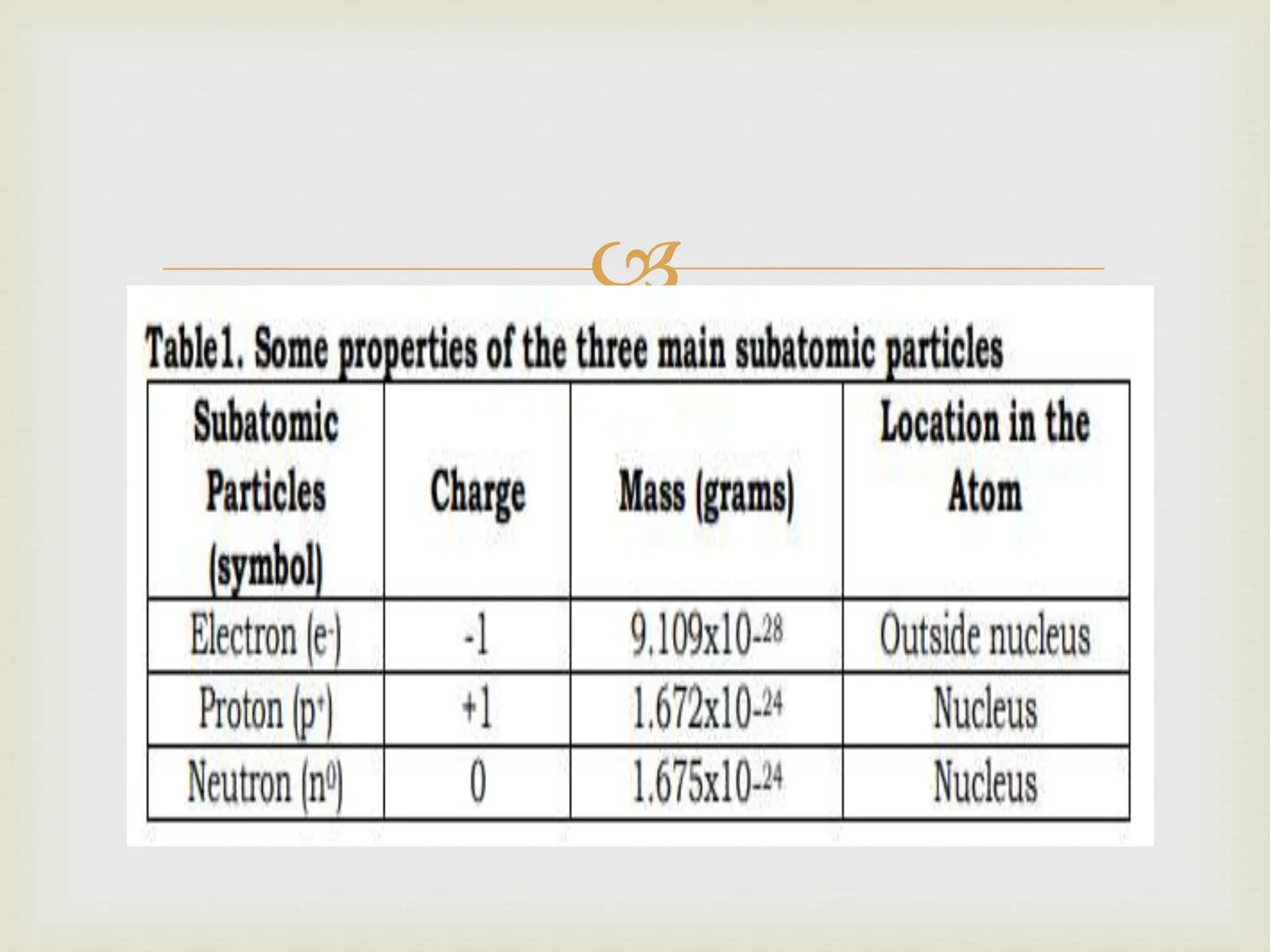
Protons and neutrons have
approximately the same masses.
Both subatomic particles are found
in the nucleus. On the other hand,
electrons are found outside the
nucleus and are the smallest
subatomic particles

The atomic number tells the 4
number of protons in one atom of
an element. It also tells the number
of electrons in a neutral atom of the
element.

The mass number is the sum of
the total number of protons and
neutrons in the nucleus of the
atom.

Q3 Science Week 3-4 power point presentation.pptx

  • 1.
    Atomic Structure 2.1 Protons 2.2Neutrons 2.3 Electrons
  • 2.
     Atoms are electricalin nature. They contain particles with positive and negative charges. The proton carries a positive charge (+1). The electron carries a negative charge (-1).
  • 3.
     Atoms in theirmost stable state are neutral with an equal number of protons and electrons. For example, if an atom has 5 electrons, then it also has 5 protons. The other particle in an atom is neutron, which does not carry any charge or is neutral.
  • 4.
  • 5.
  • 6.
  • 7.
     Protons and neutronshave approximately the same masses. Both subatomic particles are found in the nucleus. On the other hand, electrons are found outside the nucleus and are the smallest subatomic particles
  • 8.
     The atomic numbertells the 4 number of protons in one atom of an element. It also tells the number of electrons in a neutral atom of the element.
  • 9.
     The mass numberis the sum of the total number of protons and neutrons in the nucleus of the atom.