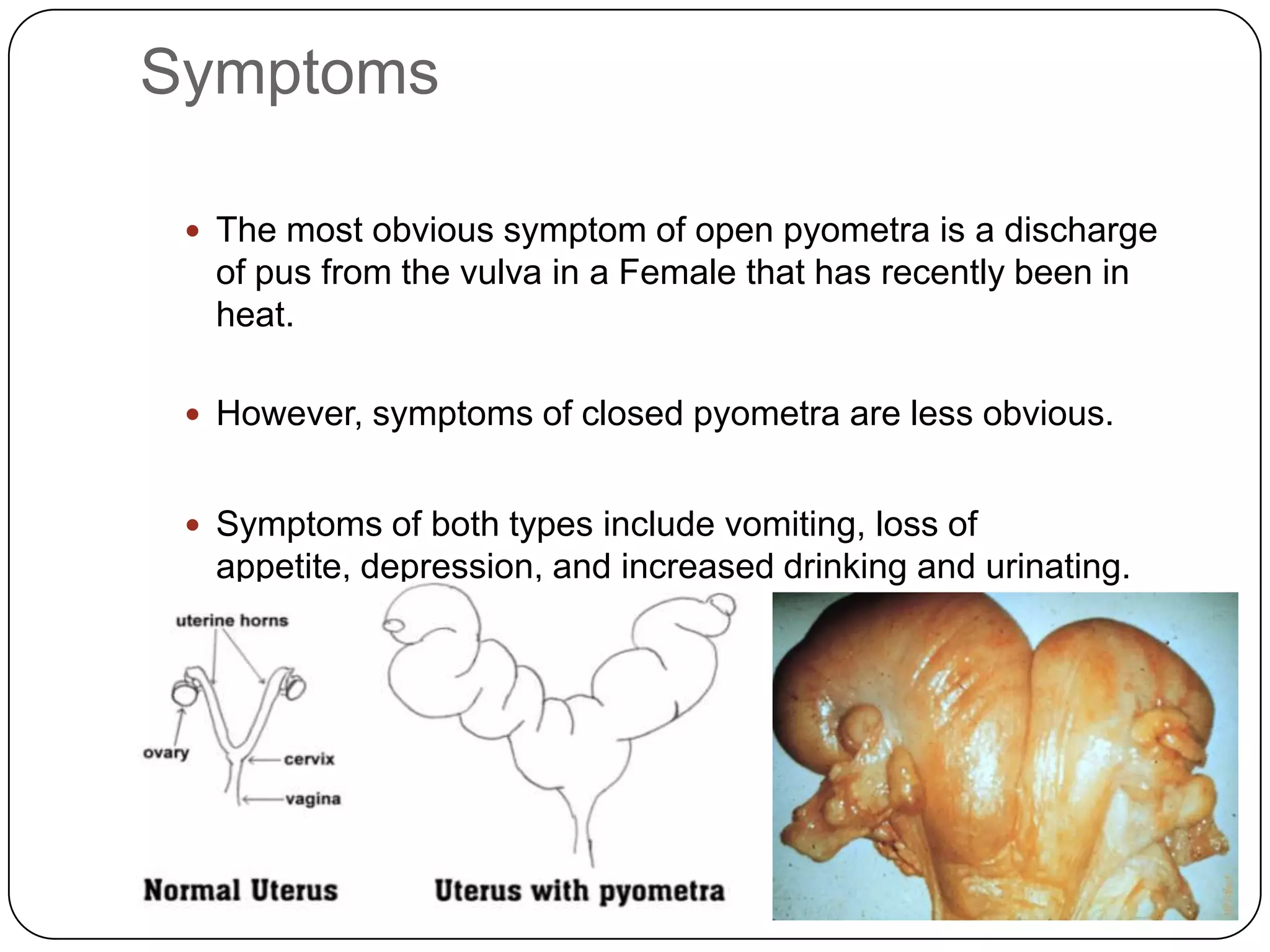
An
Assignment
On
“Pyometra”
Submitted toDr.B.S.Rathod
Submitted byPandya Kalpesh R.
Sem-5th
Roll.no-10

Reg.no-PVETS-040010-2011
Pyometra
 What is pyometra?
 Pyo = pus, infection; metra = womb or uterus

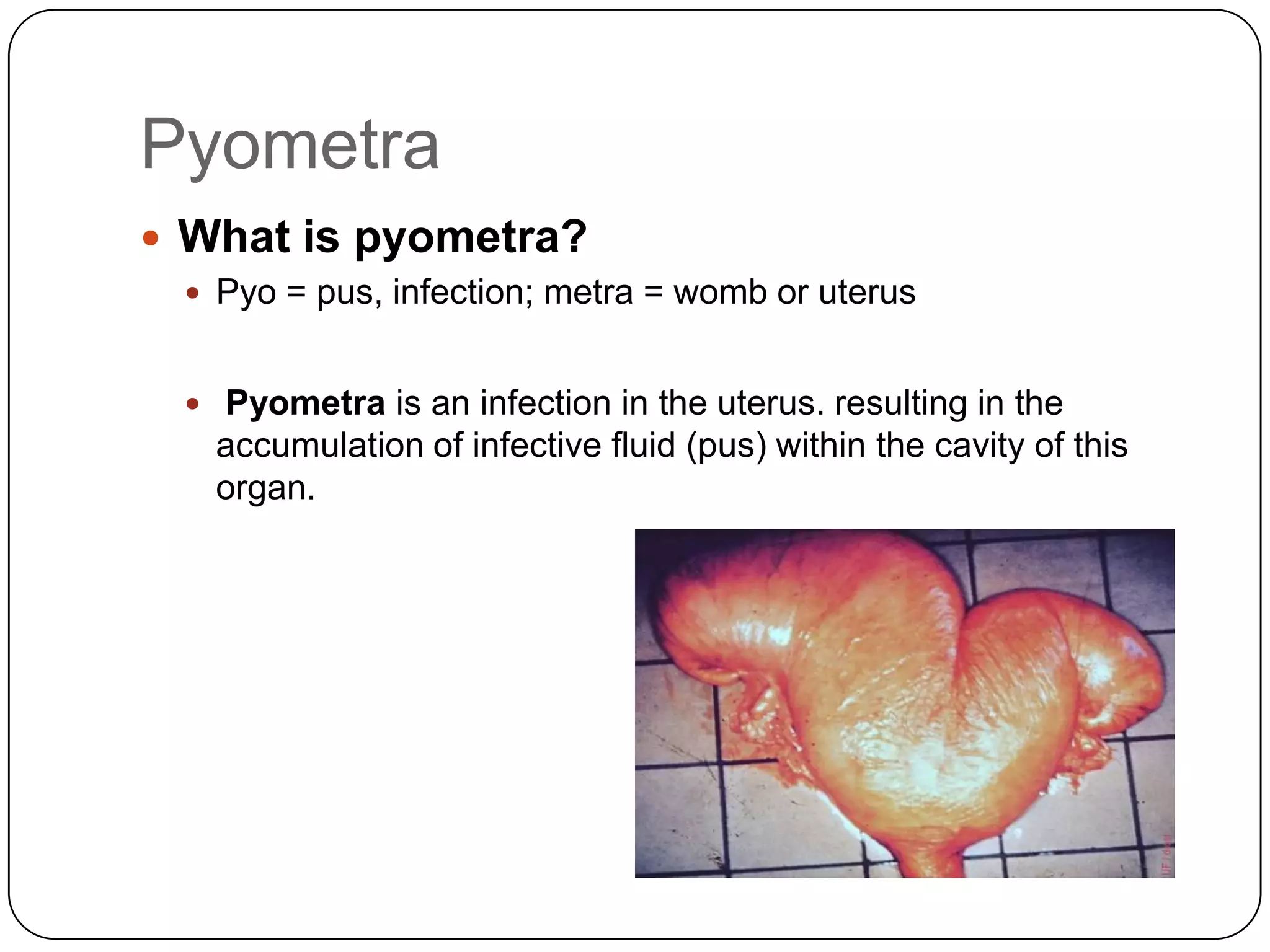
 Pyometra is an infection in the uterus. resulting in the

accumulation of infective fluid (pus) within the cavity of this
organ.
 Pyometra may be classified as open or closed.

1)Open pyometra:
 In open pyometra, a common sign is a discharge from
the vagina. This discharge may be bloody or yellow or
cream coloured.
2)Close pyometra:
 In closed pyometra, no discharge to the exterior
occurs.
Etiology
 Pyometra is a result of hormonal and structural

changes in the uterus lining.
 The changes in the womb that occur with each cycle

make infection more likely with age.
 Infection is usually caused by a very common

organism called E. coli. The disease often occurs in
the weeks or months following a heat or season
period.
 Injections with some hormones to stop seasons or for

treatment of other conditions can also increase the
risk of pyometra developing.
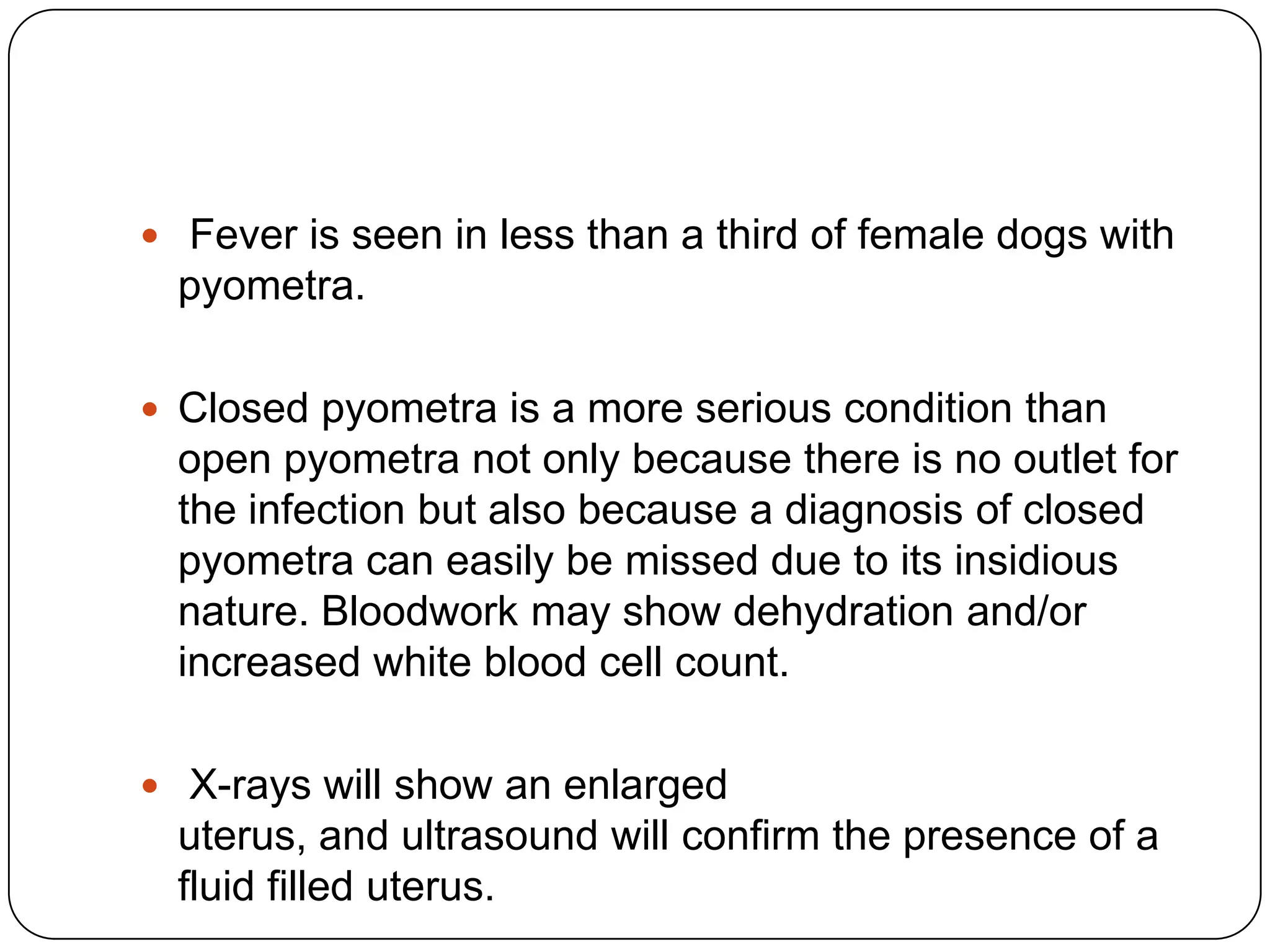
Symptoms
 The most obvious symptom of open pyometra is a discharge

of pus from the vulva in a Female that has recently been in
heat.
 However, symptoms of closed pyometra are less obvious.

 Symptoms of both types include vomiting, loss of

appetite, depression, and increased drinking and urinating.
 Fever is seen in less than a third of female dogs with

pyometra.
 Closed pyometra is a more serious condition than

open pyometra not only because there is no outlet for
the infection but also because a diagnosis of closed
pyometra can easily be missed due to its insidious
nature. Bloodwork may show dehydration and/or
increased white blood cell count.
 X-rays will show an enlarged

uterus, and ultrasound will confirm the presence of a
fluid filled uterus.
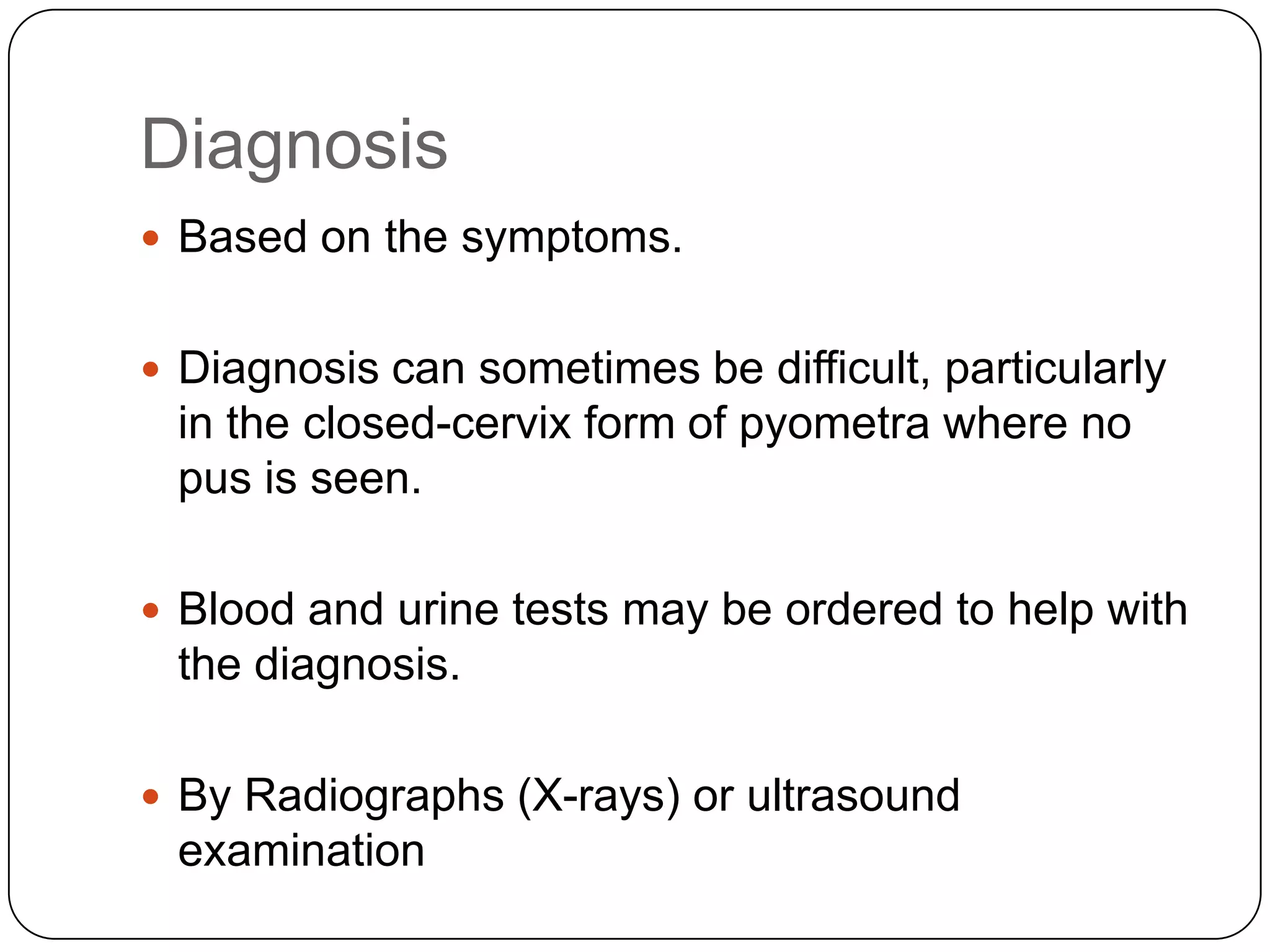
Diagnosis
 Based on the symptoms.
 Diagnosis can sometimes be difficult, particularly

in the closed-cervix form of pyometra where no
pus is seen.
 Blood and urine tests may be ordered to help with

the diagnosis.
 By Radiographs (X-rays) or ultrasound

examination
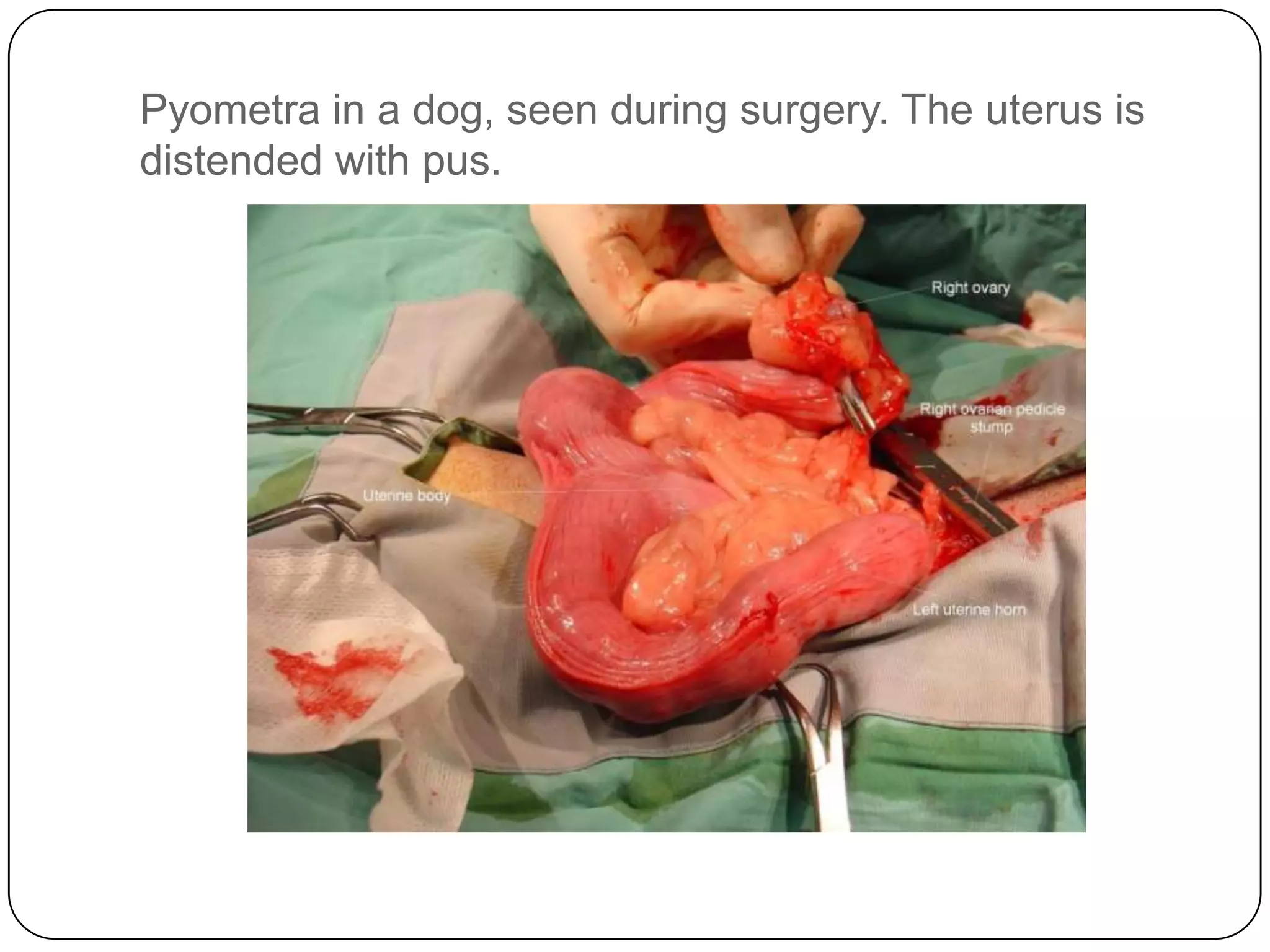
Pyometra in a dog, seen during surgery. The uterus is
distended with pus.
Treatment
1)

Surgical Treatment:
-The preferred treatment is to surgically remove
the uterus and ovaries.
-This is called an ovario-hysterectomy ("spay")
and is the safest and most effective way of
treating pyometra.

2) Medical Treatment:
- using prostaglandins is available for valuable
breeding
bitches
where
desexing
is
undesirable.
 Prostaglandins are a group of hormones that

reduce the blood level of progesterone, relax and
open the cervix, and contract the uterus to expel
bacteria and pus. Injections are given daily for 3-5
days.
Prevention
 pyometra can be prevented by routine desexing

("spay") of your dog or cat while she is young.
 We recommend desexing of all non-breeding pets at

5-6 months of age.
THANKS

Pyometra

  • 1.
    An Assignment On “Pyometra” Submitted toDr.B.S.Rathod Submitted byPandyaKalpesh R. Sem-5th Roll.no-10 Reg.no-PVETS-040010-2011
  • 2.
    Pyometra  What ispyometra?  Pyo = pus, infection; metra = womb or uterus  Pyometra is an infection in the uterus. resulting in the accumulation of infective fluid (pus) within the cavity of this organ.
  • 3.
     Pyometra maybe classified as open or closed. 1)Open pyometra:  In open pyometra, a common sign is a discharge from the vagina. This discharge may be bloody or yellow or cream coloured. 2)Close pyometra:  In closed pyometra, no discharge to the exterior occurs.
  • 4.
    Etiology  Pyometra isa result of hormonal and structural changes in the uterus lining.  The changes in the womb that occur with each cycle make infection more likely with age.  Infection is usually caused by a very common organism called E. coli. The disease often occurs in the weeks or months following a heat or season period.  Injections with some hormones to stop seasons or for treatment of other conditions can also increase the risk of pyometra developing.
  • 5.
    Symptoms  The mostobvious symptom of open pyometra is a discharge of pus from the vulva in a Female that has recently been in heat.  However, symptoms of closed pyometra are less obvious.  Symptoms of both types include vomiting, loss of appetite, depression, and increased drinking and urinating.
  • 6.
     Fever isseen in less than a third of female dogs with pyometra.  Closed pyometra is a more serious condition than open pyometra not only because there is no outlet for the infection but also because a diagnosis of closed pyometra can easily be missed due to its insidious nature. Bloodwork may show dehydration and/or increased white blood cell count.  X-rays will show an enlarged uterus, and ultrasound will confirm the presence of a fluid filled uterus.
  • 7.
    Diagnosis  Based onthe symptoms.  Diagnosis can sometimes be difficult, particularly in the closed-cervix form of pyometra where no pus is seen.  Blood and urine tests may be ordered to help with the diagnosis.  By Radiographs (X-rays) or ultrasound examination
  • 8.
    Pyometra in adog, seen during surgery. The uterus is distended with pus.
  • 9.
    Treatment 1) Surgical Treatment: -The preferredtreatment is to surgically remove the uterus and ovaries. -This is called an ovario-hysterectomy ("spay") and is the safest and most effective way of treating pyometra. 2) Medical Treatment: - using prostaglandins is available for valuable breeding bitches where desexing is undesirable.
  • 10.
     Prostaglandins area group of hormones that reduce the blood level of progesterone, relax and open the cervix, and contract the uterus to expel bacteria and pus. Injections are given daily for 3-5 days.
  • 11.
    Prevention  pyometra canbe prevented by routine desexing ("spay") of your dog or cat while she is young.  We recommend desexing of all non-breeding pets at 5-6 months of age.
  • 12.