1
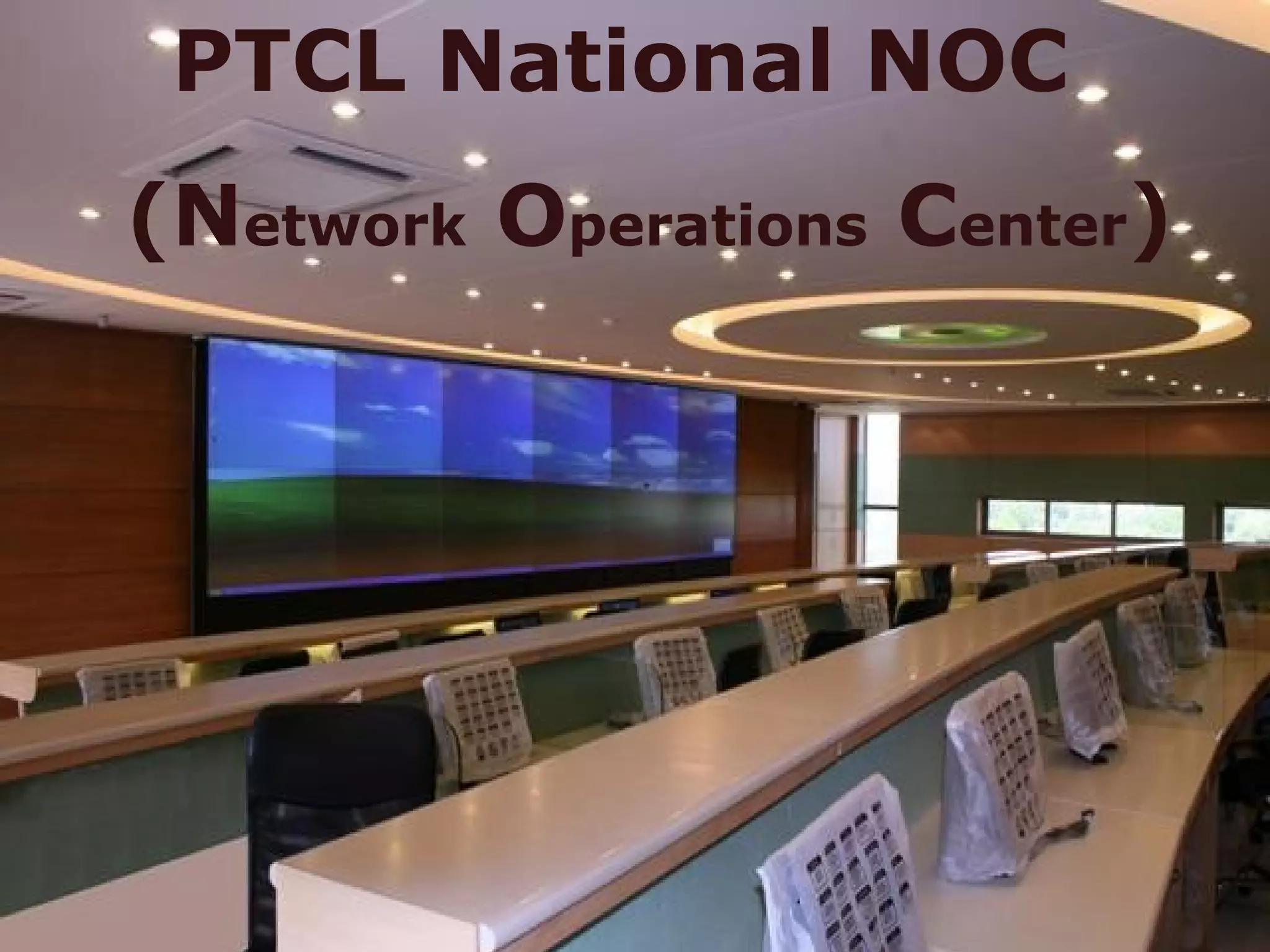
PTCL National NOC
(Network Operations Center)

2
Why NOC?
What is NOC?
•It is Network Operations Center
• It is an apex in TMN hierarchy to view, monitor and control
networks.
•It is a tool for managing a network of networks.

3
Why NOC?
What is NOC ?
•NOC rely on a set of Operations Support Systems (OSS) and
operations procedures to manage the networks.
•The OSS collects fault and performance data from the Element
Management Systems and Network Elements and present them in
standardized manner to enable the NOC staff to monitor and manage
the networks.

4
Why NOC?
What is NOC ?
•
NOC is a cross-domain organization managing network across several
business and operations units at PTCL. It manages networks provided
by multiple vendors, multiple network technologies in multiple
geographic locations. Using a set of standardized processes and tools,
regardless of where in the PTCL infrastructure the problem lies, the
NOC aims to
•
•
•
•

5

provide up-to-date status of services.
identify and minimize impacts to customers due to service outages.
manage resolution of outages in a timely manner
be a focal point for coordination during major networks related
events
Centralized NOC?





6

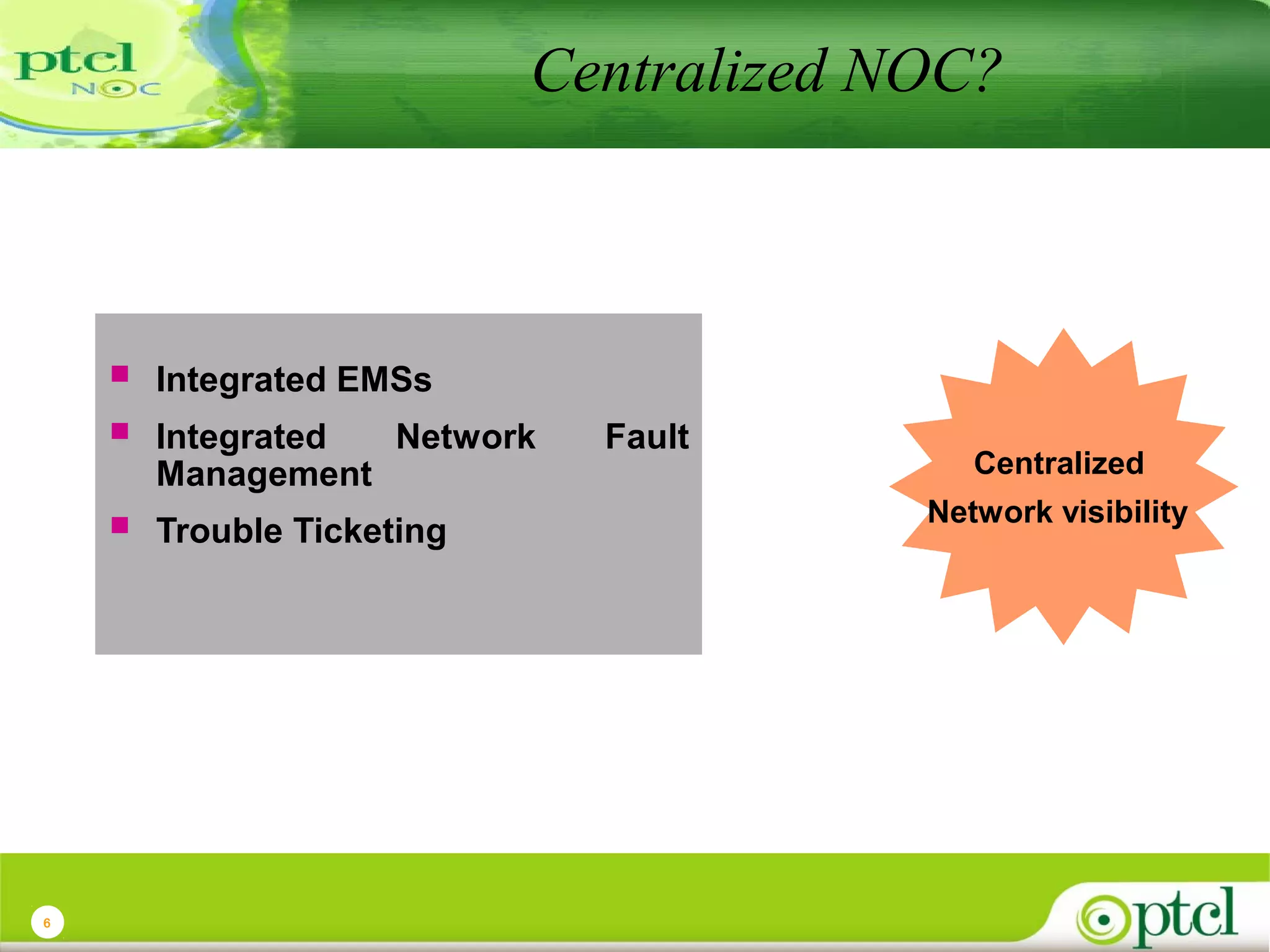
Integrated EMSs

Trouble Ticketing

Integrated
Network
Management

Fault

Centralized
Network visibility
Why NOC?
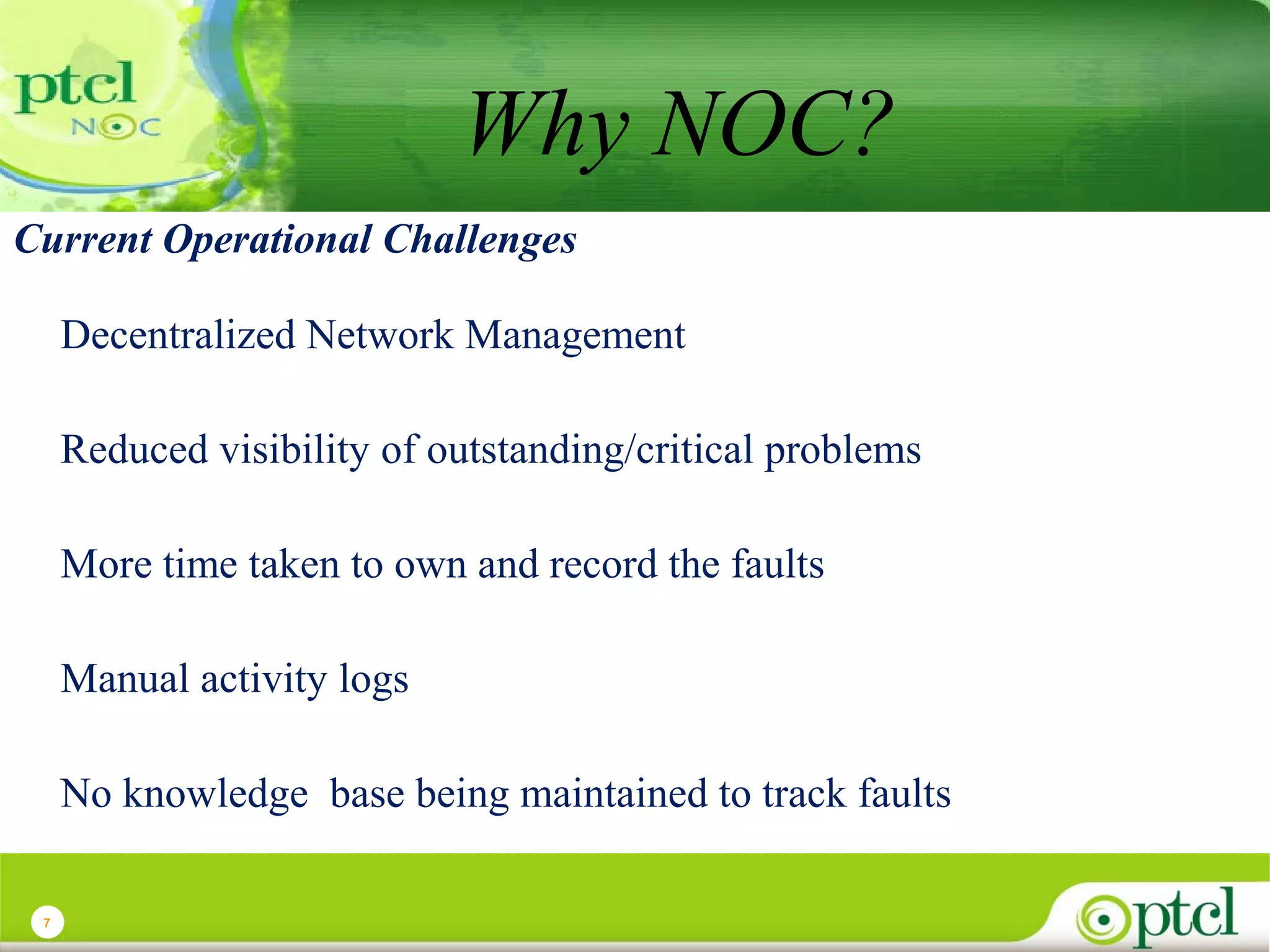
Current Operational Challenges
Decentralized Network Management
Reduced visibility of outstanding/critical problems
More time taken to own and record the faults
Manual activity logs
No knowledge base being maintained to track faults
7
Why NOC?
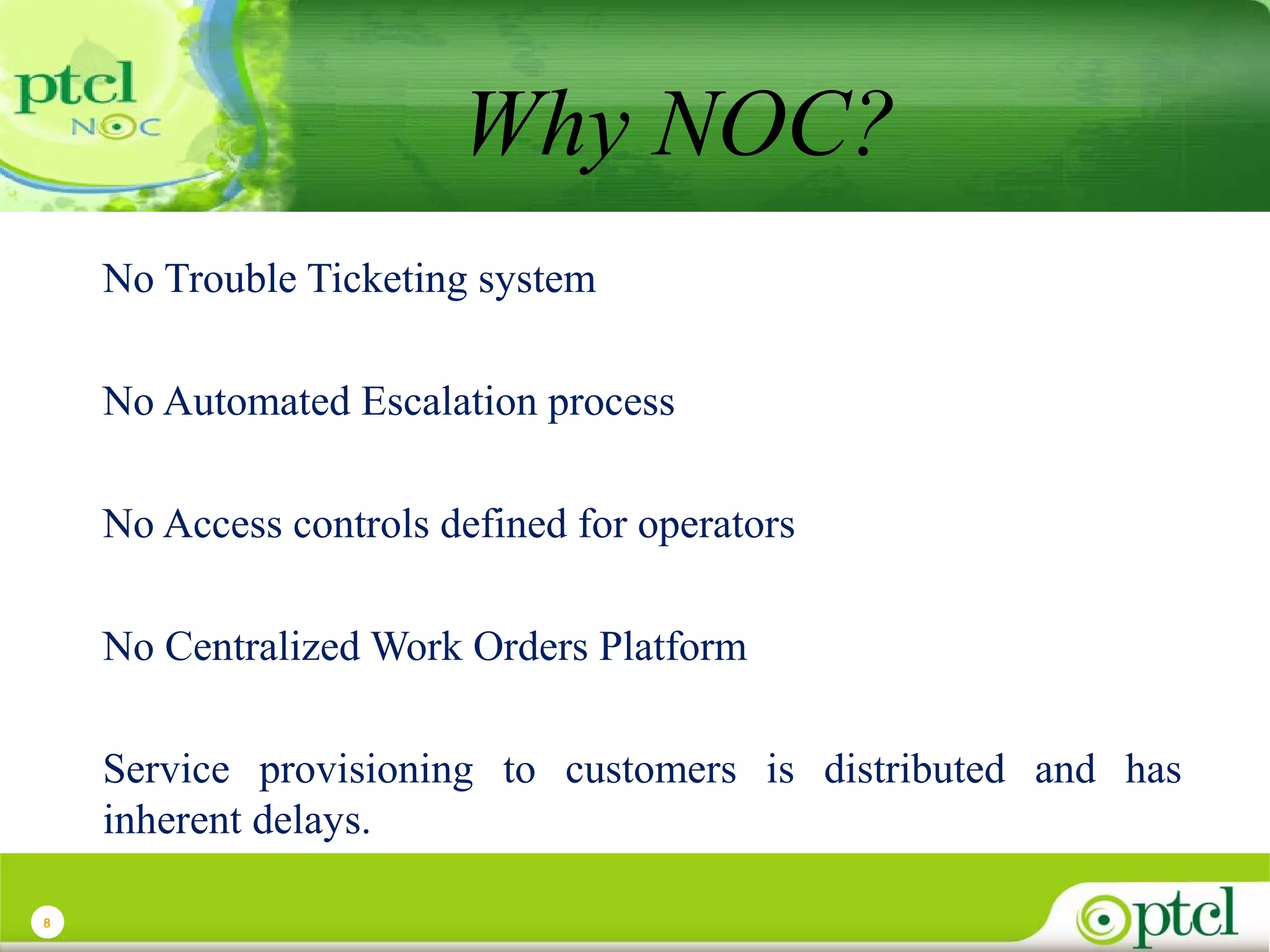
No Trouble Ticketing system
No Automated Escalation process
No Access controls defined for operators
No Centralized Work Orders Platform
Service provisioning to customers is distributed and has
inherent delays.
8
Why NOC?
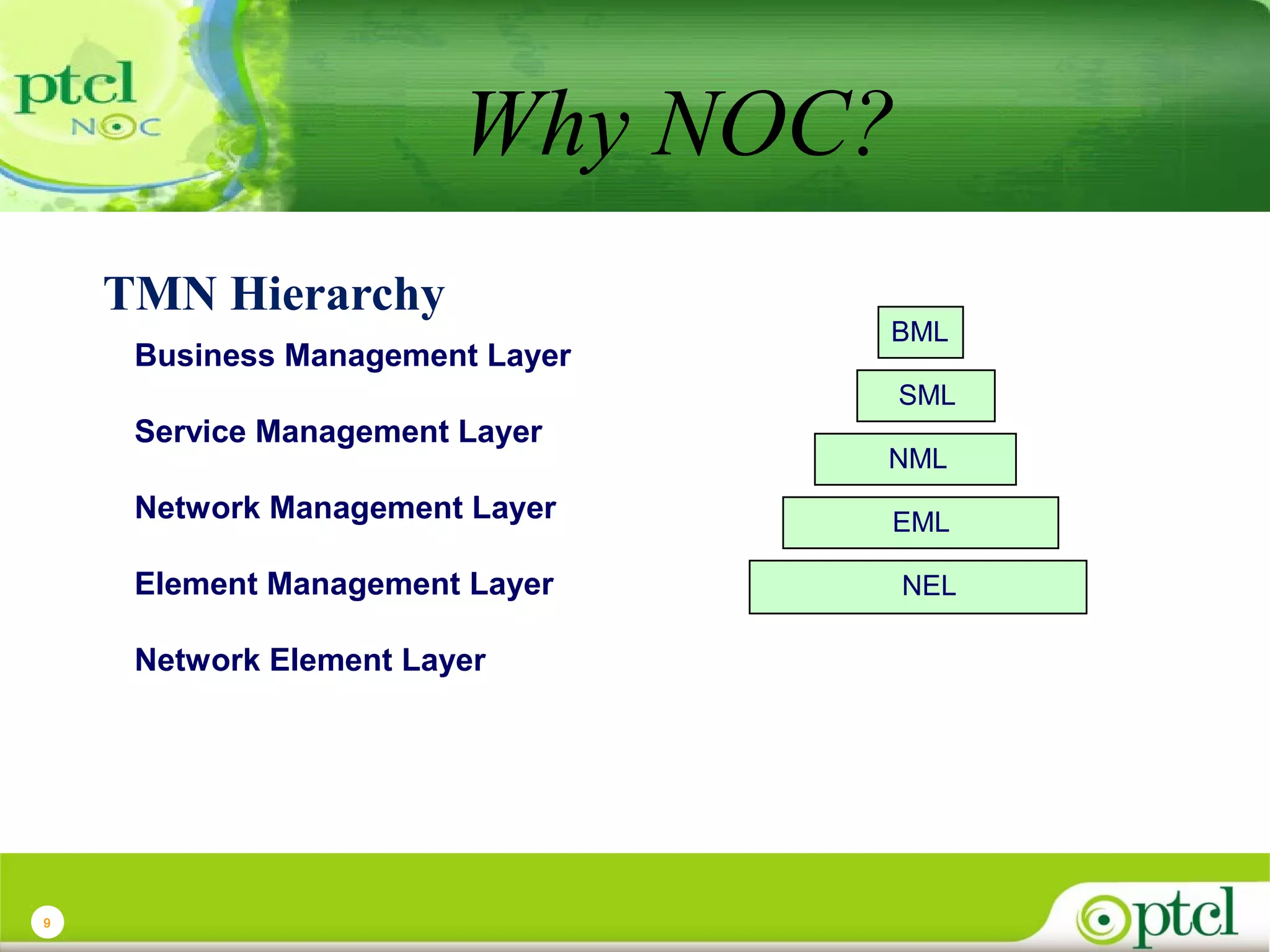
TMN Hierarchy
Business Management Layer

BML
SML

Service Management Layer

NML

Network Management Layer

EML

Element Management Layer

NEL

Network Element Layer

9
Why NOC?
NOC provides FCAPS functions for networks
– Fault management
– Configuration management
– Account management
– Performance management
– Security management

10
How NOC will help PTCL in
achieving its targets?
NOC will proactively identify and get resolved the faults in
Network through
Real time Network Monitoring
Network status visibility
Increase network availability
Enhanced QOS visibility
Centralized Reporting
Uniform performance statistics
Optimization of operational and maintenance cost
Centralized level of O&M/OSS management
Standardized Operational Processes

11
PTCL NOC scope- at Present
•
•

Performance management

•

12

Alarm monitoring & management

Trouble Ticketing (Incident management)
Networks – Some basic concepts
Network Element (NE)?
Element Manager System (EMS)?
Network Management Systems (NMS)?
A cluster of NMSs
Examples in Transmission and Switching Domains

13
Alarms and their classifications
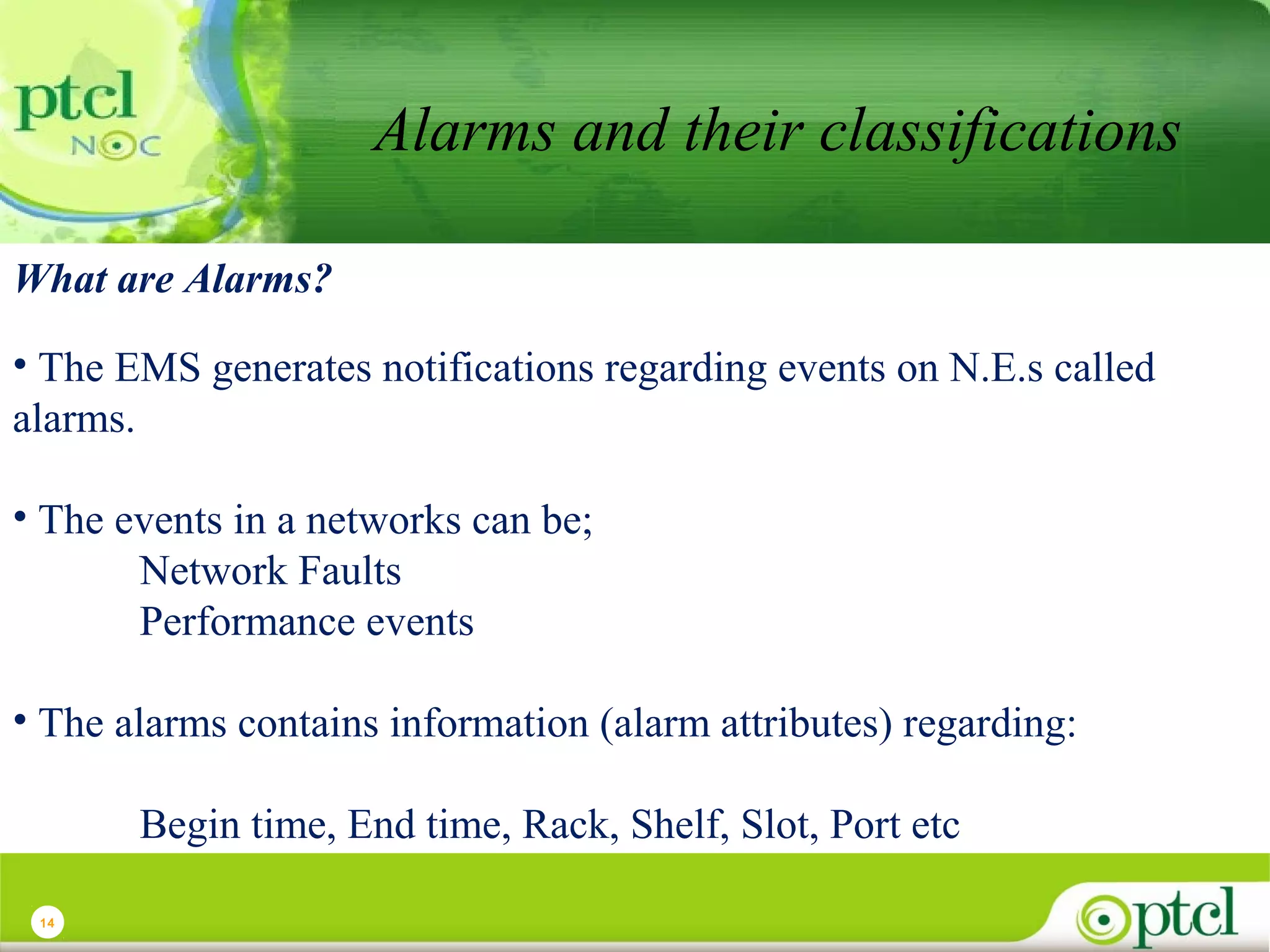
What are Alarms?
• The EMS generates notifications regarding events on N.E.s called
alarms.
• The events in a networks can be;
Network Faults
Performance events
• The alarms contains information (alarm attributes) regarding:
Begin time, End time, Rack, Shelf, Slot, Port etc
14
Alarms and their classifications
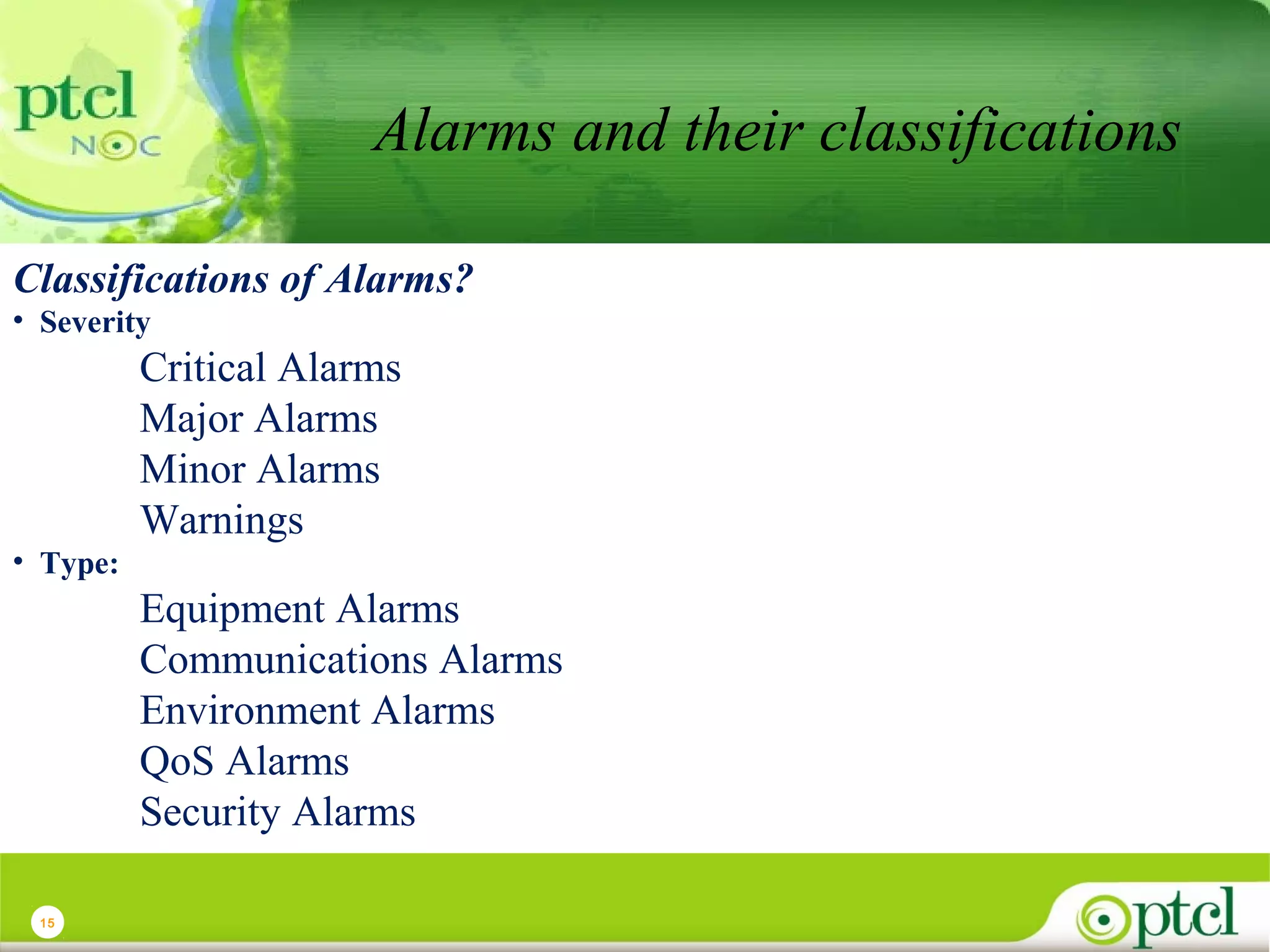
Classifications of Alarms?
• Severity

Critical Alarms
Major Alarms
Minor Alarms
Warnings
• Type:

Equipment Alarms
Communications Alarms
Environment Alarms
QoS Alarms
Security Alarms
15
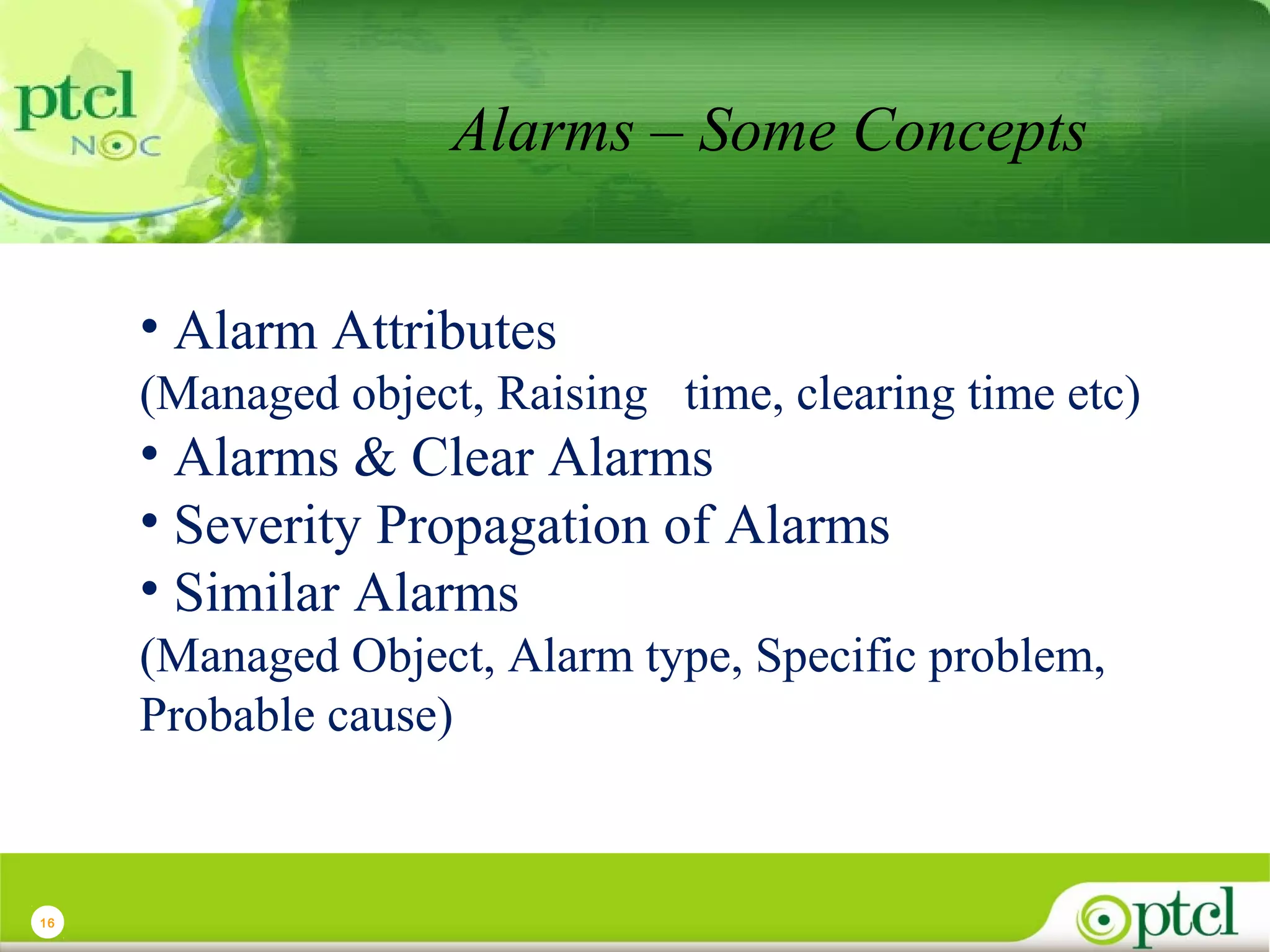
Alarms – Some Concepts
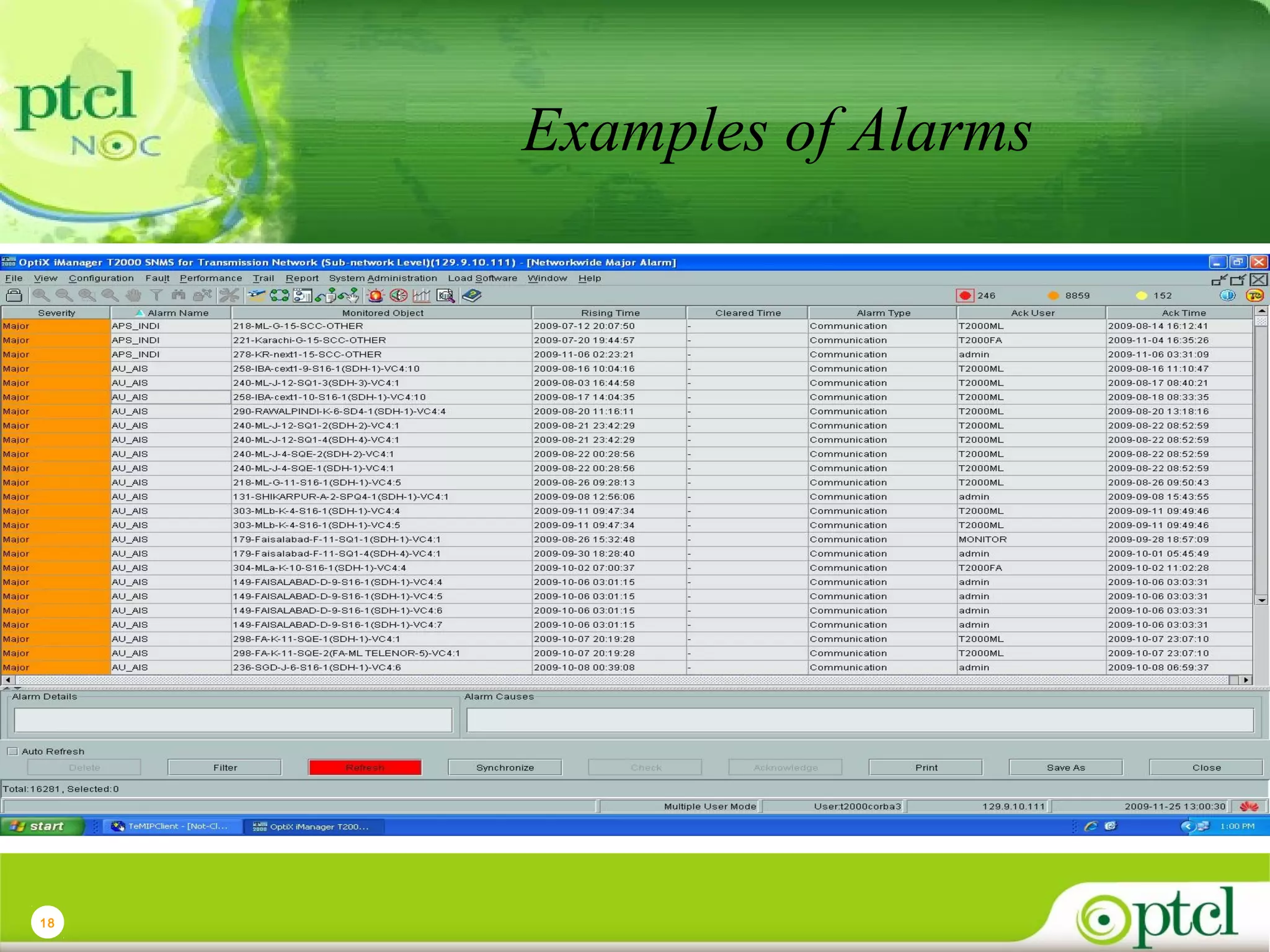
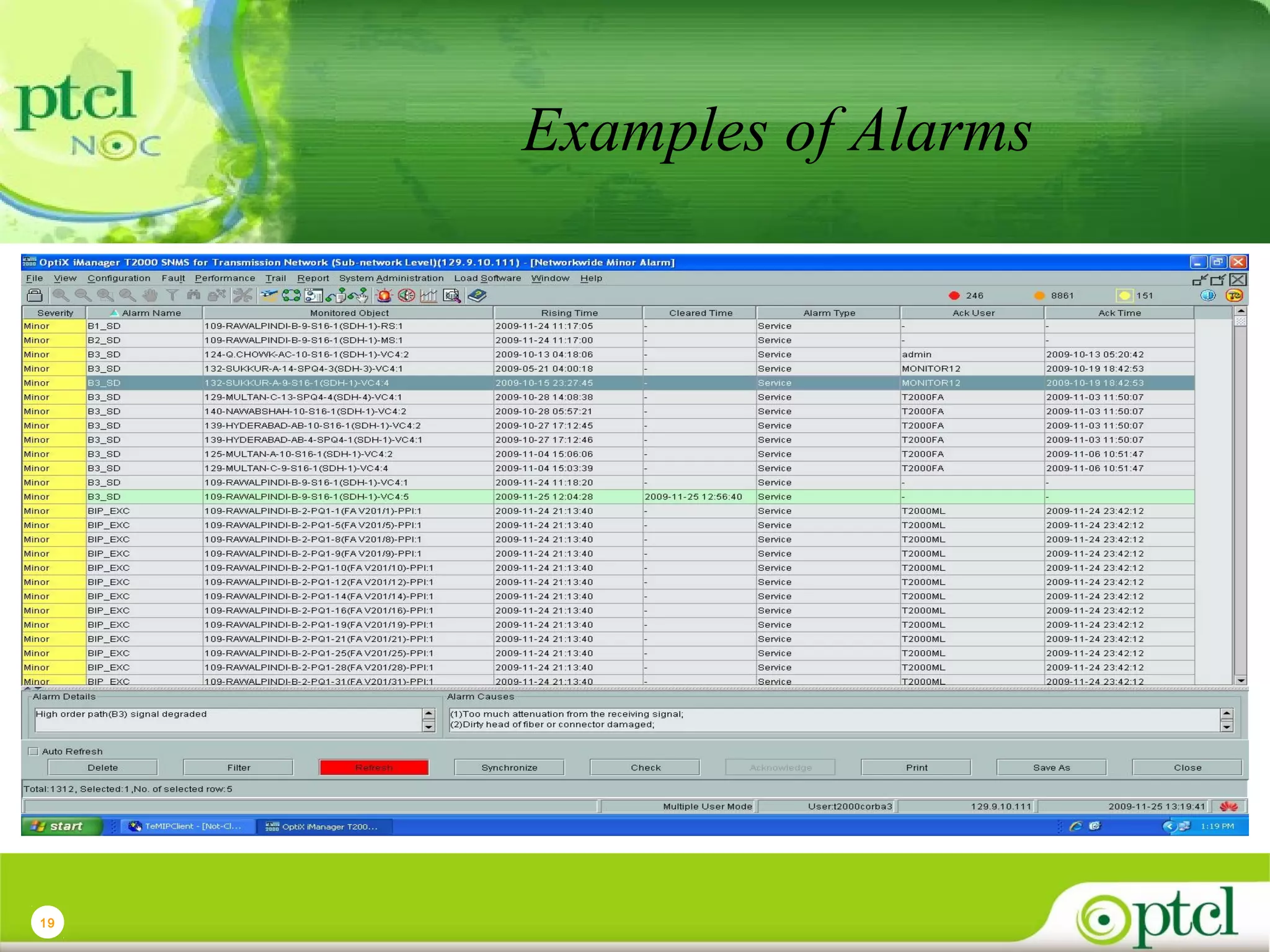
• Alarm Attributes
(Managed object, Raising time, clearing time etc)

• Alarms & Clear Alarms
• Severity Propagation of Alarms
• Similar Alarms
(Managed Object, Alarm type, Specific problem,
Probable cause)

16
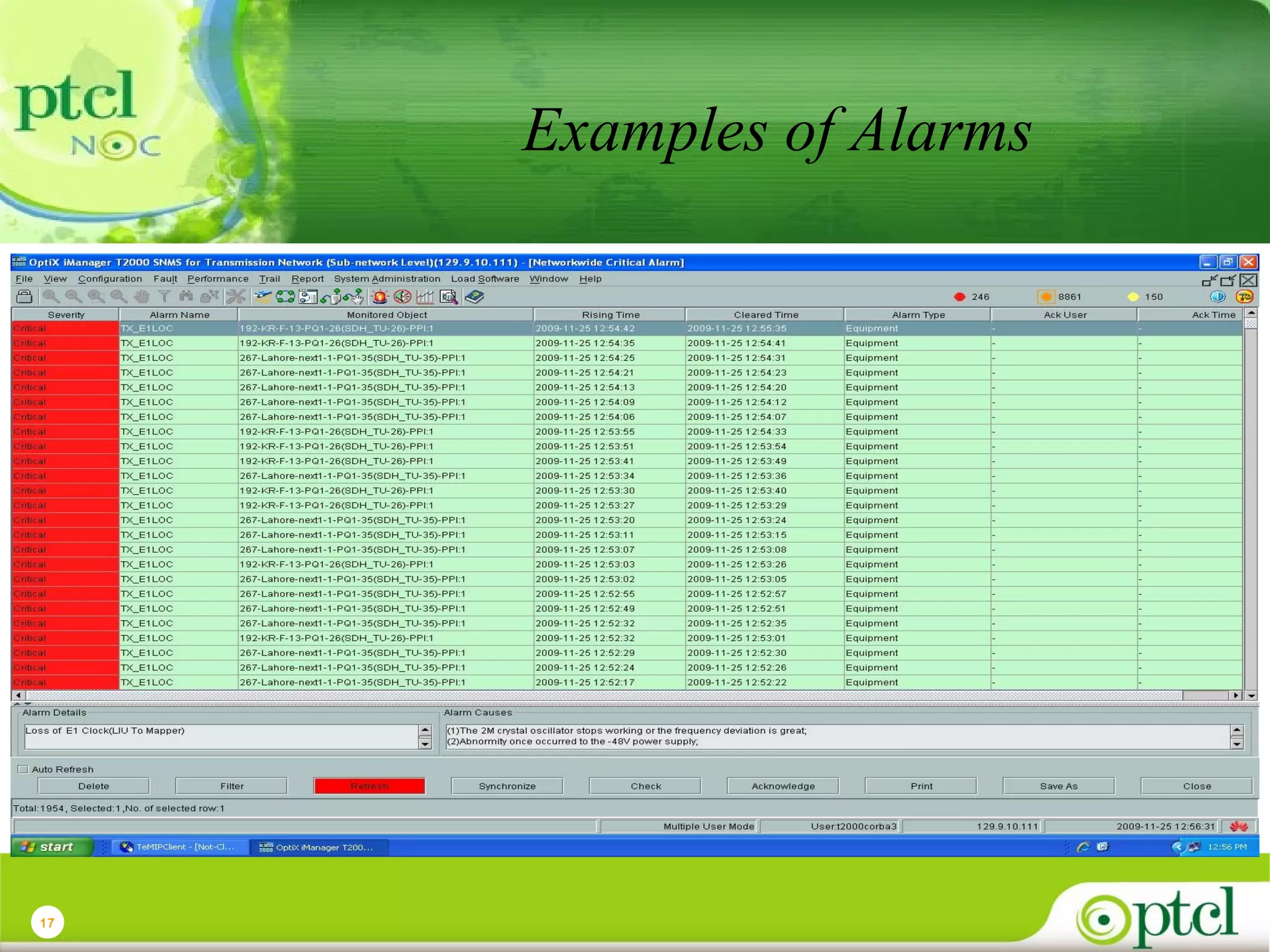
Examples of Alarms

17
Examples of Alarms

18
Examples of Alarms

19
Alarm collection Processes
The North Bound Interface (NBI)
– This is an interface on EMS with standardized set of protocols for information
interchange with NMS.

The commonly used NBI Protocols
– CORBA
– ASCII
– SNMP
– Q3

20
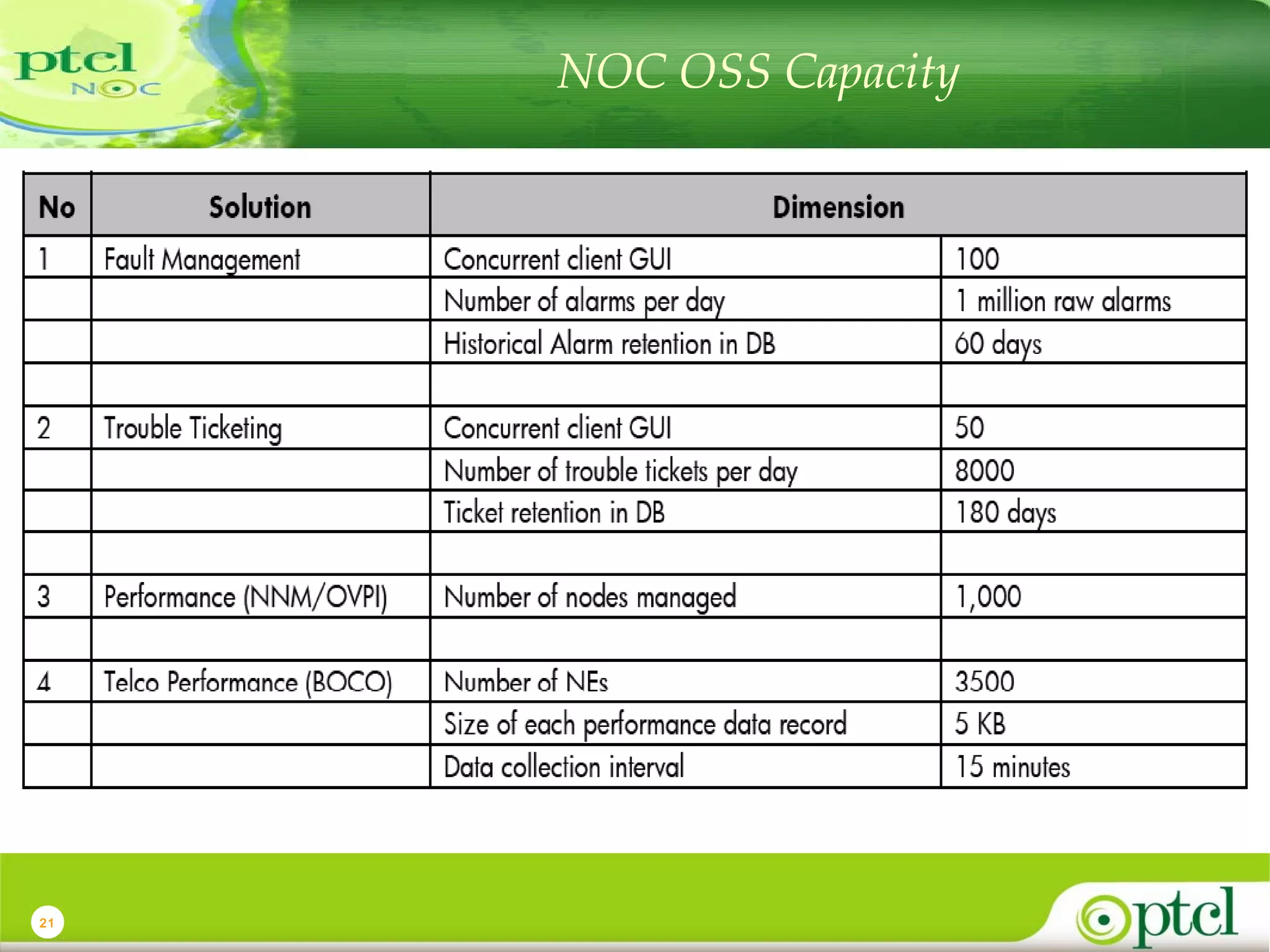
NOC OSS Capacity

21
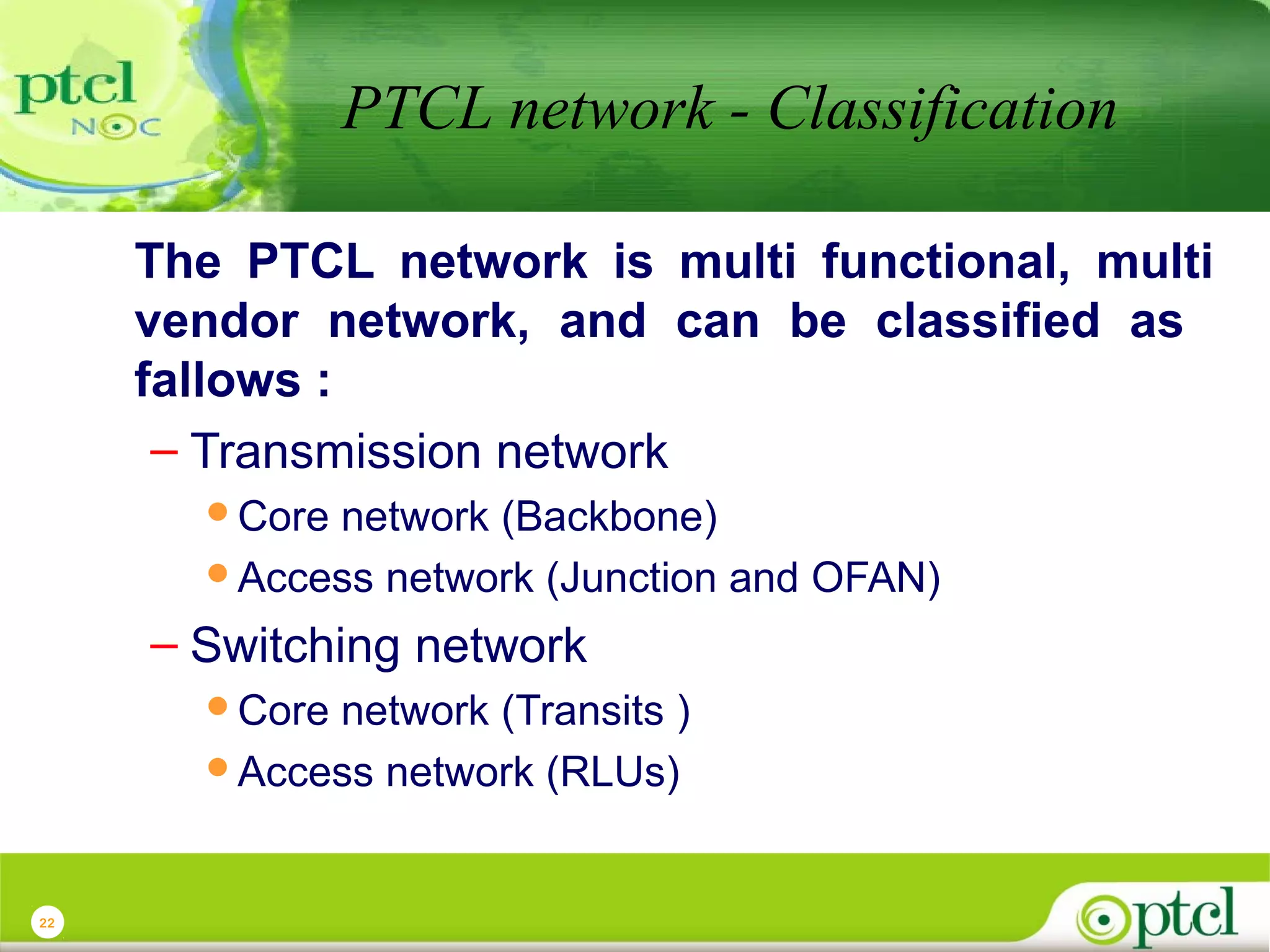
PTCL network - Classification
The PTCL network is multi functional, multi
vendor network, and can be classified as
fallows :
– Transmission network
Core

network (Backbone)
Access network (Junction and OFAN)

– Switching network
Core

network (Transits )
Access network (RLUs)

22
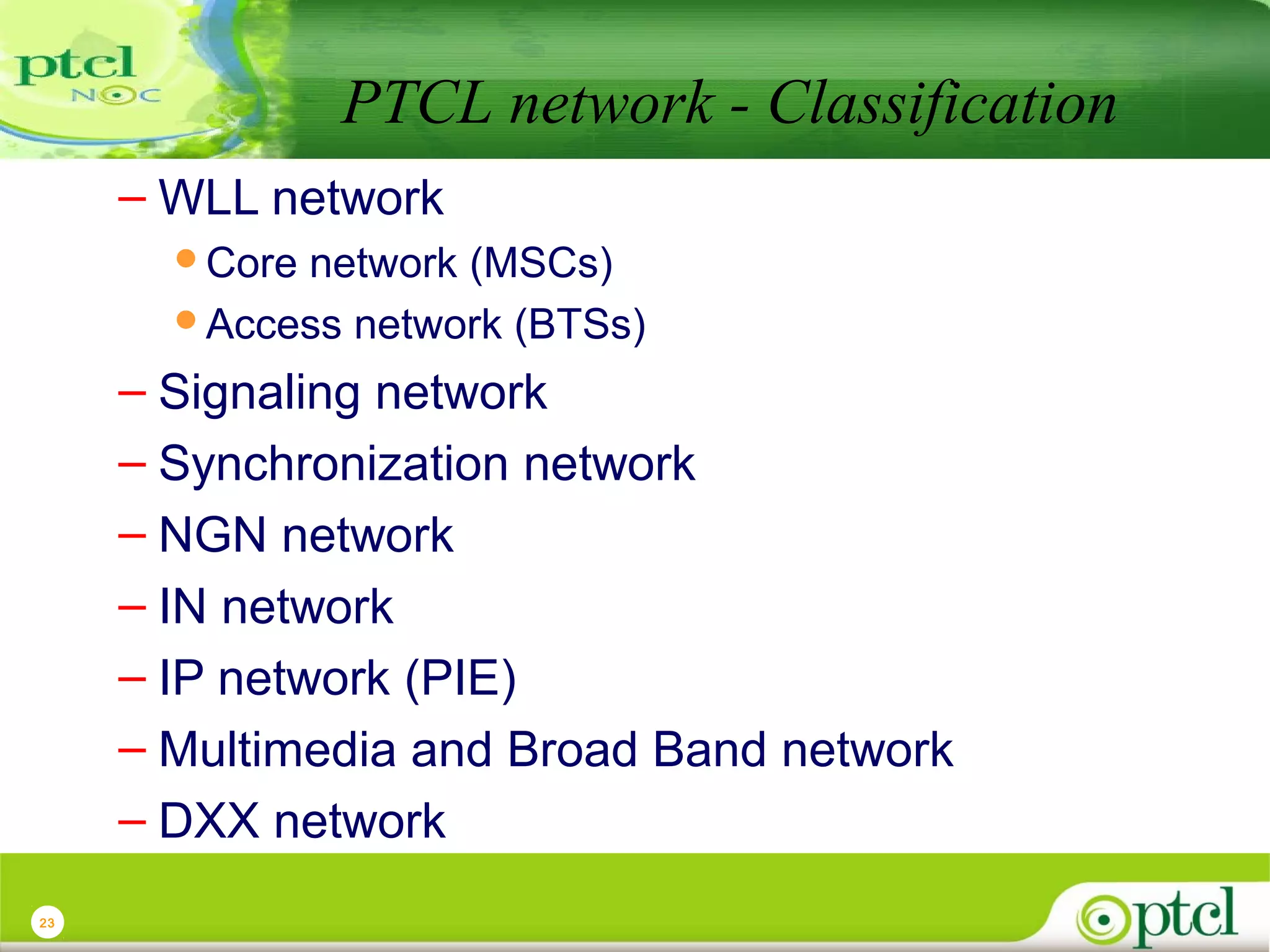
PTCL network - Classification
– WLL network
Core

network (MSCs)
Access network (BTSs)

– Signaling network
– Synchronization network
– NGN network
– IN network
– IP network (PIE)
– Multimedia and Broad Band network
– DXX network
23
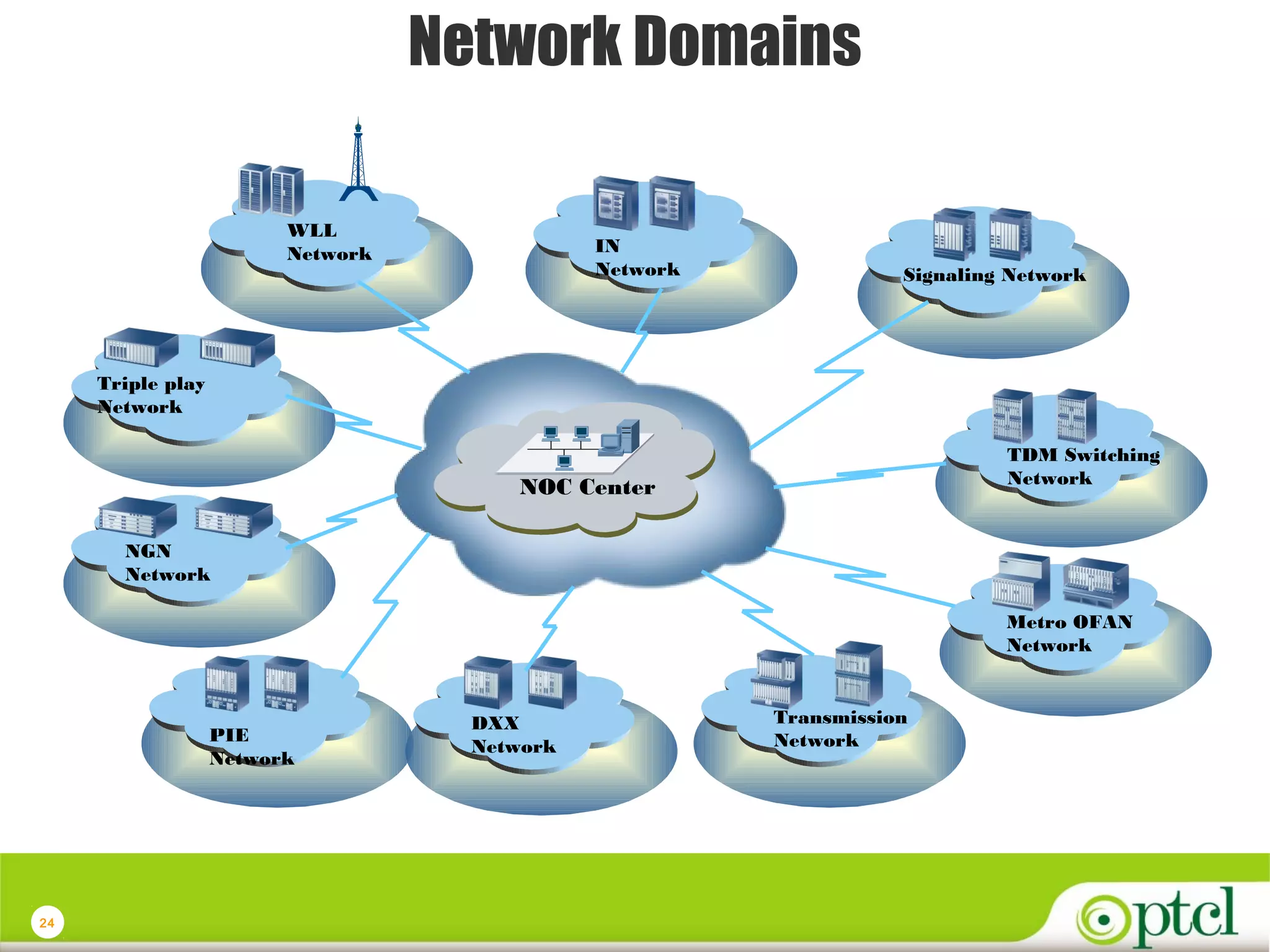
Network Domains
WLL
Network

IN
Network

Signaling Network

Triple play
Network
TDM Switching
Network

NOC Center
NGN
Network

Metro OFAN
Network

PIE
Network

24

DXX
Network

Transmission
Network
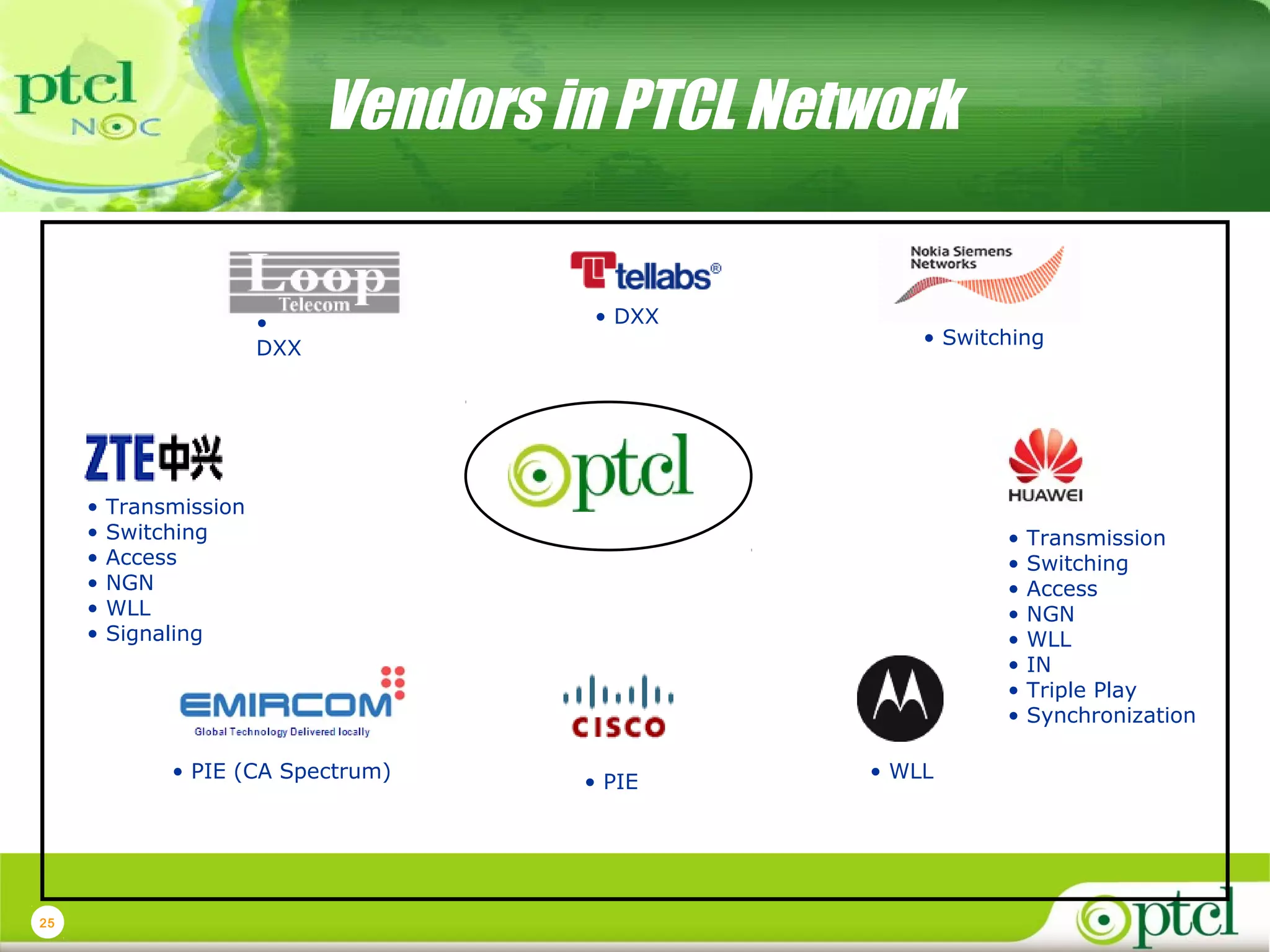
Vendors in PTCL Network

•
DXX

•
•
•
•
•
•

• Switching

Transmission
Switching
Access
NGN
WLL
Signaling

• PIE (CA Spectrum)

25

• DXX

•
•
•
•
•
•
•
•
• PIE

• WLL

Transmission
Switching
Access
NGN
WLL
IN
Triple Play
Synchronization
Contract details

The contract for the NOC project (PUR.6-12/2007/1494) was
signed on the 14th of December 2007
The contract was signed on Turnkey basis with M/S Huawei
Huawei has subcontracted with HP for the Provisioning of
NOC/OSS solution (software/application)

26
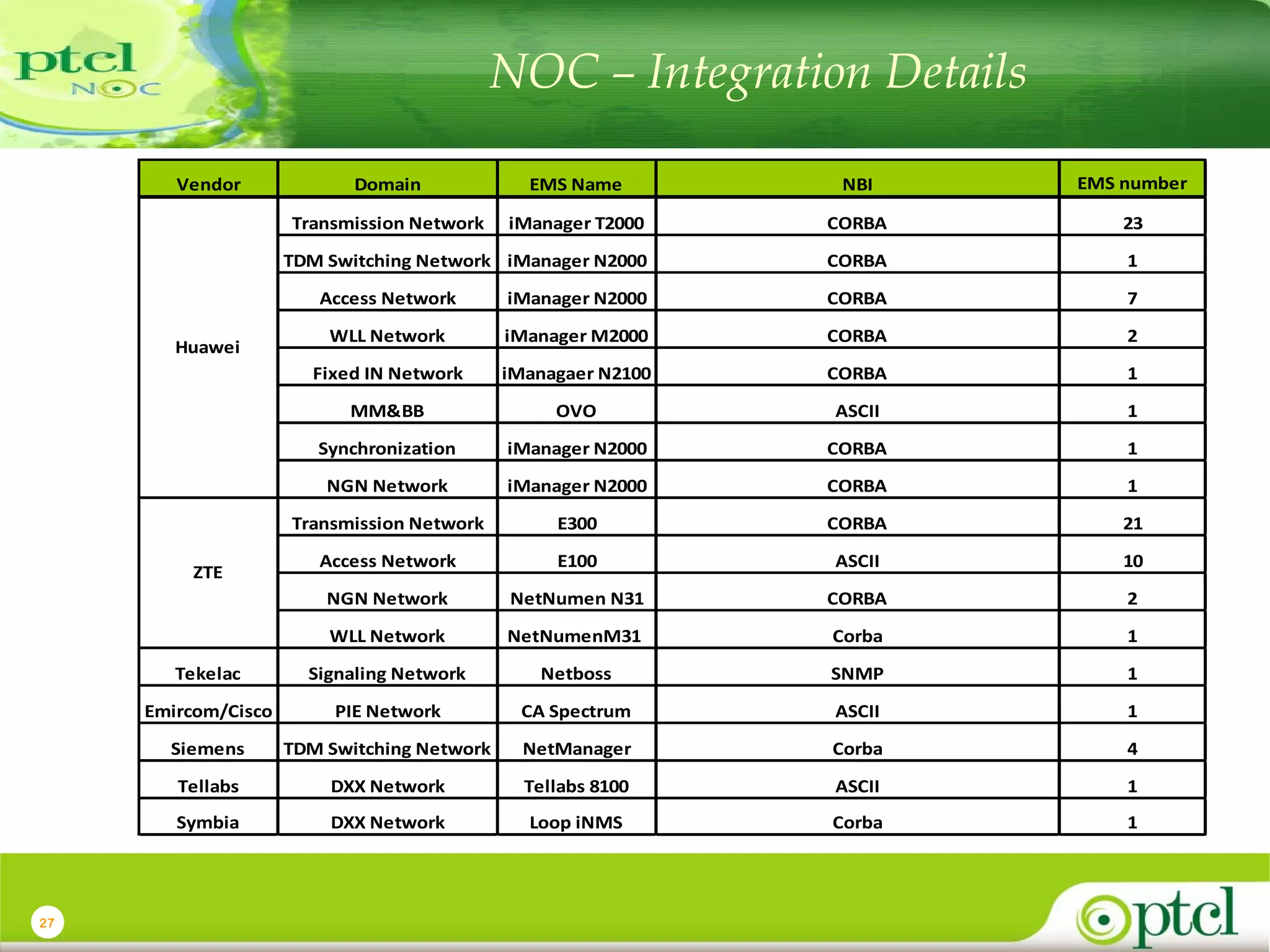
NOC – Integration Details
Domain

EMS Name

NBI

EMS number

Transmission Network

iManager T2000

CORBA

23

TDM Switching Network iManager N2000

Vendor

CORBA

1

Access Network

iManager N2000

CORBA

7

WLL Network

iManager M2000

CORBA

2

Fixed IN Network

iManagaer N2100

CORBA

1

MM&BB

OVO

ASCII

1

Synchronization

iManager N2000

CORBA

1

NGN Network

iManager N2000

CORBA

1

Transmission Network

E300

CORBA

21

Access Network

E100

ASCII

10

NGN Network

NetNumen N31

CORBA

2

WLL Network

NetNumenM31

Corba

1

Tekelac

Signaling Network

Netboss

SNMP

1

Emircom/Cisco

PIE Network

CA Spectrum

ASCII

1

Siemens

TDM Switching Network

NetManager

Corba

4

Tellabs

DXX Network

Tellabs 8100

ASCII

1

Symbia

DXX Network

Loop iNMS

Corba

1

Huawei

ZTE

27
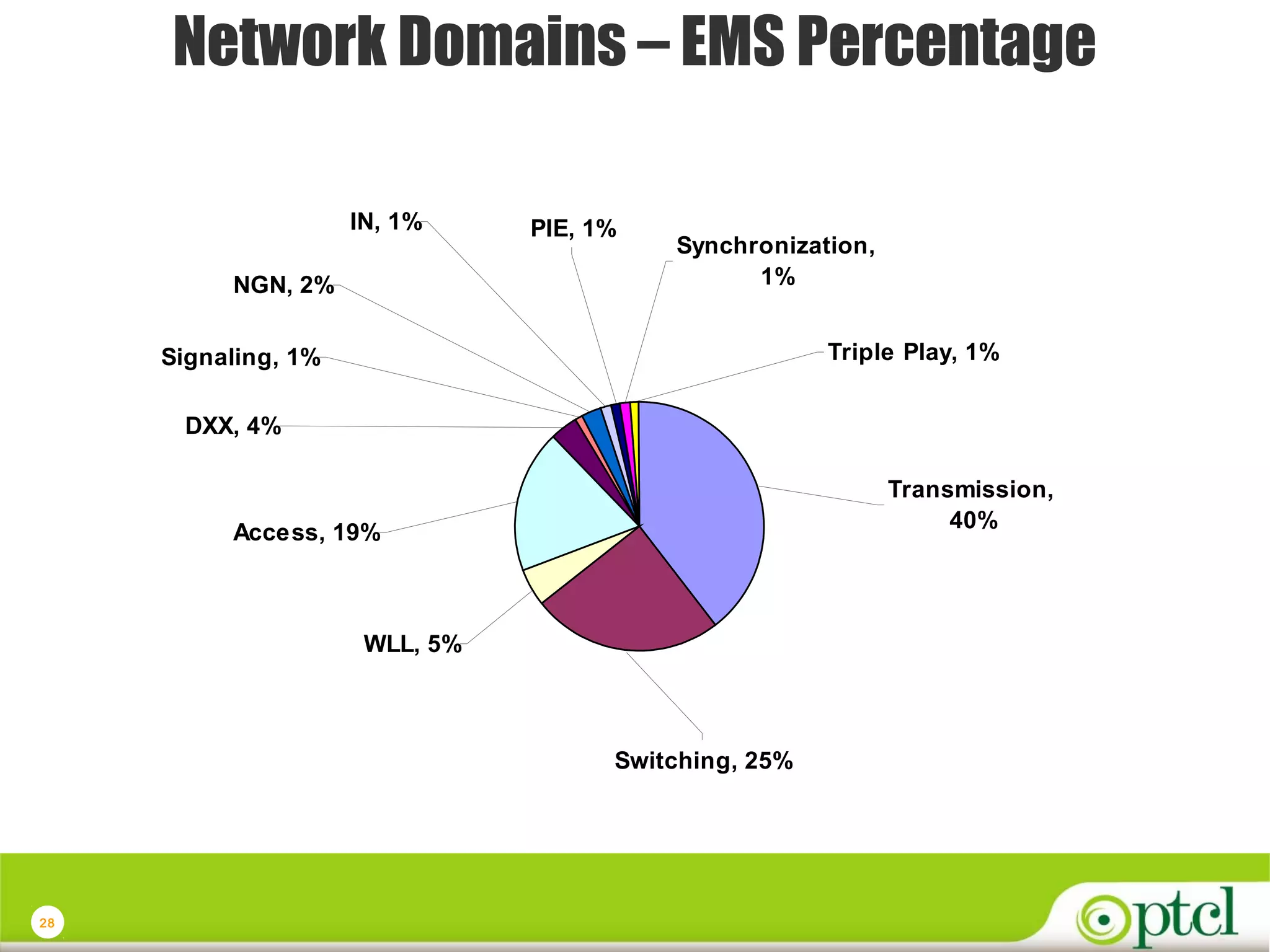
Network Domains – EMS Percentage
IN, 1%
NGN, 2%

PIE, 1%

Synchronization,
1%
Triple Play, 1%

Signaling, 1%
DXX, 4%

Transmission,
40%

Access, 19%

WLL, 5%

Switching, 25%

28

ptcl noc Introductry concepts -_lecture___1

  • 1.
  • 2.
    PTCL National NOC (NetworkOperations Center) 2
  • 3.
    Why NOC? What isNOC? •It is Network Operations Center • It is an apex in TMN hierarchy to view, monitor and control networks. •It is a tool for managing a network of networks. 3
  • 4.
    Why NOC? What isNOC ? •NOC rely on a set of Operations Support Systems (OSS) and operations procedures to manage the networks. •The OSS collects fault and performance data from the Element Management Systems and Network Elements and present them in standardized manner to enable the NOC staff to monitor and manage the networks. 4
  • 5.
    Why NOC? What isNOC ? • NOC is a cross-domain organization managing network across several business and operations units at PTCL. It manages networks provided by multiple vendors, multiple network technologies in multiple geographic locations. Using a set of standardized processes and tools, regardless of where in the PTCL infrastructure the problem lies, the NOC aims to • • • • 5 provide up-to-date status of services. identify and minimize impacts to customers due to service outages. manage resolution of outages in a timely manner be a focal point for coordination during major networks related events
  • 6.
    Centralized NOC?    6 Integrated EMSs TroubleTicketing Integrated Network Management Fault Centralized Network visibility
  • 7.
    Why NOC? Current OperationalChallenges Decentralized Network Management Reduced visibility of outstanding/critical problems More time taken to own and record the faults Manual activity logs No knowledge base being maintained to track faults 7
  • 8.
    Why NOC? No TroubleTicketing system No Automated Escalation process No Access controls defined for operators No Centralized Work Orders Platform Service provisioning to customers is distributed and has inherent delays. 8
  • 9.
    Why NOC? TMN Hierarchy BusinessManagement Layer BML SML Service Management Layer NML Network Management Layer EML Element Management Layer NEL Network Element Layer 9
  • 10.
    Why NOC? NOC providesFCAPS functions for networks – Fault management – Configuration management – Account management – Performance management – Security management 10
  • 11.
    How NOC willhelp PTCL in achieving its targets? NOC will proactively identify and get resolved the faults in Network through Real time Network Monitoring Network status visibility Increase network availability Enhanced QOS visibility Centralized Reporting Uniform performance statistics Optimization of operational and maintenance cost Centralized level of O&M/OSS management Standardized Operational Processes 11
  • 12.
    PTCL NOC scope-at Present • • Performance management • 12 Alarm monitoring & management Trouble Ticketing (Incident management)
  • 13.
    Networks – Somebasic concepts Network Element (NE)? Element Manager System (EMS)? Network Management Systems (NMS)? A cluster of NMSs Examples in Transmission and Switching Domains 13
  • 14.
    Alarms and theirclassifications What are Alarms? • The EMS generates notifications regarding events on N.E.s called alarms. • The events in a networks can be; Network Faults Performance events • The alarms contains information (alarm attributes) regarding: Begin time, End time, Rack, Shelf, Slot, Port etc 14
  • 15.
    Alarms and theirclassifications Classifications of Alarms? • Severity Critical Alarms Major Alarms Minor Alarms Warnings • Type: Equipment Alarms Communications Alarms Environment Alarms QoS Alarms Security Alarms 15
  • 16.
    Alarms – SomeConcepts • Alarm Attributes (Managed object, Raising time, clearing time etc) • Alarms & Clear Alarms • Severity Propagation of Alarms • Similar Alarms (Managed Object, Alarm type, Specific problem, Probable cause) 16
  • 17.
  • 18.
  • 19.
  • 20.
    Alarm collection Processes TheNorth Bound Interface (NBI) – This is an interface on EMS with standardized set of protocols for information interchange with NMS. The commonly used NBI Protocols – CORBA – ASCII – SNMP – Q3 20
  • 21.
  • 22.
    PTCL network -Classification The PTCL network is multi functional, multi vendor network, and can be classified as fallows : – Transmission network Core network (Backbone) Access network (Junction and OFAN) – Switching network Core network (Transits ) Access network (RLUs) 22
  • 23.
    PTCL network -Classification – WLL network Core network (MSCs) Access network (BTSs) – Signaling network – Synchronization network – NGN network – IN network – IP network (PIE) – Multimedia and Broad Band network – DXX network 23
  • 24.
    Network Domains WLL Network IN Network Signaling Network Tripleplay Network TDM Switching Network NOC Center NGN Network Metro OFAN Network PIE Network 24 DXX Network Transmission Network
  • 25.
    Vendors in PTCLNetwork • DXX • • • • • • • Switching Transmission Switching Access NGN WLL Signaling • PIE (CA Spectrum) 25 • DXX • • • • • • • • • PIE • WLL Transmission Switching Access NGN WLL IN Triple Play Synchronization
  • 26.
    Contract details The contractfor the NOC project (PUR.6-12/2007/1494) was signed on the 14th of December 2007 The contract was signed on Turnkey basis with M/S Huawei Huawei has subcontracted with HP for the Provisioning of NOC/OSS solution (software/application) 26
  • 27.
    NOC – IntegrationDetails Domain EMS Name NBI EMS number Transmission Network iManager T2000 CORBA 23 TDM Switching Network iManager N2000 Vendor CORBA 1 Access Network iManager N2000 CORBA 7 WLL Network iManager M2000 CORBA 2 Fixed IN Network iManagaer N2100 CORBA 1 MM&BB OVO ASCII 1 Synchronization iManager N2000 CORBA 1 NGN Network iManager N2000 CORBA 1 Transmission Network E300 CORBA 21 Access Network E100 ASCII 10 NGN Network NetNumen N31 CORBA 2 WLL Network NetNumenM31 Corba 1 Tekelac Signaling Network Netboss SNMP 1 Emircom/Cisco PIE Network CA Spectrum ASCII 1 Siemens TDM Switching Network NetManager Corba 4 Tellabs DXX Network Tellabs 8100 ASCII 1 Symbia DXX Network Loop iNMS Corba 1 Huawei ZTE 27
  • 28.
    Network Domains –EMS Percentage IN, 1% NGN, 2% PIE, 1% Synchronization, 1% Triple Play, 1% Signaling, 1% DXX, 4% Transmission, 40% Access, 19% WLL, 5% Switching, 25% 28