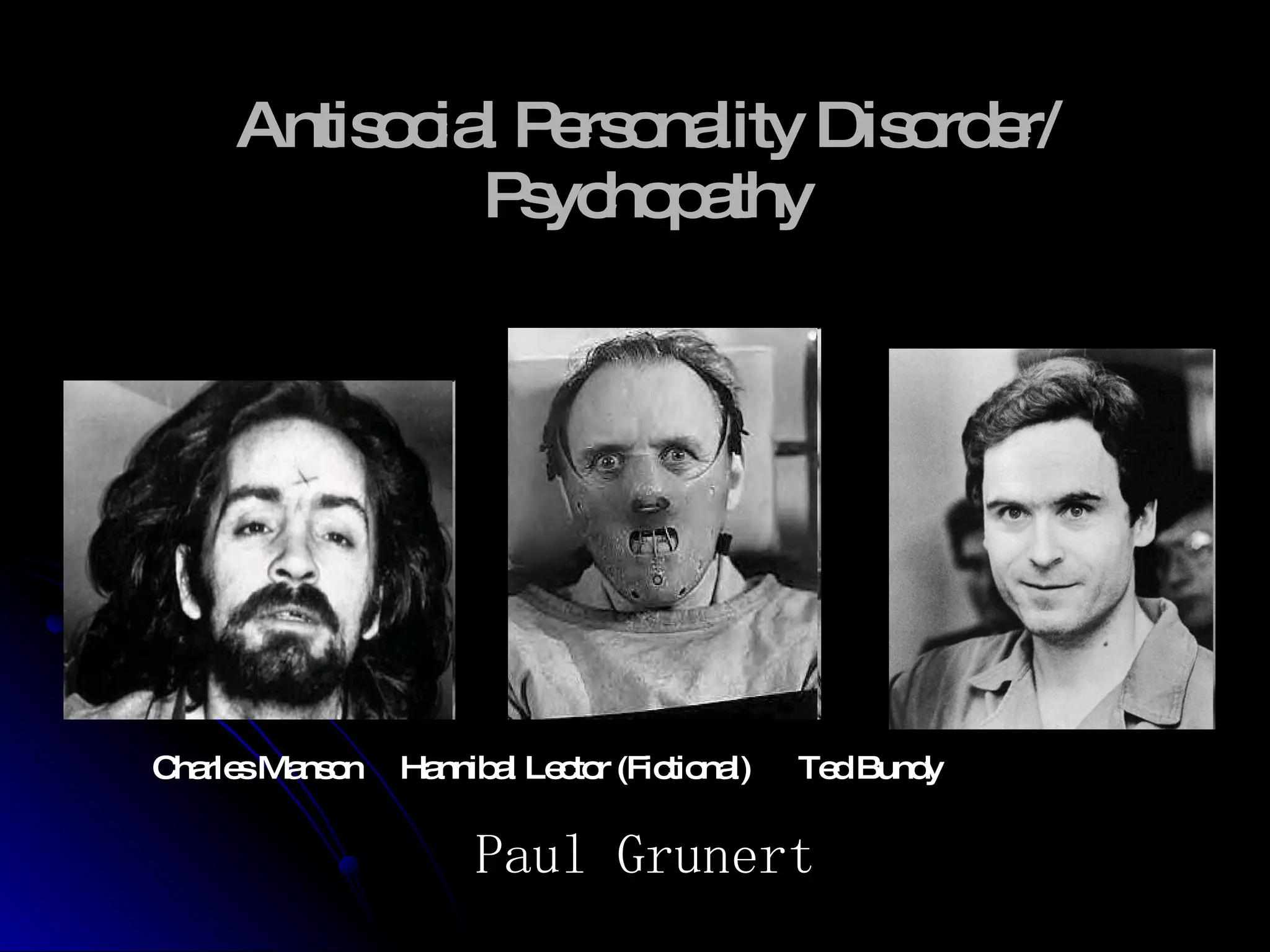
Antisocial Personality Disorder/ Psychopathy Paul Grunert Charles Manson  Hannibal Lector (Fictional)  Ted Bundy
Shared Traits: Prolific Liars No empathy for others Lack of feelings Early signs of violence (such as hurting animals) Desire for exciting and often dangerous situations (such as committing a crime) No long-term goals Inability to keep long-term relationships
Psychopathic Traits: Charming Extremely intelligent Ability to imitate human emotions Arrogance Inability to recognize any responsibility Capability of committing any crime, including murder
Four Subgenres:  Distempered Psychopaths Charismatic Psychopaths Primary Psychopaths Secondary Psychopaths
Distempered Psychopath More prone to act out due to rage More likely to commit acts of sexual violence They receive extreme pleasure and get “high” off doing things with risk
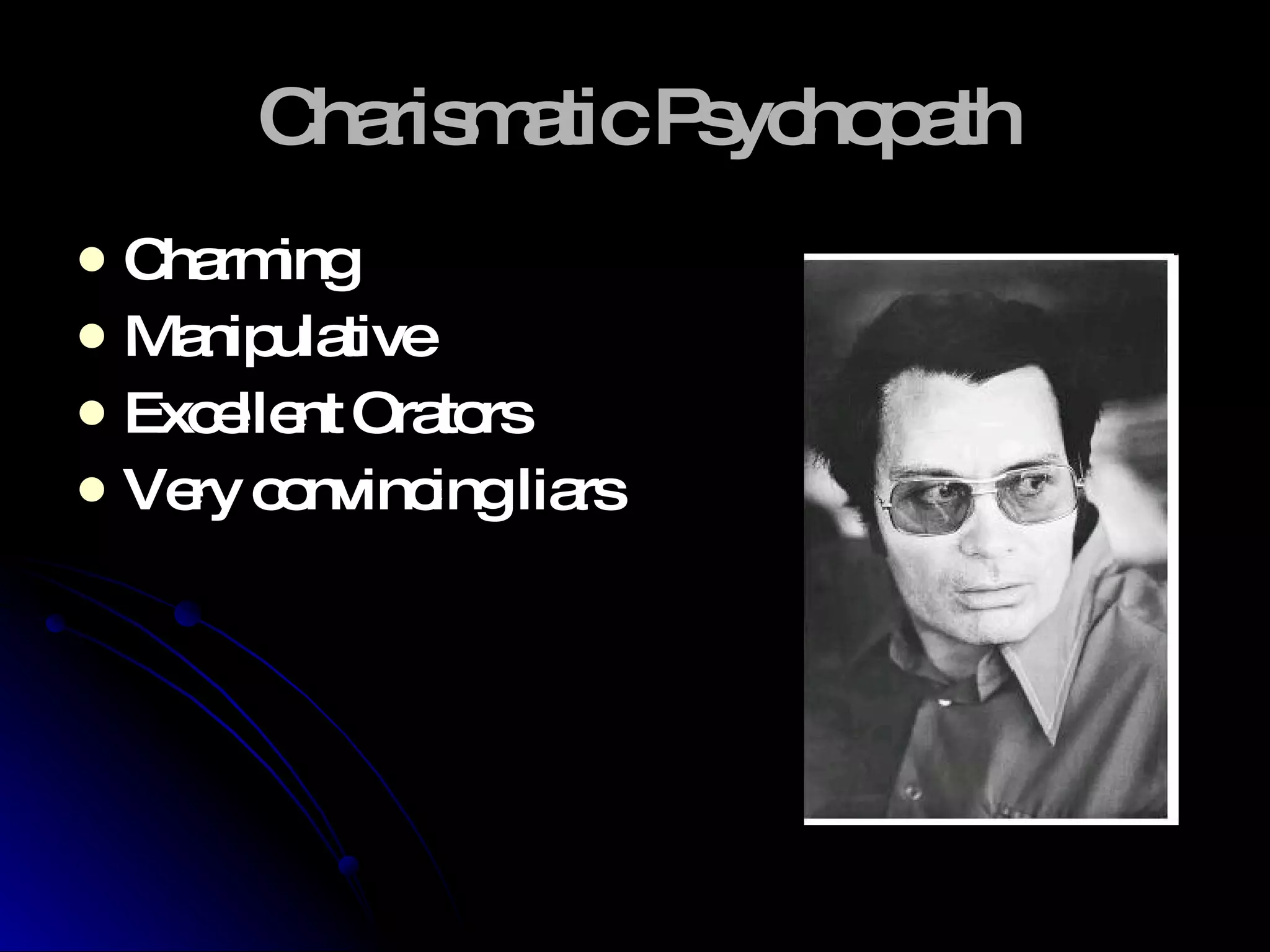
Charismatic Psychopath Charming Manipulative Excellent Orators Very convincing liars
Primary Psychopath Do not respond to punishment, stress, apprehension, or disapproval Words do not have the same effect on the primary psychopath Have ability to control their antisocial impulses due to an underlying motive
Secondary Psychopath Unconventional and adventurous and risk takers Stress reactive They always want to avoid stress and pain, but they fall victim to temptation easily The more an object or goal is “forbidden," the more they want it
Causes Genetic: - A decrease in the activity of the prefrontal cortex - A hyperactive amygdala Environmental - Parental rejection - Physical and sexual abuse - Childhood deprivation
Childhood Symptoms Pleasure in hurting animals Habitual lying No understanding of others’ feelings Early sexual behavior Disregard for rules
Other Disorders Linked to Psychopathy Childhood Bipolar Disorder Attention Deficit Hyperactive Disorder (ADHD) Conduct Disorder Oppositional Defiant Disorder
Statistics About 2 million people in the US have psychopathy or antisocial personality disorder Everyone in the US is affected by a psychopath About as prevalent as schizophrenia 47% of male prison inmates and 23% of female prison inmates show psychopathic traits 50% of law enforcement personnel who are killed are killed by psychopaths
Therapies Much of therapy does not work, because psychopaths do not believe they need the help, so they refuse to participate in therapy Therapists attempt to ease tension and set short term goals for people with ASPD so that they might get satisfaction easier and decrease their violent tendencies
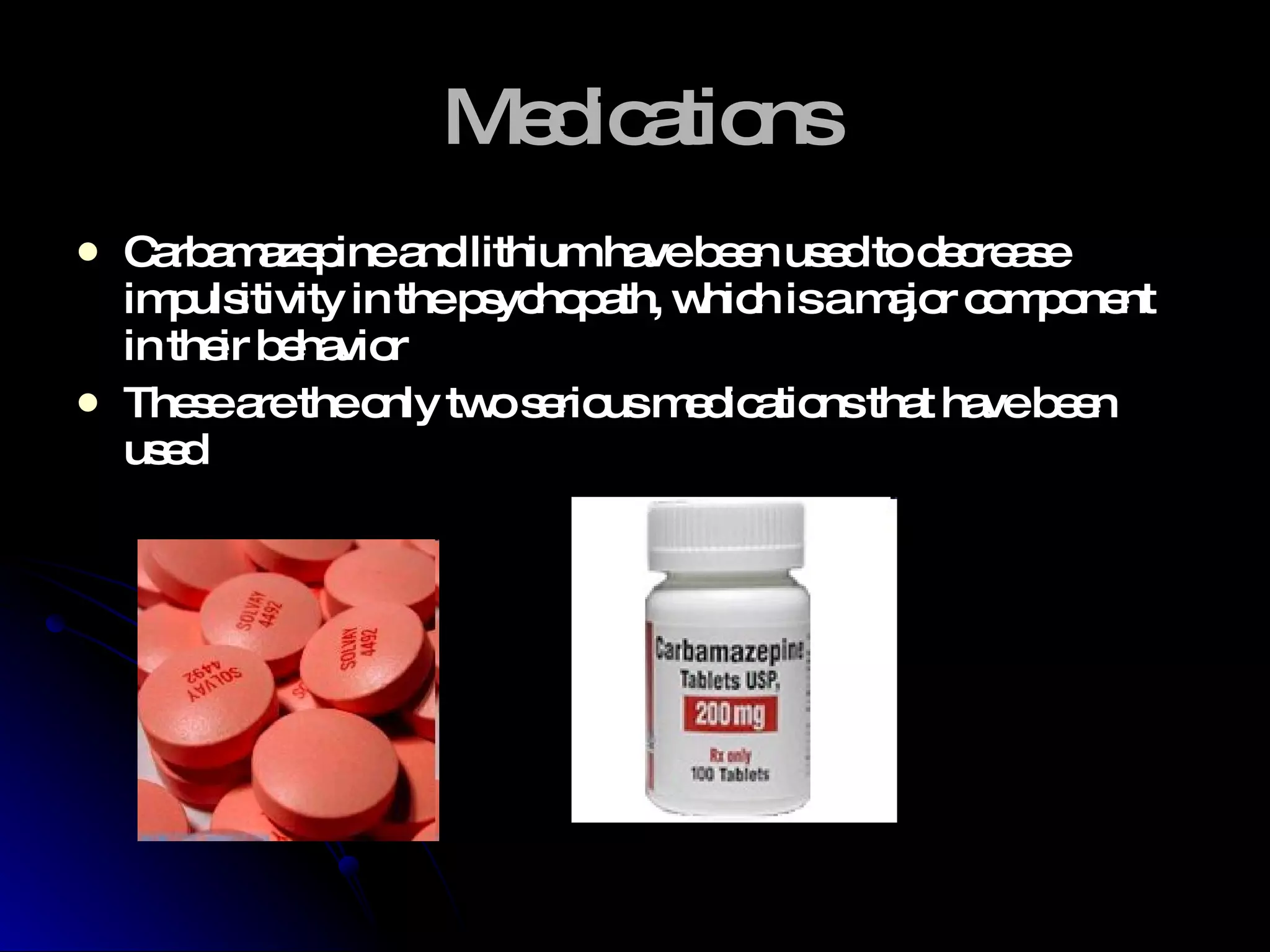
Medications Carbamazepine and lithium have been used to decrease impulsitivity in the psychopath, which is a major component in their behavior These are the only two serious medications that have been used
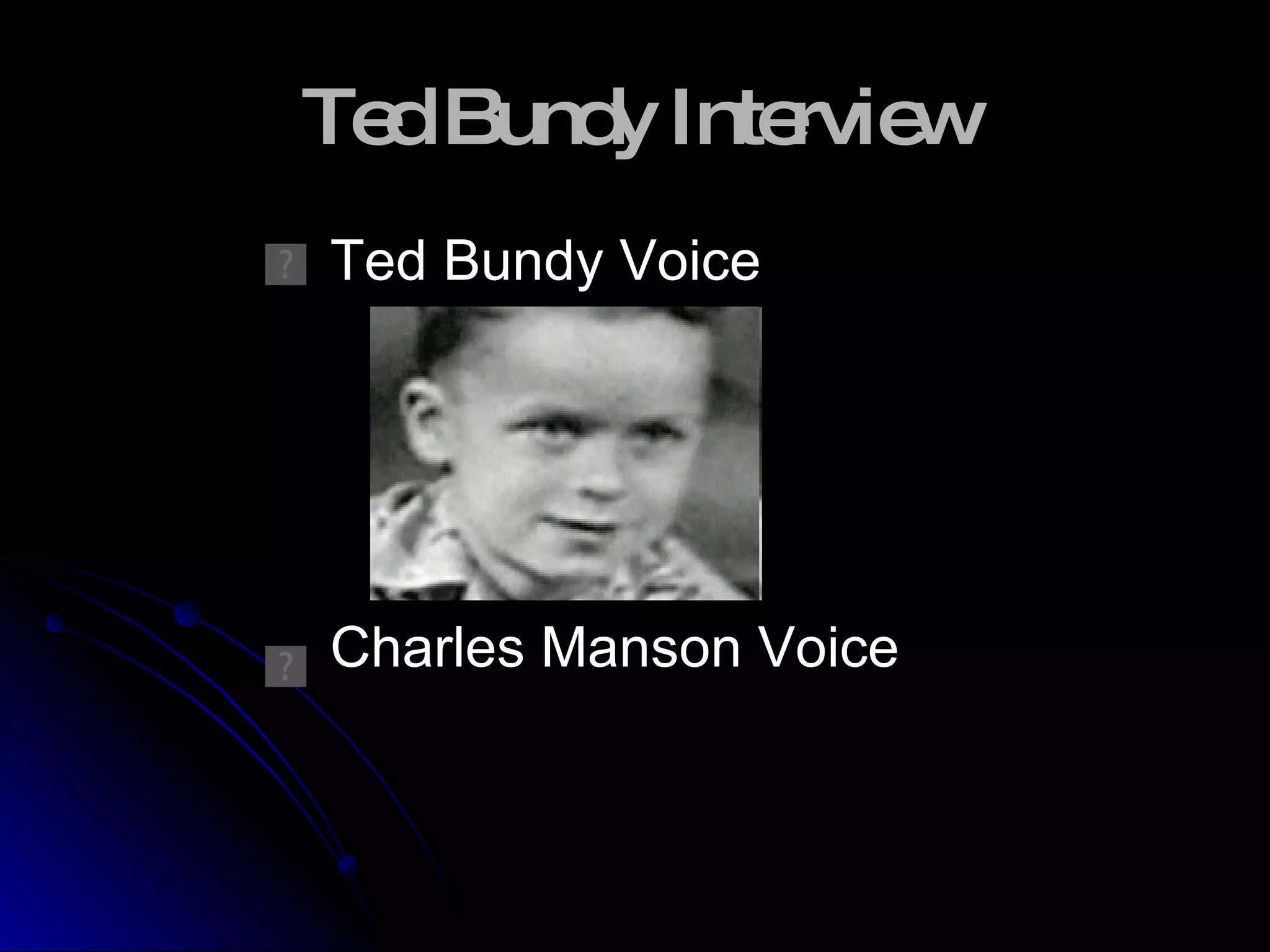
Ted Bundy Interview Ted Bundy Voice Charles Manson Voice

Psychopathy project

  • 1.
    Antisocial Personality Disorder/Psychopathy Paul Grunert Charles Manson Hannibal Lector (Fictional) Ted Bundy
  • 2.
    Shared Traits: ProlificLiars No empathy for others Lack of feelings Early signs of violence (such as hurting animals) Desire for exciting and often dangerous situations (such as committing a crime) No long-term goals Inability to keep long-term relationships
  • 3.
    Psychopathic Traits: CharmingExtremely intelligent Ability to imitate human emotions Arrogance Inability to recognize any responsibility Capability of committing any crime, including murder
  • 4.
    Four Subgenres: Distempered Psychopaths Charismatic Psychopaths Primary Psychopaths Secondary Psychopaths
  • 5.
    Distempered Psychopath Moreprone to act out due to rage More likely to commit acts of sexual violence They receive extreme pleasure and get “high” off doing things with risk
  • 6.
    Charismatic Psychopath CharmingManipulative Excellent Orators Very convincing liars
  • 7.
    Primary Psychopath Donot respond to punishment, stress, apprehension, or disapproval Words do not have the same effect on the primary psychopath Have ability to control their antisocial impulses due to an underlying motive
  • 8.
    Secondary Psychopath Unconventionaland adventurous and risk takers Stress reactive They always want to avoid stress and pain, but they fall victim to temptation easily The more an object or goal is “forbidden," the more they want it
  • 9.
    Causes Genetic: -A decrease in the activity of the prefrontal cortex - A hyperactive amygdala Environmental - Parental rejection - Physical and sexual abuse - Childhood deprivation
  • 10.
    Childhood Symptoms Pleasurein hurting animals Habitual lying No understanding of others’ feelings Early sexual behavior Disregard for rules
  • 11.
    Other Disorders Linkedto Psychopathy Childhood Bipolar Disorder Attention Deficit Hyperactive Disorder (ADHD) Conduct Disorder Oppositional Defiant Disorder
  • 12.
    Statistics About 2million people in the US have psychopathy or antisocial personality disorder Everyone in the US is affected by a psychopath About as prevalent as schizophrenia 47% of male prison inmates and 23% of female prison inmates show psychopathic traits 50% of law enforcement personnel who are killed are killed by psychopaths
  • 13.
    Therapies Much oftherapy does not work, because psychopaths do not believe they need the help, so they refuse to participate in therapy Therapists attempt to ease tension and set short term goals for people with ASPD so that they might get satisfaction easier and decrease their violent tendencies
  • 14.
    Medications Carbamazepine andlithium have been used to decrease impulsitivity in the psychopath, which is a major component in their behavior These are the only two serious medications that have been used
  • 15.
    Ted Bundy InterviewTed Bundy Voice Charles Manson Voice