SIXTIES'
PSYCHEDELIA
1960 - 1975
Introduction
• It was born within the hippie subculture in
San Francisco in the 1960's.
• It was inspired by psychedelic experiences
while the artists were on drugs like LSD and
mescaline.
• The intent was to discover a new realm of
freedom and to liberate peoples minds.
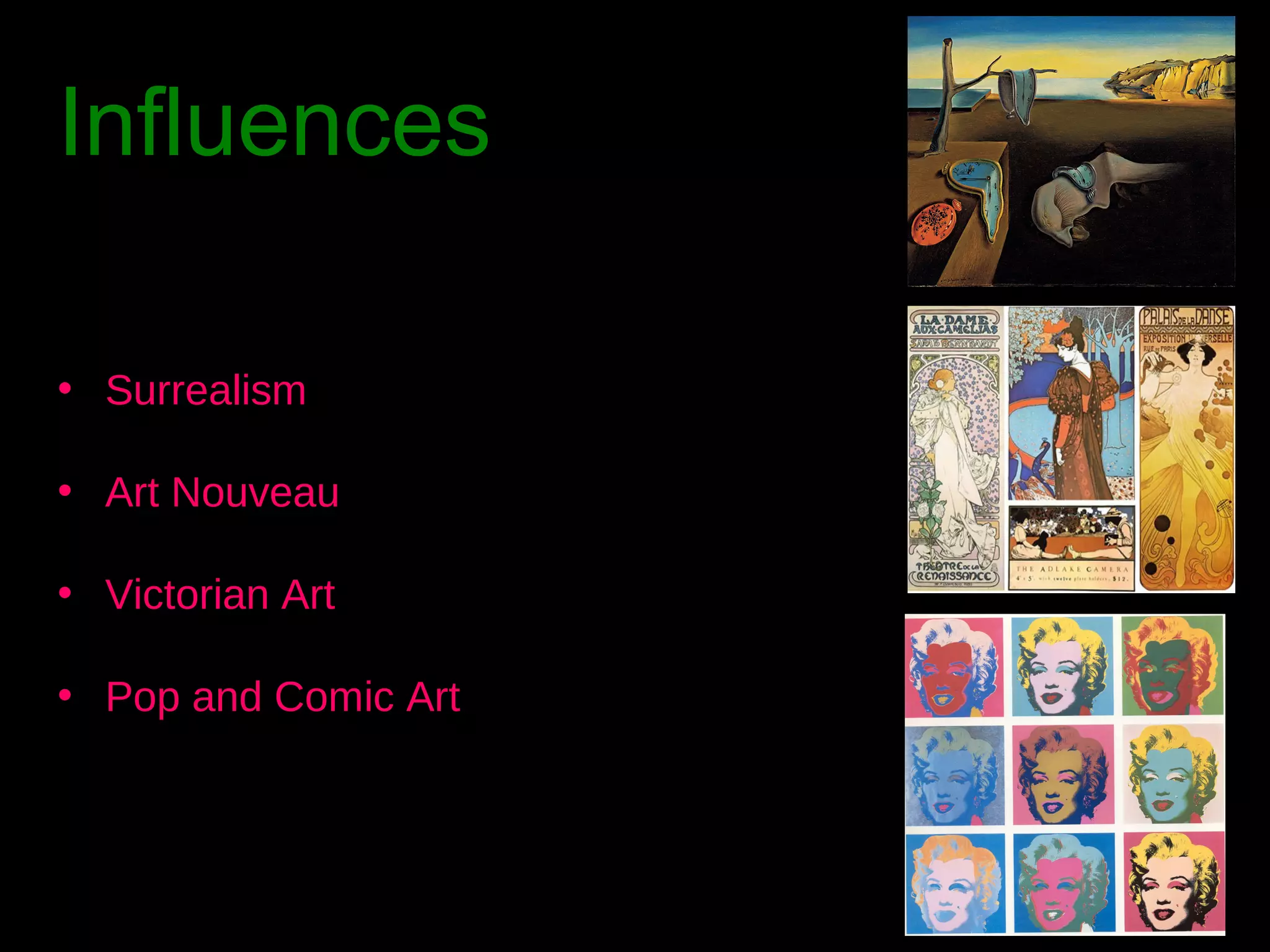
Influences
• Surrealism
• Art Nouveau
• Victorian Art
• Pop and Comic Art
Characteristics
• Use of bright contrasting colors and loud textures.
• Optical vibrating effect of graphic lines.
• Use of curviliniar shapes.
• Type was made illegible.
• There was often metaphysical elements attached.
• Text was used to create imagery.
• Collage technique was used.
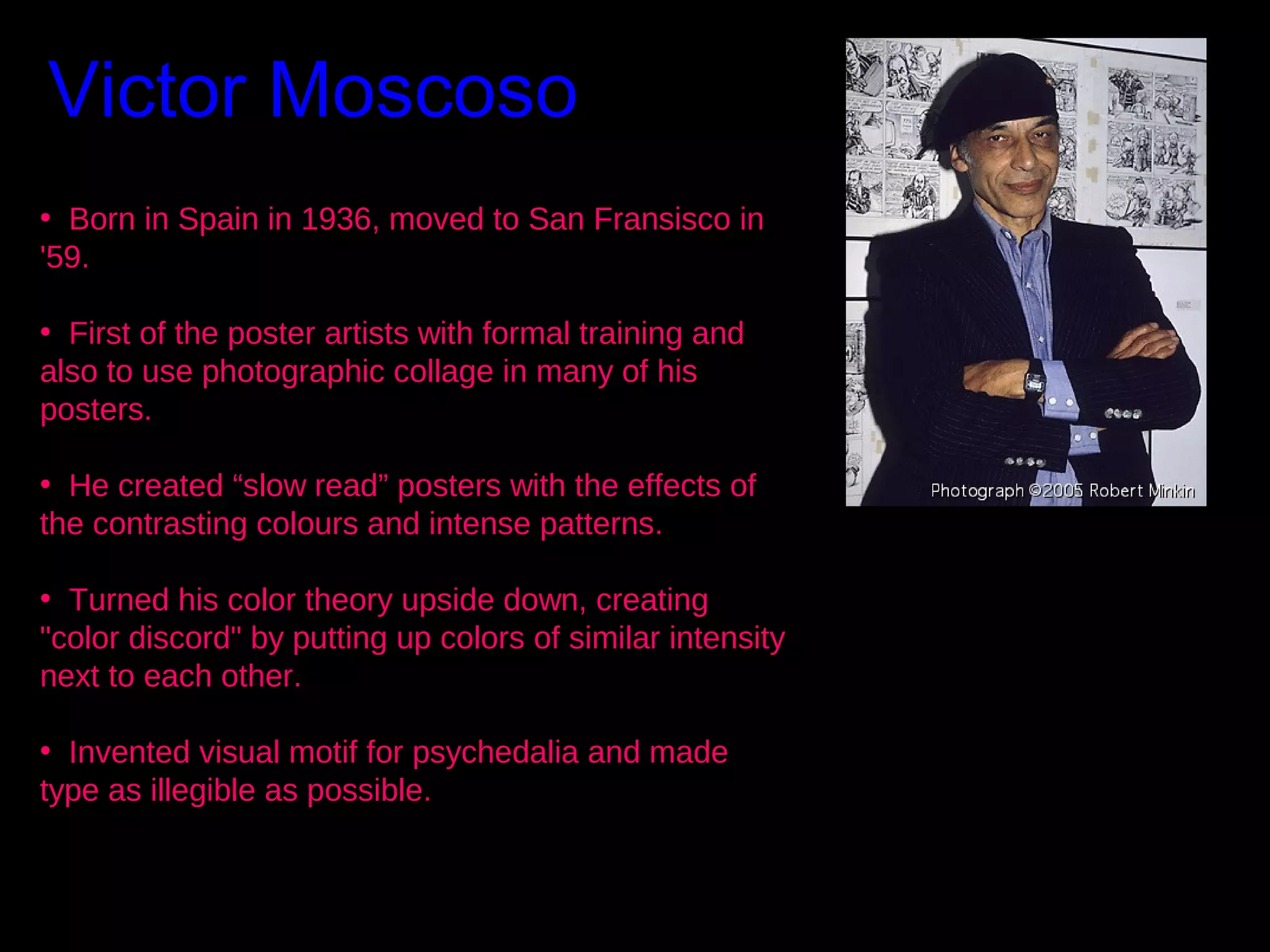
Victor Moscoso
• Born in Spain in 1936, moved to San Fransisco in
'59.
• First of the poster artists with formal training and
also to use photographic collage in many of his
posters.
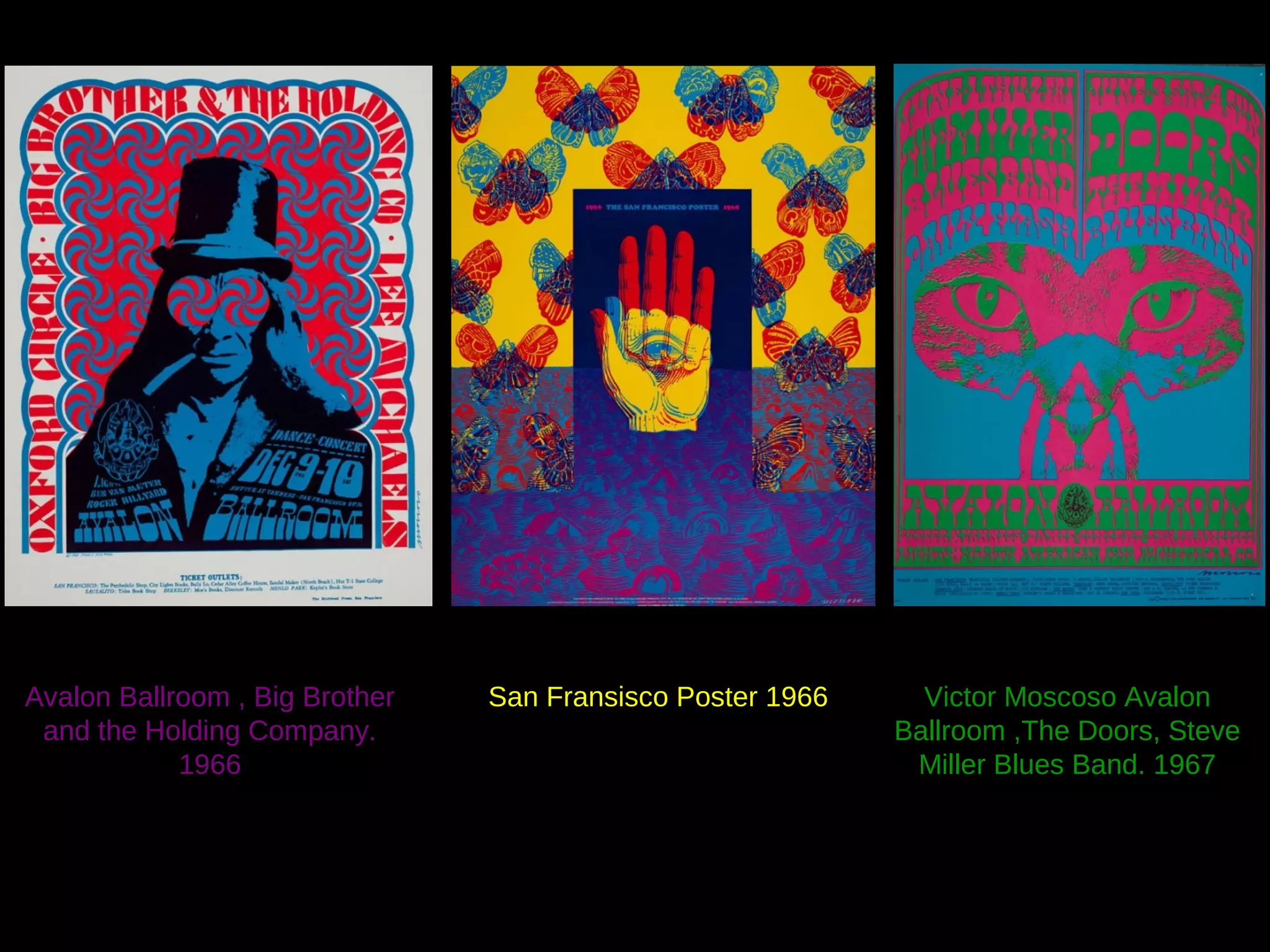
• He created “slow read” posters with the effects of
the contrasting colours and intense patterns.
• Turned his color theory upside down, creating
"color discord" by putting up colors of similar intensity
next to each other.
• Invented visual motif for psychedalia and made
type as illegible as possible.
Avalon Ballroom , Big Brother
and the Holding Company.
1966

San Fransisco Poster 1966

Victor Moscoso Avalon
Ballroom ,The Doors, Steve
Miller Blues Band. 1967
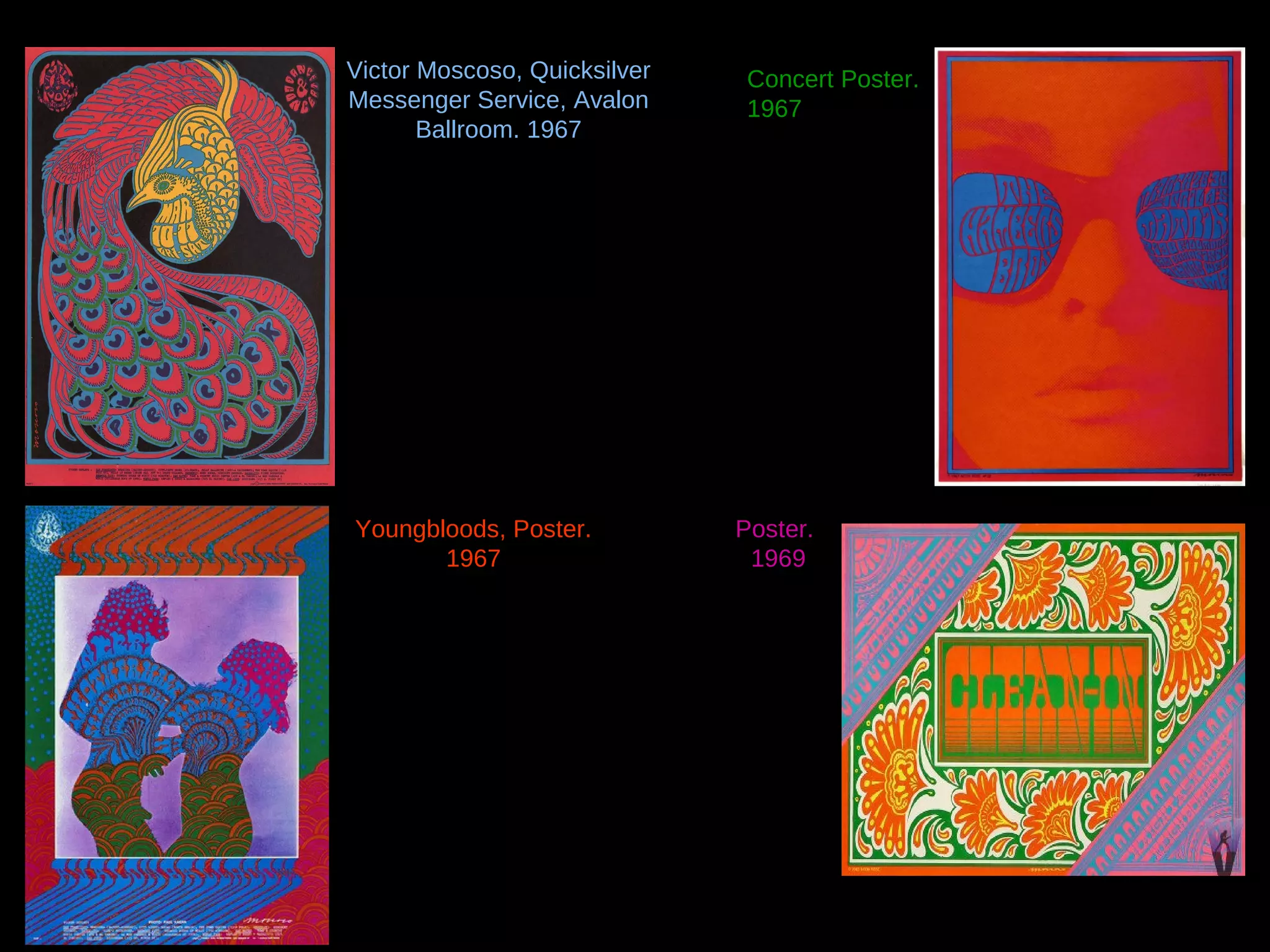
Victor Moscoso, Quicksilver
Messenger Service, Avalon
Ballroom. 1967

Youngbloods, Poster.
1967

Concert Poster.
1967

Poster.
1969
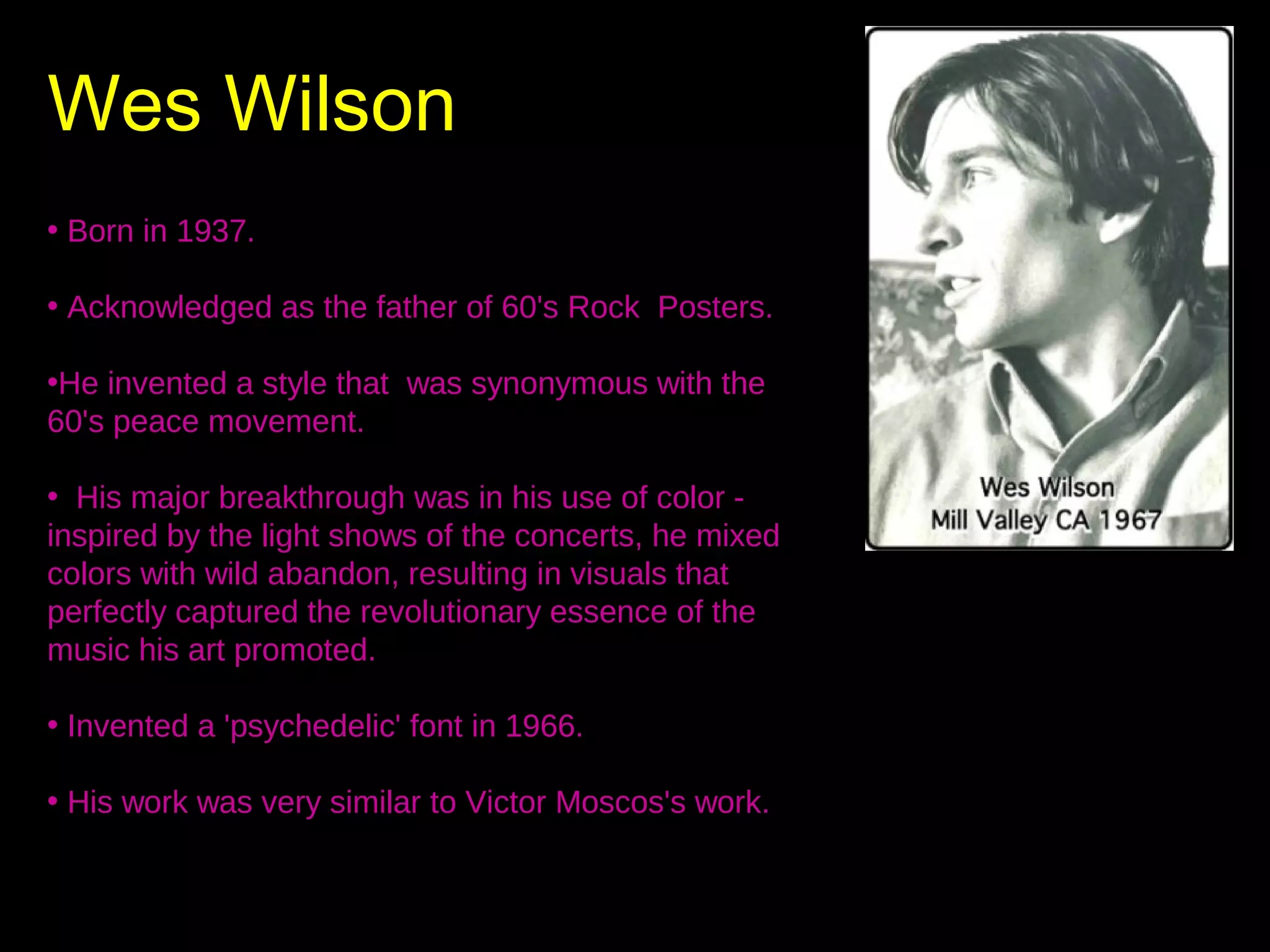
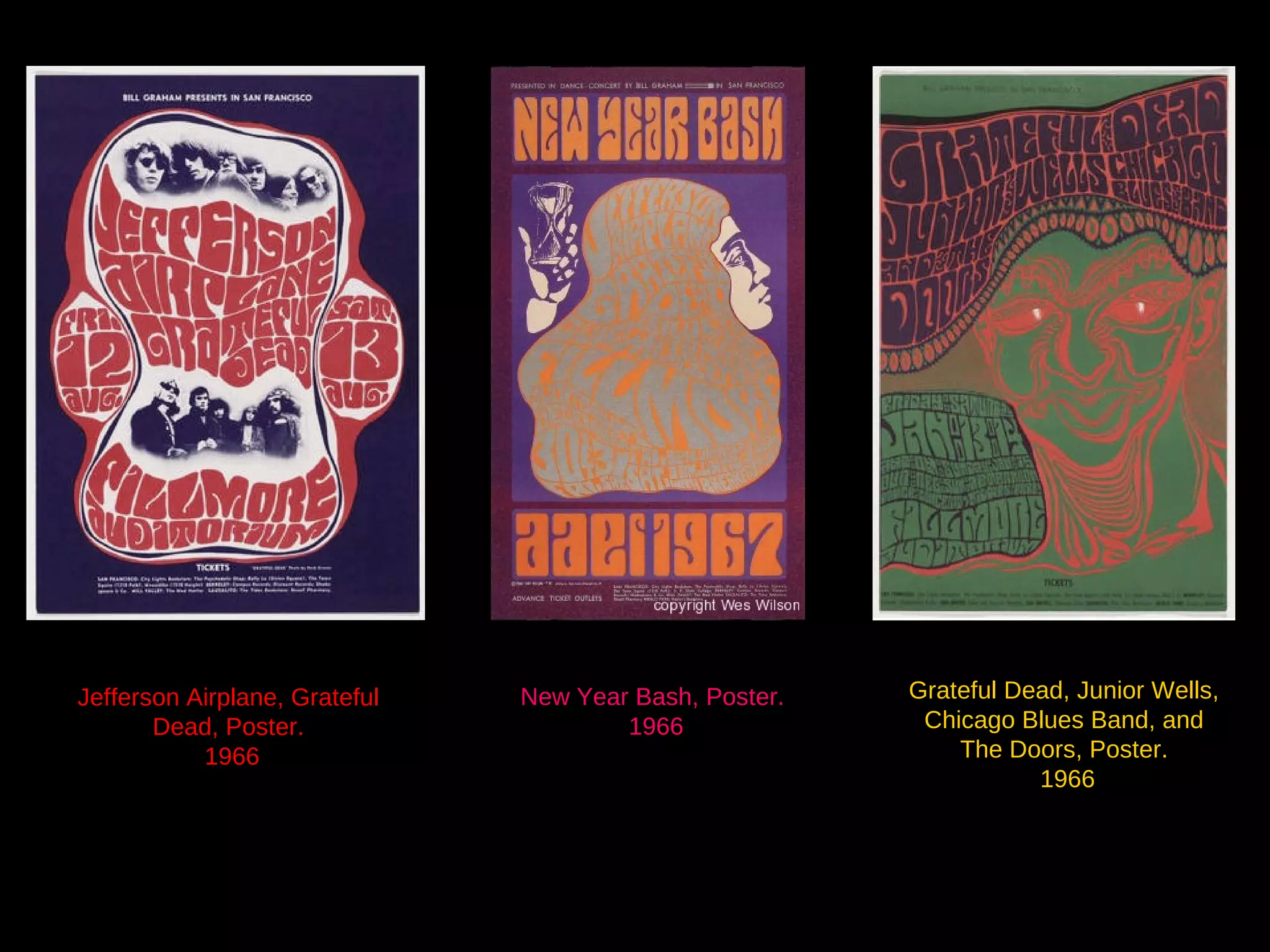
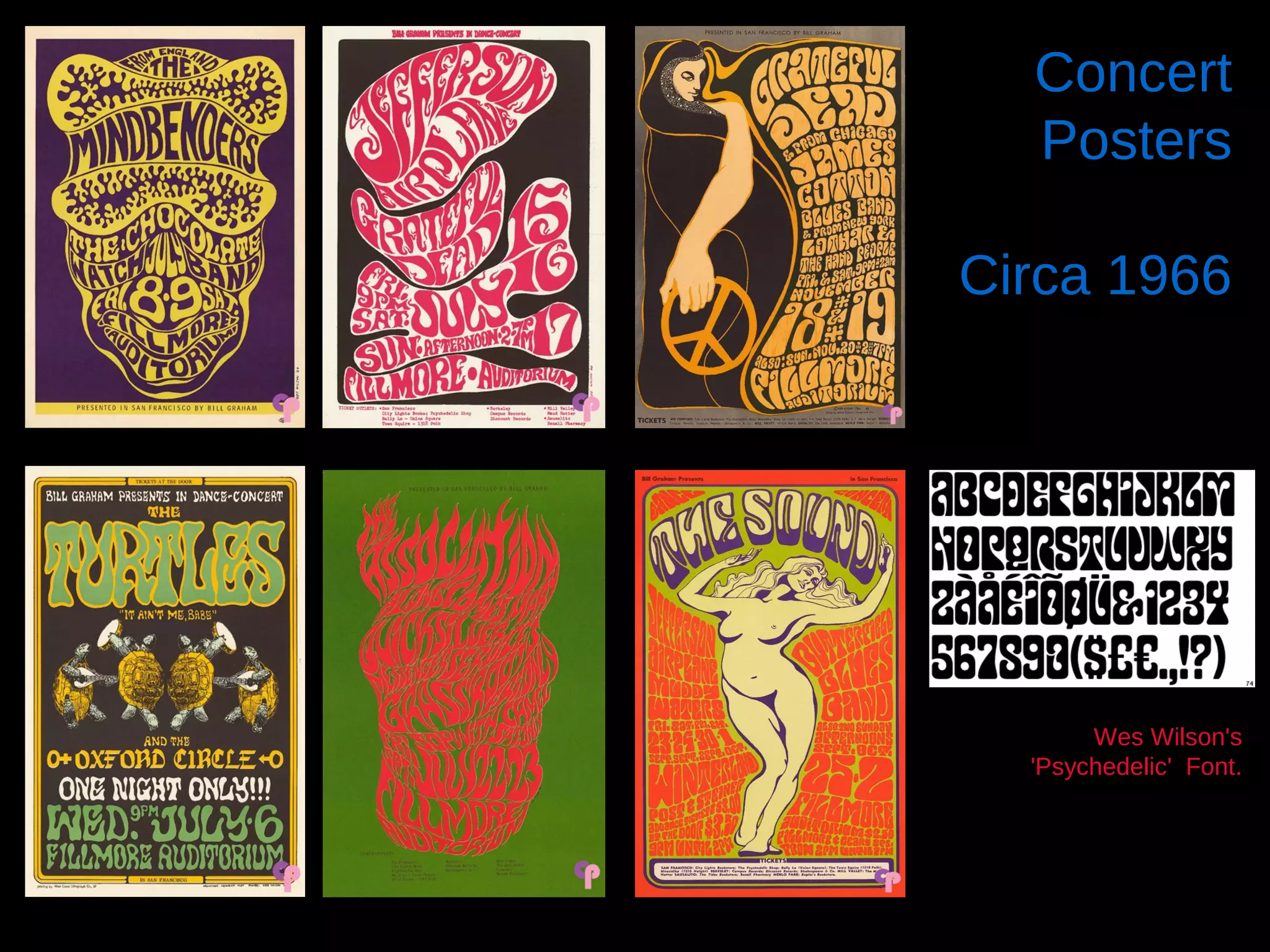
Wes Wilson

WE

• Born in 1937.
• Acknowledged as the father of 60's Rock Posters.
•He invented a style that was synonymous with the
60's peace movement.
• His major breakthrough was in his use of color inspired by the light shows of the concerts, he mixed
colors with wild abandon, resulting in visuals that
perfectly captured the revolutionary essence of the
music his art promoted.
• Invented a 'psychedelic' font in 1966.
• His work was very similar to Victor Moscos's work.
Jefferson Airplane, Grateful
Dead, Poster.
1966

New Year Bash, Poster.
1966

Grateful Dead, Junior Wells,
Chicago Blues Band, and
The Doors, Poster.
1966
Concert
Posters
Circa 1966

Wes Wilson's
'Psychedelic' Font.
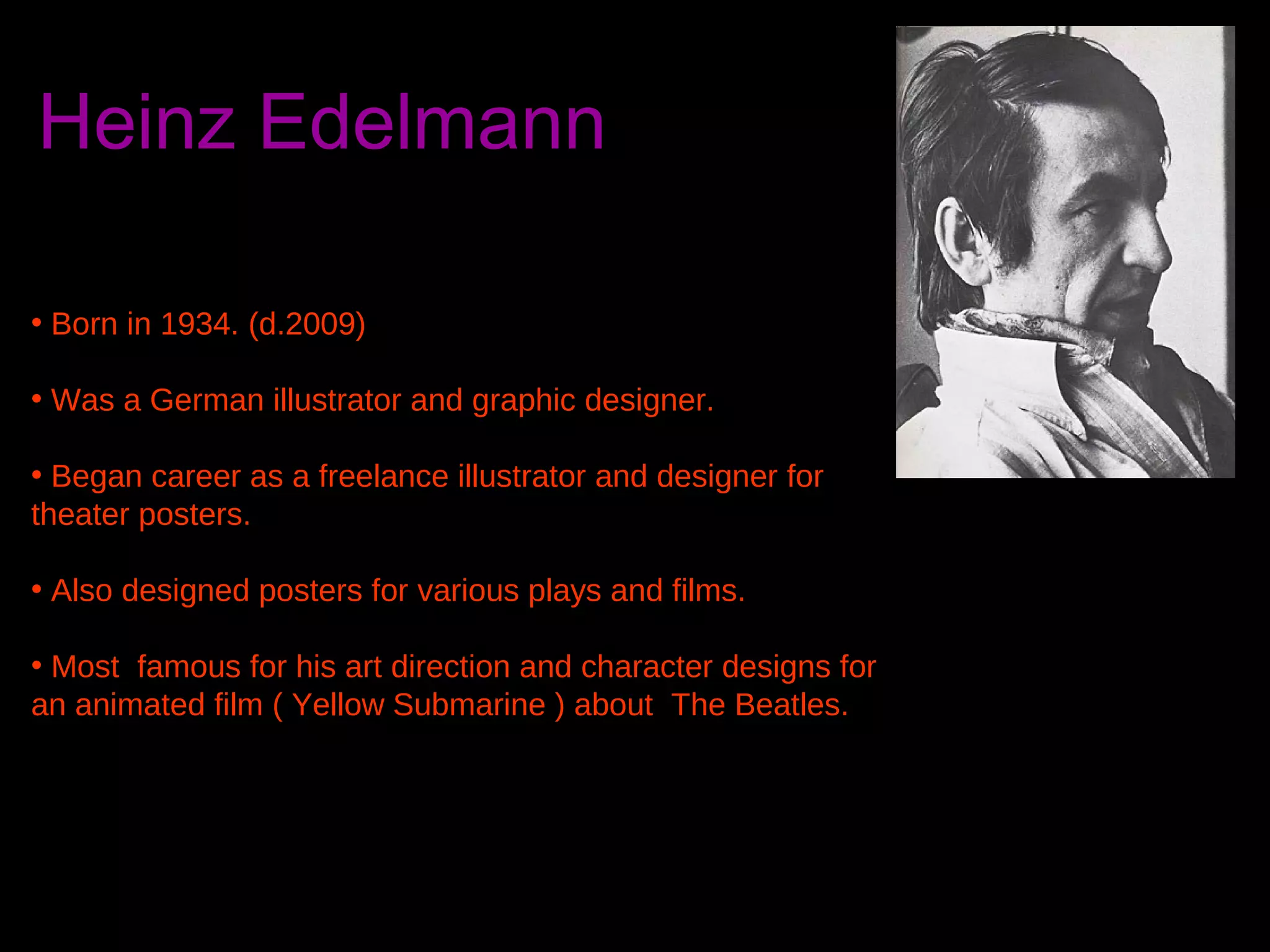
Heinz Edelmann
• Born in 1934. (d.2009)
• Was a German illustrator and graphic designer.
• Began career as a freelance illustrator and designer for
theater posters.
• Also designed posters for various plays and films.
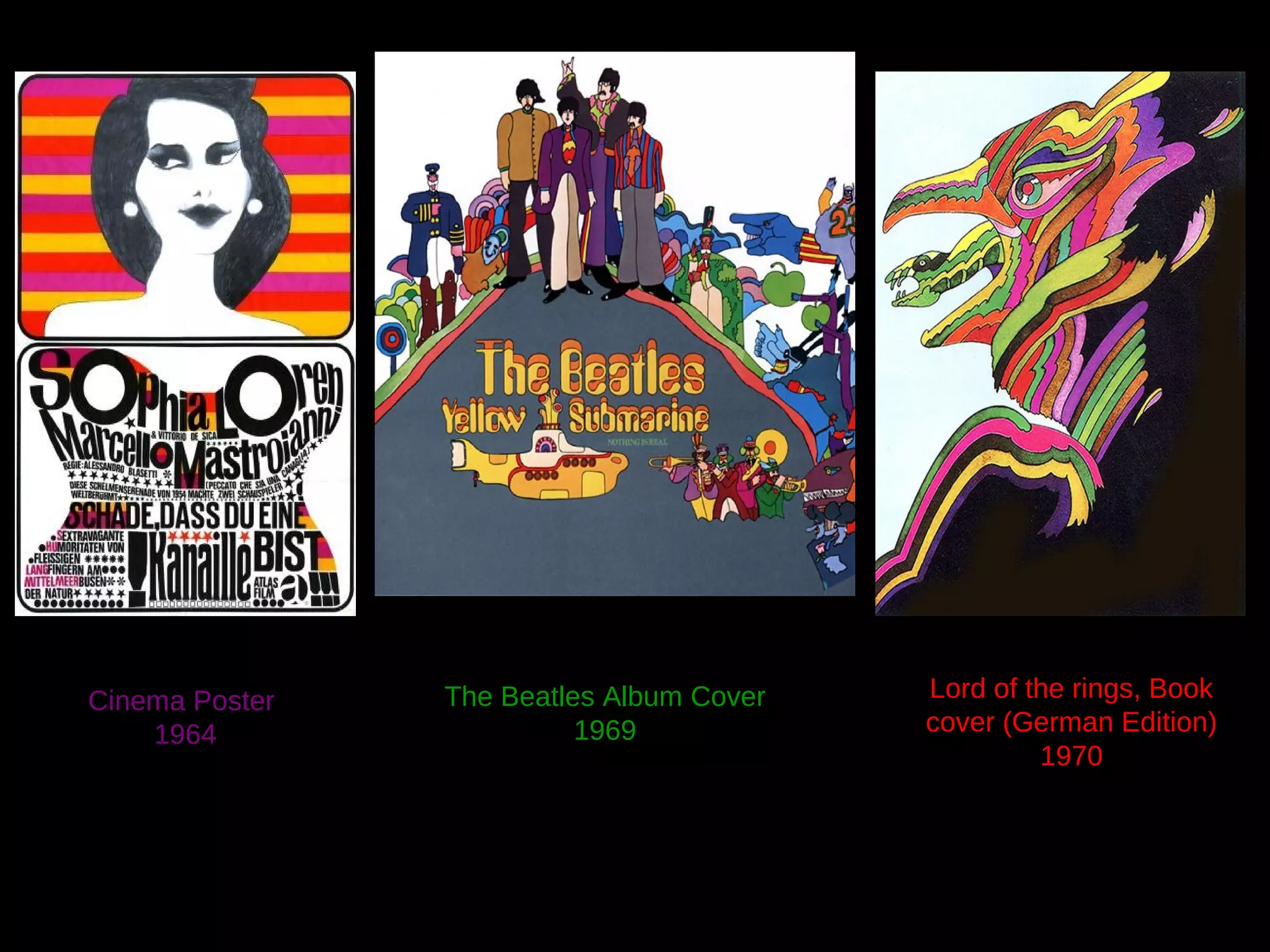
• Most famous for his art direction and character designs for
an animated film ( Yellow Submarine ) about The Beatles.
Cinema Poster
1964

The Beatles Album Cover
1969

Lord of the rings, Book
cover (German Edition)
1970
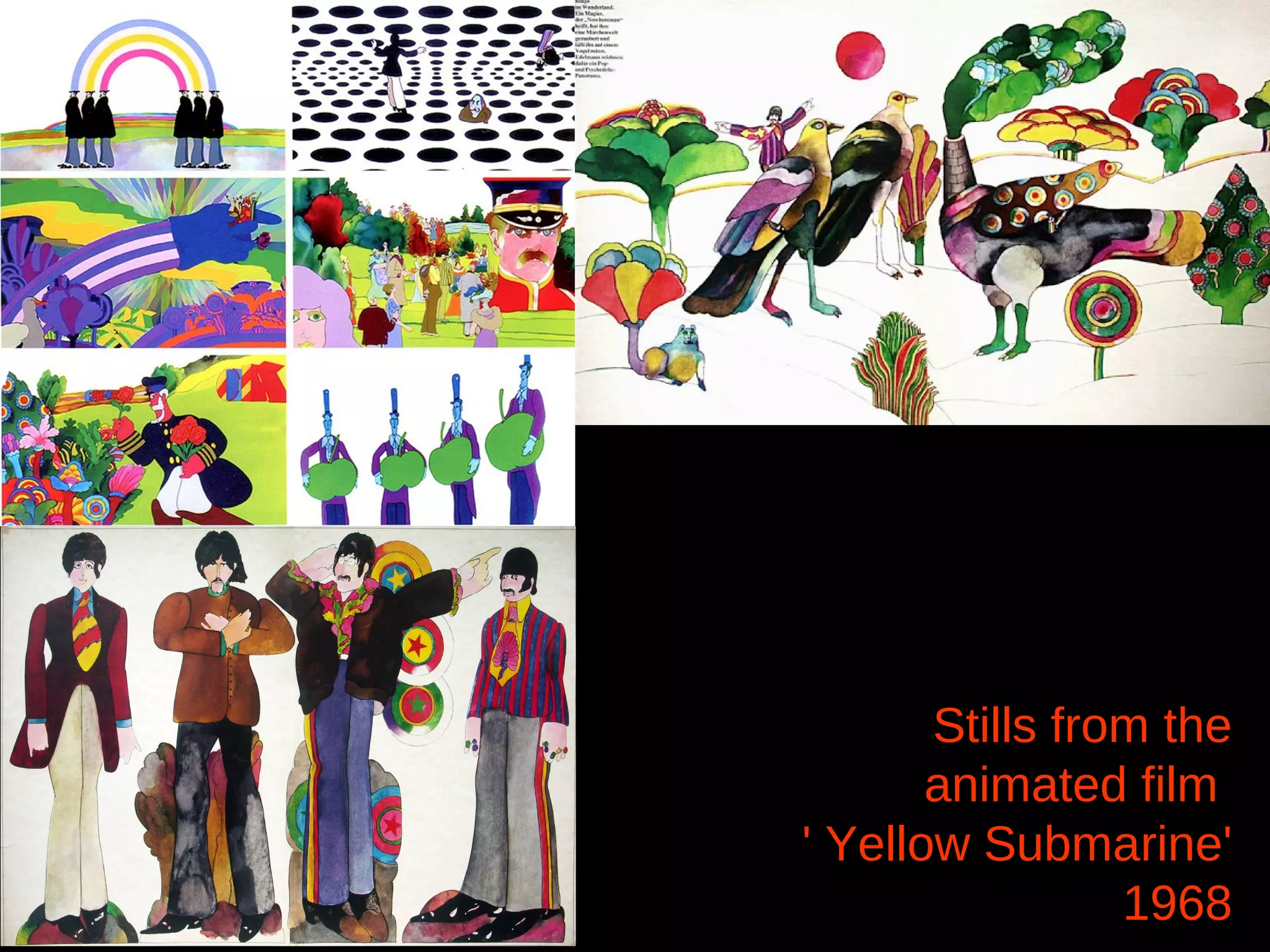
Stills from the
animated film
' Yellow Submarine'
1968
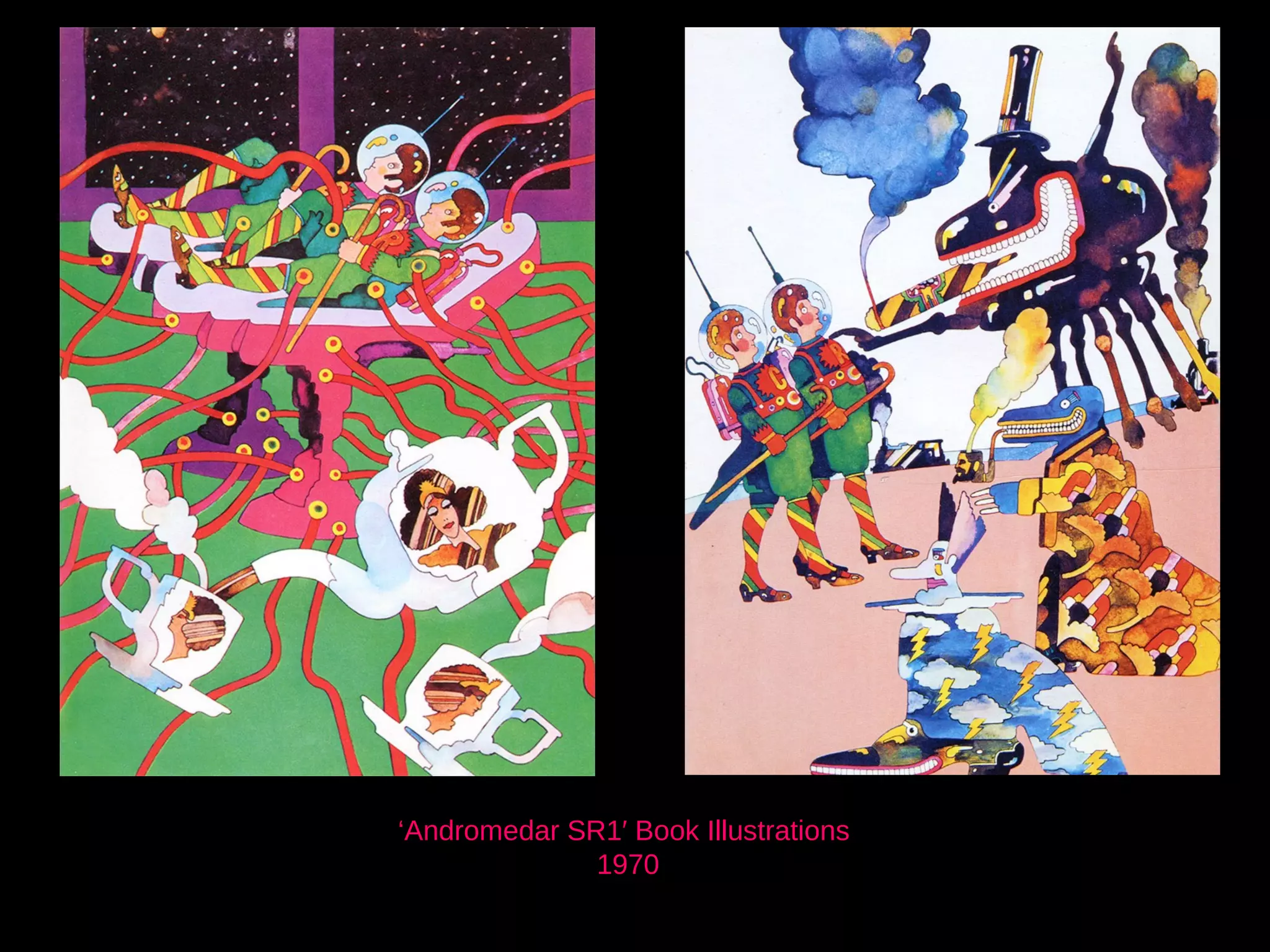
‘Andromedar SR1′ Book Illustrations
1970
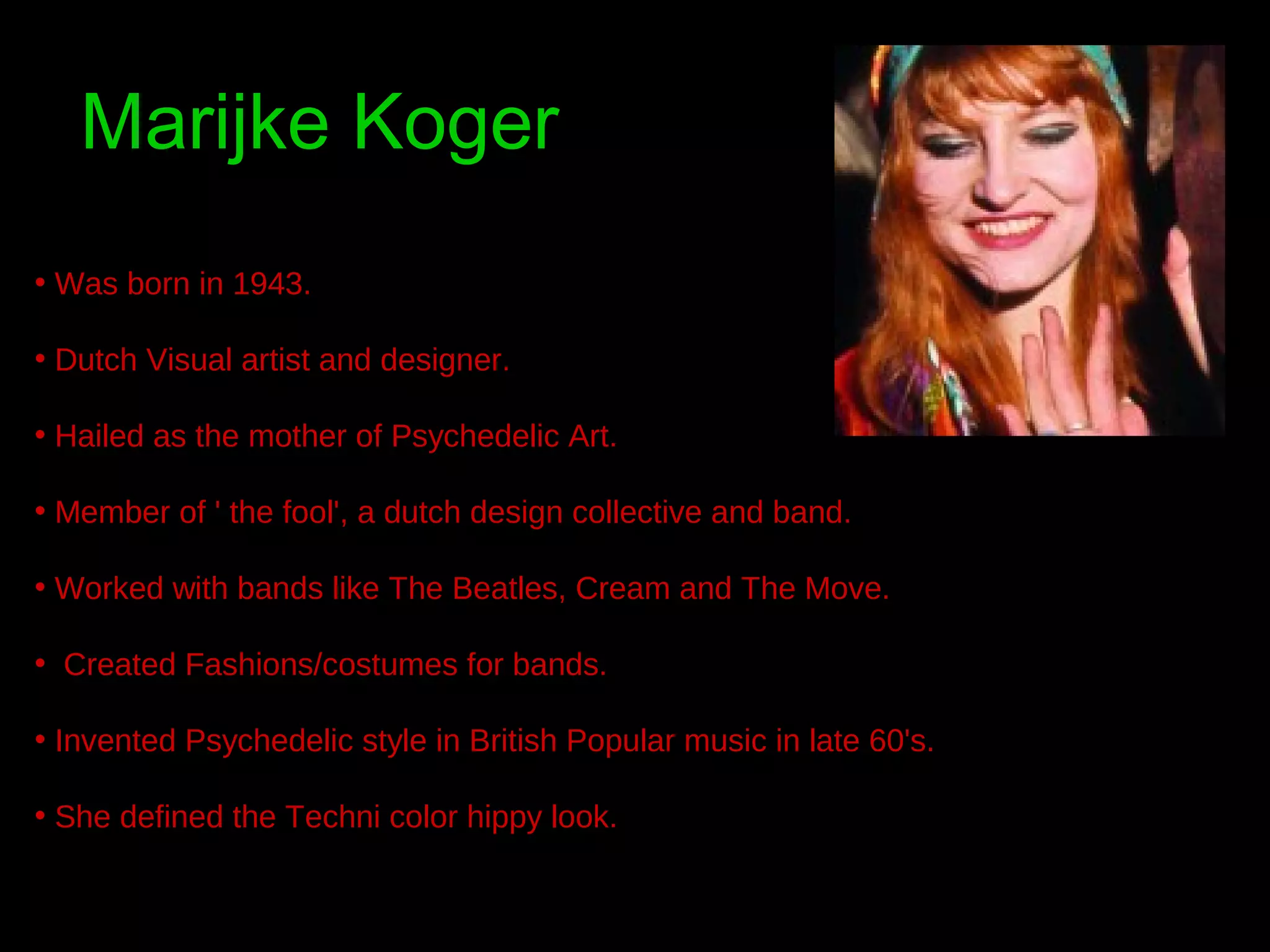
Marijke Koger
• Was born in 1943.
• Dutch Visual artist and designer.
• Hailed as the mother of Psychedelic Art.
• Member of ' the fool', a dutch design collective and band.
• Worked with bands like The Beatles, Cream and The Move.
• Created Fashions/costumes for bands.
• Invented Psychedelic style in British Popular music in late 60's.
• She defined the Techni color hippy look.
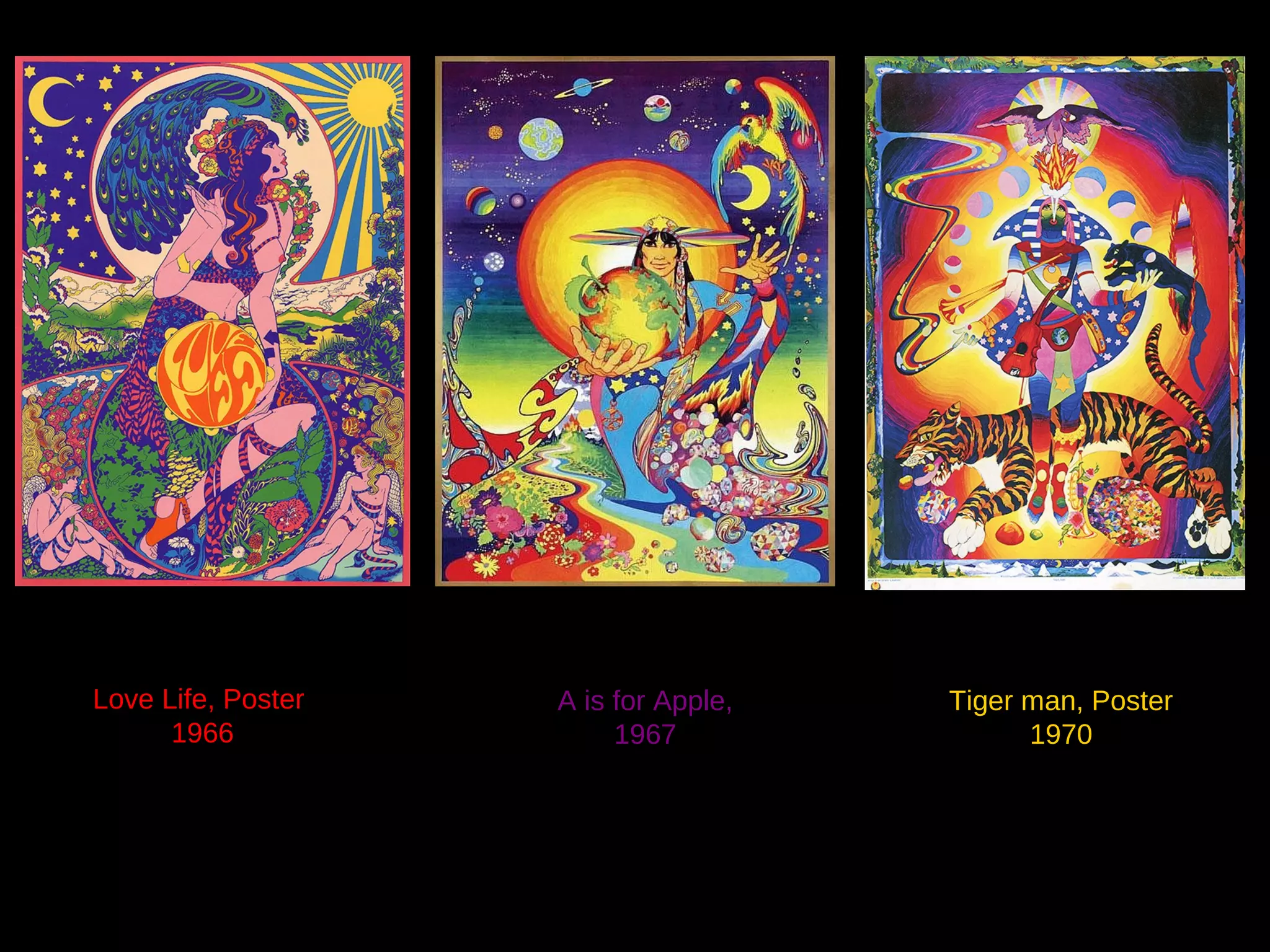
Love Life, Poster
1966

A is for Apple,
1967

Tiger man, Poster
1970
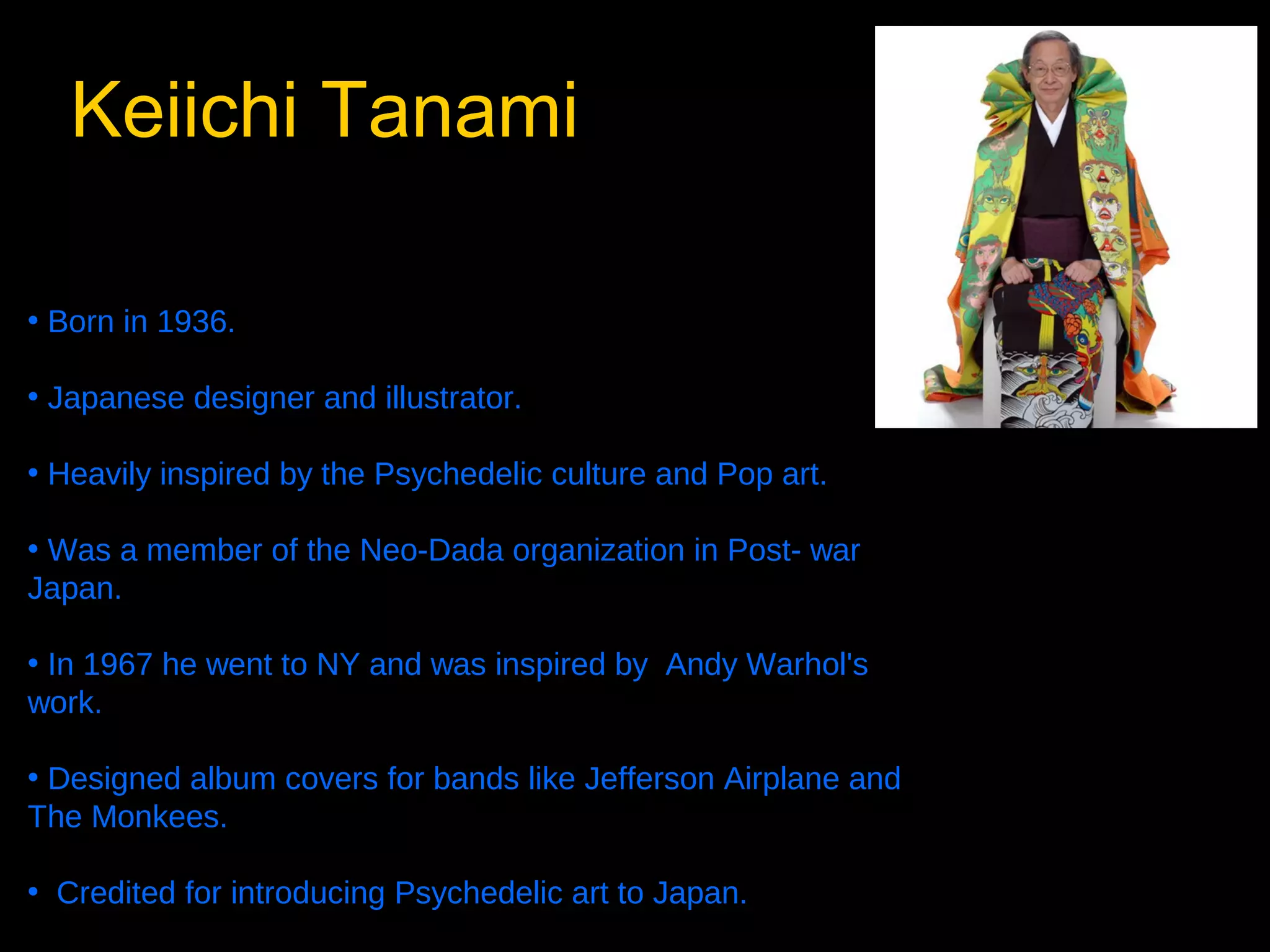
Keiichi Tanami
• Born in 1936.
• Japanese designer and illustrator.
• Heavily inspired by the Psychedelic culture and Pop art.
• Was a member of the Neo-Dada organization in Post- war
Japan.
• In 1967 he went to NY and was inspired by Andy Warhol's
work.
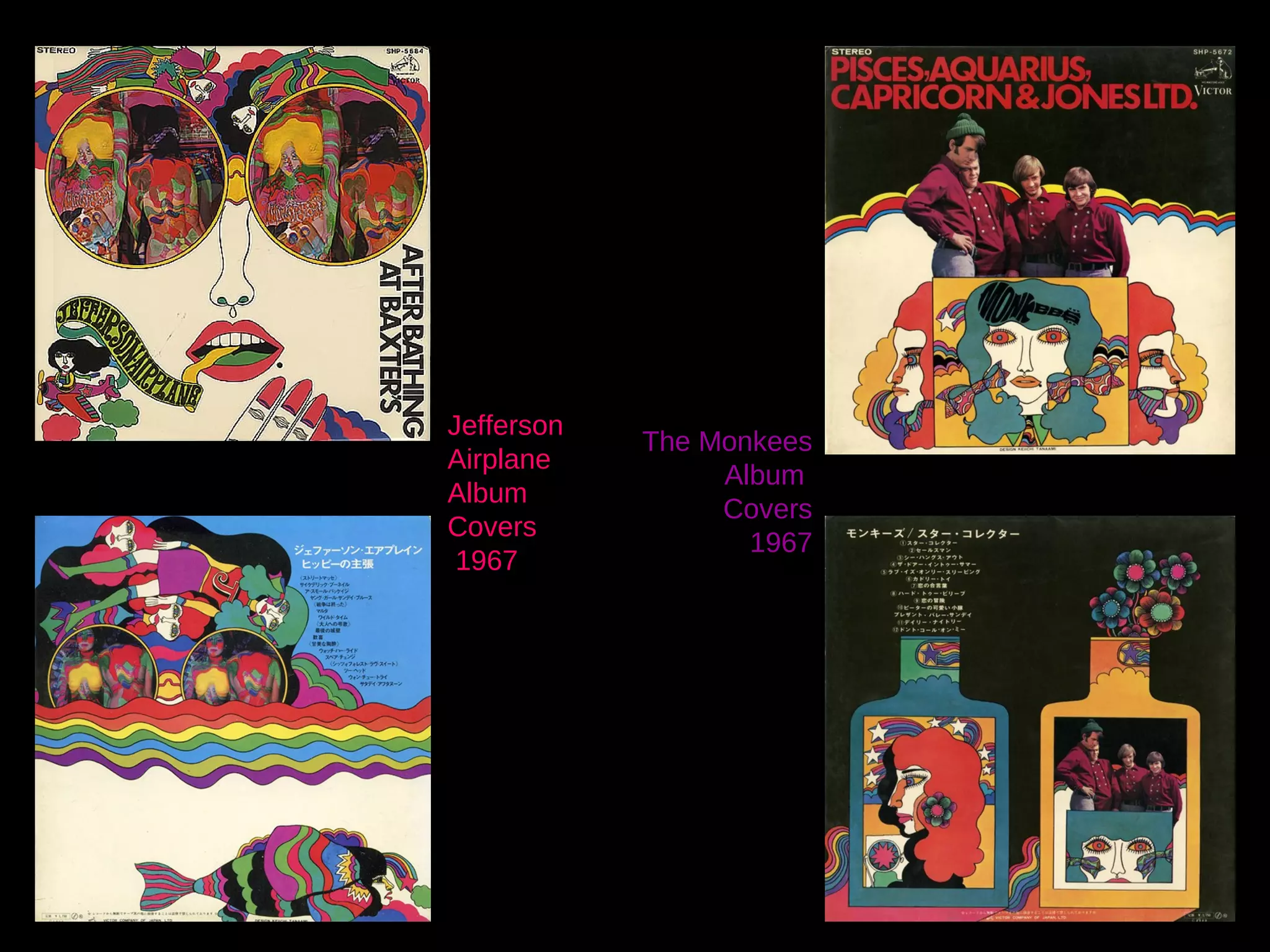
• Designed album covers for bands like Jefferson Airplane and
The Monkees.
• Credited for introducing Psychedelic art to Japan.
Jefferson
Airplane
Album
Covers
1967

The Monkees
Album
Covers
1967
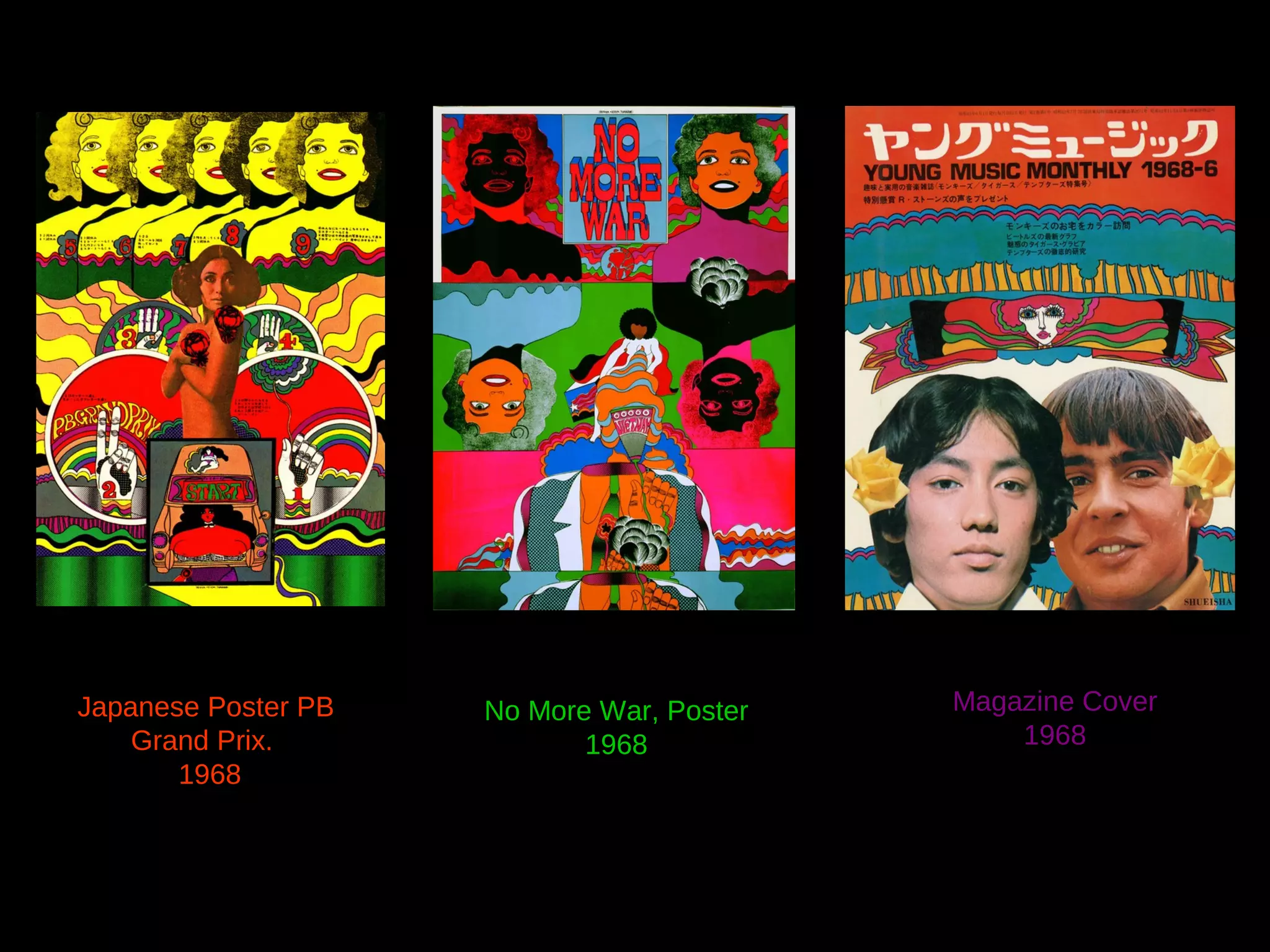
Japanese Poster PB
Grand Prix.
1968

No More War, Poster
1968

Magazine Cover
1968
End of an era
• The early years of the 1970's saw advertisers using
psychedelic art to sell a limitless array of consumer
goods.
• Even the term "psychedelic" itself underwent a s
shift, and soon came to mean "anything in youth
culture which is colorful, or unusual, or fashionable.
• By the mid-1970s, the psychedelic art movement had
been largely co-opted by mainstream commercial
forces, incorporated into the very system of capitalism
that the hippies had struggled so hard to change.

Psychedelic Art Movement

  • 1.
  • 2.
    Introduction • It wasborn within the hippie subculture in San Francisco in the 1960's. • It was inspired by psychedelic experiences while the artists were on drugs like LSD and mescaline. • The intent was to discover a new realm of freedom and to liberate peoples minds.
  • 3.
    Influences • Surrealism • ArtNouveau • Victorian Art • Pop and Comic Art
  • 4.
    Characteristics • Use ofbright contrasting colors and loud textures. • Optical vibrating effect of graphic lines. • Use of curviliniar shapes. • Type was made illegible. • There was often metaphysical elements attached. • Text was used to create imagery. • Collage technique was used.
  • 5.
    Victor Moscoso • Bornin Spain in 1936, moved to San Fransisco in '59. • First of the poster artists with formal training and also to use photographic collage in many of his posters. • He created “slow read” posters with the effects of the contrasting colours and intense patterns. • Turned his color theory upside down, creating "color discord" by putting up colors of similar intensity next to each other. • Invented visual motif for psychedalia and made type as illegible as possible.
  • 6.
    Avalon Ballroom ,Big Brother and the Holding Company. 1966 San Fransisco Poster 1966 Victor Moscoso Avalon Ballroom ,The Doors, Steve Miller Blues Band. 1967
  • 7.
    Victor Moscoso, Quicksilver MessengerService, Avalon Ballroom. 1967 Youngbloods, Poster. 1967 Concert Poster. 1967 Poster. 1969
  • 8.
    Wes Wilson WE • Bornin 1937. • Acknowledged as the father of 60's Rock Posters. •He invented a style that was synonymous with the 60's peace movement. • His major breakthrough was in his use of color inspired by the light shows of the concerts, he mixed colors with wild abandon, resulting in visuals that perfectly captured the revolutionary essence of the music his art promoted. • Invented a 'psychedelic' font in 1966. • His work was very similar to Victor Moscos's work.
  • 9.
    Jefferson Airplane, Grateful Dead,Poster. 1966 New Year Bash, Poster. 1966 Grateful Dead, Junior Wells, Chicago Blues Band, and The Doors, Poster. 1966
  • 10.
  • 11.
    Heinz Edelmann • Bornin 1934. (d.2009) • Was a German illustrator and graphic designer. • Began career as a freelance illustrator and designer for theater posters. • Also designed posters for various plays and films. • Most famous for his art direction and character designs for an animated film ( Yellow Submarine ) about The Beatles.
  • 12.
    Cinema Poster 1964 The BeatlesAlbum Cover 1969 Lord of the rings, Book cover (German Edition) 1970
  • 13.
    Stills from the animatedfilm ' Yellow Submarine' 1968
  • 14.
    ‘Andromedar SR1′ BookIllustrations 1970
  • 15.
    Marijke Koger • Wasborn in 1943. • Dutch Visual artist and designer. • Hailed as the mother of Psychedelic Art. • Member of ' the fool', a dutch design collective and band. • Worked with bands like The Beatles, Cream and The Move. • Created Fashions/costumes for bands. • Invented Psychedelic style in British Popular music in late 60's. • She defined the Techni color hippy look.
  • 16.
    Love Life, Poster 1966 Ais for Apple, 1967 Tiger man, Poster 1970
  • 17.
    Keiichi Tanami • Bornin 1936. • Japanese designer and illustrator. • Heavily inspired by the Psychedelic culture and Pop art. • Was a member of the Neo-Dada organization in Post- war Japan. • In 1967 he went to NY and was inspired by Andy Warhol's work. • Designed album covers for bands like Jefferson Airplane and The Monkees. • Credited for introducing Psychedelic art to Japan.
  • 18.
  • 19.
    Japanese Poster PB GrandPrix. 1968 No More War, Poster 1968 Magazine Cover 1968
  • 20.
    End of anera • The early years of the 1970's saw advertisers using psychedelic art to sell a limitless array of consumer goods. • Even the term "psychedelic" itself underwent a s shift, and soon came to mean "anything in youth culture which is colorful, or unusual, or fashionable. • By the mid-1970s, the psychedelic art movement had been largely co-opted by mainstream commercial forces, incorporated into the very system of capitalism that the hippies had struggled so hard to change.

Editor's Notes