Promoting Physical Activity In School
Physical Activity  Physical inactivity is a serious problem here in the United States.  If a physically active lifestyle is adopted early in life, the chances are better that it may continue into adulthood.  Schools can provide environments with opportunities for learning and practicing active lifestyle behaviors.
What is Physical Activity?
Physical Activity… Any athletic, recreational or occupational activities that require physical skills and utilizes strength, power, endurance, speed, flexibility, range of motion or agility to increase physical fitness.
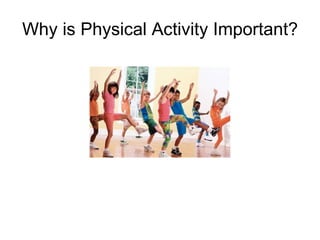
Why is Physical Activity Important?
Physical Activity is Important Improves cardiovascular and respiratory functioning Reduces coronary artery disease (CAD) risk Increased quality of life.  Beneficial improvements in cardiovascular and respiratory function include: An increased ability of exercising muscles to consume oxygen, Lowered resting and exercise heart rates, Increased stamina Resistance to fatigue  More effective management of diabetes  Reduced bone-mineral loss Decreased blood pressure  Increased efficiency of the heart.
How much physical activity is recommended for children?
Physical Activity is good! According to the new 2005 Dietary Guidelines for Americans, children and adolescents should engage in at least 60 minutes of physical activity on most, preferably all, days of the week.
How can we incorporate physical activity into school?
Even if physical activity requirements are declining, schools can promote physically active lifestyles. Provide  time during the school day for quality physical activity. Sponsor  parent-child activity programs after school. Encourage  and enable school personnel to be active role models by their participation in physical activity. Allow  access to facilities before and after school hours and during vacation periods. Plan  fitness breaks: periodic 5 minute aerobic activities to break up the school day or class. Provide  students and teachers with physical and social environments that encourage and enable physical activity. Encourage  and enable parental involvement in physical activity. Schedule  an activity break after lunch. Provide  extracurricular programs, e.g. walking clubs, jumping rope, in-line skating. Encourage  teachers to provide time for unstructured physical activity during recess. Incorporate  physical activity in other subjects such as math, science, language arts, spelling and geography.
The impact of physical activity
Impact Schools that promote physical activity may have a significant impact on reducing childhood obesity, chronic disease, and, ultimately, adult mortality.  As research has shown physical activity has been associated with increased academic performance, self-concept, mood, and mental health, the promotion of physical activity and exercise may also improve quality of life.

Promoting Physical Activity In School

  • 1.
  • 2.
    Physical Activity Physical inactivity is a serious problem here in the United States. If a physically active lifestyle is adopted early in life, the chances are better that it may continue into adulthood. Schools can provide environments with opportunities for learning and practicing active lifestyle behaviors.
  • 3.
  • 4.
    Physical Activity… Anyathletic, recreational or occupational activities that require physical skills and utilizes strength, power, endurance, speed, flexibility, range of motion or agility to increase physical fitness.
  • 5.
    Why is PhysicalActivity Important?
  • 6.
    Physical Activity isImportant Improves cardiovascular and respiratory functioning Reduces coronary artery disease (CAD) risk Increased quality of life. Beneficial improvements in cardiovascular and respiratory function include: An increased ability of exercising muscles to consume oxygen, Lowered resting and exercise heart rates, Increased stamina Resistance to fatigue More effective management of diabetes Reduced bone-mineral loss Decreased blood pressure Increased efficiency of the heart.
  • 7.
    How much physicalactivity is recommended for children?
  • 8.
    Physical Activity isgood! According to the new 2005 Dietary Guidelines for Americans, children and adolescents should engage in at least 60 minutes of physical activity on most, preferably all, days of the week.
  • 9.
    How can weincorporate physical activity into school?
  • 10.
    Even if physicalactivity requirements are declining, schools can promote physically active lifestyles. Provide time during the school day for quality physical activity. Sponsor parent-child activity programs after school. Encourage and enable school personnel to be active role models by their participation in physical activity. Allow access to facilities before and after school hours and during vacation periods. Plan fitness breaks: periodic 5 minute aerobic activities to break up the school day or class. Provide students and teachers with physical and social environments that encourage and enable physical activity. Encourage and enable parental involvement in physical activity. Schedule an activity break after lunch. Provide extracurricular programs, e.g. walking clubs, jumping rope, in-line skating. Encourage teachers to provide time for unstructured physical activity during recess. Incorporate physical activity in other subjects such as math, science, language arts, spelling and geography.
  • 11.
    The impact ofphysical activity
  • 12.
    Impact Schools thatpromote physical activity may have a significant impact on reducing childhood obesity, chronic disease, and, ultimately, adult mortality. As research has shown physical activity has been associated with increased academic performance, self-concept, mood, and mental health, the promotion of physical activity and exercise may also improve quality of life.