Download to read offline
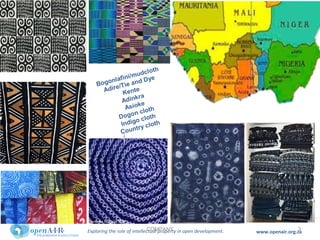

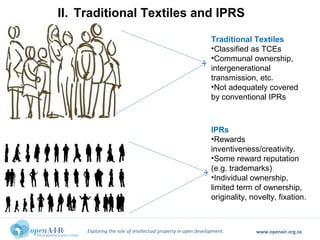


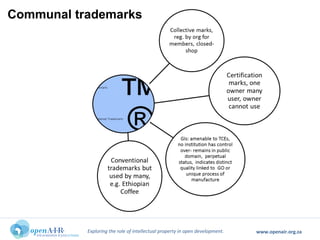
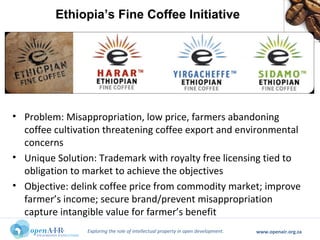


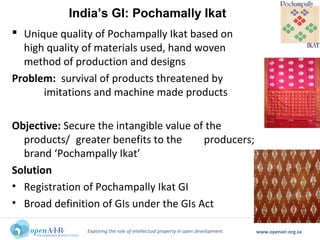
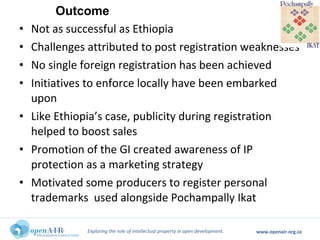

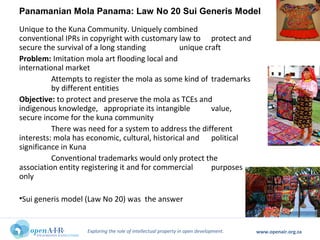
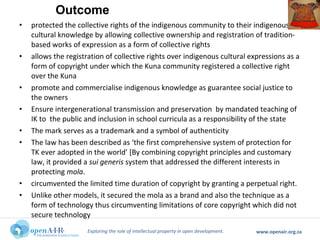
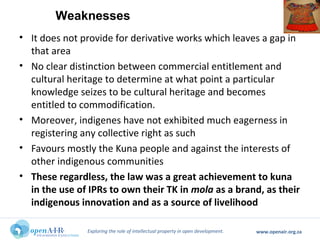
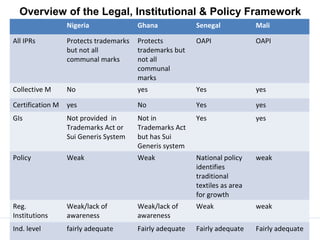


This document discusses promoting traditional textiles from West African communities through communal intellectual property models. It profiles various traditional textiles and examines how their communal ownership and intergenerational transmission is not adequately covered by conventional IP laws. The document analyzes initiatives in Ethiopia and India that registered communal trademarks for coffee and ikat textiles respectively. It also examines a sui generis model in Panama protecting Kuna indigenous art. The document concludes that communal trademarks have potential to benefit traditional textile producers in West Africa, and countries should consider adopting communal IP models to preserve such cultural knowledge.


