What is Projectile
Motion?
Instructional Objectives:
• Students will be able to:
– Define Projectile Motion
– Distinguish between the different types of
projectile motion
– Apply the concept to a toy car and measure its
velocity
Projectile Motion
• Two-dimensional motion of an object
– Vertical
– Horizontal
Types of Projectile
Motion
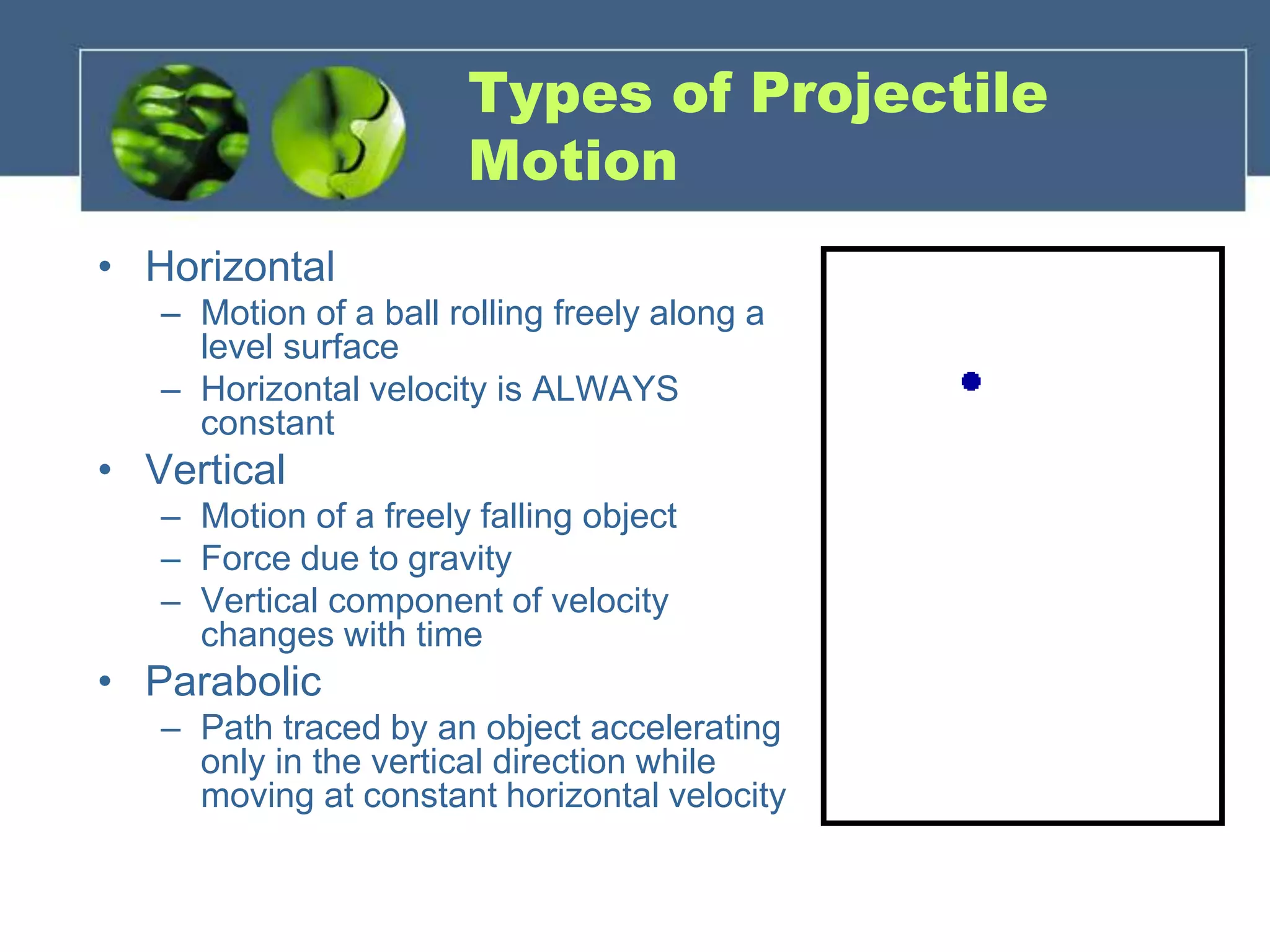
• Horizontal
– Motion of a ball rolling freely along a
level surface
– Horizontal velocity is ALWAYS
constant
• Vertical
– Motion of a freely falling object
– Force due to gravity
– Vertical component of velocity
changes with time
• Parabolic
– Path traced by an object accelerating
only in the vertical direction while
moving at constant horizontal velocity
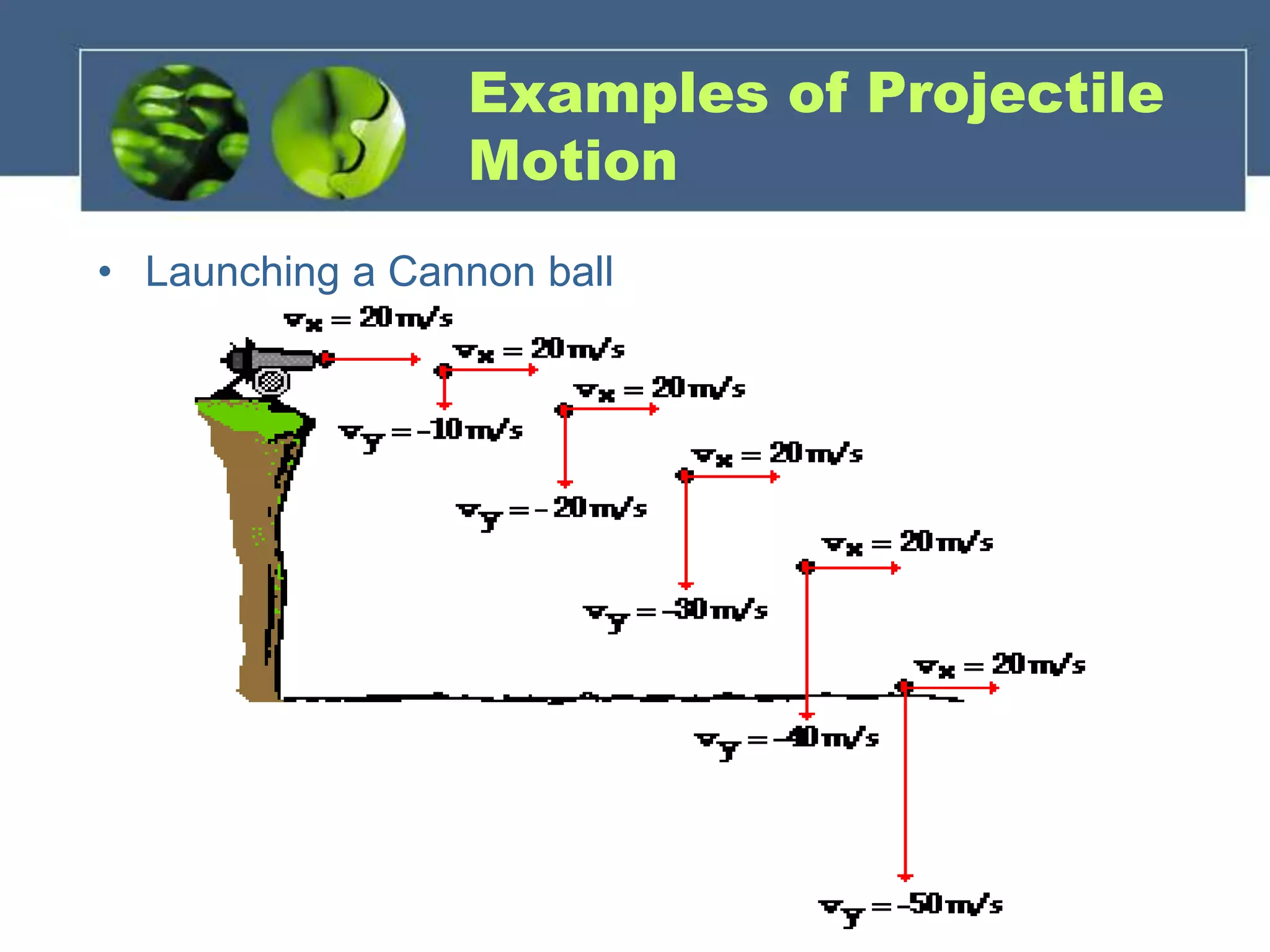
Examples of Projectile
Motion
• Launching a Cannon ball
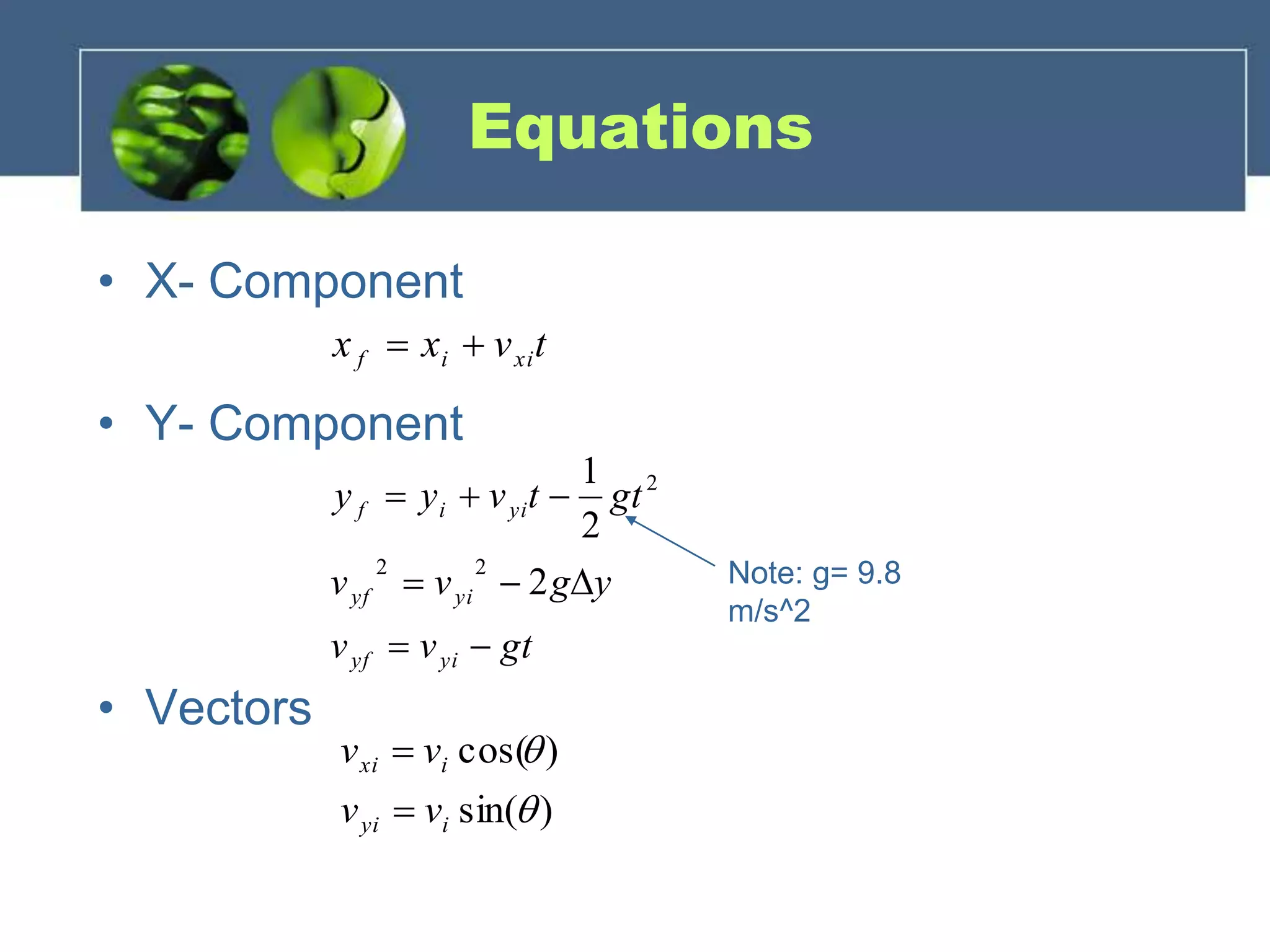
Equations
• X- Component
• Y- Component
• Vectors
tvxx xiif 
gtvv
ygvv
gttvyy
yiyf
yiyf
yiif



2
2
1
22
2
)sin(
)cos(


iyi
ixi
vv
vv


Note: g= 9.8
m/s^2
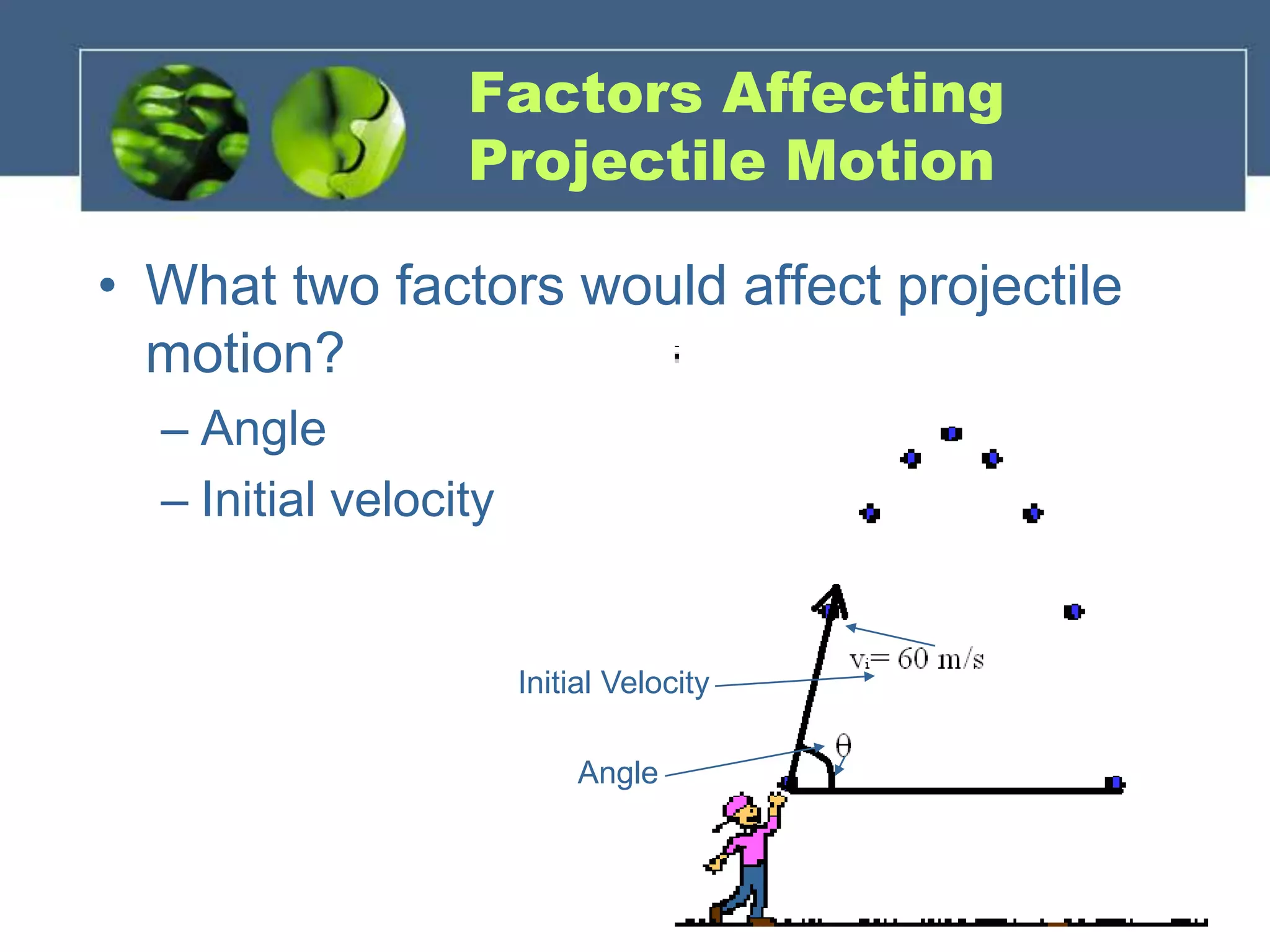
Factors Affecting
Projectile Motion
• What two factors would affect projectile
motion?
– Angle
– Initial velocity
Initial Velocity
Angle
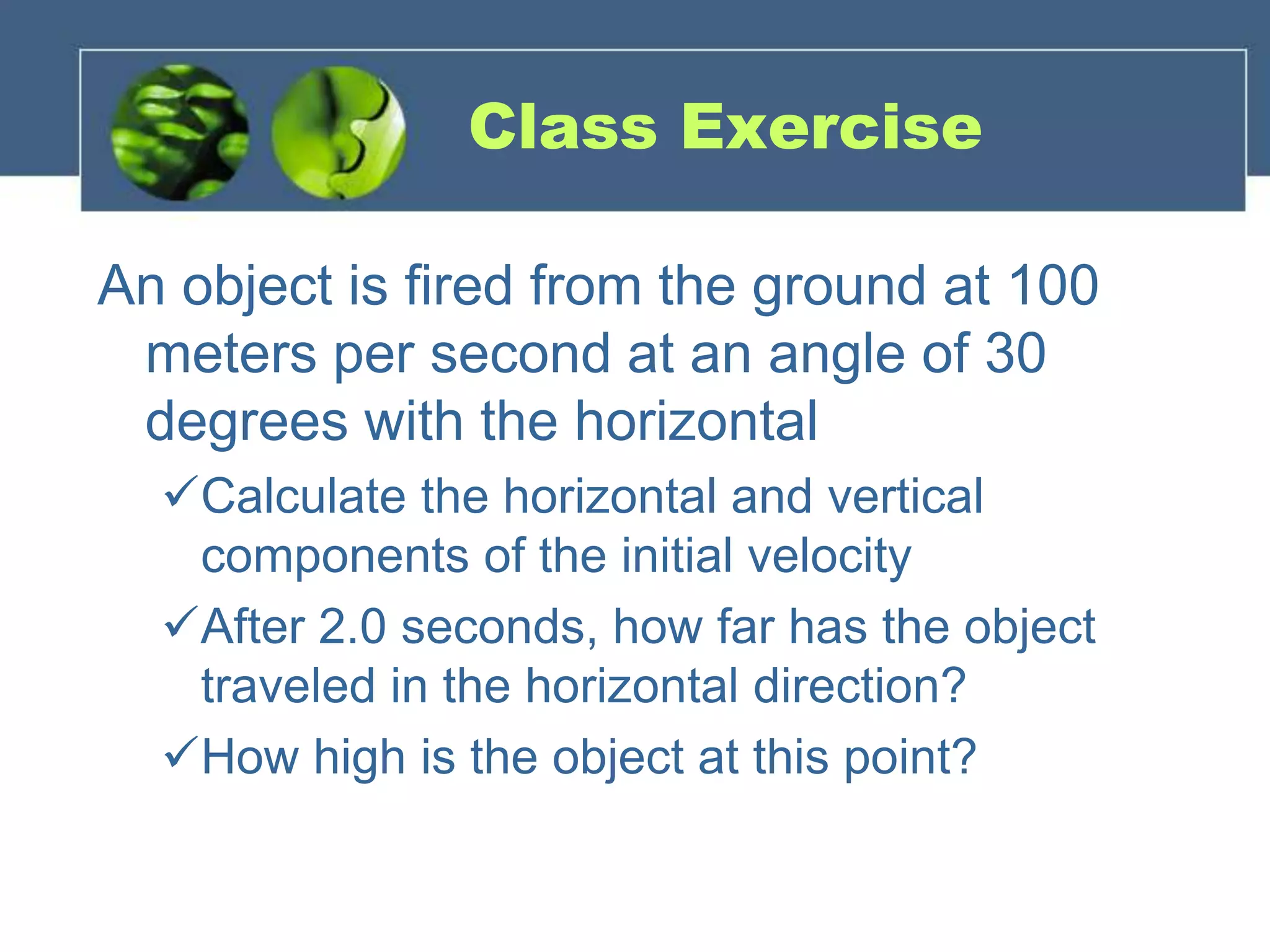
Class Exercise
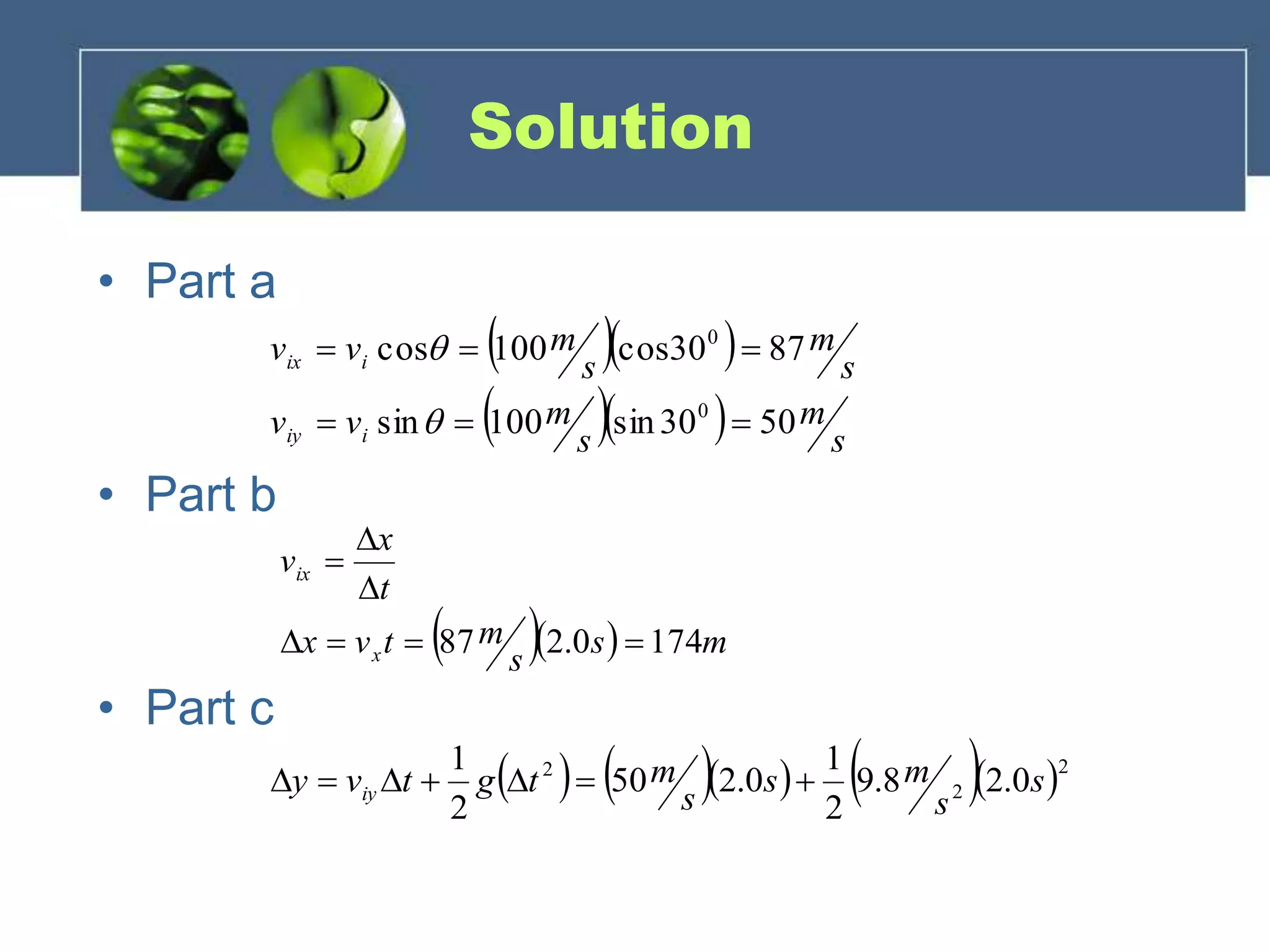
An object is fired from the ground at 100
meters per second at an angle of 30
degrees with the horizontal
Calculate the horizontal and vertical
components of the initial velocity
After 2.0 seconds, how far has the object
traveled in the horizontal direction?
How high is the object at this point?
Solution
• Part a
• Part b
• Part c
   ms
s
mtvx
t
x
v
x
ix
1740.287 



  
   s
m
s
mvv
s
m
s
mvv
iiy
iix
5030sin100sin
8730cos100cos
0
0




       2
2
2
0.28.9
2
1
0.250
2
1
s
s
ms
s
mtgtvy iy 
Applications
Any Ideas?
THANK YOU

Projectile motion

  • 1.
  • 2.
    Instructional Objectives: • Studentswill be able to: – Define Projectile Motion – Distinguish between the different types of projectile motion – Apply the concept to a toy car and measure its velocity
  • 3.
    Projectile Motion • Two-dimensionalmotion of an object – Vertical – Horizontal
  • 4.
    Types of Projectile Motion •Horizontal – Motion of a ball rolling freely along a level surface – Horizontal velocity is ALWAYS constant • Vertical – Motion of a freely falling object – Force due to gravity – Vertical component of velocity changes with time • Parabolic – Path traced by an object accelerating only in the vertical direction while moving at constant horizontal velocity
  • 5.
    Examples of Projectile Motion •Launching a Cannon ball
  • 7.
    Equations • X- Component •Y- Component • Vectors tvxx xiif  gtvv ygvv gttvyy yiyf yiyf yiif    2 2 1 22 2 )sin( )cos(   iyi ixi vv vv   Note: g= 9.8 m/s^2
  • 8.
    Factors Affecting Projectile Motion •What two factors would affect projectile motion? – Angle – Initial velocity Initial Velocity Angle
  • 9.
    Class Exercise An objectis fired from the ground at 100 meters per second at an angle of 30 degrees with the horizontal Calculate the horizontal and vertical components of the initial velocity After 2.0 seconds, how far has the object traveled in the horizontal direction? How high is the object at this point?
  • 10.
    Solution • Part a •Part b • Part c    ms s mtvx t x v x ix 1740.287           s m s mvv s m s mvv iiy iix 5030sin100sin 8730cos100cos 0 0            2 2 2 0.28.9 2 1 0.250 2 1 s s ms s mtgtvy iy 
  • 11.
  • 12.