Jim Damicis
Senior Vice President
Camoin Associates
March 23-24, 2017
Denver, CO
1
Economic Development
Strategic Planning
Project Identification
2
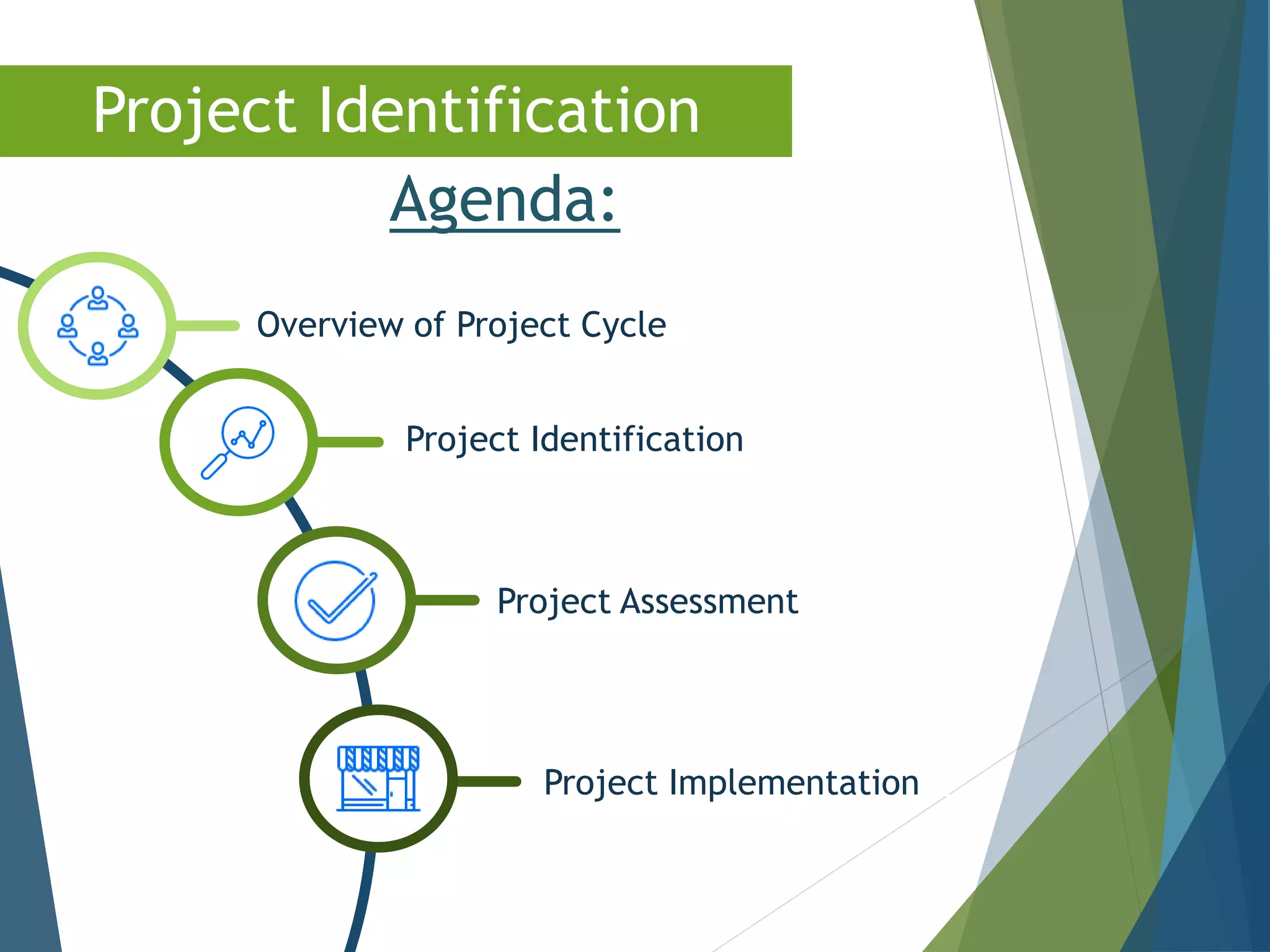
Overview of Project Cycle
Project Identification
Project Assessment
Project Implementation
Agenda:
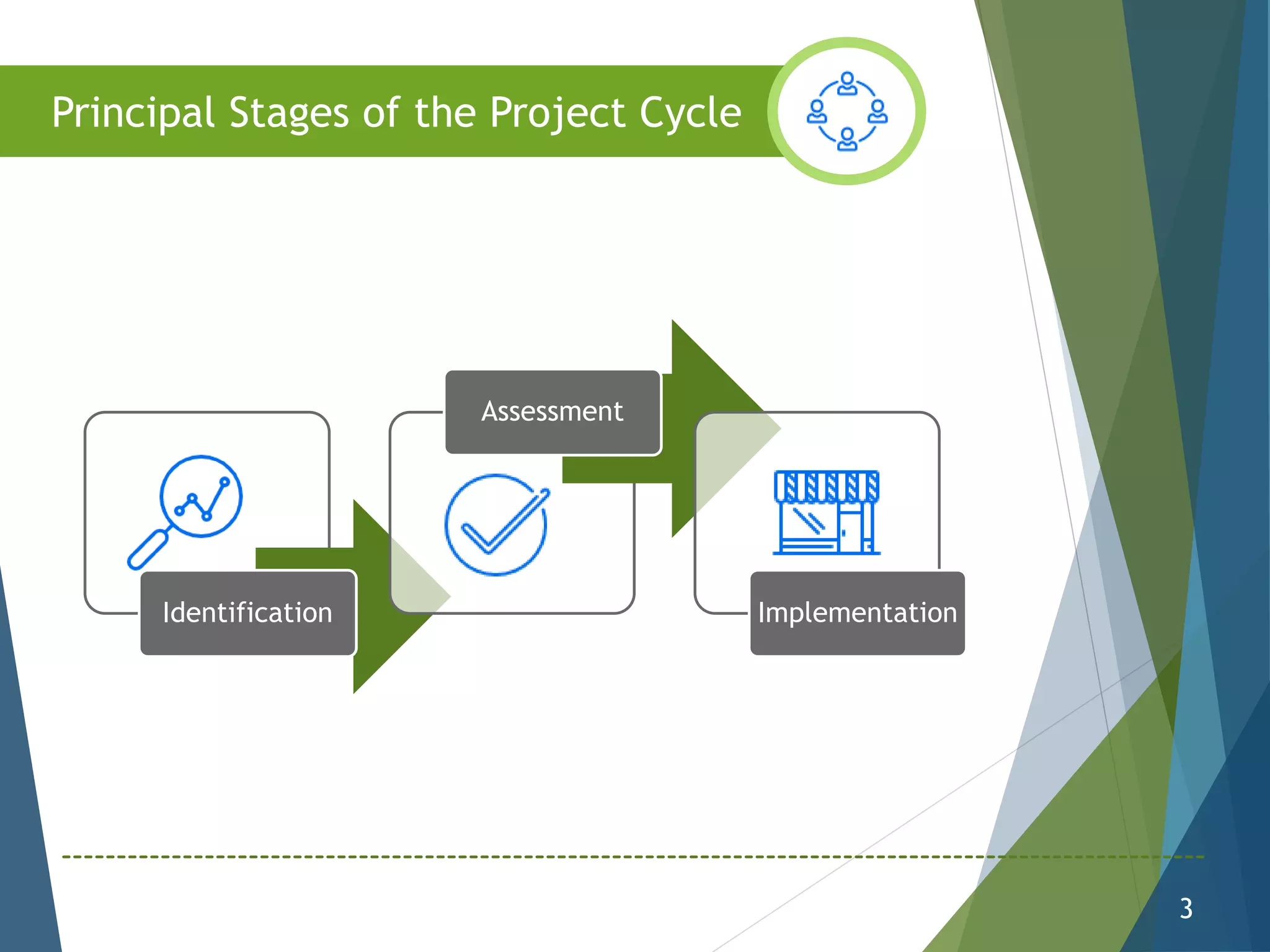
Identification
Assessment
Implementation
3
Principal Stages of the Project Cycle
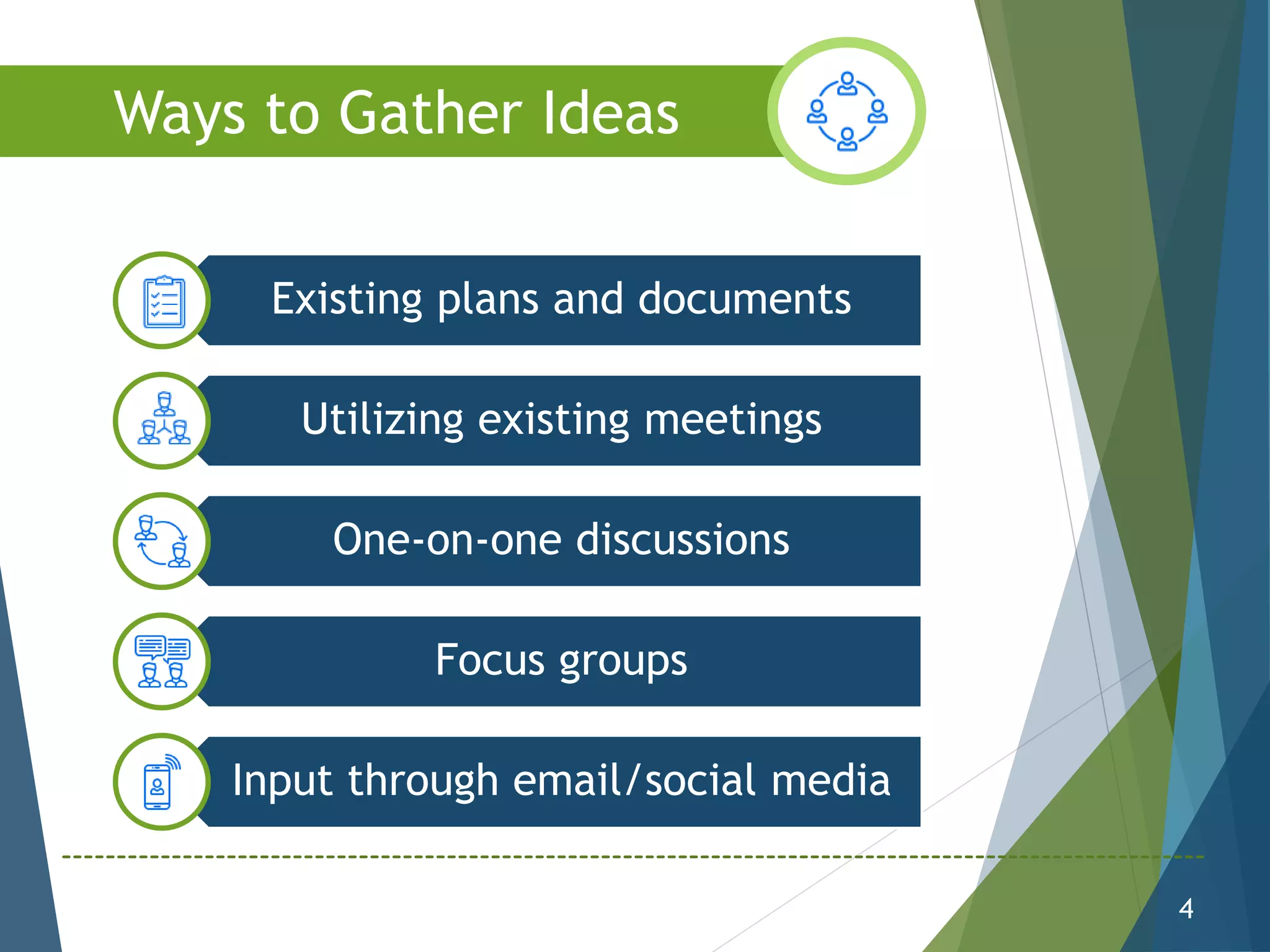
Existing plans and documents
Utilizing existing meetings
One-on-one discussions
Focus groups
Input through email/social media
4
Ways to Gather Ideas
 Consider range of alternative projects &
programs
 Identify projects & programs in light of:
 Strategic economic development goals
 Objectives
 Strategies established earlier
 Broadly evaluate project proposals
5
Project Identification
 Does it help achieve a goal or
objective?
 Does the community have the
resource & capacity to undertake
the program?
6
Note:
 Limit depth of analysis
 Decide if further consideration is warranted
Broad Criteria
• Individuals who identify proposals should prioritize project
options
• Stakeholders should establish set of standards or criteria
o Identify best possible projects
o Recognize both positive & negative impacts
• Conduct research to assess feasibility
o Initial or first phase: assess which proposals to pursue, &
prioritize
o Second phase: in-depth feasibility study
7
Project Assessment
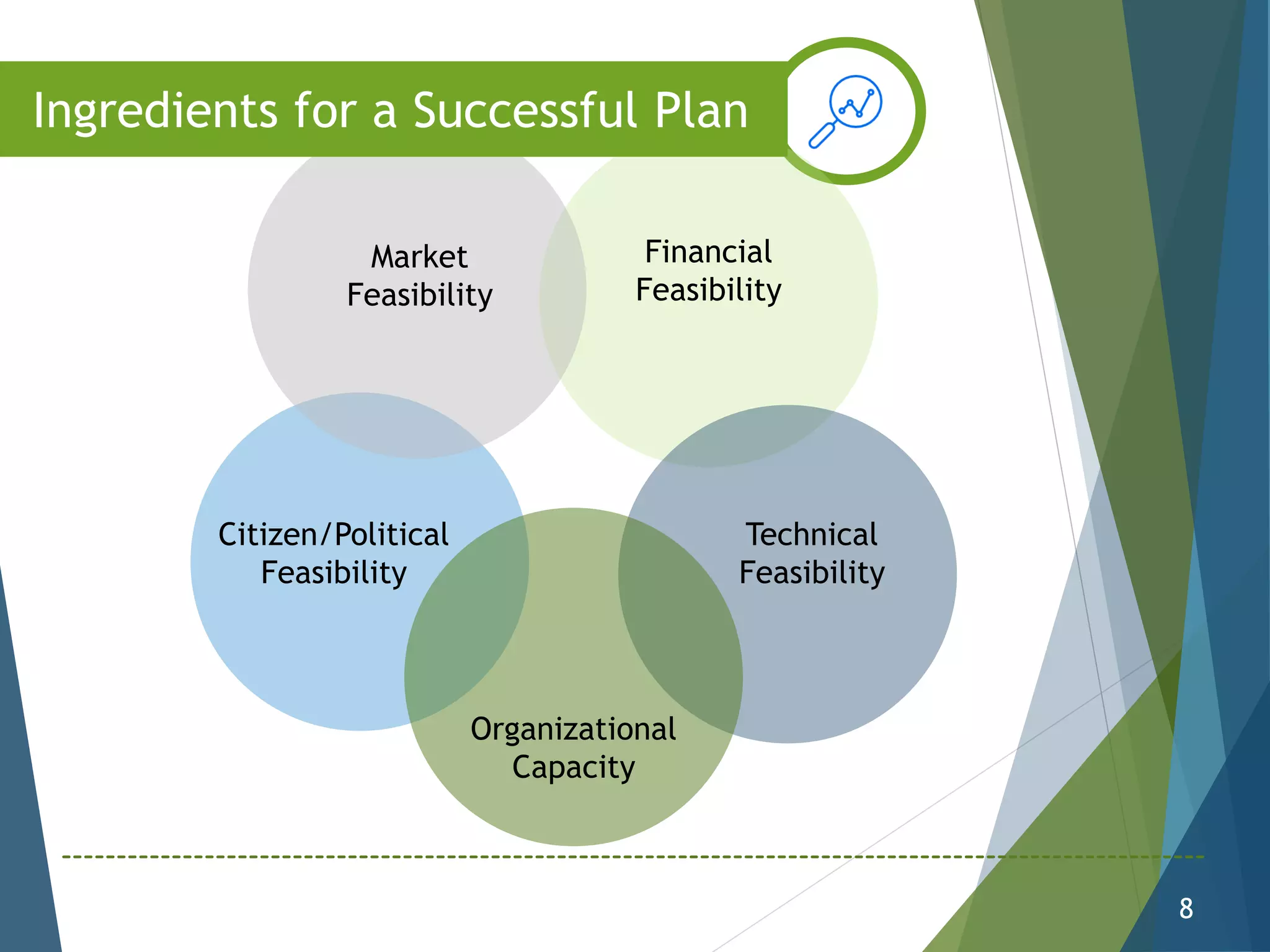
Market
Feasibility
Financial
Feasibility
Citizen/Political
Feasibility
Organizational
Capacity
Technical
Feasibility
Ingredients for a Successful Plan
8
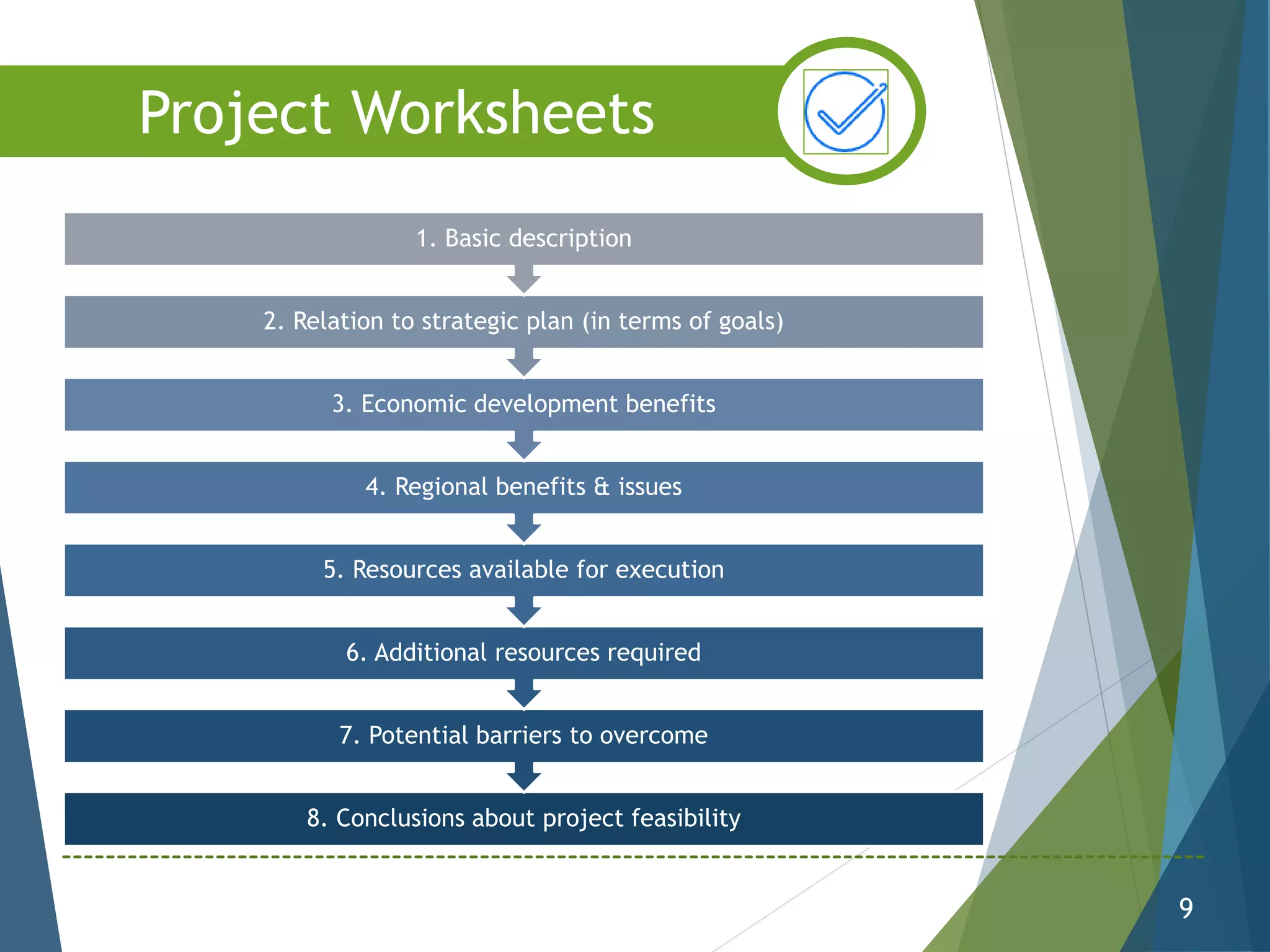
8. Conclusions about project feasibility
7. Potential barriers to overcome
6. Additional resources required
5. Resources available for execution
4. Regional benefits & issues
3. Economic development benefits
2. Relation to strategic plan (in terms of goals)
1. Basic description
9
Project Worksheets
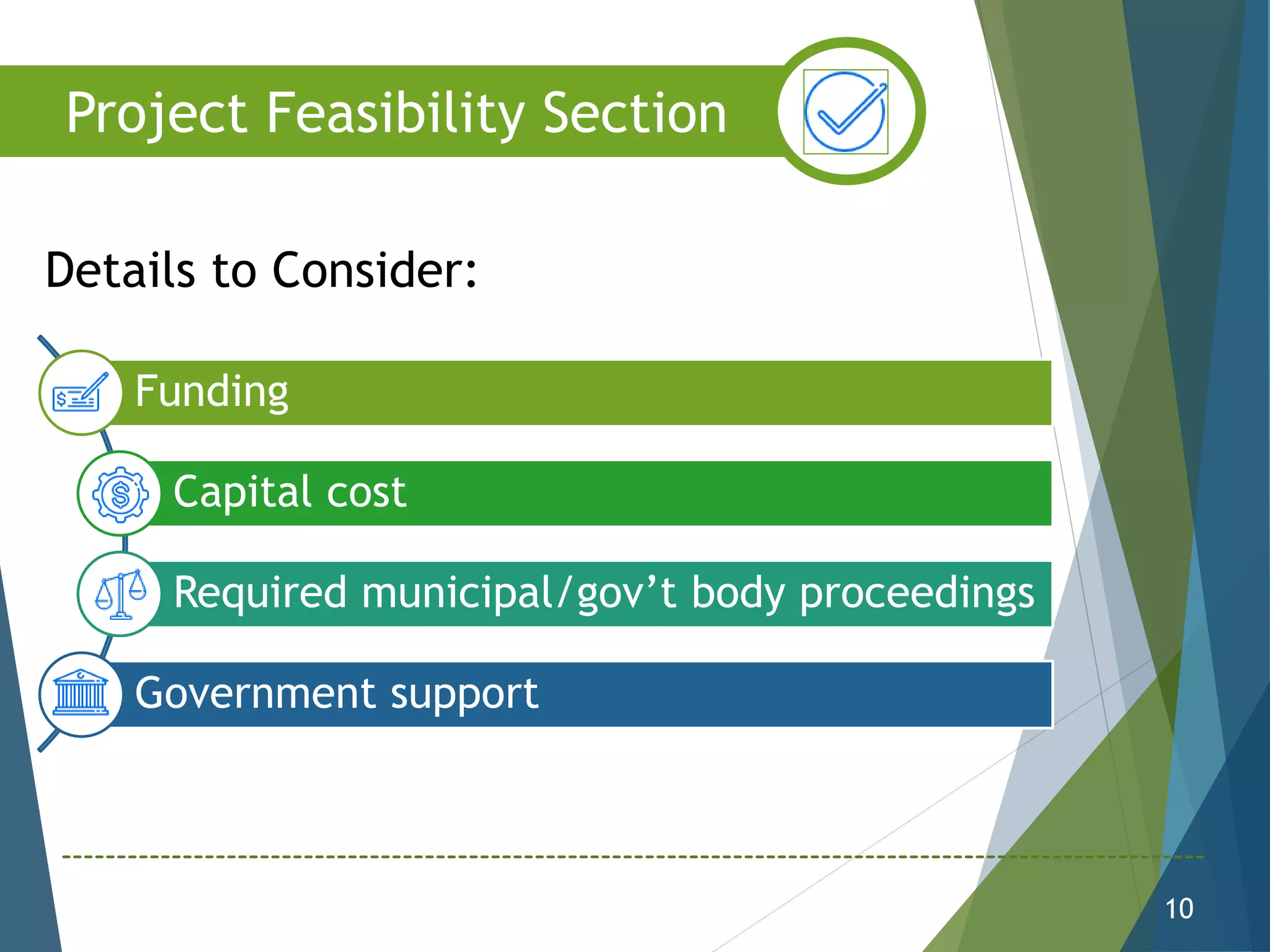
Funding
Capital cost
Required municipal/gov’t body proceedings
Government support
10
Project Feasibility Section
Details to Consider:
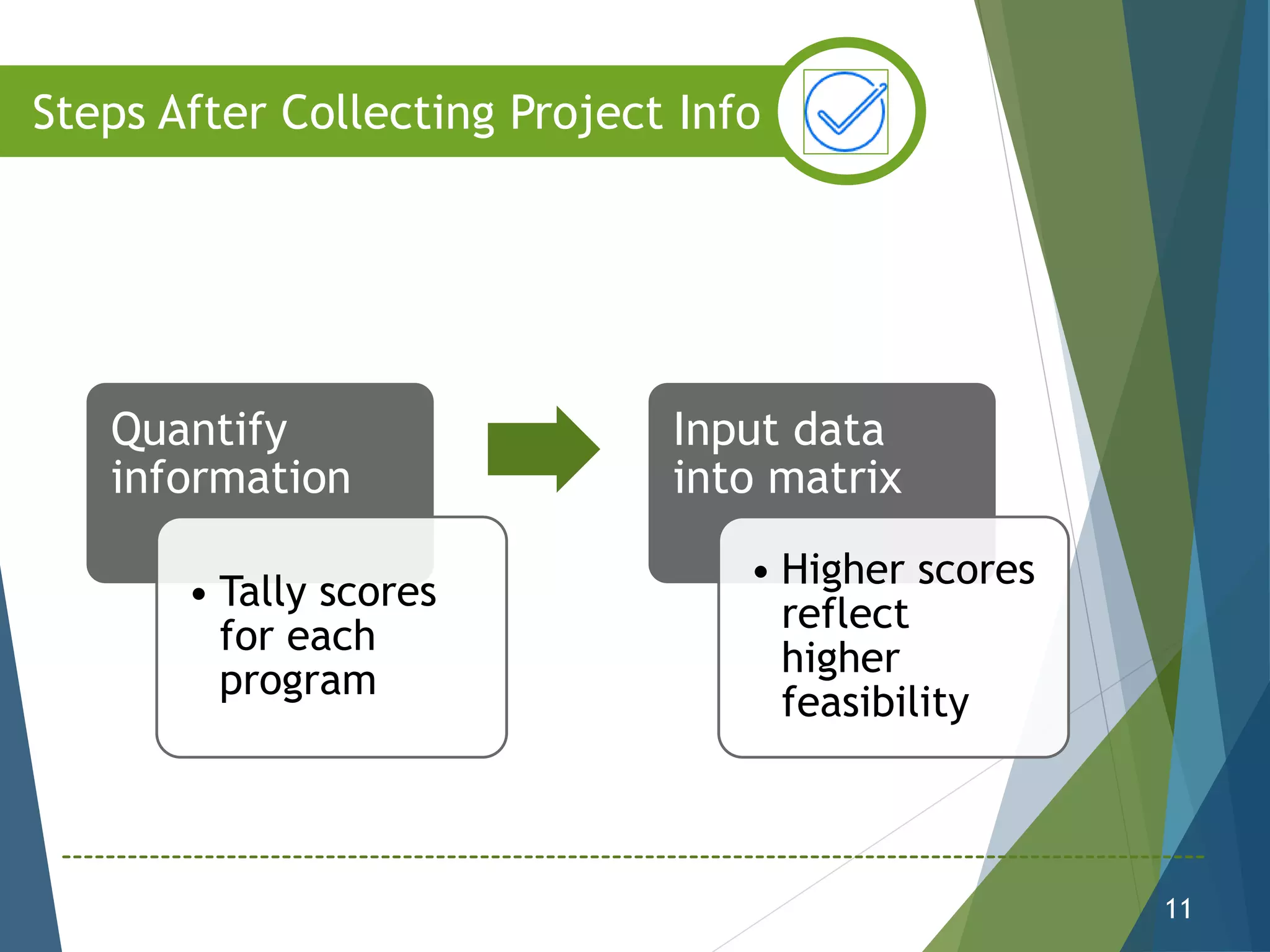
Quantify
information
• Tally scores
for each
program
Input data
into matrix
• Higher scores
reflect
higher
feasibility
11
Steps After Collecting Project Info
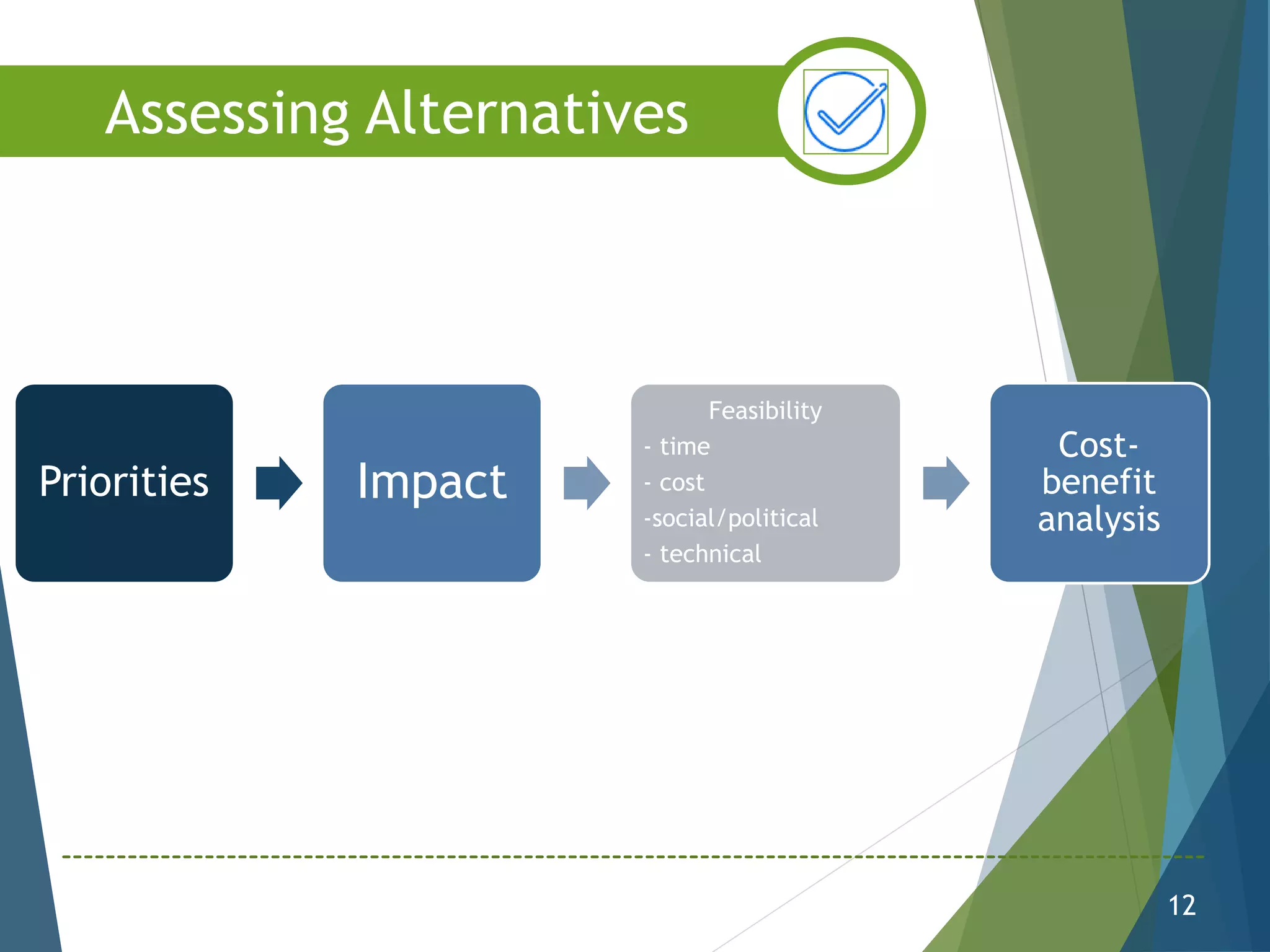
Priorities Impact
Feasibility
- time
- cost
-social/political
- technical
Cost-
benefit
analysis
12
Assessing Alternatives
 Projects that reflect plans, goals, & objectives rank higher
 Review alternatives individually
 Compare alternatives
 likely effects
 how well it meets specific goals
13
Establishing Priorities
 Determine positive & negative
 local economy
 regional way of life
 All ventures have advantages & disadvantages
 Estimate degree of impact of each
 Rank projects with greatest net effects as top priorities
14
Measuring Impact
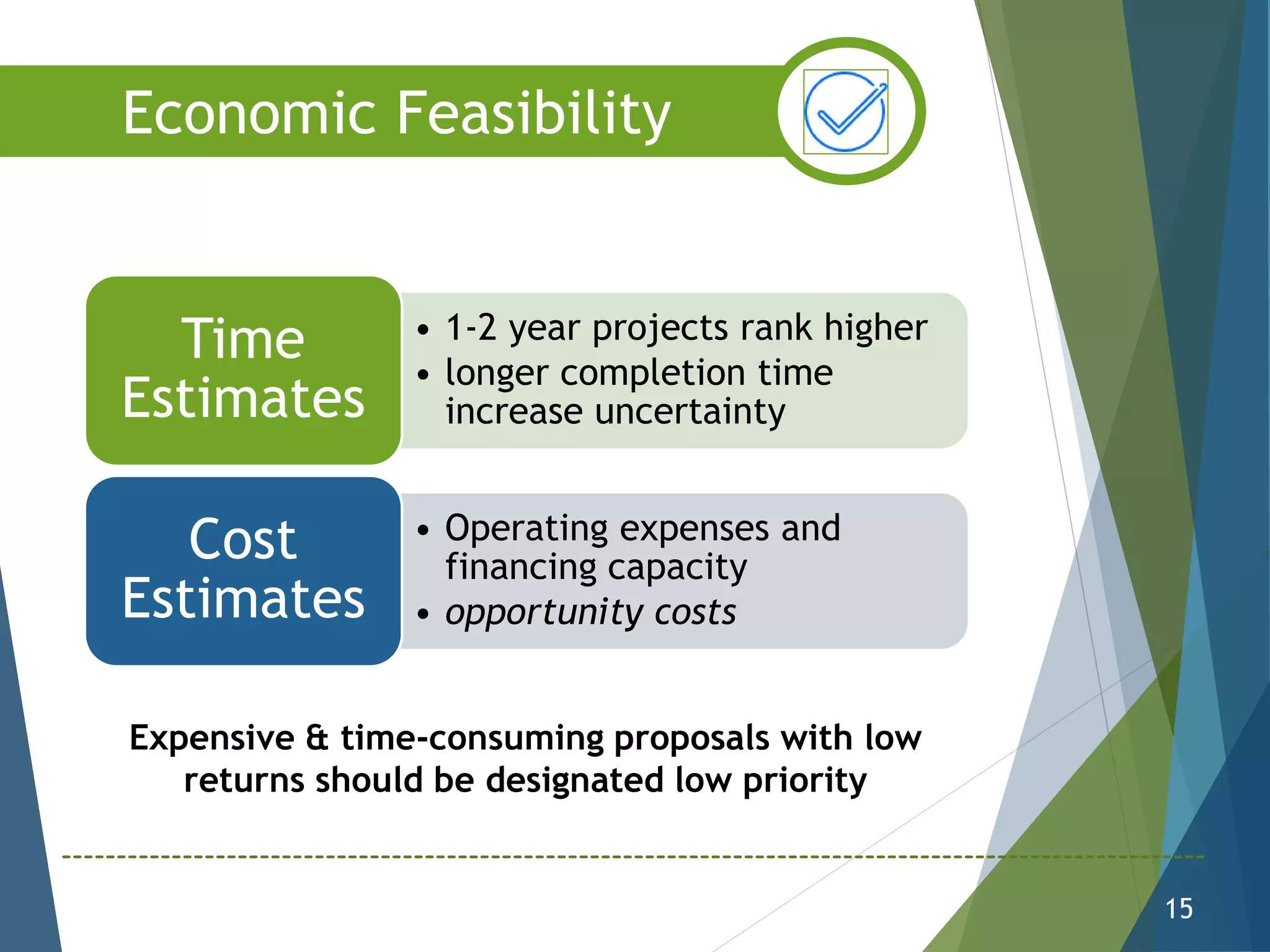
• 1-2 year projects rank higher
• longer completion time
increase uncertainty
Time
Estimates
• Operating expenses and
financing capacity
• opportunity costs
Cost
Estimates
15
Economic Feasibility
Expensive & time-consuming proposals with low
returns should be designated low priority
 Determines economic viability
 Used to assess a single project or for comparison
 Can be used to determine most efficient use of
resources
 Process
 Identify & calculate costs & benefits
 Calculate the net impact
16
Cost-Benefit Analysis
 Project costs do not include sunk costs
 Costs, prior to implementation, may include
 Existing infrastructure
 Buildings
 Services
 Supplies
17
Sunk Costs
 All revenue that results from project
operation
 Measured by increase in output or cost
savings
 Examples of project revenues
 Municipal taxes
 Fees or charges for services
 Sale of remaining equipment
18
Benefits
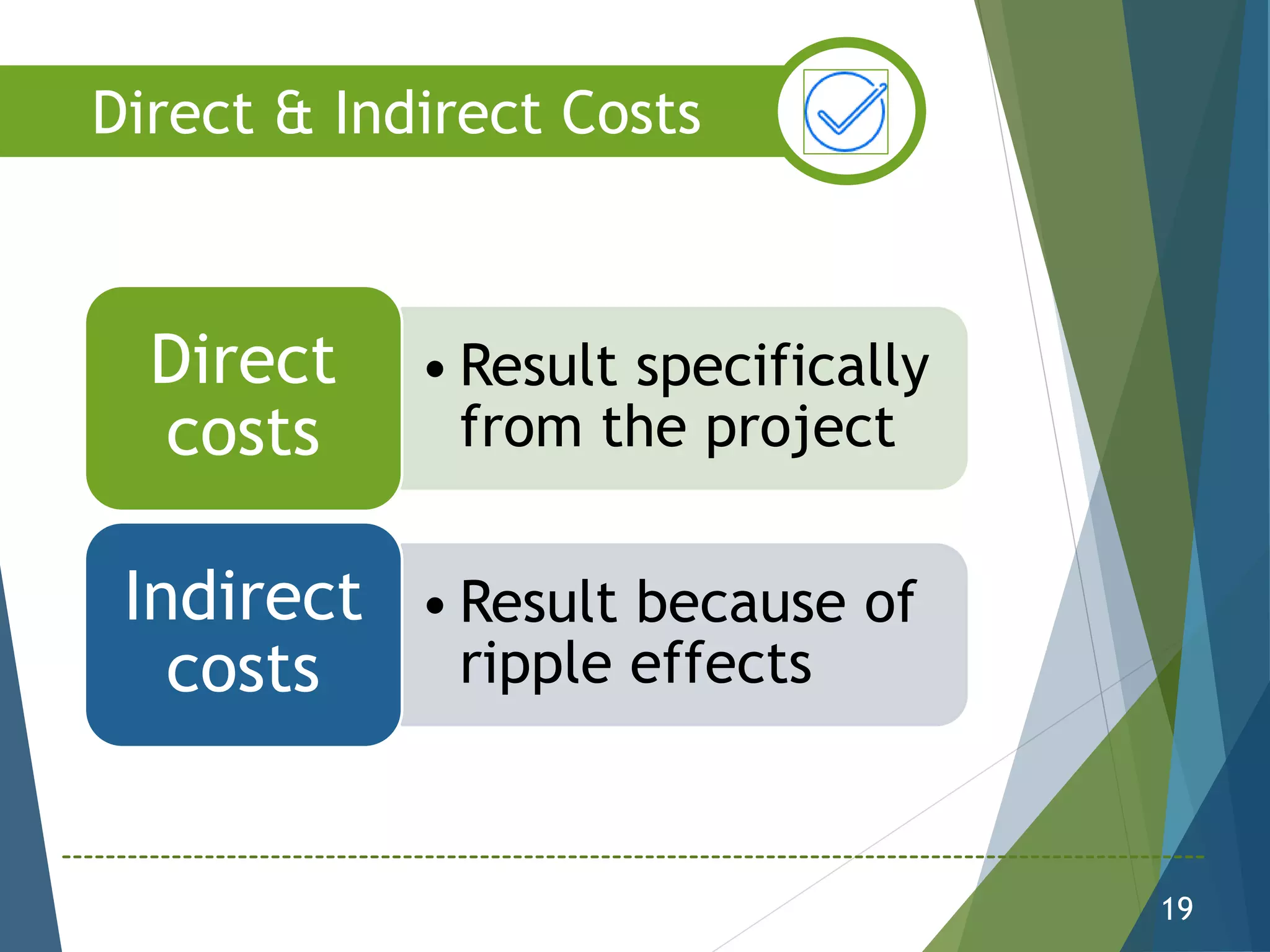
• Result specifically
from the project
Direct
costs
• Result because of
ripple effects
Indirect
costs
19
Direct & Indirect Costs
Rank highly proposals with a great degree of
community support from public officials,
business leaders, & residents.
Social support can make or break a program
alternative.
20
Social/Political Feasibility
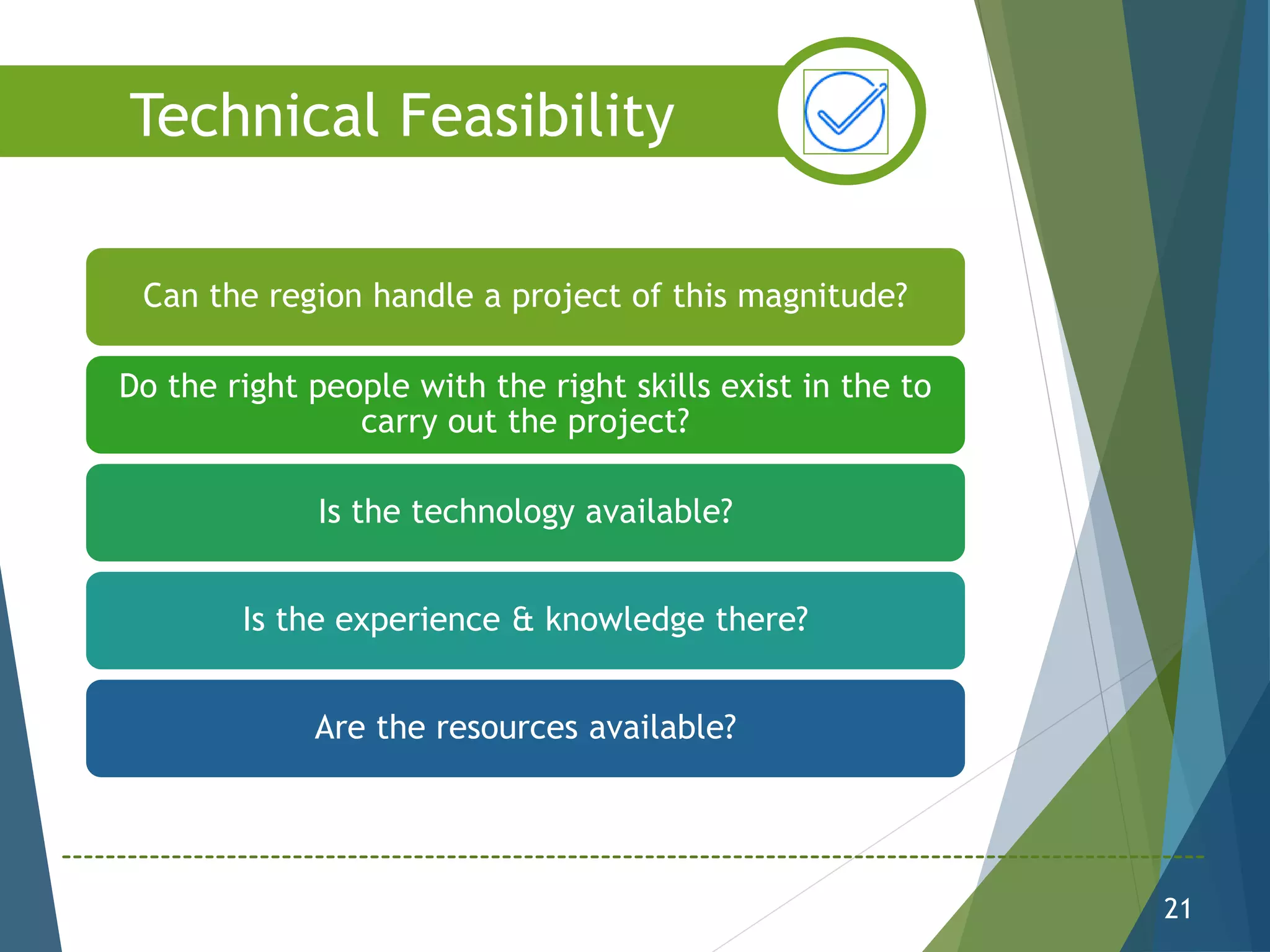
Can the region handle a project of this magnitude?
Do the right people with the right skills exist in the to
carry out the project?
Is the technology available?
Is the experience & knowledge there?
Are the resources available?
21
Technical Feasibility
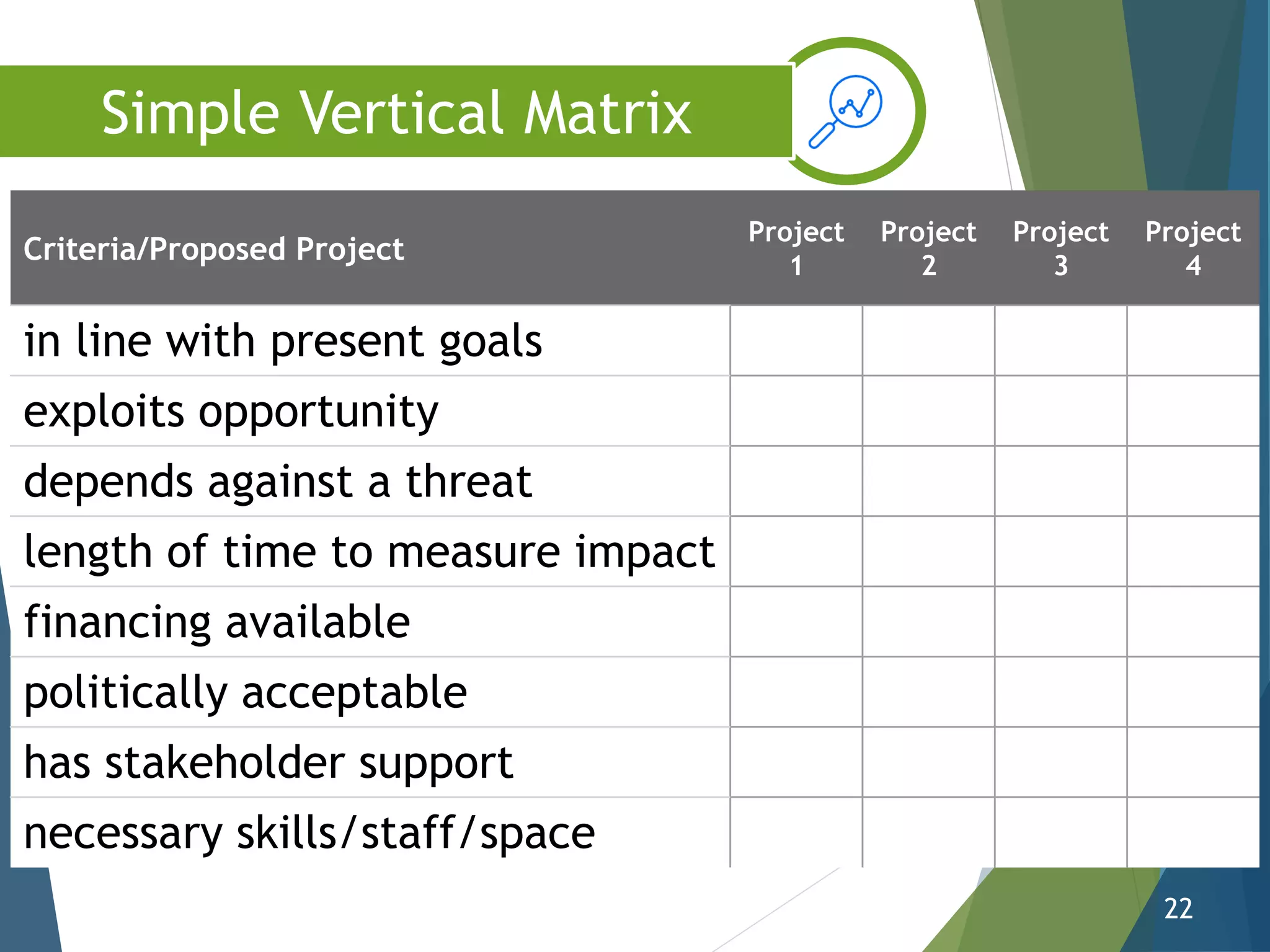
Criteria/Proposed Project
Project
1
Project
2
Project
3
Project
4
in line with present goals
exploits opportunity
depends against a threat
length of time to measure impact
financing available
politically acceptable
has stakeholder support
necessary skills/staff/space
22
Simple Vertical Matrix
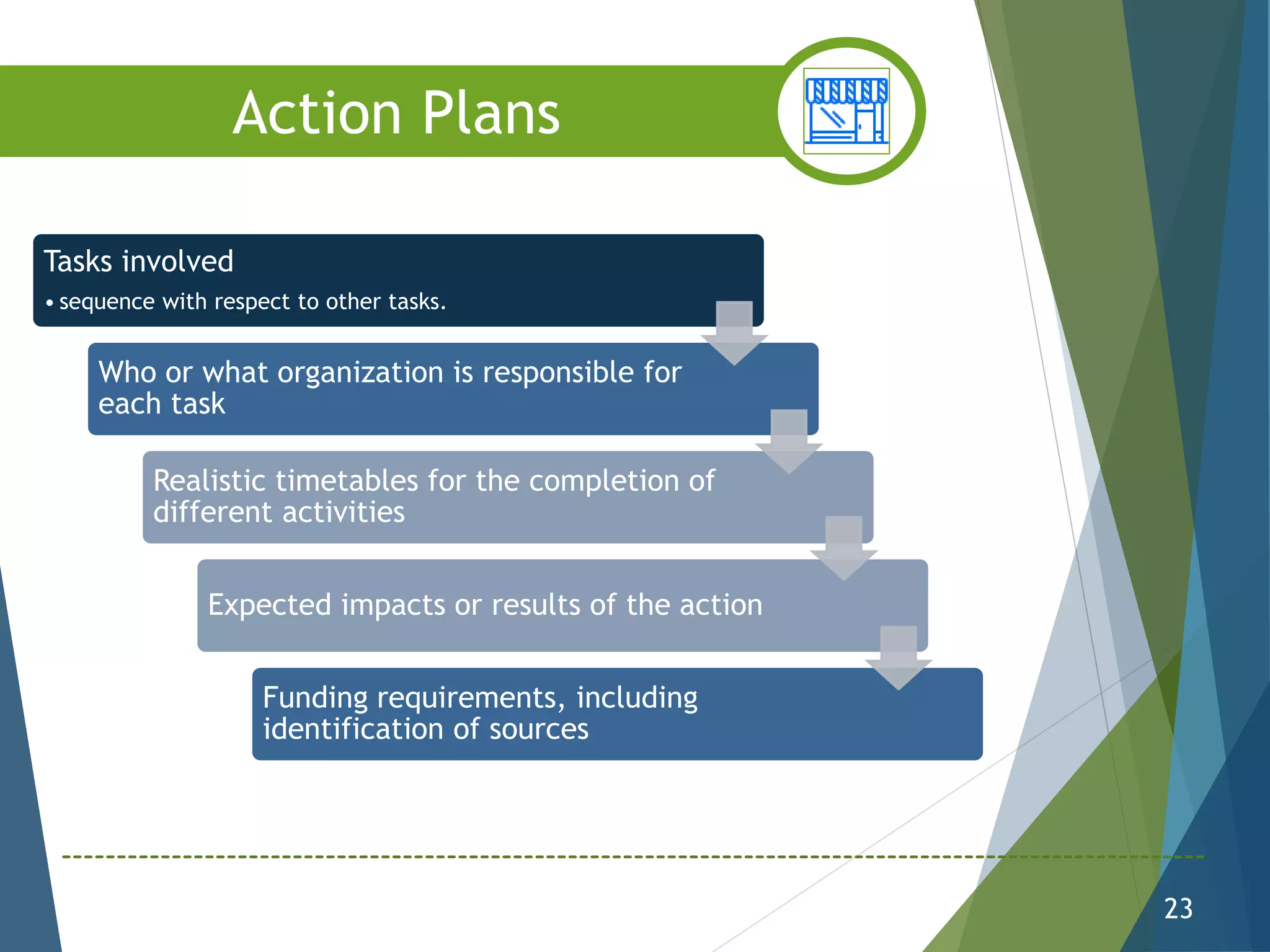
Tasks involved
• sequence with respect to other tasks.
Who or what organization is responsible for
each task
Realistic timetables for the completion of
different activities
Expected impacts or results of the action
Funding requirements, including
identification of sources
23
Action Plans
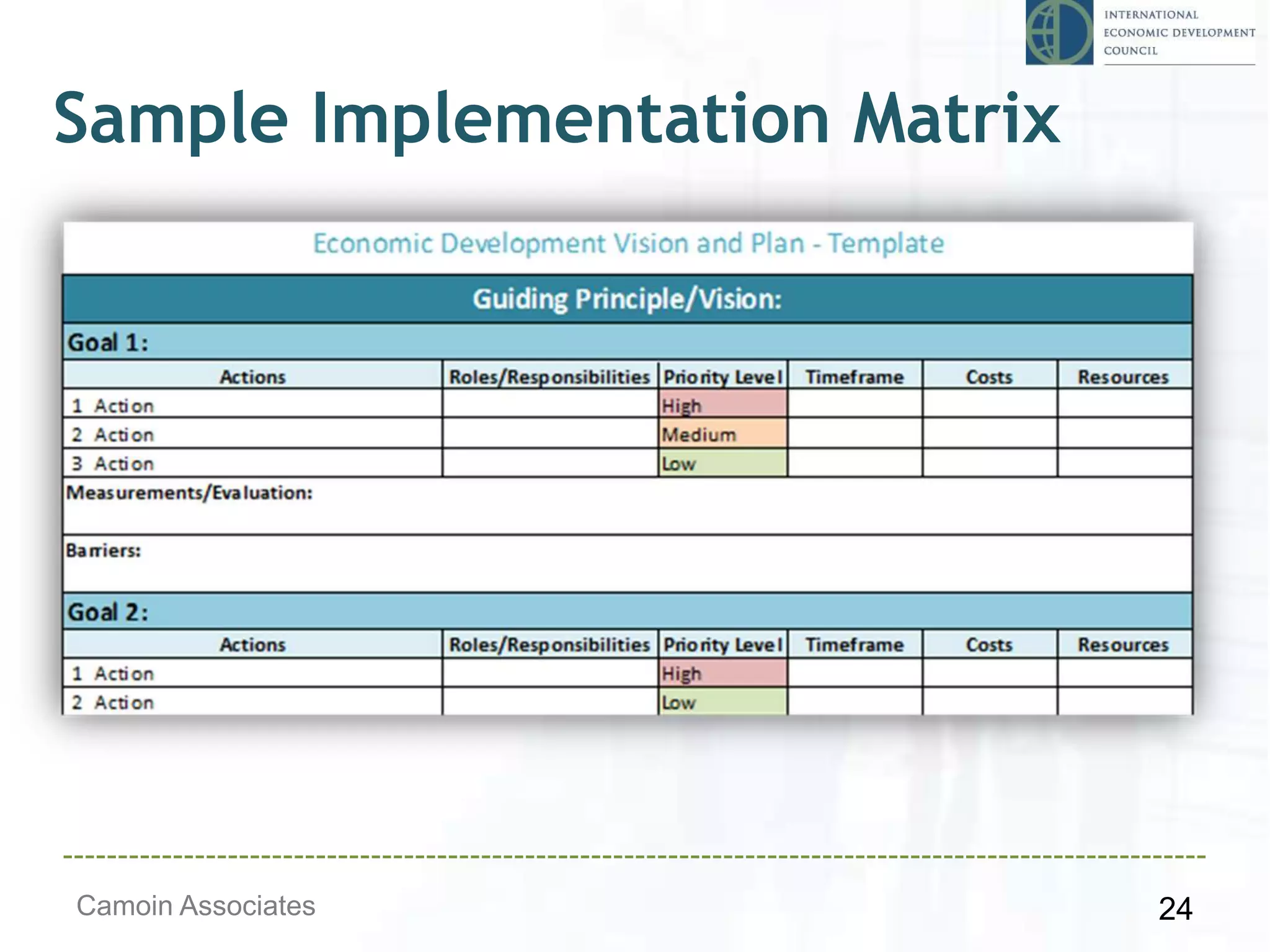
Camoin Associates 24
Sample Implementation Matrix
 Need for flexibility
 Leave room for changes & delays
 Develop strategy for problem
resolution
 Keeping the plan alive
 Marketing, market, marketing
25
Implementing Programs
 Revisit & update annually
 Confirm or adjust
 Opportunities or threats require
immediate action
 New grant program, plant closing,
natural disaster
26
Amending Programs & Successive Planning Efforts
Contact Information
o jim@camoinassociates.com
o www.camoinassociates.com
o Twitter: @jdamicis
o Linkedin: www.linkedin.com/in/jdamicis
o Economic Development Navigator: www.camoinassociates.com/navigator
Economic Development
Contact Information

Project Identification in Strategic Planning

  • 1.
    Jim Damicis Senior VicePresident Camoin Associates March 23-24, 2017 Denver, CO 1 Economic Development Strategic Planning
  • 2.
    Project Identification 2 Overview ofProject Cycle Project Identification Project Assessment Project Implementation Agenda:
  • 3.
  • 4.
    Existing plans anddocuments Utilizing existing meetings One-on-one discussions Focus groups Input through email/social media 4 Ways to Gather Ideas
  • 5.
     Consider rangeof alternative projects & programs  Identify projects & programs in light of:  Strategic economic development goals  Objectives  Strategies established earlier  Broadly evaluate project proposals 5 Project Identification
  • 6.
     Does ithelp achieve a goal or objective?  Does the community have the resource & capacity to undertake the program? 6 Note:  Limit depth of analysis  Decide if further consideration is warranted Broad Criteria
  • 7.
    • Individuals whoidentify proposals should prioritize project options • Stakeholders should establish set of standards or criteria o Identify best possible projects o Recognize both positive & negative impacts • Conduct research to assess feasibility o Initial or first phase: assess which proposals to pursue, & prioritize o Second phase: in-depth feasibility study 7 Project Assessment
  • 8.
  • 9.
    8. Conclusions aboutproject feasibility 7. Potential barriers to overcome 6. Additional resources required 5. Resources available for execution 4. Regional benefits & issues 3. Economic development benefits 2. Relation to strategic plan (in terms of goals) 1. Basic description 9 Project Worksheets
  • 10.
    Funding Capital cost Required municipal/gov’tbody proceedings Government support 10 Project Feasibility Section Details to Consider:
  • 11.
    Quantify information • Tally scores foreach program Input data into matrix • Higher scores reflect higher feasibility 11 Steps After Collecting Project Info
  • 12.
    Priorities Impact Feasibility - time -cost -social/political - technical Cost- benefit analysis 12 Assessing Alternatives
  • 13.
     Projects thatreflect plans, goals, & objectives rank higher  Review alternatives individually  Compare alternatives  likely effects  how well it meets specific goals 13 Establishing Priorities
  • 14.
     Determine positive& negative  local economy  regional way of life  All ventures have advantages & disadvantages  Estimate degree of impact of each  Rank projects with greatest net effects as top priorities 14 Measuring Impact
  • 15.
    • 1-2 yearprojects rank higher • longer completion time increase uncertainty Time Estimates • Operating expenses and financing capacity • opportunity costs Cost Estimates 15 Economic Feasibility Expensive & time-consuming proposals with low returns should be designated low priority
  • 16.
     Determines economicviability  Used to assess a single project or for comparison  Can be used to determine most efficient use of resources  Process  Identify & calculate costs & benefits  Calculate the net impact 16 Cost-Benefit Analysis
  • 17.
     Project costsdo not include sunk costs  Costs, prior to implementation, may include  Existing infrastructure  Buildings  Services  Supplies 17 Sunk Costs
  • 18.
     All revenuethat results from project operation  Measured by increase in output or cost savings  Examples of project revenues  Municipal taxes  Fees or charges for services  Sale of remaining equipment 18 Benefits
  • 19.
    • Result specifically fromthe project Direct costs • Result because of ripple effects Indirect costs 19 Direct & Indirect Costs
  • 20.
    Rank highly proposalswith a great degree of community support from public officials, business leaders, & residents. Social support can make or break a program alternative. 20 Social/Political Feasibility
  • 21.
    Can the regionhandle a project of this magnitude? Do the right people with the right skills exist in the to carry out the project? Is the technology available? Is the experience & knowledge there? Are the resources available? 21 Technical Feasibility
  • 22.
    Criteria/Proposed Project Project 1 Project 2 Project 3 Project 4 in linewith present goals exploits opportunity depends against a threat length of time to measure impact financing available politically acceptable has stakeholder support necessary skills/staff/space 22 Simple Vertical Matrix
  • 23.
    Tasks involved • sequencewith respect to other tasks. Who or what organization is responsible for each task Realistic timetables for the completion of different activities Expected impacts or results of the action Funding requirements, including identification of sources 23 Action Plans
  • 24.
    Camoin Associates 24 SampleImplementation Matrix
  • 25.
     Need forflexibility  Leave room for changes & delays  Develop strategy for problem resolution  Keeping the plan alive  Marketing, market, marketing 25 Implementing Programs
  • 26.
     Revisit &update annually  Confirm or adjust  Opportunities or threats require immediate action  New grant program, plant closing, natural disaster 26 Amending Programs & Successive Planning Efforts
  • 27.
    Contact Information o jim@camoinassociates.com owww.camoinassociates.com o Twitter: @jdamicis o Linkedin: www.linkedin.com/in/jdamicis o Economic Development Navigator: www.camoinassociates.com/navigator Economic Development Contact Information