M R . P R A H L A D A G
F A C U L T Y
D E P T . O F S O C I A L W O R K . U C A T
T U M K U R U N I V E R S I T Y , T U M K U R
Project cycle and Project
management
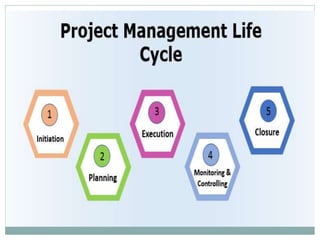
phases of the project management life
cycle
1. Initiation
2. Planning
3. Execution
4. monitoring/controlling
5. Closure
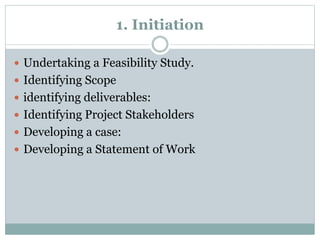
1. Initiation
 Undertaking a Feasibility Study.
 Identifying Scope
 identifying deliverables:
 Identifying Project Stakeholders
 Developing a case:
 Developing a Statement of Work
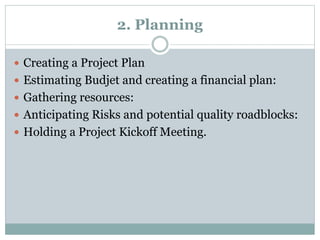
2. Planning
 Creating a Project Plan
 Estimating Budjet and creating a financial plan:
 Gathering resources:
 Anticipating Risks and potential quality roadblocks:
 Holding a Project Kickoff Meeting.
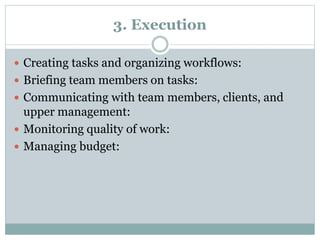
3. Execution
 Creating tasks and organizing workflows:
 Briefing team members on tasks:
 Communicating with team members, clients, and
upper management:
 Monitoring quality of work:
 Managing budget:
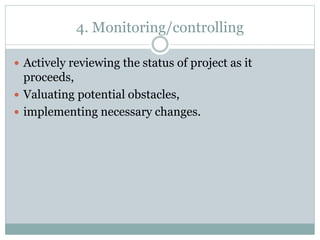
4. Monitoring/controlling
 Actively reviewing the status of project as it
proceeds,
 Valuating potential obstacles,
 implementing necessary changes.
5. Closure
 Analyzing project performance:
 Analyzing team performance:
 Documenting project closure:
 Conducting post-implementation reviews:
 Accounting for used and unused
Thank
You

Project Cycle.pptx

  • 1.
    M R .P R A H L A D A G F A C U L T Y D E P T . O F S O C I A L W O R K . U C A T T U M K U R U N I V E R S I T Y , T U M K U R Project cycle and Project management
  • 3.
    phases of theproject management life cycle 1. Initiation 2. Planning 3. Execution 4. monitoring/controlling 5. Closure
  • 4.
    1. Initiation  Undertakinga Feasibility Study.  Identifying Scope  identifying deliverables:  Identifying Project Stakeholders  Developing a case:  Developing a Statement of Work
  • 5.
    2. Planning  Creatinga Project Plan  Estimating Budjet and creating a financial plan:  Gathering resources:  Anticipating Risks and potential quality roadblocks:  Holding a Project Kickoff Meeting.
  • 6.
    3. Execution  Creatingtasks and organizing workflows:  Briefing team members on tasks:  Communicating with team members, clients, and upper management:  Monitoring quality of work:  Managing budget:
  • 7.
    4. Monitoring/controlling  Activelyreviewing the status of project as it proceeds,  Valuating potential obstacles,  implementing necessary changes.
  • 8.
    5. Closure  Analyzingproject performance:  Analyzing team performance:  Documenting project closure:  Conducting post-implementation reviews:  Accounting for used and unused
  • 9.