“Project-based multimedia
learning redefines boundaries of
    the classroom. No longer are
   students confined to learning
                within the walls”.
Teacher Nachielle teaces social
studies. Her students, as part of
their studies of medieval history
            created a multimedia
   presentation about the Black
      Plaque. She teamed with a
           teacher in the science
        department for the unit.
In science, students created
  animations that simulated how
the plaque virus attack the body.
    In social studies they created
  computer-based presentations
      looking at the plaque from
        various perspectives that
                      included 14th
century farmers and 21st century
   scientists. Their presentations
used primary historical resources,
  as well as literature and current
        events. The presentation
compared the plaque to the AIDS
                   epidemic today.
Entering teachers Nicolle’s class,
you first notice that every child is
 completely engrossed. Second,
    you notice the cacophony of
      voices, raising and falling in
   intense animated discussions
    among small groups of third
                          graders.
You look or the teacher – she isn’t
 conveniently located at the front
  of the room. Finally, you see her
down among a group of students.
 You wait for her to notice you as
  she show the group how to use
        the index of a book to find
   information about shelter for a
                    tribe of Aetas.
As you wait, your eyes move from
             group to group. At the
computers, three boys are typing
  some text they have composed
  for their presentations. A group
of girls paints a colorful scene of a
         tribe of Aetas’ village to be
                              scanned
into the presentation software
later. Another group of boys uses
 a Venn diagram to show foods in
  their diet, food in “their” tribe’s
        diet and food they have in
  common. You want to ask them
about their work but can’t bear to
        break their concentration.
Teacher Nicole notices you and
      starts toward you, but each
    group of students she passes
   stops her to proudly show off
        their work or ask to check
  something. She finally reaches
     you and starts to explain the
various activities the children are
      working on to prepare their
multimedia presentation – content
 research, art, language arts, math
  and technology activities she has
 designed for the project. You talk
  for almost 10 minutes before you
notice the most amazing things of
 all – the children are still working,
  still engrossed, still animated and
                              focused.
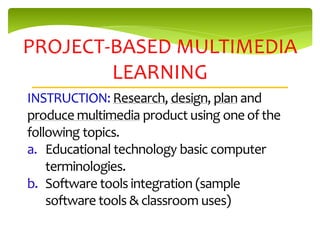
PROJECT-BASED MULTIMEDIA
        LEARNING
•   Project-based multimedia learning is a
    teaching method in which students
    “acquire new knowledge and skills in the
    course of designing, planning, and
    producing multimedia product.” (Simkins,
    et al, 2012.)
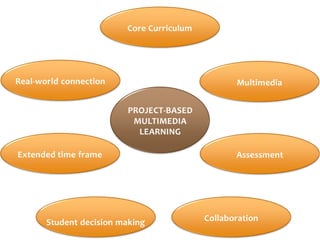
Core Curriculum


Real-world connection                             Multimedia


                          PROJECT-BASED
                           MULTIMEDIA
                            LEARNING

Extended time frame                               Assessment


       Student decision making             Collaboration
WHY USE PROJECT-BASED
MULTIMEDIA LEARNING?
WHAT CAN BE SOME
LIMITATIONS OF THE USE OF
PROJECT-BASED LEARNING
STRATEGIES?
•   Need for an extended period of
    time.
•   Requires technical skills.
•   Tendency to lose track of the
    goals and objectives of your
    lesson because technology has
    gotten limelight.
APPLICATION
PROJECT-BASED MULTIMEDIA
        LEARNING
INSTRUCTION: Research, design, plan and
produce multimedia product using one of the
following topics.
a. Educational technology basic computer
    terminologies.
b. Software tools integration (sample
    software tools & classroom uses)
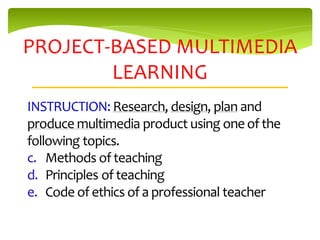
PROJECT-BASED MULTIMEDIA
        LEARNING
INSTRUCTION: Research, design, plan and
produce multimedia product using one of the
following topics.
c. Methods of teaching
d. Principles of teaching
e. Code of ethics of a professional teacher
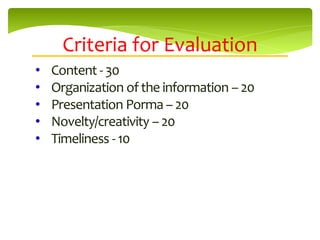
Criteria for Evaluation
•   Content - 30
•   Organization of the information – 20
•   Presentation Porma – 20
•   Novelty/creativity – 20
•   Timeliness - 10
REFERENCE
Corpuz, Brenda B. and Lucido, Paz L. (2008). Educational
  technology 1. Cubao Quezon City, Philippines:
  Lorimar Publishing, Inc.

Project based multimedia learning

  • 1.
    “Project-based multimedia learning redefinesboundaries of the classroom. No longer are students confined to learning within the walls”.
  • 2.
    Teacher Nachielle teacessocial studies. Her students, as part of their studies of medieval history created a multimedia presentation about the Black Plaque. She teamed with a teacher in the science department for the unit.
  • 3.
    In science, studentscreated animations that simulated how the plaque virus attack the body. In social studies they created computer-based presentations looking at the plaque from various perspectives that included 14th
  • 4.
    century farmers and21st century scientists. Their presentations used primary historical resources, as well as literature and current events. The presentation compared the plaque to the AIDS epidemic today.
  • 5.
    Entering teachers Nicolle’sclass, you first notice that every child is completely engrossed. Second, you notice the cacophony of voices, raising and falling in intense animated discussions among small groups of third graders.
  • 6.
    You look orthe teacher – she isn’t conveniently located at the front of the room. Finally, you see her down among a group of students. You wait for her to notice you as she show the group how to use the index of a book to find information about shelter for a tribe of Aetas.
  • 7.
    As you wait,your eyes move from group to group. At the computers, three boys are typing some text they have composed for their presentations. A group of girls paints a colorful scene of a tribe of Aetas’ village to be scanned
  • 8.
    into the presentationsoftware later. Another group of boys uses a Venn diagram to show foods in their diet, food in “their” tribe’s diet and food they have in common. You want to ask them about their work but can’t bear to break their concentration.
  • 9.
    Teacher Nicole noticesyou and starts toward you, but each group of students she passes stops her to proudly show off their work or ask to check something. She finally reaches you and starts to explain the various activities the children are working on to prepare their
  • 10.
    multimedia presentation –content research, art, language arts, math and technology activities she has designed for the project. You talk for almost 10 minutes before you notice the most amazing things of all – the children are still working, still engrossed, still animated and focused.
  • 11.
    PROJECT-BASED MULTIMEDIA LEARNING • Project-based multimedia learning is a teaching method in which students “acquire new knowledge and skills in the course of designing, planning, and producing multimedia product.” (Simkins, et al, 2012.)
  • 12.
    Core Curriculum Real-world connection Multimedia PROJECT-BASED MULTIMEDIA LEARNING Extended time frame Assessment Student decision making Collaboration
  • 13.
  • 14.
    WHAT CAN BESOME LIMITATIONS OF THE USE OF PROJECT-BASED LEARNING STRATEGIES?
  • 15.
    Need for an extended period of time. • Requires technical skills. • Tendency to lose track of the goals and objectives of your lesson because technology has gotten limelight.
  • 16.
  • 17.
    PROJECT-BASED MULTIMEDIA LEARNING INSTRUCTION: Research, design, plan and produce multimedia product using one of the following topics. a. Educational technology basic computer terminologies. b. Software tools integration (sample software tools & classroom uses)
  • 18.
    PROJECT-BASED MULTIMEDIA LEARNING INSTRUCTION: Research, design, plan and produce multimedia product using one of the following topics. c. Methods of teaching d. Principles of teaching e. Code of ethics of a professional teacher
  • 19.
    Criteria for Evaluation • Content - 30 • Organization of the information – 20 • Presentation Porma – 20 • Novelty/creativity – 20 • Timeliness - 10
  • 20.
    REFERENCE Corpuz, Brenda B.and Lucido, Paz L. (2008). Educational technology 1. Cubao Quezon City, Philippines: Lorimar Publishing, Inc.