programme planning and operationsconceive  to launch a  new academic programmedrpankajkhareplanning and development divisionpkhare@ignou.ac.in
agendawe will have discussions onconceiving  an academic programmevarious planning strategiesproposalconceptdesign and DPRlaunch (offer of programme)operation links
conceiving an academic programthe proposal’s genesis isexperts‘ opinionsocietal needoutcome of conference/seminaroutcome of need assessmentoutcome of literature surveyoutcome of field surveypolitically motivatedcollaborative arrangementbased on tacit experience
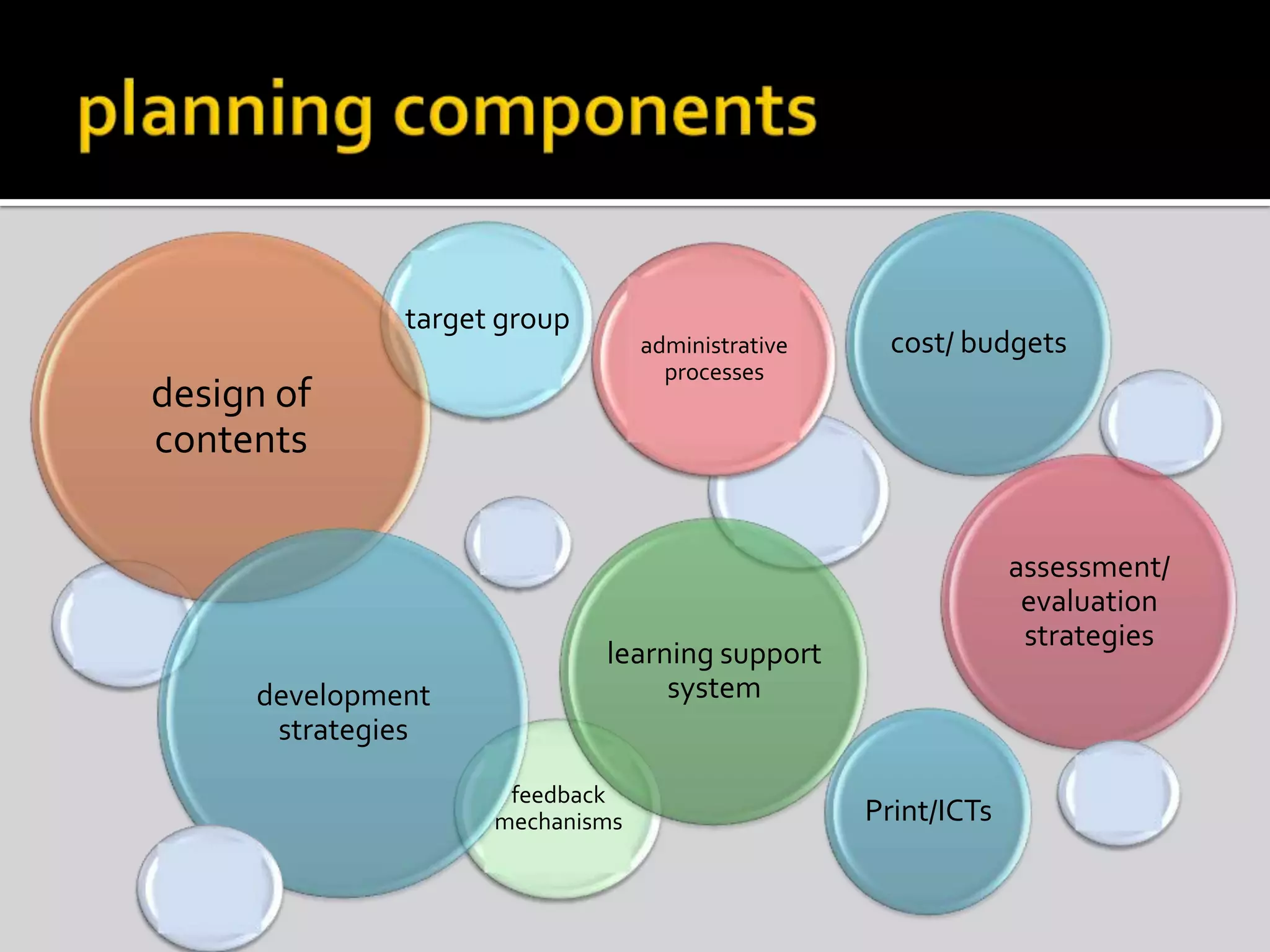
feedback mechanismsplanning componentsdesign of contentsadministrative processesassessment/ evaluation strategiescost/ budgetsPrint/ICTsdevelopment strategieslearning support systemtarget group
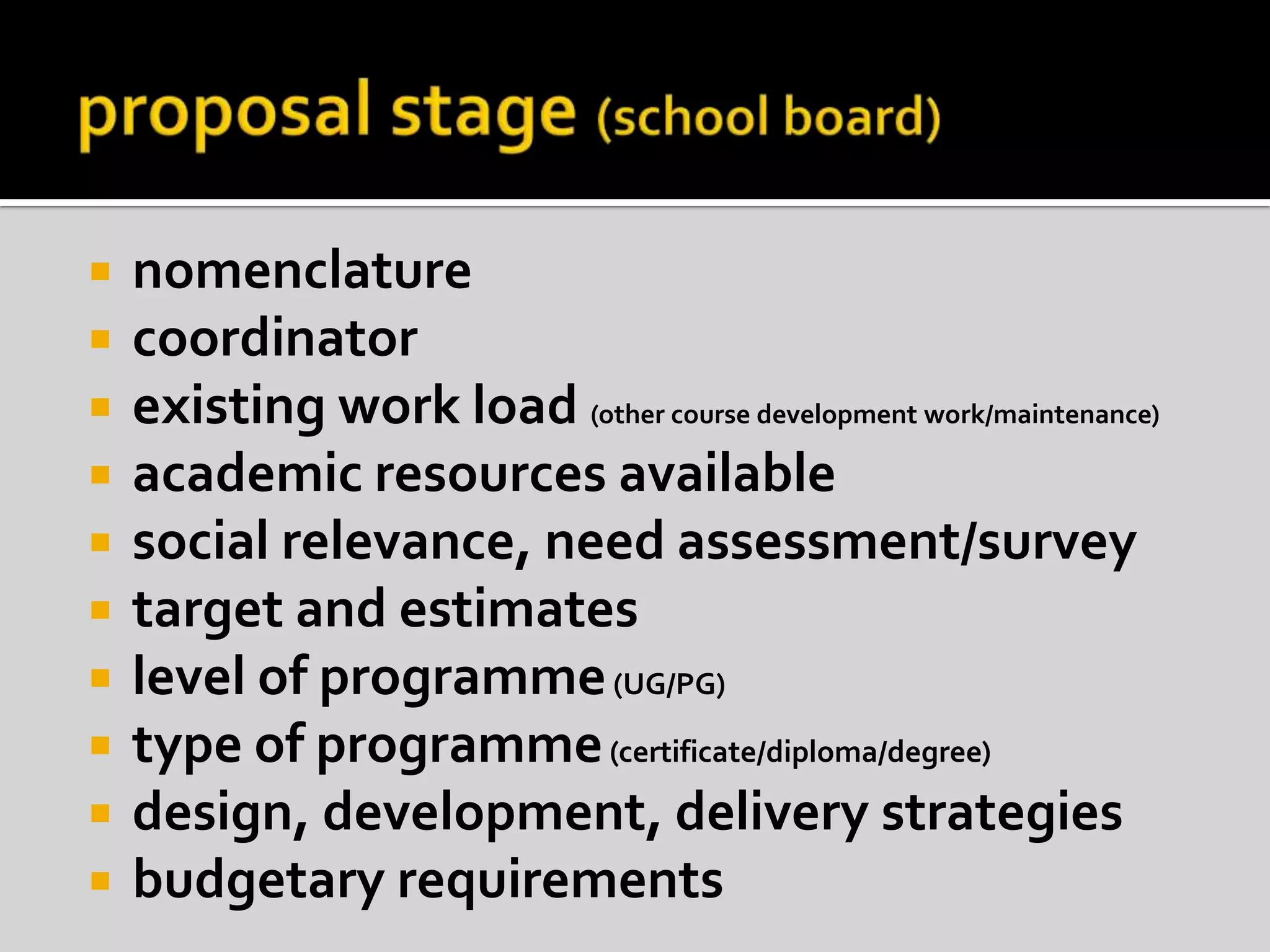
proposal stage (school board)nomenclaturecoordinatorexisting work load (other course development work/maintenance)academic resources availablesocial relevance, need assessment/surveytarget and estimateslevel of programme (UG/PG)type of programme (certificate/diploma/degree)design, development, delivery strategiesbudgetary requirements
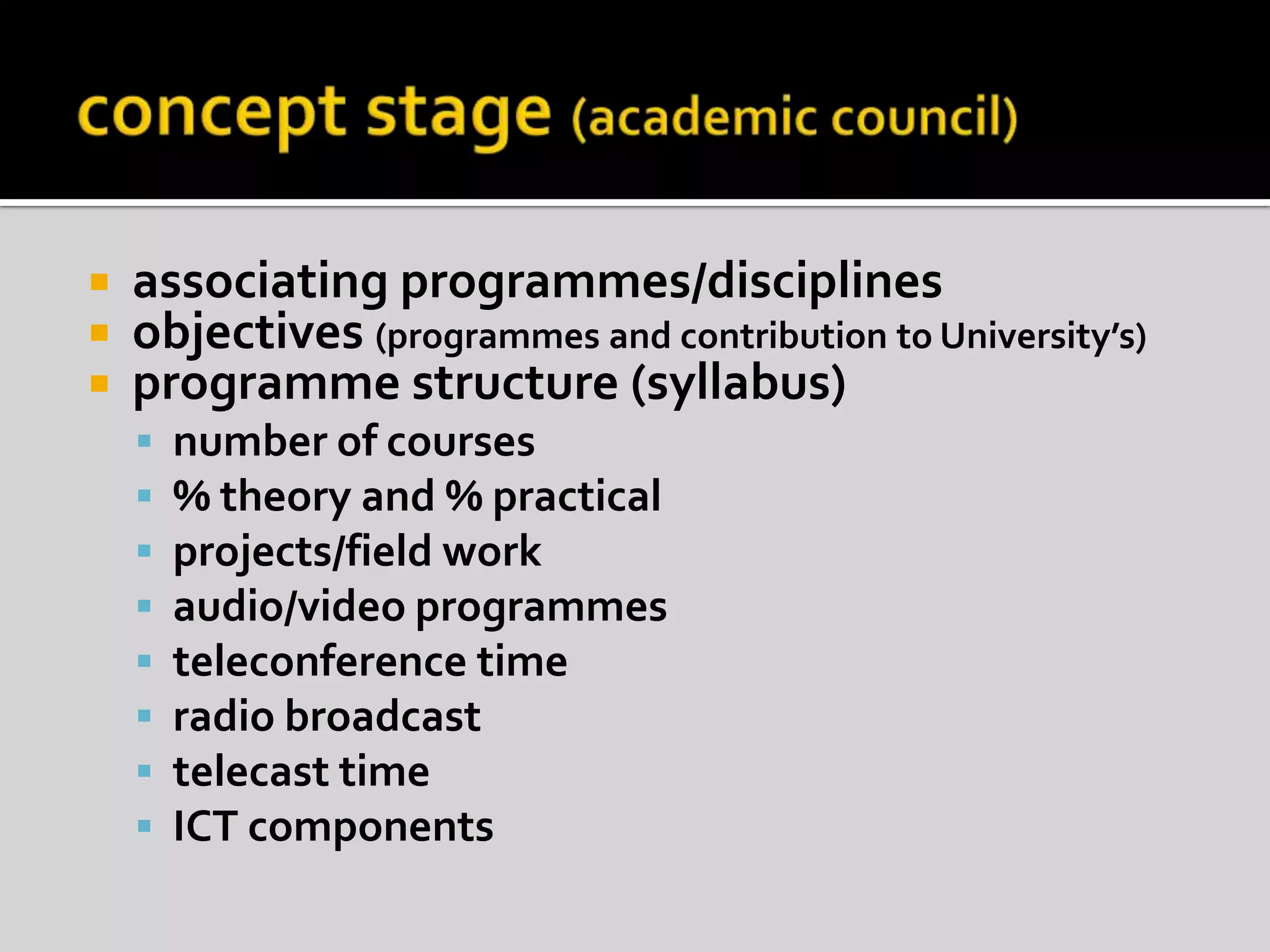
concept stage (academic council)associating programmes/disciplinesobjectives (programmes and contribution to University’s)programme structure (syllabus)number of courses% theory and % practicalprojects/field workaudio/video programmesteleconference timeradio broadcasttelecast timeICT components
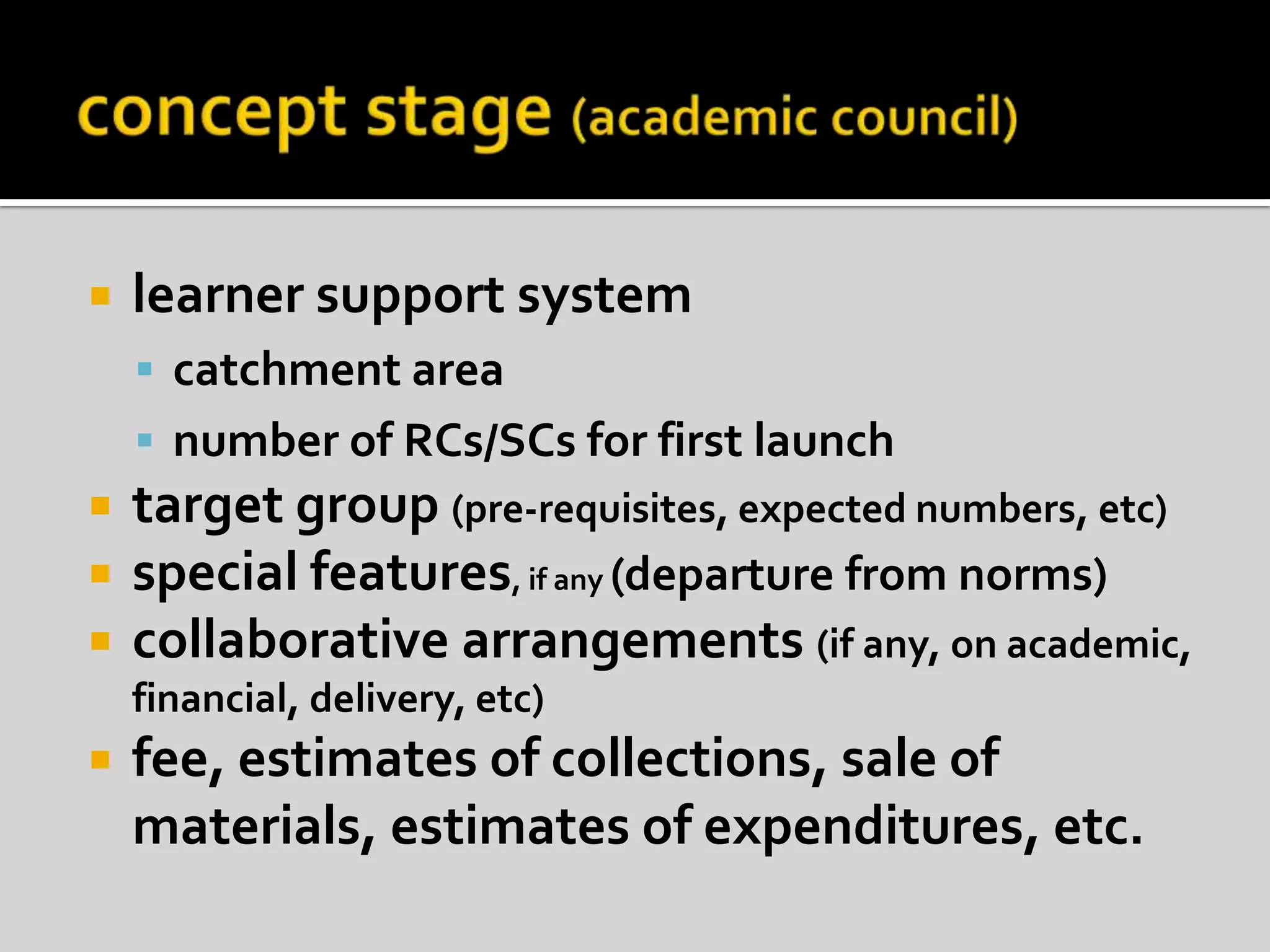
concept stage (academic council)learner support systemcatchment areanumber of RCs/SCs for first launchtarget group (pre-requisites, expected numbers, etc)special features, if any (departure from norms)collaborative arrangements (if any, on academic, financial, delivery, etc)fee, estimates of collections, sale of materials, estimates of expenditures, etc.
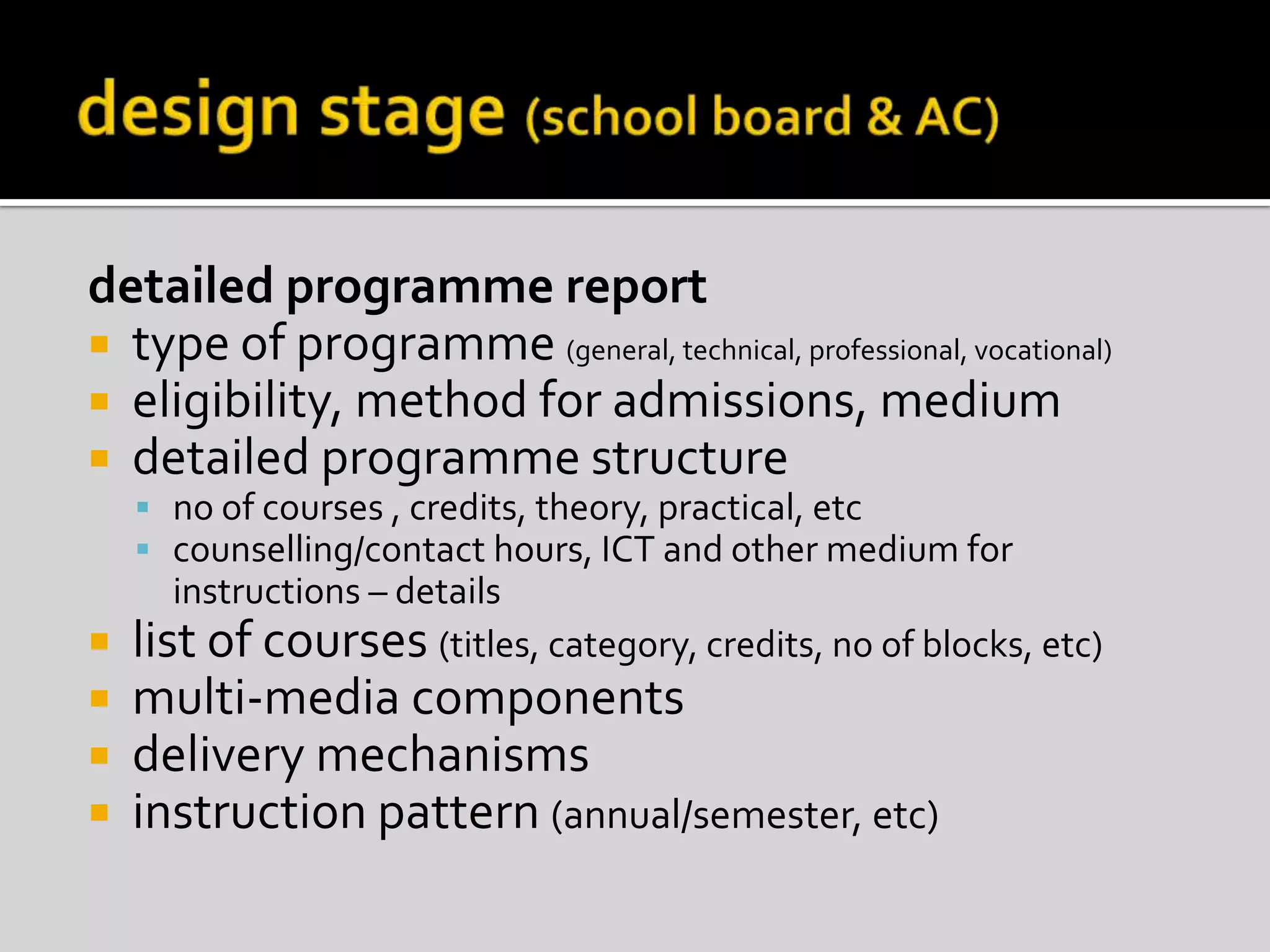
design stage (school board & AC)detailed programme reporttype of programme (general, technical, professional, vocational)eligibility, method for admissions, mediumdetailed programme structureno of courses , credits, theory, practical, etccounselling/contact hours, ICT and other medium for instructions – detailslist of courses (titles, category, credits, no of blocks, etc)multi-media componentsdelivery mechanismsinstruction pattern (annual/semester, etc)
design stage (school board & AC)detailed programme reportevaluation methodology (continuous/ term end)determination of fee, revenue collection, etcdetailed collaborative arrangementsapprovals from statutory bodiesschedulescourse writers’ meetingcontent developmentcourse production, etc.
launch stage (academic prog. committee)check readinessapplicants guideprint materialsassignmentsprgramme guidemanualsA/V materialsconsents from MPDD, SRD, SED, RSD & EMPC
revision strategies (SB and AC)progress evaluationrevisiting fee structuresupdates envisagesbudgetary requirementstimelinesstrategies
operations (post launch)students‘ registrationtimelinesAdvertisement and promotional activitieslearner support monitoringcounselling schedulesassignment feedbackslab workupdate on contents feedback analysis and update on master copynew trends and studies
operations (post launch)setting question papers, moderationpreparation of evaluators’ listmoderation of resultsTHANK YOU

Programme Planning And Operations

  • 1.
    programme planning andoperationsconceive to launch a new academic programmedrpankajkhareplanning and development divisionpkhare@ignou.ac.in
  • 2.
    agendawe will havediscussions onconceiving an academic programmevarious planning strategiesproposalconceptdesign and DPRlaunch (offer of programme)operation links
  • 3.
    conceiving an academicprogramthe proposal’s genesis isexperts‘ opinionsocietal needoutcome of conference/seminaroutcome of need assessmentoutcome of literature surveyoutcome of field surveypolitically motivatedcollaborative arrangementbased on tacit experience
  • 4.
    feedback mechanismsplanning componentsdesignof contentsadministrative processesassessment/ evaluation strategiescost/ budgetsPrint/ICTsdevelopment strategieslearning support systemtarget group
  • 5.
    proposal stage (schoolboard)nomenclaturecoordinatorexisting work load (other course development work/maintenance)academic resources availablesocial relevance, need assessment/surveytarget and estimateslevel of programme (UG/PG)type of programme (certificate/diploma/degree)design, development, delivery strategiesbudgetary requirements
  • 6.
    concept stage (academiccouncil)associating programmes/disciplinesobjectives (programmes and contribution to University’s)programme structure (syllabus)number of courses% theory and % practicalprojects/field workaudio/video programmesteleconference timeradio broadcasttelecast timeICT components
  • 7.
    concept stage (academiccouncil)learner support systemcatchment areanumber of RCs/SCs for first launchtarget group (pre-requisites, expected numbers, etc)special features, if any (departure from norms)collaborative arrangements (if any, on academic, financial, delivery, etc)fee, estimates of collections, sale of materials, estimates of expenditures, etc.
  • 8.
    design stage (schoolboard & AC)detailed programme reporttype of programme (general, technical, professional, vocational)eligibility, method for admissions, mediumdetailed programme structureno of courses , credits, theory, practical, etccounselling/contact hours, ICT and other medium for instructions – detailslist of courses (titles, category, credits, no of blocks, etc)multi-media componentsdelivery mechanismsinstruction pattern (annual/semester, etc)
  • 9.
    design stage (schoolboard & AC)detailed programme reportevaluation methodology (continuous/ term end)determination of fee, revenue collection, etcdetailed collaborative arrangementsapprovals from statutory bodiesschedulescourse writers’ meetingcontent developmentcourse production, etc.
  • 10.
    launch stage (academicprog. committee)check readinessapplicants guideprint materialsassignmentsprgramme guidemanualsA/V materialsconsents from MPDD, SRD, SED, RSD & EMPC
  • 11.
    revision strategies (SBand AC)progress evaluationrevisiting fee structuresupdates envisagesbudgetary requirementstimelinesstrategies
  • 12.
    operations (post launch)students‘registrationtimelinesAdvertisement and promotional activitieslearner support monitoringcounselling schedulesassignment feedbackslab workupdate on contents feedback analysis and update on master copynew trends and studies
  • 13.
    operations (post launch)settingquestion papers, moderationpreparation of evaluators’ listmoderation of resultsTHANK YOU