Some Preliminary Information
Cittadella, 11.01.2013
QUALITY MANAGEMENT APPROACHES TO
ESTABLISHING A QUALITY CULTURE
WITHIN VET INSTITUTIONS
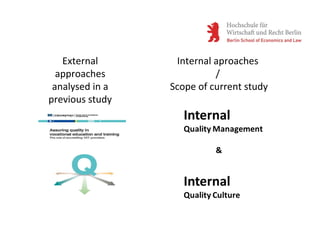
External
approaches
analysed in a
previous study
Internal aproaches
/
Scope of current study
 mission is to support development of European VET policies
and contribute to their implementation
 strategic objective is to strengthen European cooperation and
support the European Commission, Member States and social
partners in designing and implementing policies for an
attractive VET that promotes excellence and social inclusion
About CEDEFOP
Aim of the CEDEFOP study
A European HANDBOOK for VET providers
supporting Internal Quality Management and
Quality culture
... accompanied by practical tools
16 “National” Cases in 13 Member States:
Austria, Belgium, Estonia, Finland, France (2), Germany (2) ,
Hungary, Italy (2) , Netherlands, Portugal, Romania,
Slovenia, UK/Scotland
4 Sector Cases:
Automotive Industry (CZ); Design/Industry, Related
Services (IT); Social Services/Rehabilitation (DE); Maritime
Management, Navigation and Engineering (LT)
Methodology I - Sample
Team of research experts enacting case studies
Common methodology: Guidelines, questionnaires, templates
for data-collection
On-site visits of selected VET institutions
In-depth interviews with
 Heads of management
 Quality department / quality officers
 Teachers and trainers
 Students
 External stakeholders: Employers, chambers …
Collection of QA tools applied by the VET institution
Methodology II –
Research Approach
Basic information about the
examined VET institutions
 Providers of IVET / CVET, both, + HE
>>> tendency towards complex institutions for LLL
 Varying size, serving 200 -> 19.000 students
 Wide range of VET programs offered
 Variety of Quality Management Systems in place
 Mature QM-Systems in place:
Long-standing experience with QM
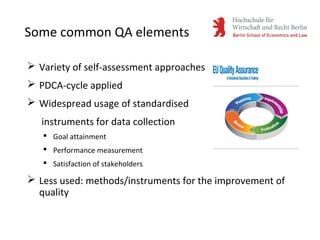
Some common QA elements
 Variety of self-assessment approaches
 PDCA-cycle applied
 Widespread usage of standardised
instruments for data collection
 Goal attainment
 Performance measurement
 Satisfaction of stakeholders
 Less used: methods/instruments for the improvement of
quality
Typical quality areas in
VET institutions
 Manage the institution
 involve all stakeholders
 improve the quality of classes
 adjust the organization of processes for service delivery
 Develop the school
 agree on quality objectives and targets
 Lead the personnel of the institution
 develop the capacities of teachers, trainers, other staff
 Manage resources
 Develop cooperation and networking
 Create and develop facilities for educational supply
 Observe, assess and analyse results and success
Indicators
Often direct or indirect reference to EQAVET indicators
(drop-out, graduation, destination)
Useful specifications towards early warning (absence
rate)
Meaningful extensions (cost-effectiveness)
Weaknesses:
Sometimes meaningless inflation and confusion
Lack of coherency – missing set of interrelated indicators)
Self-assessment –
Different functions
Formal exercise to gain external accreditation
 Starting point for the creation of awareness and
commitment
 In more mature stages: Instrument for continuous
analysis and reflection – often based on electronically
gathered data (tools)
Commitment, support and participation of the head of
management
Involvement of staff in the self-assessment exercise + a core
quality team to coordinate and integrate the self-assessment
activities
Openness towards data, facts and potential changes
Decisions on improvement strategies based on the self-
assessment results
Agreement amongst staff on the improvement actions
Proper information on processes and results on a continuous
basis
Preconditions for successful
self-assessment
Self-assessment +
Improvement strategy
Priorities and overall strategies for achieving improvement
Detailed and operational objectives, whose achievement
can be monitored and measured by appropriate indicators
Specific actions to be implemented within reasonable time
period
Provision of resources to turn improvement actions into
reality
Identification of individual responsibilities in the process of
improvement
Definition of indicators allowing to monitor the progress of
activities and the status of the problem to be solved
Impacts on teaching
and learning
More transparent student assessment
Better division of curricular content
Stronger coordination of teaching in classes
High satisfaction rate of students
More individualized learning
Enhanced use of e-learning
Development of blended-learning concepts
Cooperation and networking
 Ensures a competitive edge, high visibility
and enhanced attractiveness for prospective
students, parents and companies
 Supports modernisation of training programs
 Allows new insights on competence
requirements for graduates
 Supports learning from other educational
institutions
Establishing a quality policy
Definition of the mission and the vision of the VET institution
Definition of a set of institutional objectives for the
organisation and the related indicators
Definition of a quality strategy outlining the aims of having a
quality management system in operation
Commitment of the management towards quality
management
Provision of the necessary resources for the operation of the
quality management system
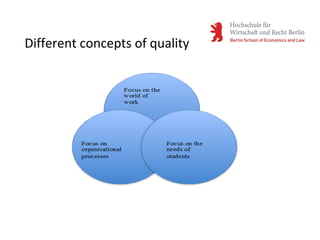
Different concepts of quality
Role of external support structures
A reliable - national or regional - general framework for quality
management
A guide for enacting self-assessment
A lean set of coherent and clearly operationalized indicators
A small number of - preferably electronic - tools and forms for
valid data-collection and data-processing
Capacities for training of staff of VET institutions in
professional quality management
An initial consultation on how to apply and perform
the quality cycle
Thank you for your attention!
erwin.seyfried@hwr-berlin.de

Anja cedefop prelim infos

  • 1.
    Some Preliminary Information Cittadella,11.01.2013 QUALITY MANAGEMENT APPROACHES TO ESTABLISHING A QUALITY CULTURE WITHIN VET INSTITUTIONS
  • 2.
    External approaches analysed in a previousstudy Internal aproaches / Scope of current study
  • 3.
     mission isto support development of European VET policies and contribute to their implementation  strategic objective is to strengthen European cooperation and support the European Commission, Member States and social partners in designing and implementing policies for an attractive VET that promotes excellence and social inclusion About CEDEFOP
  • 4.
    Aim of theCEDEFOP study A European HANDBOOK for VET providers supporting Internal Quality Management and Quality culture ... accompanied by practical tools
  • 5.
    16 “National” Casesin 13 Member States: Austria, Belgium, Estonia, Finland, France (2), Germany (2) , Hungary, Italy (2) , Netherlands, Portugal, Romania, Slovenia, UK/Scotland 4 Sector Cases: Automotive Industry (CZ); Design/Industry, Related Services (IT); Social Services/Rehabilitation (DE); Maritime Management, Navigation and Engineering (LT) Methodology I - Sample
  • 6.
    Team of researchexperts enacting case studies Common methodology: Guidelines, questionnaires, templates for data-collection On-site visits of selected VET institutions In-depth interviews with  Heads of management  Quality department / quality officers  Teachers and trainers  Students  External stakeholders: Employers, chambers … Collection of QA tools applied by the VET institution Methodology II – Research Approach
  • 7.
    Basic information aboutthe examined VET institutions  Providers of IVET / CVET, both, + HE >>> tendency towards complex institutions for LLL  Varying size, serving 200 -> 19.000 students  Wide range of VET programs offered  Variety of Quality Management Systems in place  Mature QM-Systems in place: Long-standing experience with QM
  • 8.
    Some common QAelements  Variety of self-assessment approaches  PDCA-cycle applied  Widespread usage of standardised instruments for data collection  Goal attainment  Performance measurement  Satisfaction of stakeholders  Less used: methods/instruments for the improvement of quality
  • 9.
    Typical quality areasin VET institutions  Manage the institution  involve all stakeholders  improve the quality of classes  adjust the organization of processes for service delivery  Develop the school  agree on quality objectives and targets  Lead the personnel of the institution  develop the capacities of teachers, trainers, other staff  Manage resources  Develop cooperation and networking  Create and develop facilities for educational supply  Observe, assess and analyse results and success
  • 10.
    Indicators Often direct orindirect reference to EQAVET indicators (drop-out, graduation, destination) Useful specifications towards early warning (absence rate) Meaningful extensions (cost-effectiveness) Weaknesses: Sometimes meaningless inflation and confusion Lack of coherency – missing set of interrelated indicators)
  • 11.
    Self-assessment – Different functions Formalexercise to gain external accreditation  Starting point for the creation of awareness and commitment  In more mature stages: Instrument for continuous analysis and reflection – often based on electronically gathered data (tools)
  • 12.
    Commitment, support andparticipation of the head of management Involvement of staff in the self-assessment exercise + a core quality team to coordinate and integrate the self-assessment activities Openness towards data, facts and potential changes Decisions on improvement strategies based on the self- assessment results Agreement amongst staff on the improvement actions Proper information on processes and results on a continuous basis Preconditions for successful self-assessment
  • 13.
    Self-assessment + Improvement strategy Prioritiesand overall strategies for achieving improvement Detailed and operational objectives, whose achievement can be monitored and measured by appropriate indicators Specific actions to be implemented within reasonable time period Provision of resources to turn improvement actions into reality Identification of individual responsibilities in the process of improvement Definition of indicators allowing to monitor the progress of activities and the status of the problem to be solved
  • 14.
    Impacts on teaching andlearning More transparent student assessment Better division of curricular content Stronger coordination of teaching in classes High satisfaction rate of students More individualized learning Enhanced use of e-learning Development of blended-learning concepts
  • 15.
    Cooperation and networking Ensures a competitive edge, high visibility and enhanced attractiveness for prospective students, parents and companies  Supports modernisation of training programs  Allows new insights on competence requirements for graduates  Supports learning from other educational institutions
  • 16.
    Establishing a qualitypolicy Definition of the mission and the vision of the VET institution Definition of a set of institutional objectives for the organisation and the related indicators Definition of a quality strategy outlining the aims of having a quality management system in operation Commitment of the management towards quality management Provision of the necessary resources for the operation of the quality management system
  • 17.
  • 18.
    Role of externalsupport structures A reliable - national or regional - general framework for quality management A guide for enacting self-assessment A lean set of coherent and clearly operationalized indicators A small number of - preferably electronic - tools and forms for valid data-collection and data-processing Capacities for training of staff of VET institutions in professional quality management An initial consultation on how to apply and perform the quality cycle
  • 19.
    Thank you foryour attention! erwin.seyfried@hwr-berlin.de