Program Development
• Tells your computer to dp particular job in
  desired manner.
                   OR
• List of instructions in specific language to tell
  the computer to do job in sequence.
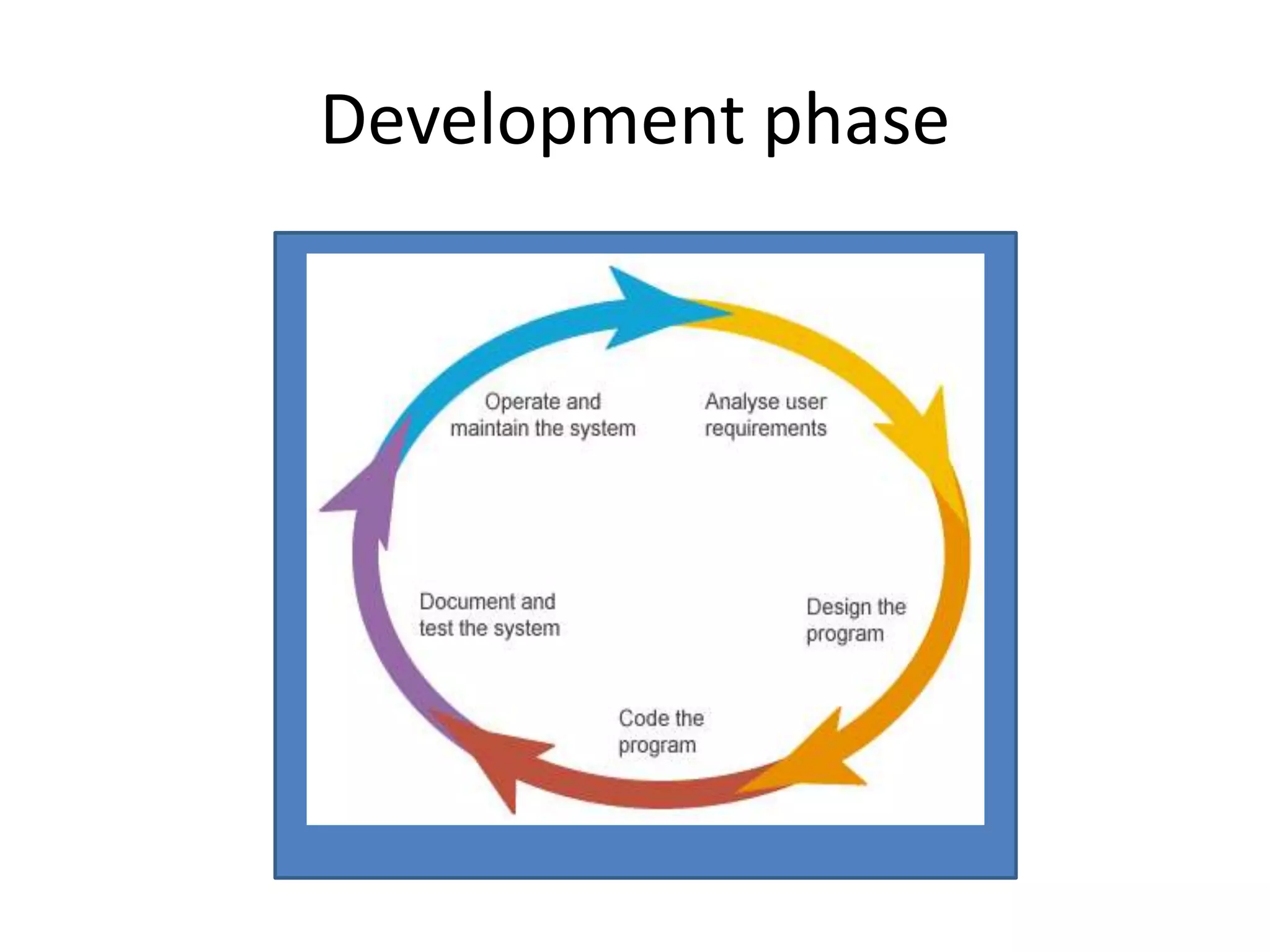
Phases of program development
    Whenever any problem has to be converted
    into a program then following steps are to be
    followed:
•   Analyzing the problem
•   Designing the solution
•   Coding the solution
•   Testing the solution
•   Documenting the solution
Development phase
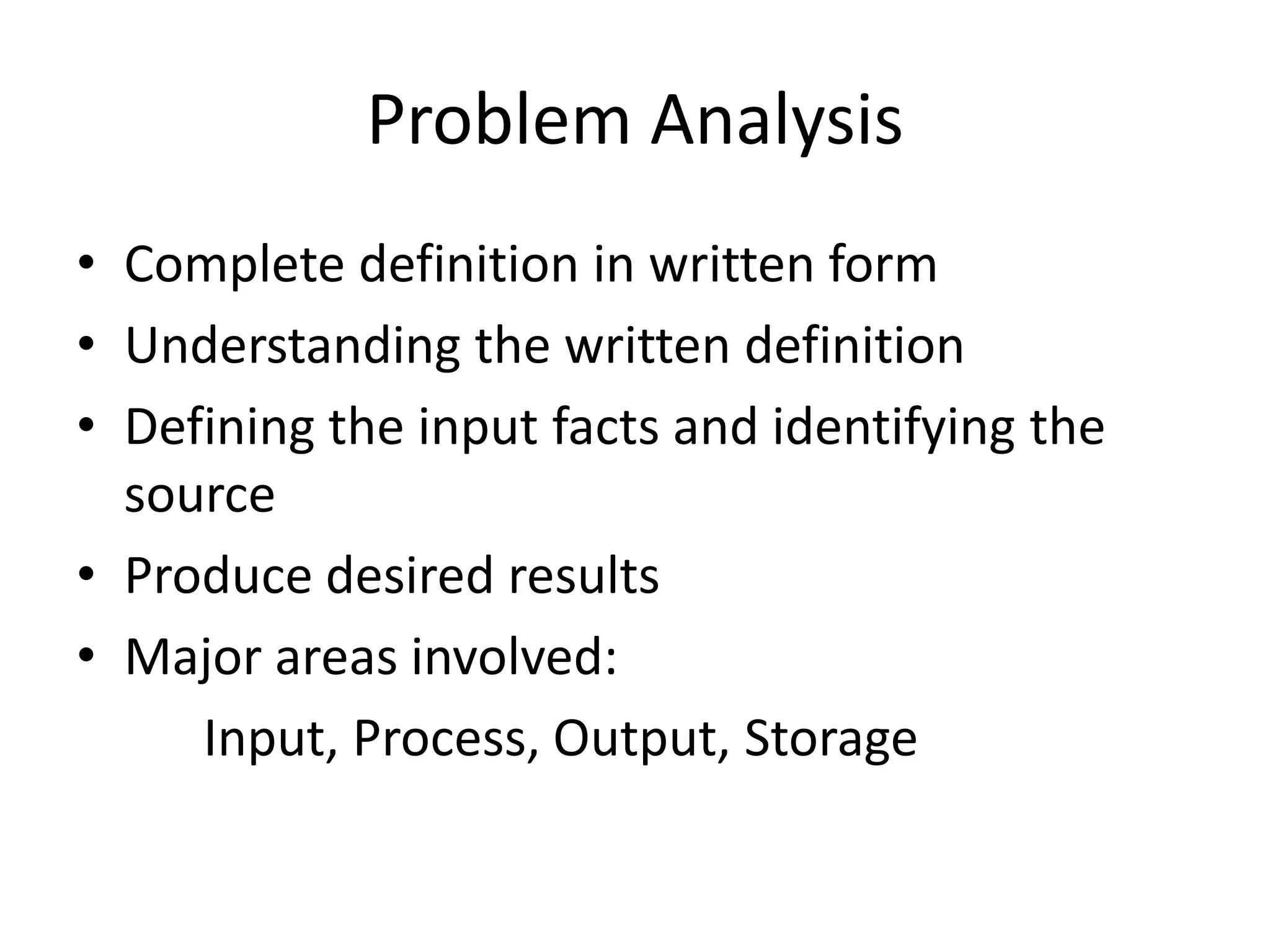
Problem Analysis
• Complete definition in written form
• Understanding the written definition
• Defining the input facts and identifying the
  source
• Produce desired results
• Major areas involved:
     Input, Process, Output, Storage
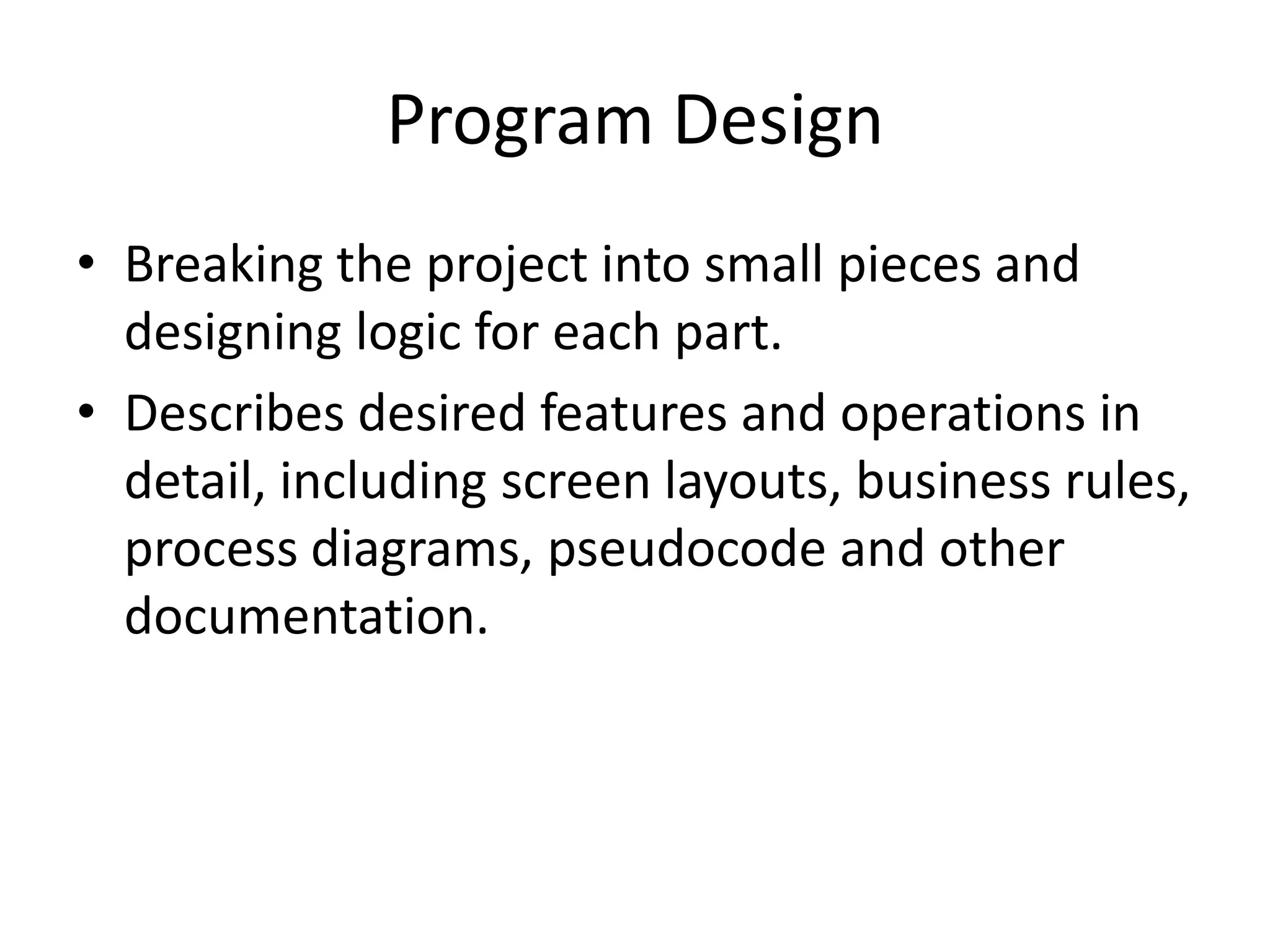
Program Design
• Breaking the project into small pieces and
  designing logic for each part.
• Describes desired features and operations in
  detail, including screen layouts, business rules,
  process diagrams, pseudocode and other
  documentation.
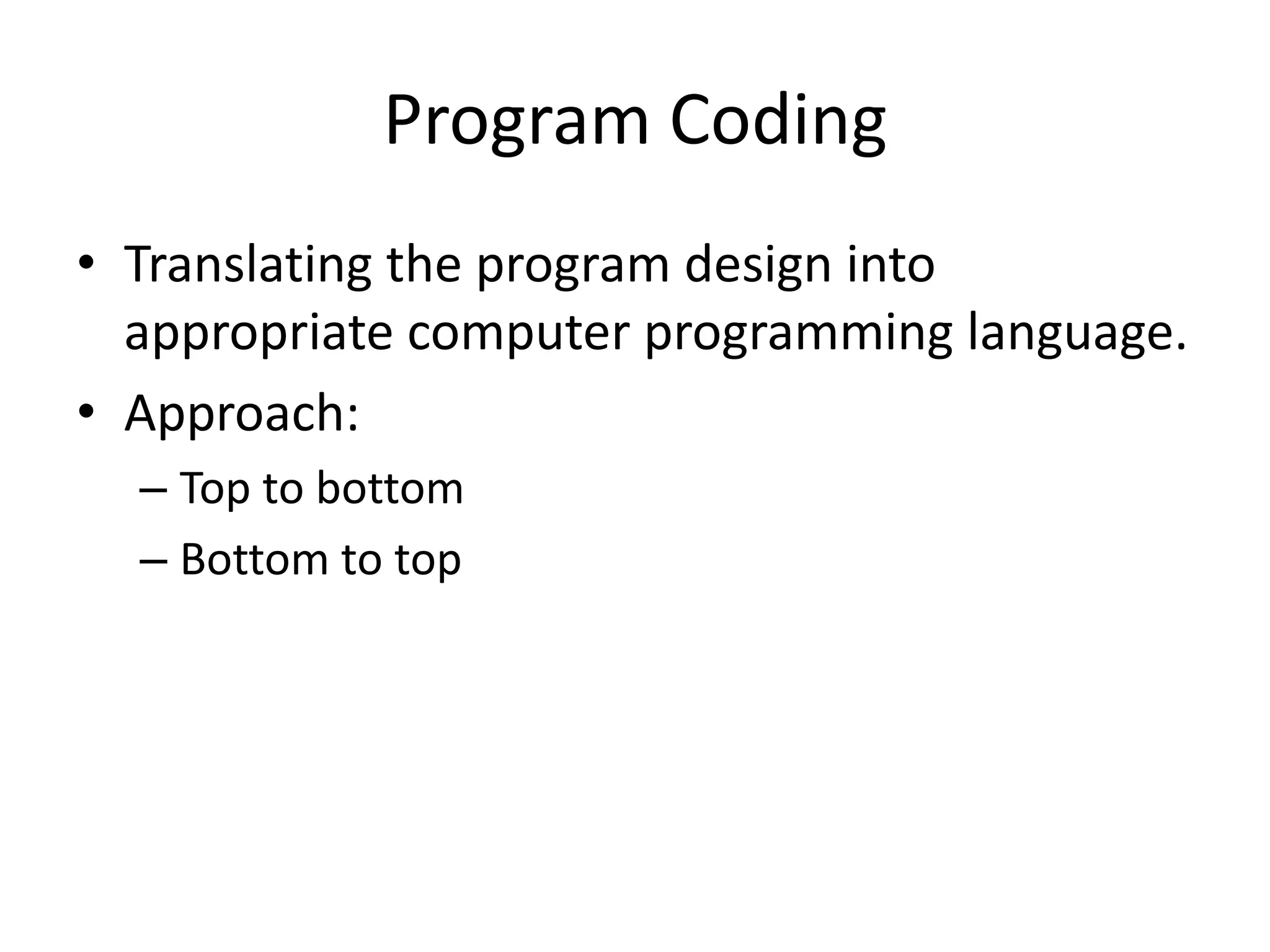
Program Coding
• Translating the program design into
  appropriate computer programming language.
• Approach:
  – Top to bottom
  – Bottom to top
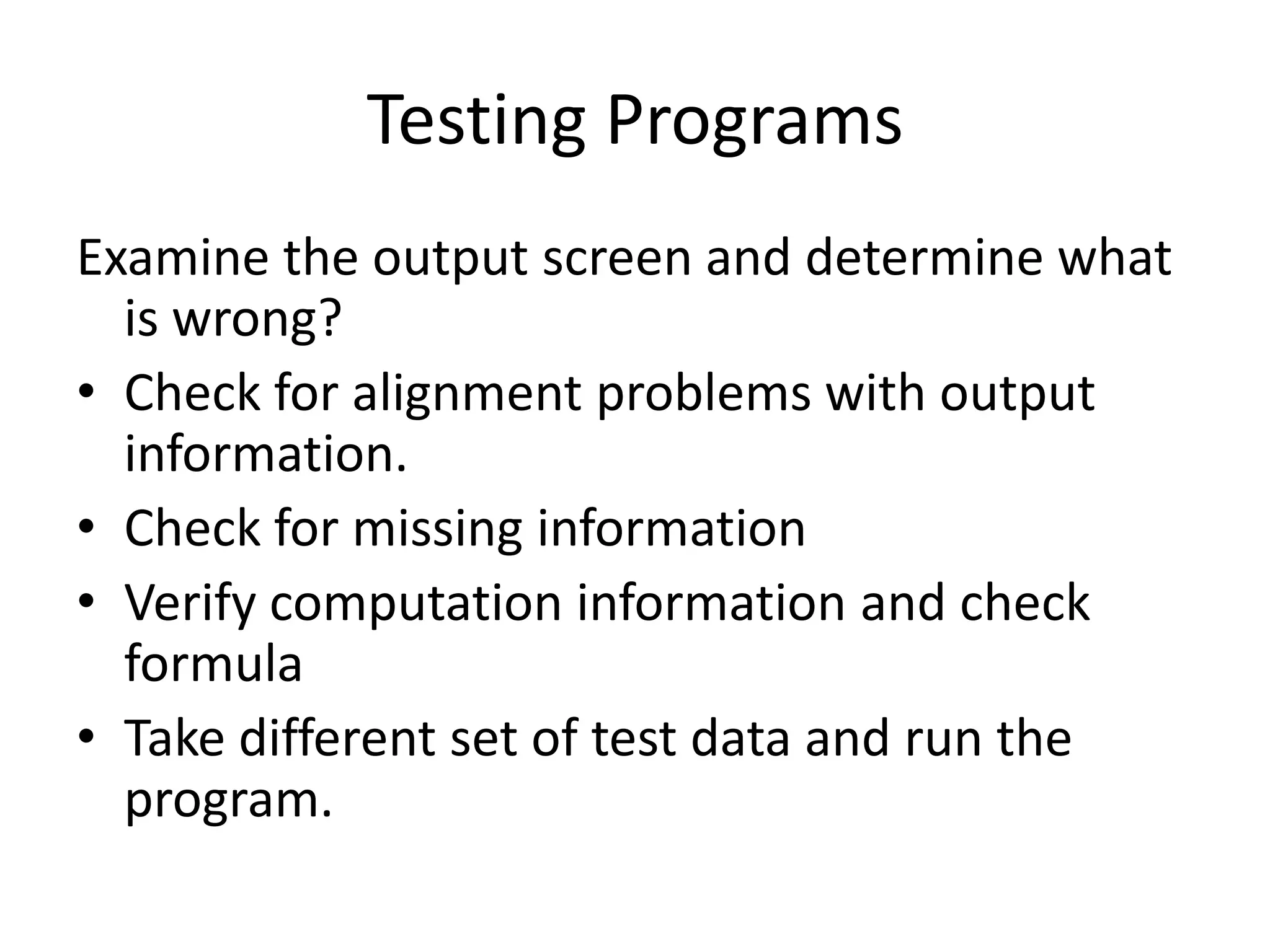
Testing Programs
Examine the output screen and determine what
  is wrong?
• Check for alignment problems with output
  information.
• Check for missing information
• Verify computation information and check
  formula
• Take different set of test data and run the
  program.
Documentation
• User documentation – User Manual
• Programmer documentation
  – Copy of original written specifications
  – Copy of input, output, process and storage analysis
  – Copy of source code, flowcharts, pseudo code or
    other designs if used.
  – Printed copy of input facts used to test program
  – Printed copy of all possible output reports or screens.

Program analysis

  • 2.
    Program Development • Tellsyour computer to dp particular job in desired manner. OR • List of instructions in specific language to tell the computer to do job in sequence.
  • 3.
    Phases of programdevelopment Whenever any problem has to be converted into a program then following steps are to be followed: • Analyzing the problem • Designing the solution • Coding the solution • Testing the solution • Documenting the solution
  • 4.
  • 5.
    Problem Analysis • Completedefinition in written form • Understanding the written definition • Defining the input facts and identifying the source • Produce desired results • Major areas involved: Input, Process, Output, Storage
  • 6.
    Program Design • Breakingthe project into small pieces and designing logic for each part. • Describes desired features and operations in detail, including screen layouts, business rules, process diagrams, pseudocode and other documentation.
  • 7.
    Program Coding • Translatingthe program design into appropriate computer programming language. • Approach: – Top to bottom – Bottom to top
  • 8.
    Testing Programs Examine theoutput screen and determine what is wrong? • Check for alignment problems with output information. • Check for missing information • Verify computation information and check formula • Take different set of test data and run the program.
  • 9.
    Documentation • User documentation– User Manual • Programmer documentation – Copy of original written specifications – Copy of input, output, process and storage analysis – Copy of source code, flowcharts, pseudo code or other designs if used. – Printed copy of input facts used to test program – Printed copy of all possible output reports or screens.