PROFESSIONALISM
REFLECTION
AND
DEVELOPMENT
TESOL 1st National Colloquium
Amideast, Tunisia
Farida Ben Abdallah (JLIDI)
ELT Inspector
Gabes
12-10-2013

1
The Plan
I- The teacher«Pleaser»;The «Professional » teacher
II- « TEACHING » : more than a job !
III- The Professional Teacher
IV- The Reflective Practitioner/Teacher
V- Development and Training
VI-Reflection and Development : My CPD Cycle
VII- Recapitulation
VIII- Let’s practice
2
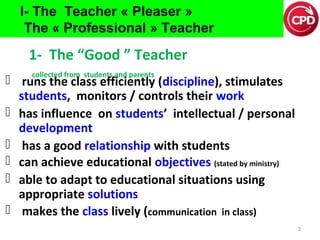
I- The Teacher « Pleaser »
The « Professional » Teacher

1- The “Good ” Teacher
collected from students and parents

 runs the class efficiently (discipline), stimulates
students, monitors / controls their work
 has influence on students’ intellectual / personal
development
 has a good relationship with students
 can achieve educational objectives (stated by ministry)
 able to adapt to educational situations using
appropriate solutions
 makes the class lively (communication in class)
3
I- The Teacher « Pleaser »
The « Professional » Teacher

2- The Professional Teacher











masters the subject of his speciality
accepts the idea of / is open to lifelong learning
improves her own knowledge
looks at what she does in a reflective way
is creative and open to criticism
is innovative
is able to use modern teaching aids
accepts and practises team work
knows the job ethics
prepares lessons well / avoids improvisation*

4
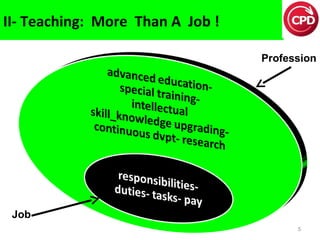
II- Teaching: More Than A Job !
Profession

Job
5
Thus,
“ Teaching” is a profession because
 It meets the standards mentioned in slide 5
 It sets a high demand on the people who engage
in the field.
 It provides opportunities for teachers to develop
in different aspects.
6
III- The Professional Teacher
mainly a reflective practitioner

• strives for improvement in her practice
• continues to improve and learn more about
effective teaching
• adheres in the reflective culture
• challenges and questions herself
• allocates time and space to think carefully
about what she is doing
7
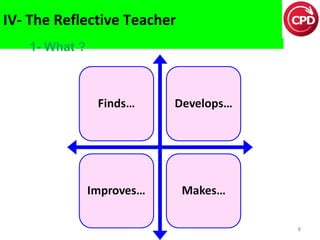
IV- The Reflective Teacher
1- What ?

8
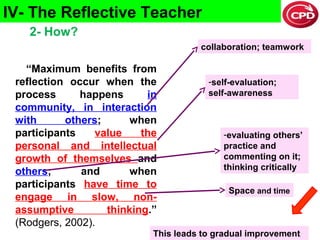
IV- The Reflective Teacher
2- How?
collaboration; teamwork

“Maximum benefits from
reflection occur when the
process
happens
in
community, in interaction
with
others;
when
participants
value
the
personal and intellectual
growth of themselves and
others;
and
when
participants have time to
engage in slow, nonassumptive
thinking.”
(Rodgers, 2002).

-self-evaluation;
self-awareness

-evaluating others’
practice and
commenting on it;
thinking critically
Space and time

9

This leads to gradual improvement
IV- The Reflective Teacher
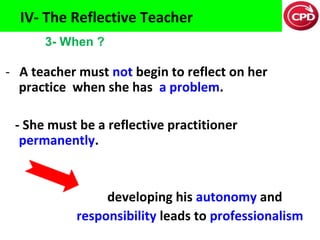
3- When ?

- A teacher must not begin to reflect on her
practice when she has a problem.
- She must be a reflective practitioner
permanently.

developing his autonomy and
responsibility leads to professionalism
V- Development and Training

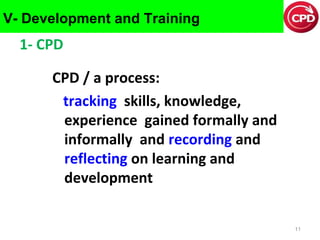
1- CPD
CPD / a process:
tracking skills, knowledge,
experience gained formally and
informally and recording and
reflecting on learning and
development
11
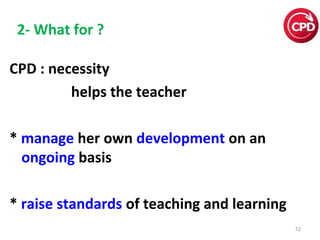
2- What for ?
CPD : necessity
helps the teacher
* manage her own development on an
ongoing basis
* raise standards of teaching and learning
12
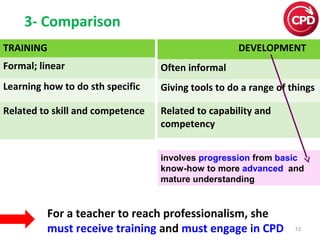
3- Comparison
TRAINING

DEVELOPMENT

Formal; linear

Often informal

Learning how to do sth specific

Giving tools to do a range of things

Related to skill and competence

Related to capability and
competency
involves progression from basic
know-how to more advanced and
mature understanding

For a teacher to reach professionalism, she
must receive training and must engage in CPD

13
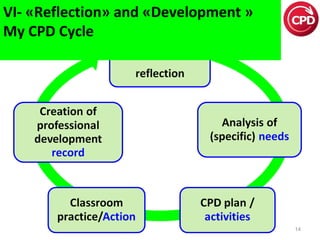
VI- «Reflection» and «Development »
My CPD Cycle

14
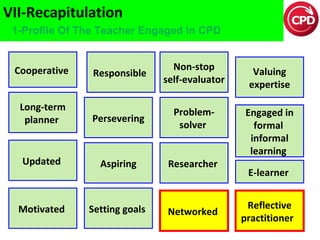
VII-Recapitulation
1-Profile Of The Teacher Engaged In CPD

Responsible

Non-stop
self-evaluator

Valuing
expertise

Long-term
planner

Persevering

Problemsolver

Updated

Aspiring

Researcher

Engaged in
formal
informal
learning

Motivated

Setting goals

Networked

Cooperative

E-learner
Reflective
practitioner
15
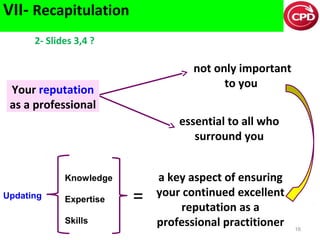
VII- Recapitulation
 

2- Slides 3,4 ?

not only important
to you

Your reputation
as a professional

essential to all who
surround you
Knowledge
Updating

Expertise
Skills

=

a key aspect of ensuring
your continued excellent
reputation as a
professional practitioner

16
VIII- LET’S PRACTICE !

1- Reflection : Personal checklist
2- Corresponding CPD plan / Activities

17
References
• Teach English, a Training Course for Teachers; 
Adrian Doff 2004
• “Finding Balance, then Staying Interested: The 
Importance of CPD”, Tessa Woodward, 2012

18
The End
THANK YOU

19

Professionalism, Reflection and Development

  • 1.
    PROFESSIONALISM REFLECTION AND DEVELOPMENT TESOL 1st NationalColloquium Amideast, Tunisia Farida Ben Abdallah (JLIDI) ELT Inspector Gabes 12-10-2013 1
  • 2.
    The Plan I- Theteacher«Pleaser»;The «Professional » teacher II- « TEACHING » : more than a job ! III- The Professional Teacher IV- The Reflective Practitioner/Teacher V- Development and Training VI-Reflection and Development : My CPD Cycle VII- Recapitulation VIII- Let’s practice 2
  • 3.
    I- The Teacher« Pleaser » The « Professional » Teacher 1- The “Good ” Teacher collected from students and parents  runs the class efficiently (discipline), stimulates students, monitors / controls their work  has influence on students’ intellectual / personal development  has a good relationship with students  can achieve educational objectives (stated by ministry)  able to adapt to educational situations using appropriate solutions  makes the class lively (communication in class) 3
  • 4.
    I- The Teacher« Pleaser » The « Professional » Teacher 2- The Professional Teacher           masters the subject of his speciality accepts the idea of / is open to lifelong learning improves her own knowledge looks at what she does in a reflective way is creative and open to criticism is innovative is able to use modern teaching aids accepts and practises team work knows the job ethics prepares lessons well / avoids improvisation* 4
  • 5.
    II- Teaching: MoreThan A Job ! Profession Job 5
  • 6.
    Thus, “ Teaching” isa profession because  It meets the standards mentioned in slide 5  It sets a high demand on the people who engage in the field.  It provides opportunities for teachers to develop in different aspects. 6
  • 7.
    III- The ProfessionalTeacher mainly a reflective practitioner • strives for improvement in her practice • continues to improve and learn more about effective teaching • adheres in the reflective culture • challenges and questions herself • allocates time and space to think carefully about what she is doing 7
  • 8.
    IV- The ReflectiveTeacher 1- What ? 8
  • 9.
    IV- The ReflectiveTeacher 2- How? collaboration; teamwork “Maximum benefits from reflection occur when the process happens in community, in interaction with others; when participants value the personal and intellectual growth of themselves and others; and when participants have time to engage in slow, nonassumptive thinking.” (Rodgers, 2002). -self-evaluation; self-awareness -evaluating others’ practice and commenting on it; thinking critically Space and time 9 This leads to gradual improvement
  • 10.
    IV- The ReflectiveTeacher 3- When ? - A teacher must not begin to reflect on her practice when she has a problem. - She must be a reflective practitioner permanently. developing his autonomy and responsibility leads to professionalism
  • 11.
    V- Development andTraining 1- CPD CPD / a process: tracking skills, knowledge, experience gained formally and informally and recording and reflecting on learning and development 11
  • 12.
    2- What for? CPD : necessity helps the teacher * manage her own development on an ongoing basis * raise standards of teaching and learning 12
  • 13.
    3- Comparison TRAINING DEVELOPMENT Formal; linear Ofteninformal Learning how to do sth specific Giving tools to do a range of things Related to skill and competence Related to capability and competency involves progression from basic know-how to more advanced and mature understanding For a teacher to reach professionalism, she must receive training and must engage in CPD 13
  • 14.
    VI- «Reflection» and«Development » My CPD Cycle 14
  • 15.
    VII-Recapitulation 1-Profile Of TheTeacher Engaged In CPD Responsible Non-stop self-evaluator Valuing expertise Long-term planner Persevering Problemsolver Updated Aspiring Researcher Engaged in formal informal learning Motivated Setting goals Networked Cooperative E-learner Reflective practitioner 15
  • 16.
    VII- Recapitulation   2- Slides3,4 ? not only important to you Your reputation as a professional essential to all who surround you Knowledge Updating Expertise Skills = a key aspect of ensuring your continued excellent reputation as a professional practitioner 16
  • 17.
    VIII- LET’S PRACTICE! 1- Reflection : Personal checklist 2- Corresponding CPD plan / Activities 17
  • 18.
  • 19.