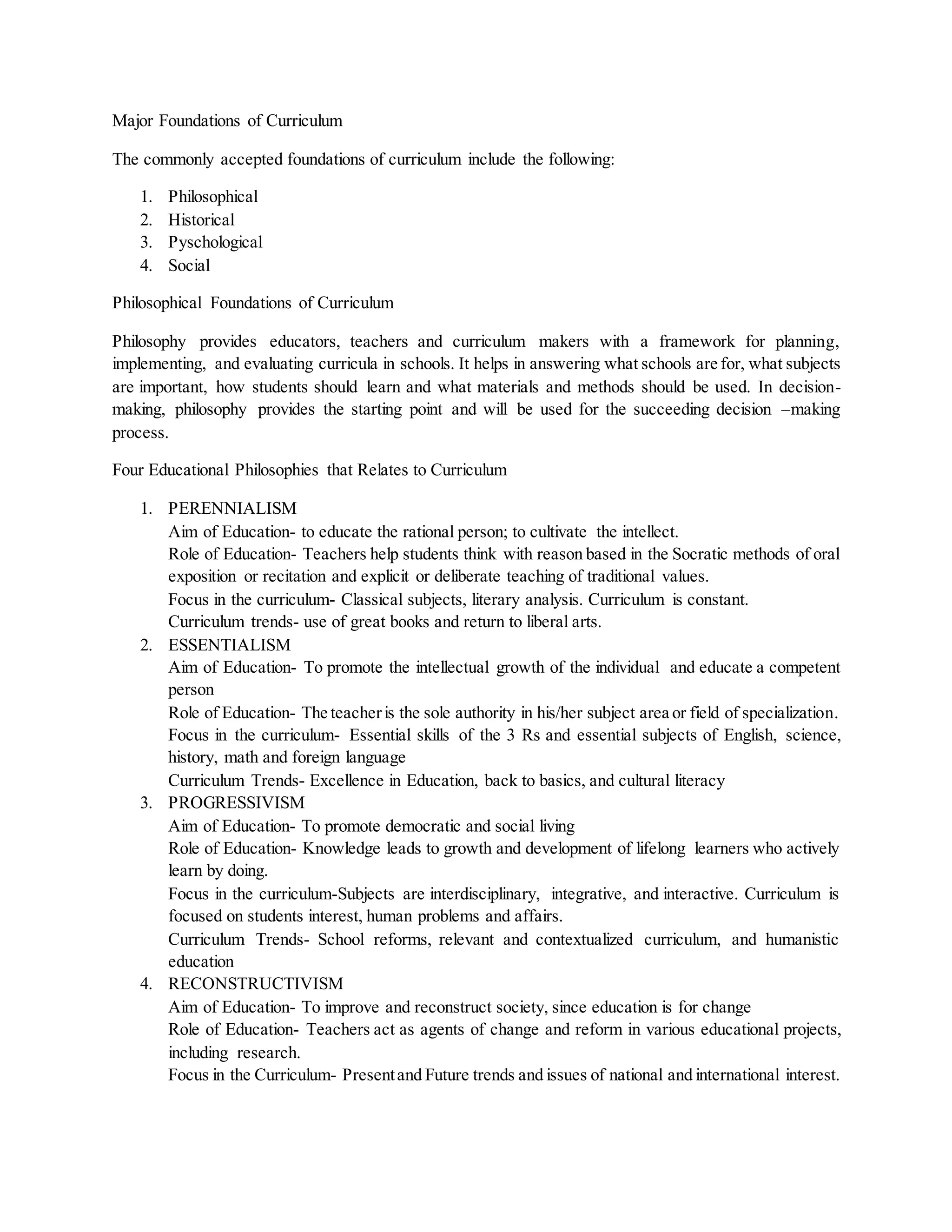
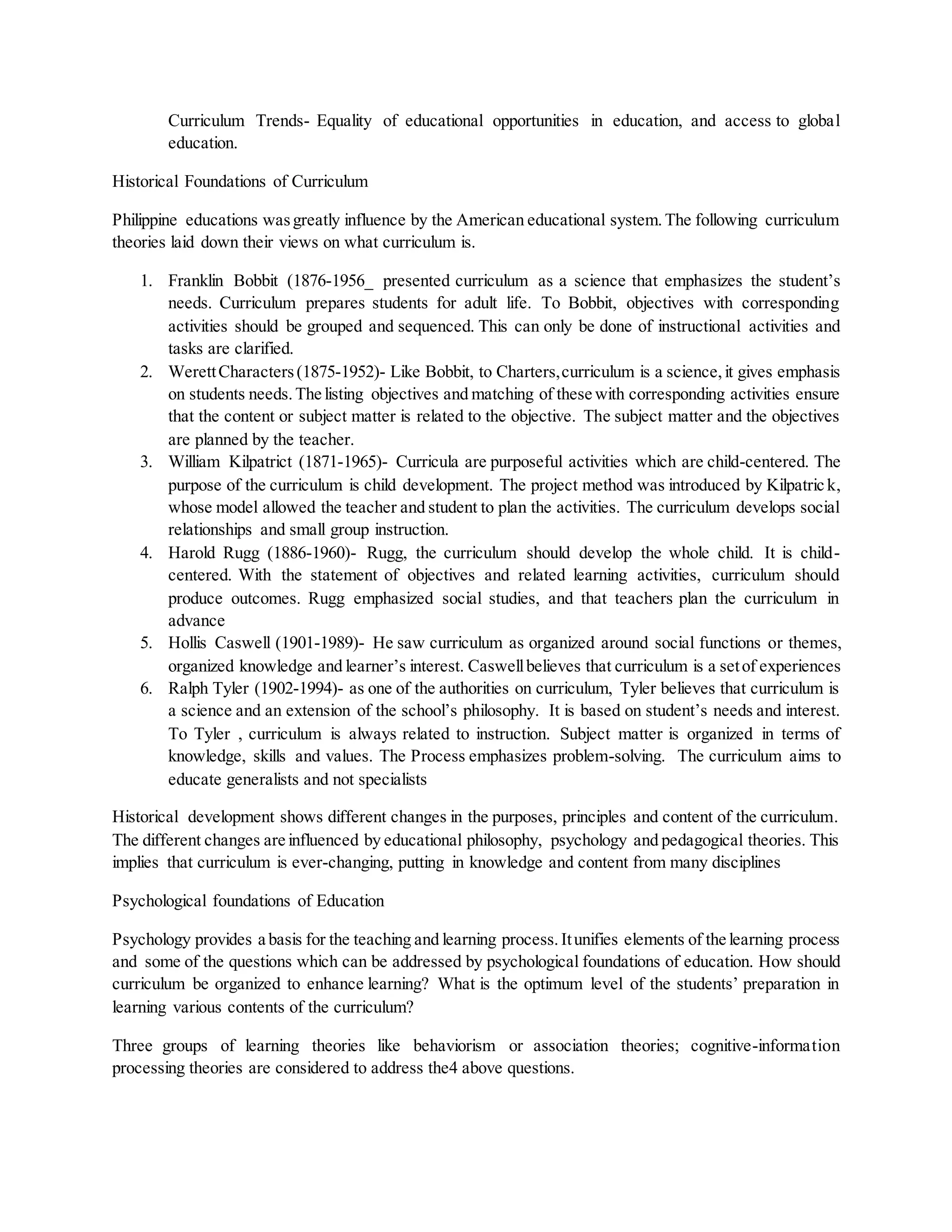
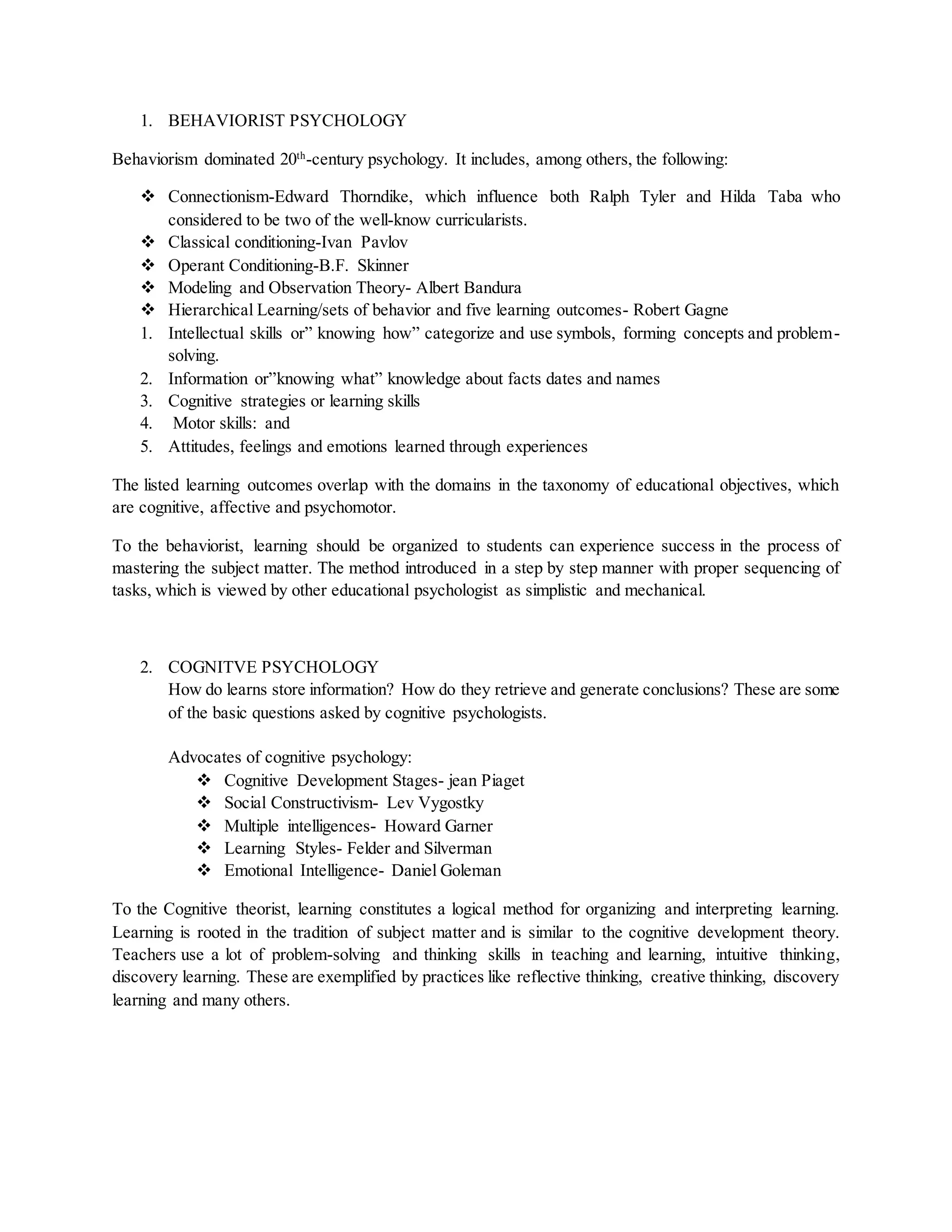
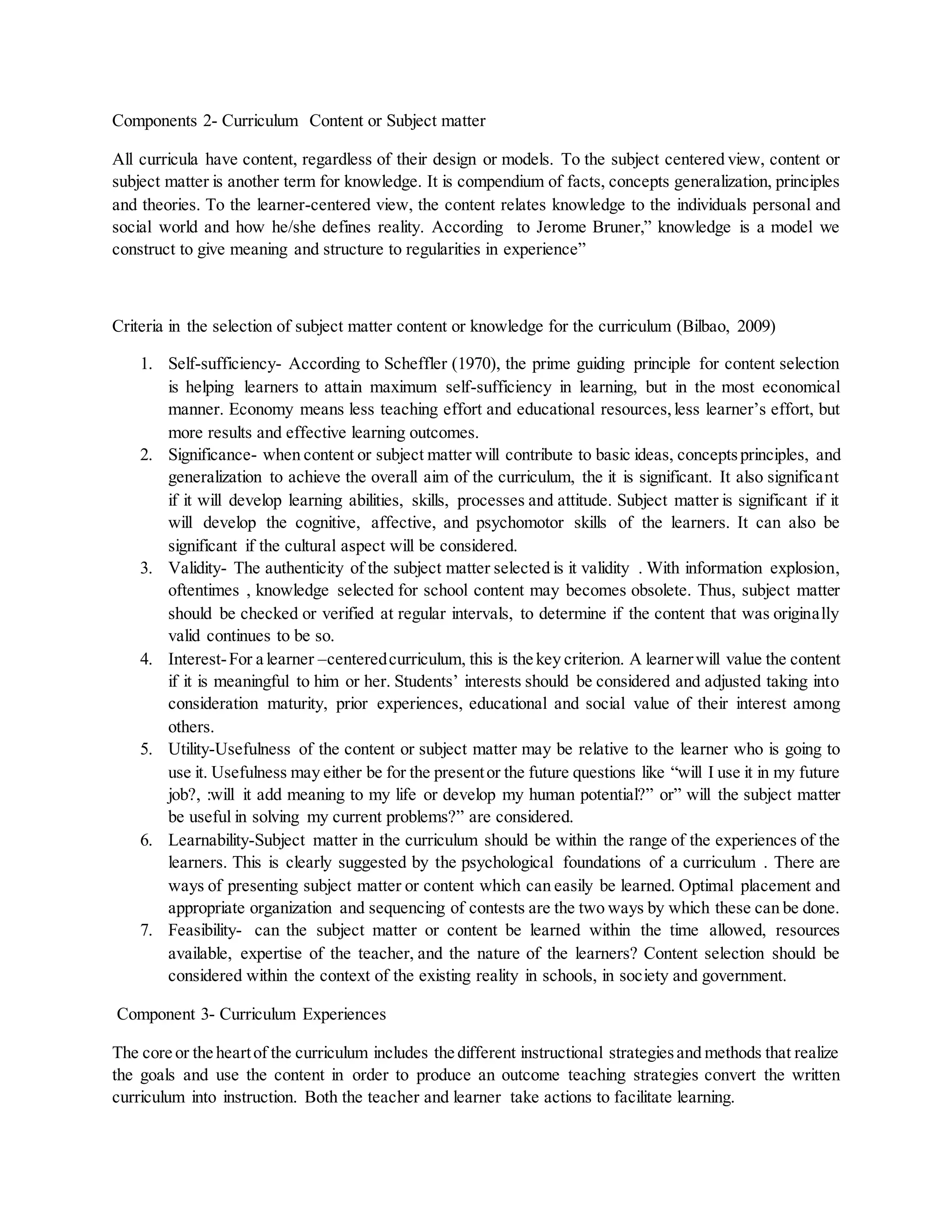
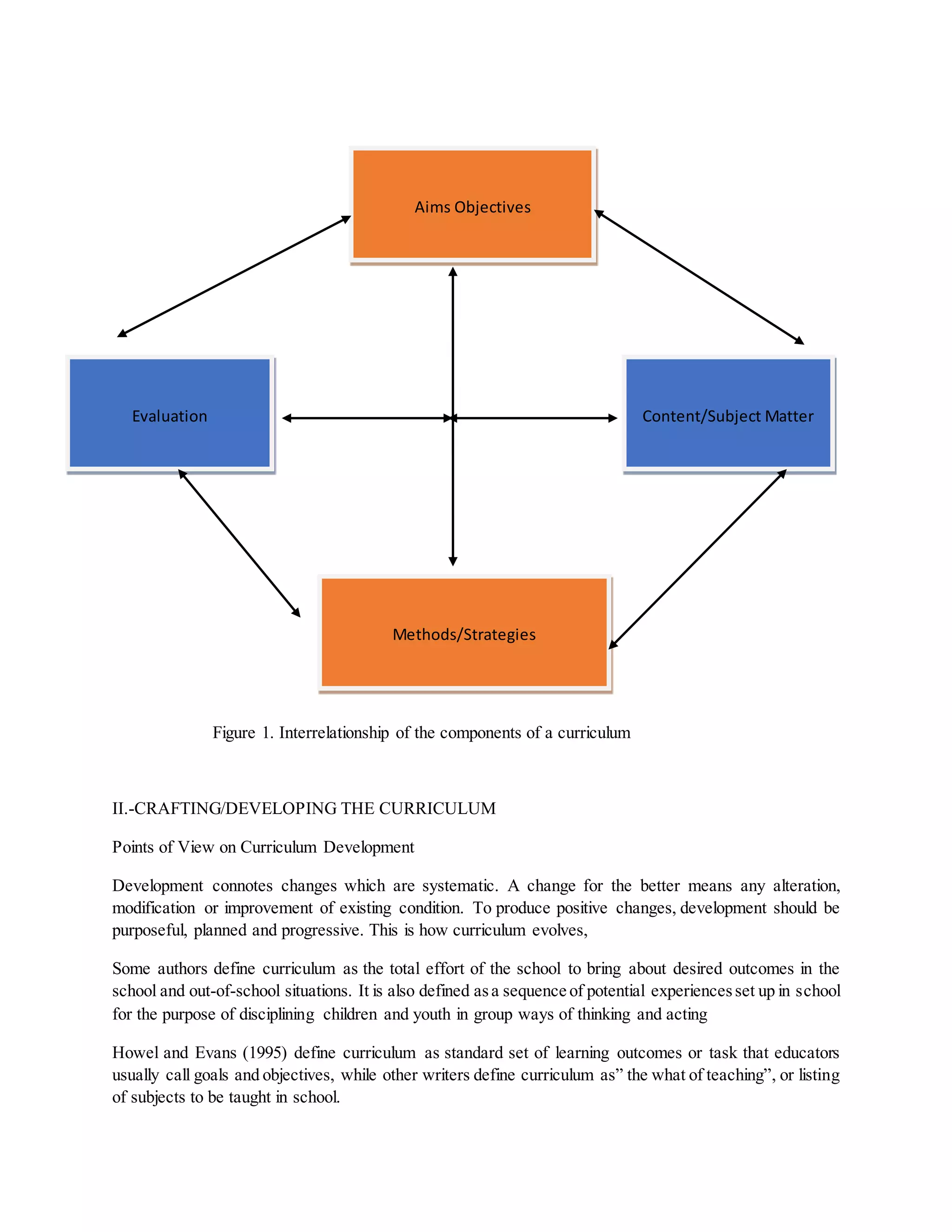
The document discusses the concepts, nature, and purposes of curriculum development in professional education. It provides definitions of curriculum from various perspectives over time. Curriculum encompasses the total learning experience of individuals both in school and society. Major foundations of curriculum development include philosophical, historical, psychological, and social influences. Philosophies like perennialism, essentialism, progressivism, and reconstructivism provide frameworks for curriculum planning. Historical influences include theories from Franklin Bobbitt, Werett Characters, William Kilpatrick, Harold Rugg, Hollis Caswell, and Ralph Tyler. Psychological foundations draw from behaviorist theories like conditioning as well as cognitive theories involving stages of development, social constructivism, and multiple intelligences.