 The product is in its
introductory stage here, there
may not be ready market for the
product.
 Sales are slow and profits seems
a remote possibility.
 Demand has to be created and
developed; and customers have
to be promoted to try out the
product.
 Promotional expenses are
highest.
 Prices are high.
 A product is a basic product at
this stage.
 Selective distribution is
required.
 Product awareness advertising.
Strategies –
 Pricing strategies to be adopted
from the following-
 Market skimming- high pricing
 Market Penetration- Low pricing
 Proper development of the
market
 High Promotion
Examples –
 4G applications , ITC scissors
etc.
 Demand for the product increases
and the size of the market grows.
 Sales and Profit goes up.
 Early adopters like the product
and additional consumers buy the
product.
 Competition grows and therefore
new features and distribution
needs are to be expanded.
 Price remain high or dip slowly.
 Firm uses all the 4P’s to change its
prior marketing strategy.
Strategies –
 New additional features
 Improved quality or style
 Adds new models & flanker
products(different size, flavors
etc.) to protect the main product.
 Enters new market segment.
 Enters new distribution channels.
 Shifts from product awareness
advertising to product preference
advertising.
 Lowers price to attract new layers
of price sensitive buyers.
Examples –
 3G applications, HD in Dish TVs,
etc.
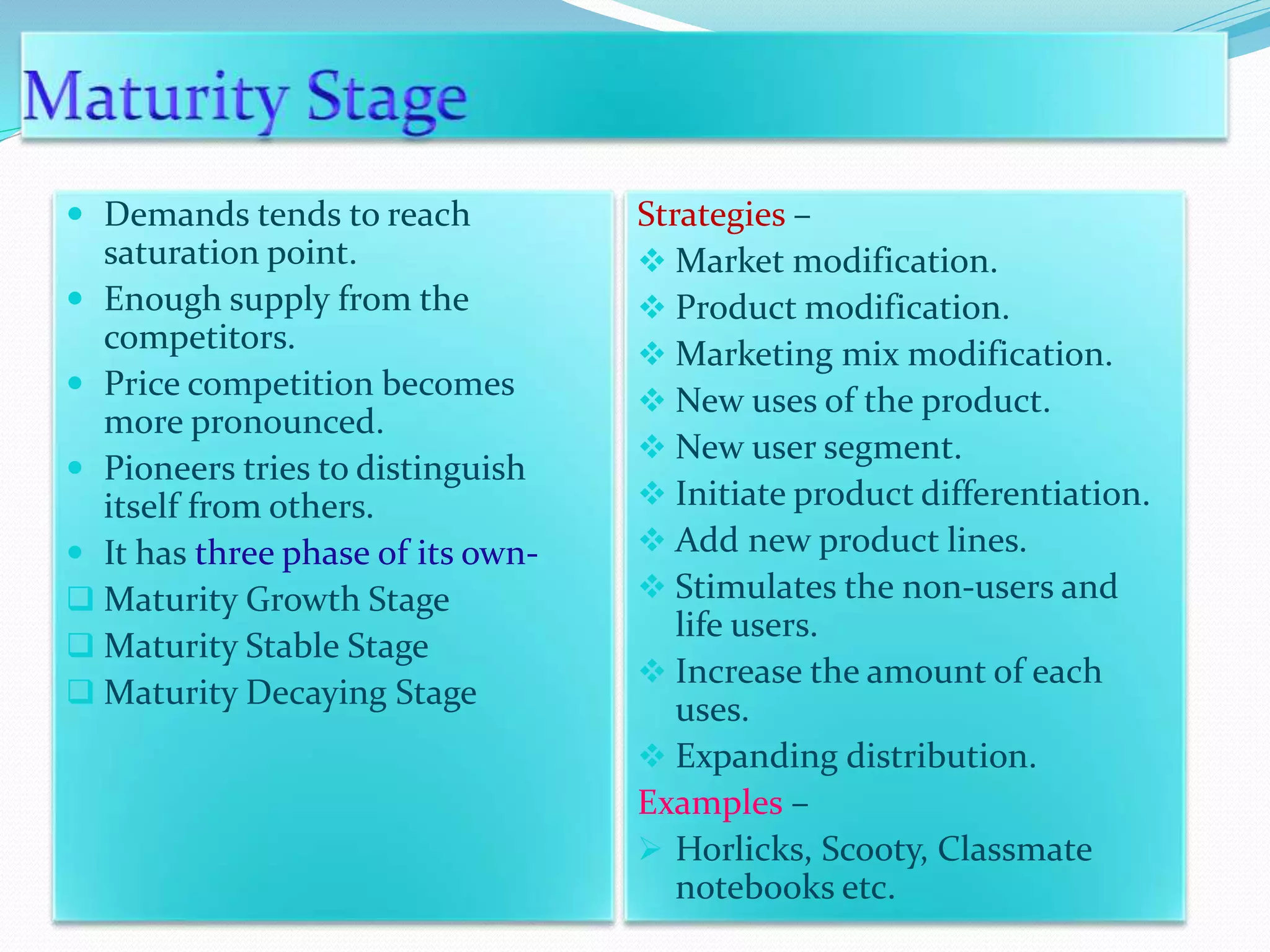
 Demands tends to reach
saturation point.
 Enough supply from the
competitors.
 Price competition becomes
more pronounced.
 Pioneers tries to distinguish
itself from others.
 It has three phase of its own-
 Maturity Growth Stage
 Maturity Stable Stage
 Maturity Decaying Stage
Strategies –
 Market modification.
 Product modification.
 Marketing mix modification.
 New uses of the product.
 New user segment.
 Initiate product differentiation.
 Add new product lines.
 Stimulates the non-users and
life users.
 Increase the amount of each
uses.
 Expanding distribution.
Examples –
 Horlicks, Scooty, Classmate
notebooks etc.
 Demand for the product shrinks.
 Advanced products becomes
available in the market.
 Market becomes pathetic for the
product.
 Prices and margins get depressed.
 Total sales and profit diminishes.
 Linking with some premium
product to stretch the life if the
declining product.
 Many firms withdraw at this stage.
 Channels of distribution are
reduced and promotional
expenses are cut.
 Products taxes not only to the cost
but also to the efforts expanded by
the firm on that particular
product.
Strategies–
 Increase in firms investment to
strengthen its competitive
position.
 Maintain the firms investment till
uncertainties dissolves.
 Decrease the investment
selectively – dropping the non-
profitable segments.
 Milk or harvest firms investment
to recover cost quickly.
 Divesting or selling off its assets as
profitably as possible.
Examples –
 Keo Karpin Hair Oil, Dettol soaps,
few cosmetics etc.
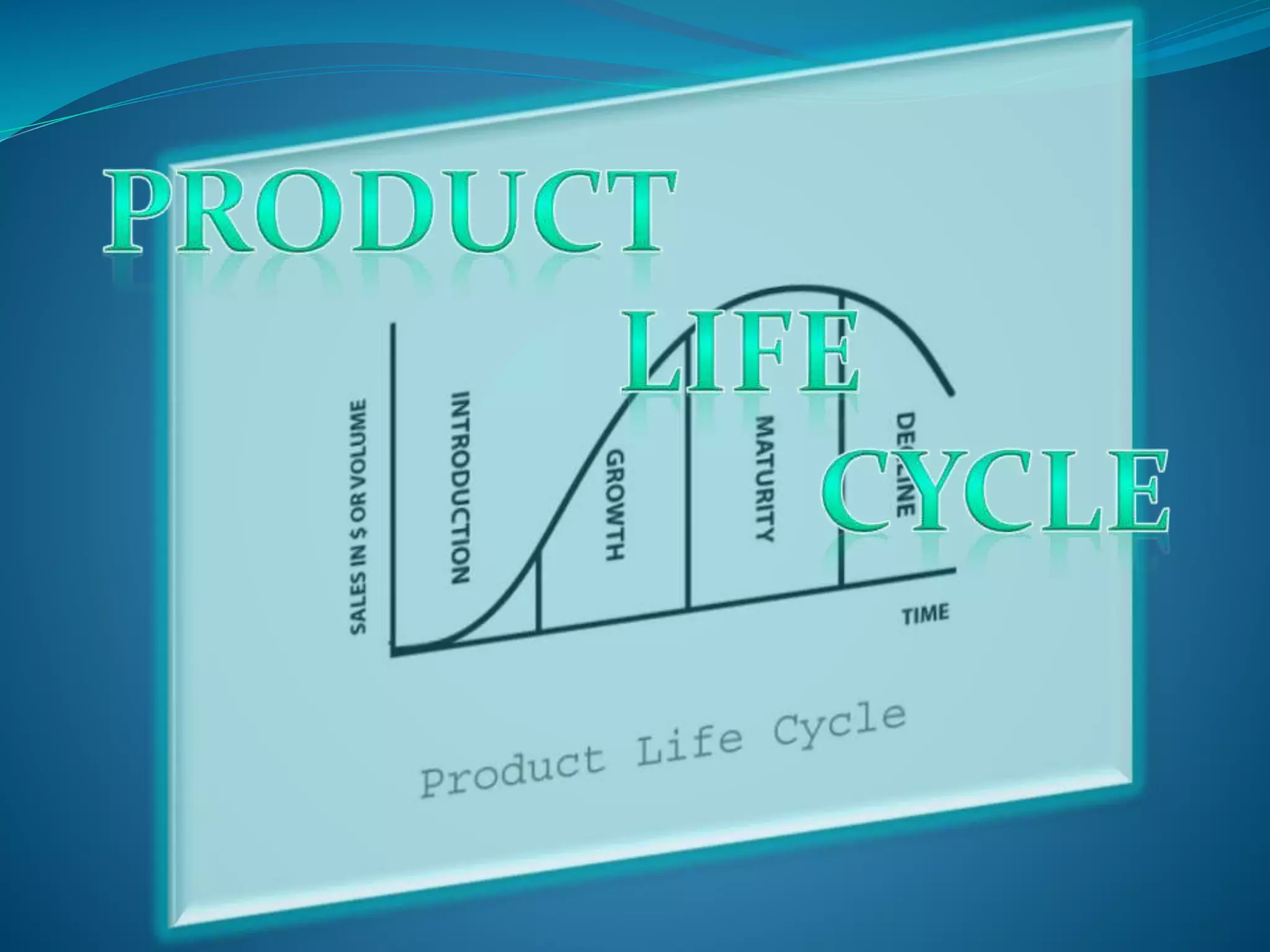
Product Life Cycle_bina amit Shukla

Product Life Cycle_bina amit Shukla

  • 3.
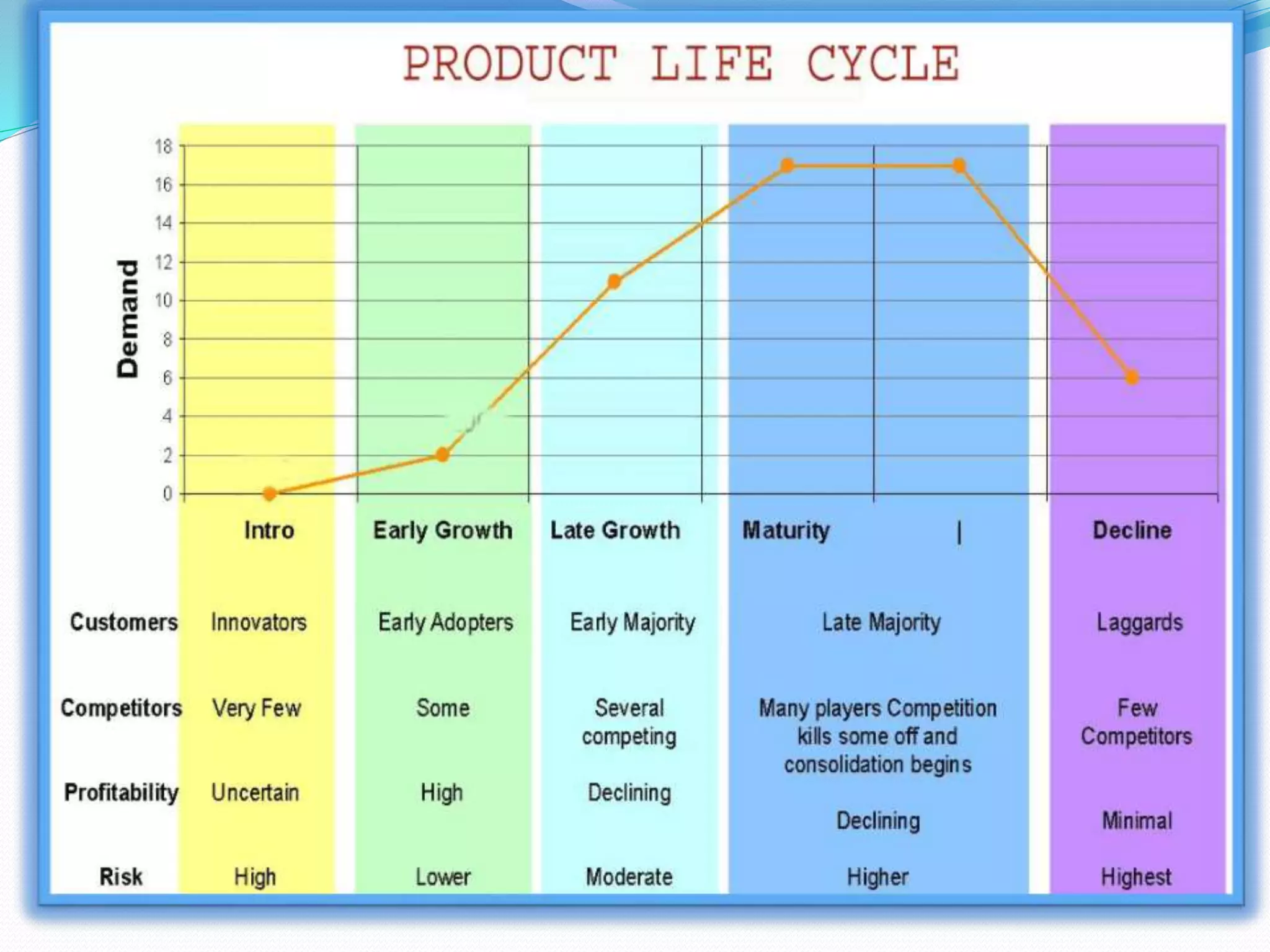
     The productis in its introductory stage here, there may not be ready market for the product.  Sales are slow and profits seems a remote possibility.  Demand has to be created and developed; and customers have to be promoted to try out the product.  Promotional expenses are highest.  Prices are high.  A product is a basic product at this stage.  Selective distribution is required.  Product awareness advertising. Strategies –  Pricing strategies to be adopted from the following-  Market skimming- high pricing  Market Penetration- Low pricing  Proper development of the market  High Promotion Examples –  4G applications , ITC scissors etc.
  • 5.
     Demand forthe product increases and the size of the market grows.  Sales and Profit goes up.  Early adopters like the product and additional consumers buy the product.  Competition grows and therefore new features and distribution needs are to be expanded.  Price remain high or dip slowly.  Firm uses all the 4P’s to change its prior marketing strategy. Strategies –  New additional features  Improved quality or style  Adds new models & flanker products(different size, flavors etc.) to protect the main product.  Enters new market segment.  Enters new distribution channels.  Shifts from product awareness advertising to product preference advertising.  Lowers price to attract new layers of price sensitive buyers. Examples –  3G applications, HD in Dish TVs, etc.
  • 6.
     Demands tendsto reach saturation point.  Enough supply from the competitors.  Price competition becomes more pronounced.  Pioneers tries to distinguish itself from others.  It has three phase of its own-  Maturity Growth Stage  Maturity Stable Stage  Maturity Decaying Stage Strategies –  Market modification.  Product modification.  Marketing mix modification.  New uses of the product.  New user segment.  Initiate product differentiation.  Add new product lines.  Stimulates the non-users and life users.  Increase the amount of each uses.  Expanding distribution. Examples –  Horlicks, Scooty, Classmate notebooks etc.
  • 7.
     Demand forthe product shrinks.  Advanced products becomes available in the market.  Market becomes pathetic for the product.  Prices and margins get depressed.  Total sales and profit diminishes.  Linking with some premium product to stretch the life if the declining product.  Many firms withdraw at this stage.  Channels of distribution are reduced and promotional expenses are cut.  Products taxes not only to the cost but also to the efforts expanded by the firm on that particular product. Strategies–  Increase in firms investment to strengthen its competitive position.  Maintain the firms investment till uncertainties dissolves.  Decrease the investment selectively – dropping the non- profitable segments.  Milk or harvest firms investment to recover cost quickly.  Divesting or selling off its assets as profitably as possible. Examples –  Keo Karpin Hair Oil, Dettol soaps, few cosmetics etc.