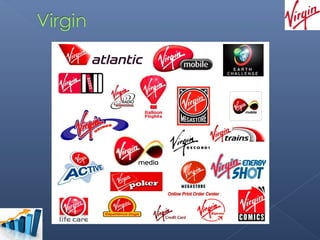
Individually how many products of
     Virgin can you name ?


   You have 3 minutes!!!!
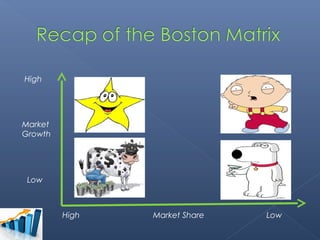
High


Market
Growth


 Low


         High   Market Share   Low
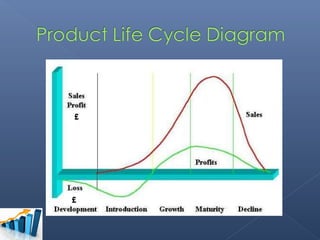
   Product Life Cycle – shows the stages
    that products go through from
    development to withdrawal
    from the market
 It refers to their full life span as such.
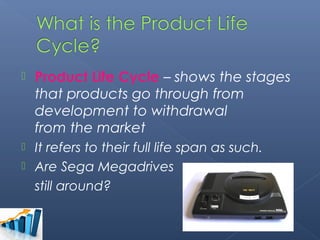
 Are Sega Megadrives
  still around?
£


£
› Each product may have a different life
    cycle
›   PLC determines revenue earned
›   Contributes to strategic marketing
    planning
›   May help the firm to identify when
    a product needs support, redesign,
    reinvigorating, withdrawal, etc.
›   May help in new product development
    planning
›   May help in forecasting and managing
    cash flow
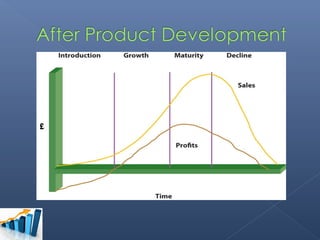
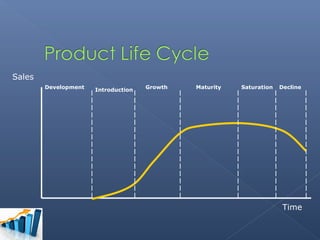
› Development
› Introduction/Launch
› Growth
› Maturity
› Saturation
› Decline
› Withdrawal
› May come from any of the following –
› Market research – identifies gaps in the
    market
›   Monitoring competitors
›   Planned research and development
    (R&D)
›   Luck or intuition – stumble across ideas?
›   Creative thinking – inventions, hunches?
›   Futures thinking – what will people be
    using/wanting/needing 5,10,20 years from
    now
› New ideas/possible inventions
› Market analysis – is it wanted? Can it be
    produced at a profit? Who is it likely
    to be aimed at?
›   Product Development and refinement
›   Test Marketing – possibly local/regional
›   Analysis of test marketing results and
    amendment of product/production
    process
›   Preparations for launch – publicity,
    marketing campaign
› Advertising and promotion campaigns
› Target campaign at specific audience?
› Monitor initial sales
› Maximise publicity
› High cost/low sales
› Length of time – type of product
› Increased consumer awareness
› Sales rise
› Revenues increase
› Costs - fixed costs/variable costs, profits
  may be made
› Monitor market – competitors reaction?
›   Sales reach peak
›   Cost of supporting the product declines
›   Ratio of revenue to cost high
›   Sales growth likely to be low
›   Market share may be high
›   Competition likely to be greater
›   Price elasticity of demand?
›   Monitor market –
    changes/amendments/new strategies?
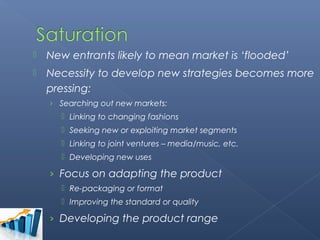
   New entrants likely to mean market is ‘flooded’
   Necessity to develop new strategies becomes more
    pressing:
    › Searching out new markets:
       Linking to changing fashions
       Seeking new or exploiting market segments
       Linking to joint ventures – media/music, etc.
       Developing new uses

    › Focus on adapting the product
       Re-packaging or format
       Improving the standard or quality

    › Developing the product range
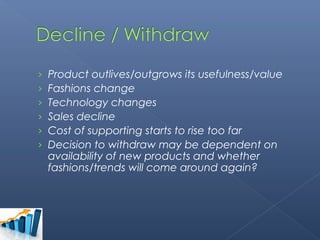
›   Product outlives/outgrows its usefulness/value
›   Fashions change
›   Technology changes
›   Sales decline
›   Cost of supporting starts to rise too far
›   Decision to withdraw may be dependent on
    availability of new products and whether
    fashions/trends will come around again?
£
Sales
        Development   Introduction   Growth   Maturity   Saturation   Decline


                                                                       Time
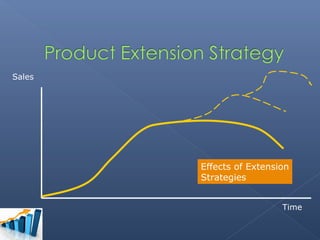
Sales


        Effects of Extension
        Strategies


                          Time
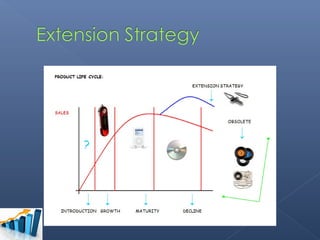
 Can be defined as - a medium to long-term
  plan for lengthening a products life cycle. It is
  likely to be implemented during the Maturity or
  early Decline.
 Extension Strategies include:
    › Redesigning the Product – New and Improved!
    › Adding an extra feature – Now with…(colour, quality,
      texture…)
    › Changing the packaging and advertising to appeal
      to a NEW Market Segment.
    › Providing a Unique Selling Point (USP) – Cross shaped
      MP3 player.
 Individually you are required to:
 Produce a Product Life Cycle, illustrating
  at which point an Extension Strategy
  may be applied to a product.
  Remember to include the four stages!
 Identify a product (not already
  discussed) at each individual stage of
  the Product Life Cycle. Most points for
  most original, creative.
   In GROUPS you are required to: (on A3 paper
    provided)
   Determine appropriate Extension Strategies
    to lengthen the Product Life Cycle for a
    product you identify as a group. Include
    appropriate design features that will appeal
    to the Target Market i.e. design, colour,
    durability, shape.
   As a group, justify why you have chosen
    these Extension Strategies? It is important
    not to forget who your Target Market is!!!
   Explain the results to the remainder of the
    class through a short presentation.

Product life cycle: notes & exercise

  • 2.
    Individually how manyproducts of Virgin can you name ? You have 3 minutes!!!!
  • 3.
    High Market Growth Low High Market Share Low
  • 4.
    Product Life Cycle – shows the stages that products go through from development to withdrawal from the market  It refers to their full life span as such.  Are Sega Megadrives still around?
  • 5.
  • 6.
    › Each productmay have a different life cycle › PLC determines revenue earned › Contributes to strategic marketing planning › May help the firm to identify when a product needs support, redesign, reinvigorating, withdrawal, etc. › May help in new product development planning › May help in forecasting and managing cash flow
  • 7.
    › Development › Introduction/Launch ›Growth › Maturity › Saturation › Decline › Withdrawal
  • 8.
    › May comefrom any of the following – › Market research – identifies gaps in the market › Monitoring competitors › Planned research and development (R&D) › Luck or intuition – stumble across ideas? › Creative thinking – inventions, hunches? › Futures thinking – what will people be using/wanting/needing 5,10,20 years from now
  • 9.
    › New ideas/possibleinventions › Market analysis – is it wanted? Can it be produced at a profit? Who is it likely to be aimed at? › Product Development and refinement › Test Marketing – possibly local/regional › Analysis of test marketing results and amendment of product/production process › Preparations for launch – publicity, marketing campaign
  • 10.
    › Advertising andpromotion campaigns › Target campaign at specific audience? › Monitor initial sales › Maximise publicity › High cost/low sales › Length of time – type of product
  • 11.
    › Increased consumerawareness › Sales rise › Revenues increase › Costs - fixed costs/variable costs, profits may be made › Monitor market – competitors reaction?
  • 12.
    Sales reach peak › Cost of supporting the product declines › Ratio of revenue to cost high › Sales growth likely to be low › Market share may be high › Competition likely to be greater › Price elasticity of demand? › Monitor market – changes/amendments/new strategies?
  • 13.
    New entrants likely to mean market is ‘flooded’  Necessity to develop new strategies becomes more pressing: › Searching out new markets:  Linking to changing fashions  Seeking new or exploiting market segments  Linking to joint ventures – media/music, etc.  Developing new uses › Focus on adapting the product  Re-packaging or format  Improving the standard or quality › Developing the product range
  • 14.
    Product outlives/outgrows its usefulness/value › Fashions change › Technology changes › Sales decline › Cost of supporting starts to rise too far › Decision to withdraw may be dependent on availability of new products and whether fashions/trends will come around again?
  • 15.
  • 16.
    Sales Development Introduction Growth Maturity Saturation Decline Time
  • 17.
    Sales Effects of Extension Strategies Time
  • 19.
     Can bedefined as - a medium to long-term plan for lengthening a products life cycle. It is likely to be implemented during the Maturity or early Decline.  Extension Strategies include: › Redesigning the Product – New and Improved! › Adding an extra feature – Now with…(colour, quality, texture…) › Changing the packaging and advertising to appeal to a NEW Market Segment. › Providing a Unique Selling Point (USP) – Cross shaped MP3 player.
  • 20.
     Individually youare required to:  Produce a Product Life Cycle, illustrating at which point an Extension Strategy may be applied to a product. Remember to include the four stages!  Identify a product (not already discussed) at each individual stage of the Product Life Cycle. Most points for most original, creative.
  • 21.
    In GROUPS you are required to: (on A3 paper provided)  Determine appropriate Extension Strategies to lengthen the Product Life Cycle for a product you identify as a group. Include appropriate design features that will appeal to the Target Market i.e. design, colour, durability, shape.  As a group, justify why you have chosen these Extension Strategies? It is important not to forget who your Target Market is!!!  Explain the results to the remainder of the class through a short presentation.